Robbie Thain
Founder, CEO

Mobile sampling and retail field marketing turn physical product trial into verified shelf velocity across diverse shopper environments and mission contexts.
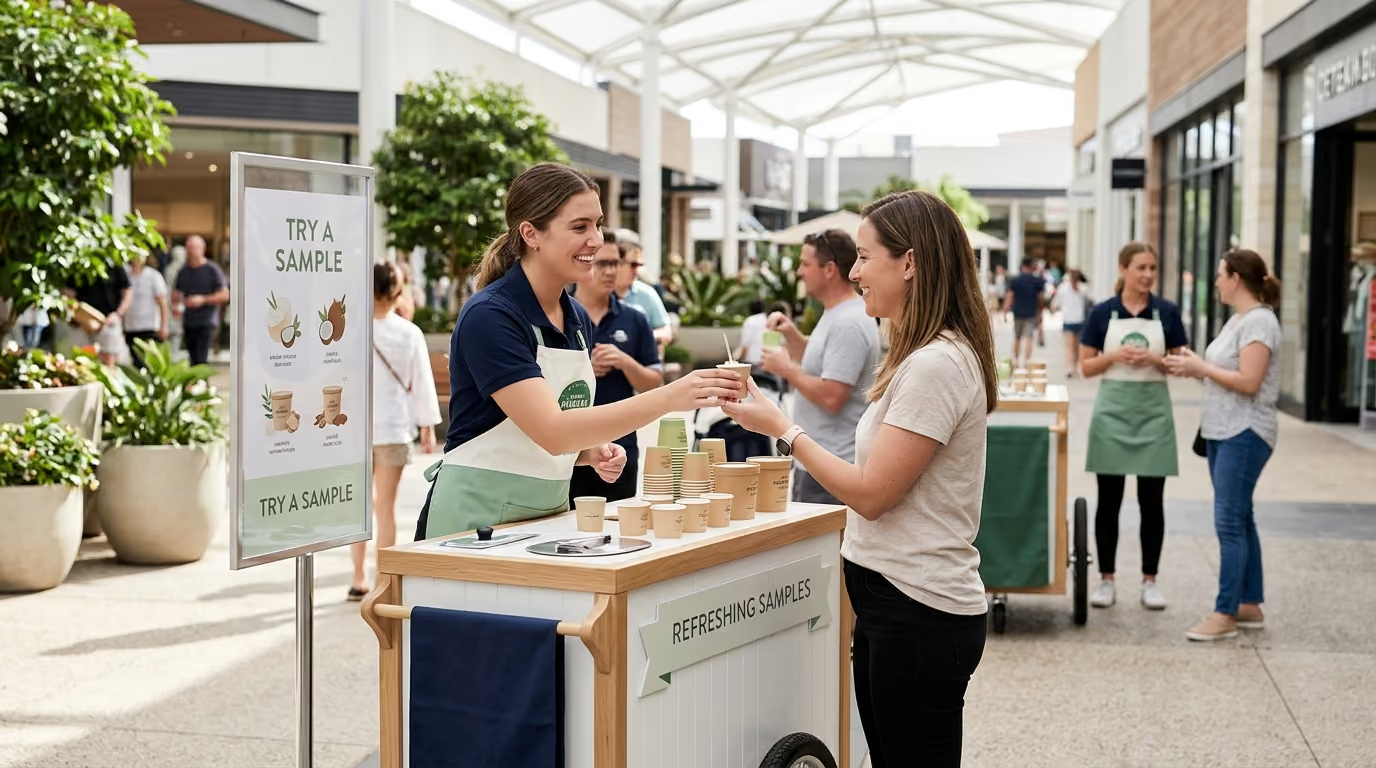
Executing field marketing across distinct retail environments requires matching shopper trip missions to channel-specific conversion mechanics. This guide details operational playbooks for convenience, grocery, club, pharmacy, specialty, and foodservice environments to turn physical product trials into verifiable shelf velocity.
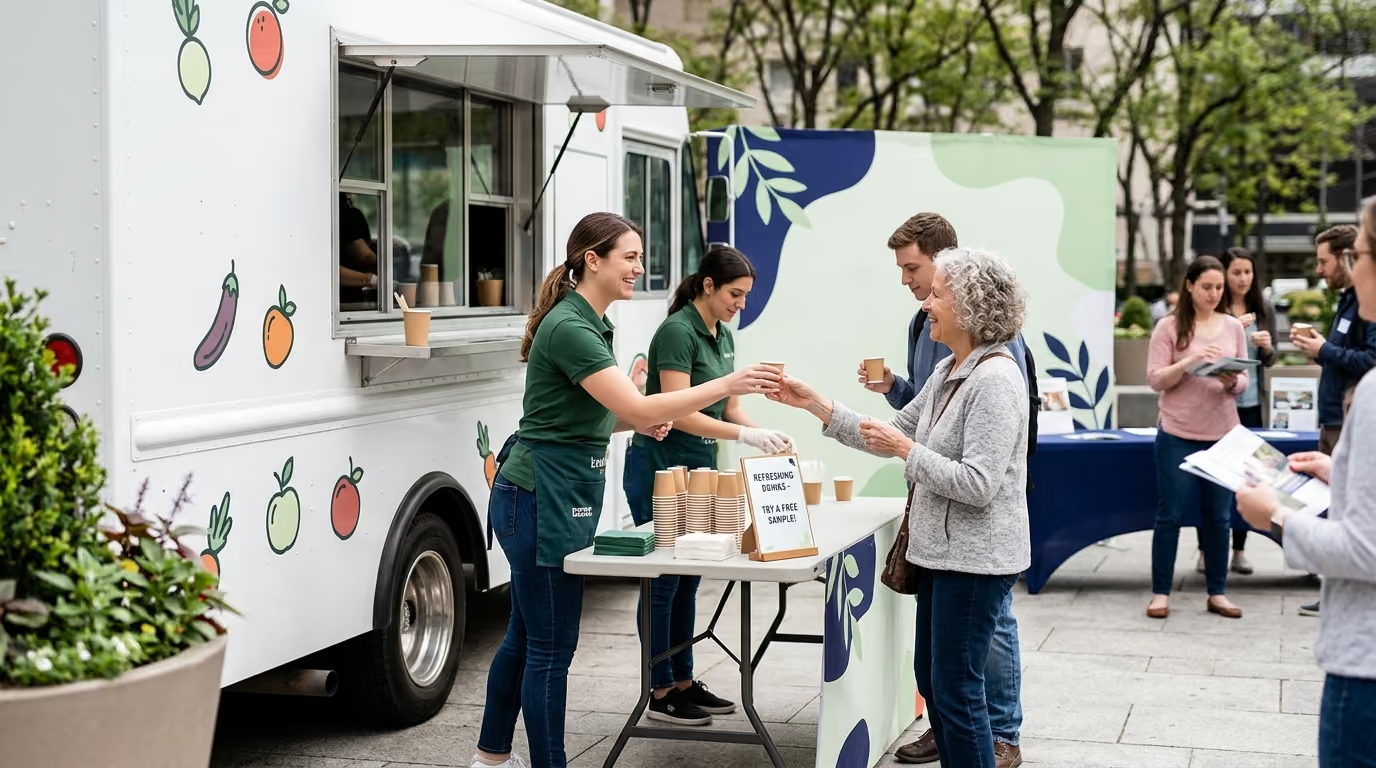
Imagine a branded mobile sampling truck parked outside a busy suburban grocery store on a Saturday afternoon. The team is energetic, music is playing from exterior speakers, and hundreds of tiny sample cups are handed out to people walking through the parking lot. At first glance, the activation looks like an undeniable victory because the crowd is steady and smiling.
By Monday morning, the brand manager reviews the store-level point of sale data and discovers zero incremental unit lift inside the aisles. The shoppers took the free food, walked past the entrance, and continued with their pre-planned shopping lists without ever looking for the product on shelf.
Meanwhile, inside a nearby convenience store, a different field team is trying to force shoppers to participate in a lengthy digital tablet survey while they are trying to buy fuel and coffee before work. Frustrated patrons brush past the ambassadors, the store manager complains about blocked foot traffic near the register, and the activation gets shut down early.
These operational disconnects happen when field marketing treats physical retail as a generic backdrop rather than a collection of distinct ecosystems. Every retail channel operates under unique shopper mindsets, dwell times, physical constraints, and checkout dynamics. Without channel-specific conversion mechanics, even the most visually impressive mobile activations produce little commercial impact.
To convert live interactions into verified retail sales, marketing teams must view mobile sampling not as promotional theater, but as a disciplined conversion pipeline. Physical trial generates awareness, but structured field marketing bridges that initial sensory experience directly to the cash register.
Mobile sampling involves distributing physical product trials using movable units such as branded vans, trailers, forecourt kiosks, aisle carts, or sidewalk teams. When executed correctly, mobile sampling integrates physical trial, human brand representation, spatial theater, retail proximity, and a trackable purchasing mechanism.
Field marketing encompasses the broader operational discipline of deploying teams directly into markets to engage consumers, store personnel, and local retail partners. It functions simultaneously as a consumer acquisition channel and a retail execution mechanism. A field campaign can create high consumer interest, but it fails commercially if shelves remain unstocked or store managers feel ignored.
Experiential marketing wraps physical product interactions in memorable contexts that answer three core questions for the consumer: what the product is, why it matters, and when to use it. In our experience, physical brand activations create an immediate sensory anchor that digital marketing cannot replicate. We blend physical and digital touchpoints by integrating QR codes, mobile engagement tools, and retail tracking layers across our field activations to turn initial curiosity into documented shopper pipelines.
High-performing retail activations follow a structured sequence rather than relying on volume metrics alone:
Measuring success purely by the raw count of handed-out samples encourages field teams to target low-value interactions. True field effectiveness is measured by whether an activation moves product off retail shelves in the immediate trade area. To achieve this, brands must align their tactics with the specific mission of the shopper.
A shopper mission represents the specific problem a consumer intends to solve during a retail visit. Trip missions dictate how much time a person has, how open they are to interruption, and how much money they intend to spend. Understanding these missions prevents field teams from deploying mismatched activation strategies.
Common retail trip missions include:
Coca-Cola's proprietary iSHOP research tracks how shopper missions vary dramatically across retail formats. Their data highlights that smaller, faster trip missions are growing across U.S. retail channels. Convenience visits skew heavily toward immediate fuel and beverage needs, whereas grocery trips center on household meal solutions. Understanding these differences allows brands to deploy appropriate messaging and mechanics for each retail footprint.
Retail adjacency refers to the physical distance between where a sample is consumed and where the product can be purchased. The physical location of the field activation dictates the conversion mechanics required to capture sales.
Inside-the-store activations deliver the shortest path to checkout. However, they carry strict operational rules, tight physical footprints, and intense scrutiny from store managers. Entrance and vestibule activations offer high visibility, but they interrupt shoppers before they have established their in-store navigation path.
Parking lot and mobile vehicle activations provide ample space for immersive brand setups and large-scale sampling. However, the physical distance between the parking lot and the interior checkout requires deliberate bridges, such as high-value coupons or prominent directional signage. Off-site or street-team activations capture broad consumer attention, but they require digital mechanisms to direct trialers to nearby stocking retailers. To design an effective activation, brands can consult frameworks on retail driven mobile tours to connect physical vehicles directly with retail trade areas.
Every successful retail activation rests on a six-layer framework. This structured model ensures that field marketing programs maintain operational consistency while adapting to different channel requirements.
The first layer evaluates the core driver of the consumer visit. Brand teams must determine whether the shopper is rushed, browsing, purchasing for themselves, or buying for an entire household. If an activation requires fifteen minutes of attention in a channel where average trip times are under four minutes, the campaign will fail.
The second layer identifies the precise point during the shopper journey when the consumer is open to engagement. Interrupting a parent wrangling toddlers at the grocery entrance rarely works. Engaging that same parent in the snack aisle while they are actively evaluating options yields far higher conversion. Field teams must pinpoint the exact physical zone where trial feels like a helpful solution rather than an intrusive interruption.
Brand messaging must adapt directly to the channel environment. In convenience channels, communication must emphasize rapid energy, hydration, portability, or instant gratification. In grocery channels, messaging should focus on ingredient quality, household value, and family meal inspiration. Club stores require messaging around per-serving economics and versatile usage, while pharmacy shoppers respond to trusted health benefits and ingredient transparency.
The conversion mechanic represents the bridge between trial and commercial action. Mechanics must reflect channel workflows:
Field programs require multi-tiered measurement systems that track activity, consumer engagement, immediate sales lift, and sustained category growth. Tracking mechanisms must distinguish between raw foot traffic, engaged prospects, verified product samplers, and actual retail purchasers. Return on Investment (ROI) calculations must isolate baseline sales from true promotional lift across matched retail stores.
A field activation is a guest inside or adjacent to a commercial property. Programs must serve the retailer's strategic interests by lifting category revenue, introducing new shoppers, and protecting the store environment. Field teams must secure proper corporate and store-level permissions, adhere to local health codes, maintain required insurance coverage, and report results back to store managers.
Convenience retail is defined by speed, immediate consumption, and tightly compressed dwell times. Convenience shoppers are rarely browsing; they enter the property with a clear, urgent purpose.
According to data from the National Association of Convenience Stores (NACS), the average convenience store consumer visits 2.6 times per week, with nearly 10% visiting more than once per day. Research from NIQ indicates that U.S. convenience locations experience approximately 165 million daily visits. These visits are concentrated around high-frequency morning and afternoon commuter windows.
Fuel and tobacco remain primary drivers of convenience trips, but prepared food and functional beverages are rapidly capturing share. Industry research from CSP Daily News notes that nearly 29% of surveyed convenience shoppers plan to visit a quick-service restaurant immediately after their stop. This trend gives brands a major opening to position packaged snacks, fresh foods, and ready-to-drink beverages as superior, immediate meal solutions.
The fuel pump island represents a prime engagement zone for convenience activations. Drivers spend several minutes standing beside their vehicles with little to do while refueling. A mobile team stationed near the pump islands can initiate brief, welcoming conversations and offer chilled beverage or snack samples.
The path between the fuel court and the front entrance provides another critical conversion point. Positioning a compact sampling footprint along this natural walking path allows field teams to intercept shoppers before they select an impulse beverage inside.
Inside the store, the coffee counter, fountain machine, and grab-and-go refrigerated cases serve as natural focal points. Field activations in these zones must remain nimble to prevent blocking aisle walkways or interfering with the cash register queue.
Convenience activations demand a streamlined field staffing model. A two-person team is typically ideal:
Verbal pitches in convenience settings must be delivered in ten seconds or less. A brand ambassador might state: "Try this cold sparkling energy water, it has zero sugar and you can grab an ice-cold can in cooler door three for two dollars." This script delivers the product benefit, confirms immediate cold availability, provides the exact shelf location, and clarifies the price point instantly.
The most frequent error in convenience field marketing is treating the forecourt like a festival. Setting up elaborate tents, loud sound systems, or multi-step tablet registrations alienates both store managers and hurried shoppers. If an interaction takes longer than thirty seconds, convenience shoppers will simply walk away.
Another common failure is poor inventory coordination with the store operator. Convenience locations carry minimal backroom storage. If a mobile team generates heavy trial for a functional beverage without confirming that the cold vault is stocked with extra cases, the store will run out of stock within the first hour of activation. Teams looking to scale across high-traffic retail formats can review our guide to annual mobile sampling and guerilla marketing programs for best practices in inventory staging.
Supermarkets present a complex environment where multiple shopper missions unfold simultaneously across different store departments. Grocery shoppers balance planned household replenishment with spontaneous discovery, making this channel ideal for educational and culinary-driven field marketing.
Research from FMI, The Food Industry Association, indicates that roughly 40% of U.S. consumers designate traditional supermarkets as their primary grocery destination. Furthermore, FMI research emphasizes that today's shoppers define grocery value not just through low pricing, but through relevance, convenience, and enjoyable in-store experiences.
However, grocery shopping is often mentally taxing. Shoppers navigate long lists, manage family budgets, and compare dozens of competing brands across crowded center-store aisles. Field marketing in grocery stores must reduce friction by showing consumers exactly how a product simplifies their household meal planning.
Grocery activations generally fall into four proven execution formats:
For brands navigating retail expansion, learning how to execute a retail demonstration program provides the operational baseline needed to succeed across regional grocery chains.
In a grocery environment, a shopper rarely consumes a full package on the spot. Conversion mechanics must incentivize placing a multi-serving item into the shopping cart.
Digital coupons integrated directly into the retailer's mobile loyalty app deliver the highest redemption rates. Field ambassadors should feature clear signage with app-specific QR codes that allow shoppers to clip a digital coupon with a single scan. For brands without digital retail integration, physical coupon cards that highlight the exact aisle number and shelf location serve as effective physical reminders.
Recipe tear pads also drive immediate basket building. When a brand ambassador hands a shopper a recipe card listing three complementary ingredients available in adjacent aisles, the brand transforms a simple product sample into a planned household dinner.
Grocery stores operate under rigorous health, safety, and operational standards:
A major risk in grocery sampling is the ghost out-of-stock scenario. This occurs when product is physically present in the store's back warehouse but missing from the retail shelf. Field leads must establish rapport with grocery department managers early in the shift to access backroom inventory and replenish shelf stock before sample distribution starts.
Warehouse clubs operate on a fundamentally distinct retail model. Members pay annual fees to access curated assortments sold in high-volume, bulk packaging. Field activations in club environments must address the psychology of bulk commitment.
In a supermarket, convincing a consumer to try a new product involves a four-dollar purchase decision. In a warehouse club, that same trial requires the consumer to commit to a twenty-dollar, multi-pack purchase. Shoppers frequently hesitate because they worry about food waste, pantry clutter, or household flavor fatigue.
Club activations must actively de-risk the bulk purchase. Brand ambassadors must explain product versatility, storage ease, freezing guidelines, and per-serving cost benefits.
Club retail floors feature wide aisles and continuous foot traffic. Field setups must be engineered to handle high volume safely and efficiently without creating shopping cart gridlock.
Effective club demonstrations utilize dedicated demonstration carts equipped with professional-grade induction burners, rapid-chill coolers, and high-capacity prep surfaces. The visual theater of active cooking, sizzling aromas, and pristine presentation attracts club members from several aisles away.
Brand ambassadors should focus communication on household economics. Explaining that a bulk pack provides eight family meals at less than two dollars per serving reframes a large checkout price into an undeniable household saving.
Club demonstrations have the power to move pallets of inventory in a single weekend. This velocity creates severe operational risks if inventory pipelines are not managed meticulously.
Field teams must coordinate closely with the warehouse receiving team and general manager days before the event. The team must verify that multiple pallets of product are checked into the building, placed on accessible pallet racking, and ready to be dropped to the sales floor as soon as the active display sells down.
Running out of stock during a club demonstration destroys the campaign's financial return. The fixed labor and activation costs remain unchanged, but the sales engine halts entirely. For food brands managing high-volume campaigns, following retail sampling formats helps balance staffing models against anticipated pallet movement.
Beyond grocery and convenience, specialized retail channels offer targeted opportunities to connect with consumers during focused lifestyle and wellness missions.
Data from YouGov indicates that 70% of U.S. adults rely on physical retail pharmacies when filling prescriptions, with 42% choosing locations based strictly on geographic convenience. Additional channel studies show that over-the-counter wellness and personal care make up half of all non-pharmaceutical purchases in the drug channel.
The pharmacy shopper mission centers on health, comfort, problem resolution, and family self-care. Field marketing in this environment demands a quiet, highly professional presence. Boisterous games, loud music, or aggressive intercepts are entirely inappropriate near healthcare counters.
Brand ambassadors in pharmacy settings must operate as consultative educators. They must adhere strictly to substantiated, approved product claims. Teams should never offer medical advice, suggest clinical diagnoses, or speculate on prescription drug interactions. Conversion mechanics should center on retailer wellness rewards points, high-value physical coupons, and informational literature detailing product ingredients.
Specialty retailers encompass beauty boutiques, outdoor outfitters, consumer electronics stores, sporting goods retailers, and pet supply chains. Shoppers visit specialty stores seeking expert guidance, premium performance, and identity expression.
Field marketing in specialty retail must elevate brand credibility through deep product knowledge:
In specialty retail, generic promotional staff will damage brand equity. Brand ambassadors must be authentic enthusiasts or subject-matter experts who can discuss technical nuances with experienced consumers.
Foodservice field marketing includes fast-casual restaurants, campus dining halls, workplace cafes, and coffee houses. In these locations, consumers are already in an active consumption mindset, creating ideal conditions for taste-driven conversions.
However, foodservice operations run on razor-thin labor margins and rapid kitchen turnaround times. Field activations must never disrupt kitchen operations or create order bottlenecking at the register.
Successful foodservice activations integrate seamlessly with the existing ordering system:
Field leads must confirm that the kitchen has adequate inventory of the sampled menu item before initiating trial. Generating enthusiasm for an item that is out of stock frustrates patrons and damages the relationship with the restaurant operator.
Flawless field execution requires operational discipline, detailed checklists, and clear escalation protocols. The following step-by-step framework ensures consistency across regional and national retail campaigns.
Measuring the business impact of retail field marketing requires separating promotional activity from true commercial lift. Field marketing leaders must establish clear measurement hierarchies that satisfy executive leadership and retail category buyers.
A robust measurement framework evaluates four distinct tiers of data:
Tier 1 focuses on operational activity tracking. This includes verified activation stops, scheduled hours completed, staffing attendance rates, and geographic coverage across target retail accounts.
Tier 2 captures immediate consumer responses. This level tracks total samples consumed, average dwell times, verbal consumer ratings, digital recipe downloads, loyalty barcode scans, and digital coupon clips.
Tier 3 isolates commercial market impact. This tier evaluates same-day store sales lift, category volume expansion, retail basket attachment, and digital coupon redemption rates. For a deeper look at field analytics, marketing leads can review our breakdown of key metrics for field marketing activations to standardize field reporting across multiple markets.
Tier 4 measures long-term brand equity and retail value. This encompasses sustained baseline velocity over a four-to-eight-week post-event window, repeat purchase rates, retail account retention, and expanded authorized shelf distribution.
Evaluating field marketing performance requires consistent financial formulas across all activated markets.
$$\text{Cost Per Verified Trial} = \frac{\text{Total Campaign Direct Cost}}{\text{Total Verified Product Samples Consumed}}$$
This formula calculates the true cost of putting a verified product sample into a target consumer's hands, factoring in labor, travel, venue fees, and product loss.
$$\text{Sales Lift Percentage} = \left( \frac{\text{Activated Store Sales} - \text{Control Store Baseline Sales}}{\text{Control Store Baseline Sales}} \right) \times 100$$
Calculating sales lift against matched, non-activated control stores isolates promotional impact from external factors such as holiday traffic, local weather patterns, or broader advertising campaigns.
$$\text{Return on Investment} = \left( \frac{\text{Gross Incremental Margin Generated} - \text{Total Campaign Cost}}{\text{Total Campaign Cost}} \right) \times 100$$
To calculate true financial return, brand managers must use the gross profit margin generated by incremental product sales rather than top-line gross revenue.
Attribution errors occur when brands compare sales during an activation week against the preceding week without accounting for broader retail trends. A sudden heatwave can increase cold beverage sales across an entire market regardless of field marketing activity.
To establish causal attribution, brands should implement test-and-control methodology:
Comparing the net velocity difference between the activated group and the control group provides undeniable evidence of promotional lift. Brands seeking to quantify long-term retail velocity can explore methods to measure the business impact of mobile sampling across complex retail environments.
A growing ready-to-drink functional tea brand faced a critical challenge. The brand had successfully secured authorized retail distribution across six hundred conventional grocery stores and four hundred convenience stores in the mid-Atlantic region. However, after four months on shelf, scan data revealed sluggish inventory turn rates, putting the brand at risk of losing shelf placement during the upcoming category review.
The brand's initial marketing instinct was to launch a regional digital ad campaign across social platforms. However, category data showed that while consumers understood the concept of functional tea, they hesitated to spend three dollars and forty-nine cents on an unfamiliar taste profile. The barrier was sensory, not informational.
The brand partnered with our team to deploy an integrated mobile sampling and retail velocity program across three key metropolitan markets. Rather than running a generic mobile tour, the program utilized distinct channel playbooks for the grocery and convenience footprints.
For the convenience channel, two-person mobile field units deployed to high-volume forecourts during morning and afternoon commute windows. The team delivered three-ounce chilled samples to drivers at fuel pumps, backed by a simple verbal proposition: "Zero sugar, clean energy, available ice-cold in cooler door four for two dollars and fifty cents." The team handed drivers physical coupon cards redeemable immediately inside the store.
For the grocery channel, field teams set up culinary demo stations adjacent to the deli and prepared foods departments from Thursday through Sunday. The ambassadors sampled the tea paired with fresh bakery items, demonstrating how the beverage functioned as an afternoon refreshment break. Signage featured a QR code that clipped a digital coupon directly into the grocery chain's mobile loyalty app.
Field leads conducted pre-shift inventory audits with store managers, pulling backroom stock forward to ensure full shelf presence. Over an eight-week activation period, the campaign delivered measurable commercial results:
Revisit these channel playbooks whenever your brand enters a critical trigger moment. Review this guide when expanding into new retail channels, launching innovative product lines, preparing for annual retailer category reviews, or scaling field operations into new geographic territories.
Disciplined field execution turns chaotic retail environments into predictable commercial engines.

30 Years Experiential & Retail Activation Partner for CPG & Beverage Brands | Multi-Market Demos, Roadshows & Costco/Club Programs That Actually Sell