Robbie Thain
Founder, CEO

High-converting event pipeline and qualified buyer commitments emerge from structured trade show incentives, pre-show outreach, strategic value exchanges.
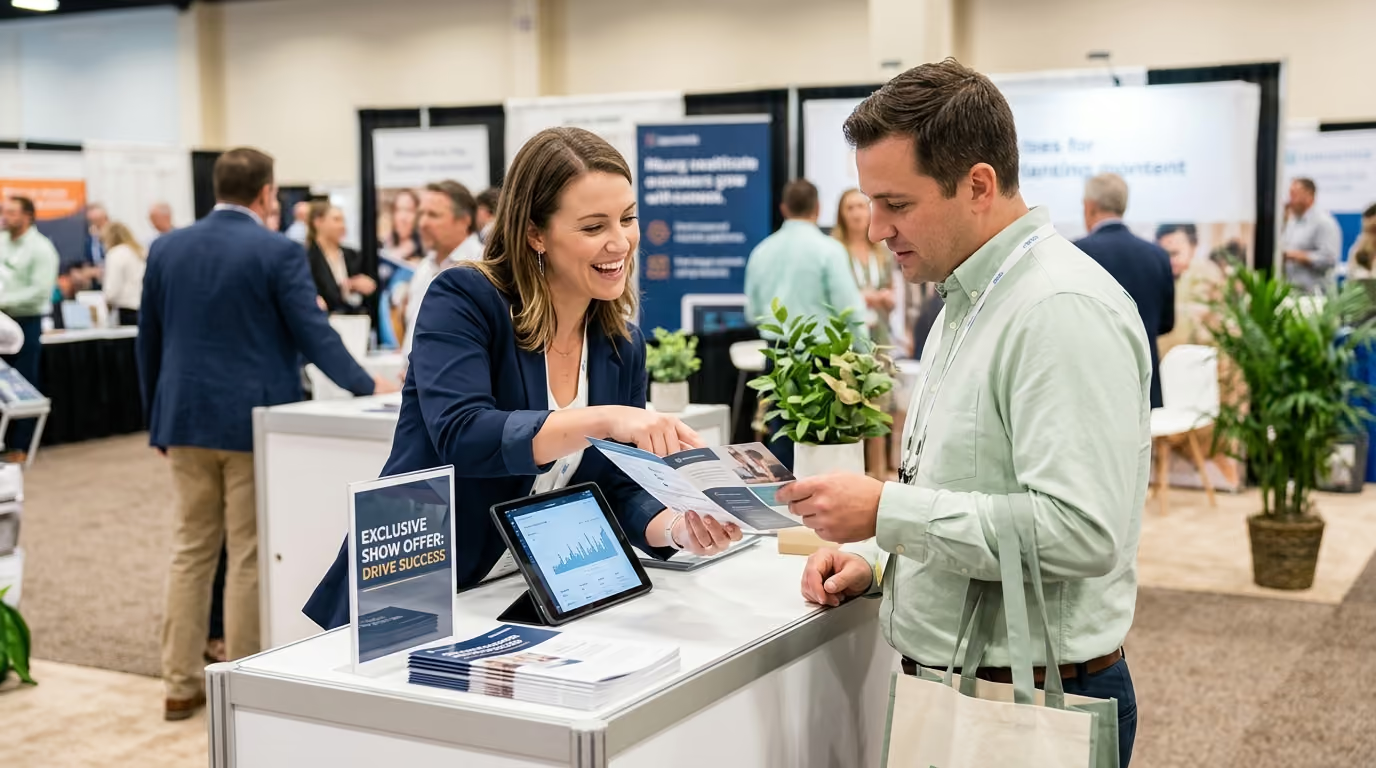
A trade show offer is a structured commercial exchange designed to move qualified prospects into your active sales pipeline. It is not an indiscriminate giveaway, a branded trinket, or an unvetted price reduction that trains buyers to delay purchases. When structured correctly, high-performing incentives reward specific commercial actions, protect product pricing power, and generate measurable Return on Investment across the post-event sales cycle.
A trade show offer is an intentional agreement between an exhibitor and a buyer. It provides tangible value in exchange for a committed business action, such as an in-depth product demonstration, a diagnostic audit, or a verified discovery meeting. In contrast, a traditional booth giveaway is an open-ended distribution of swag with no qualification criteria, no required behavioral commitment, and no downstream accountability.
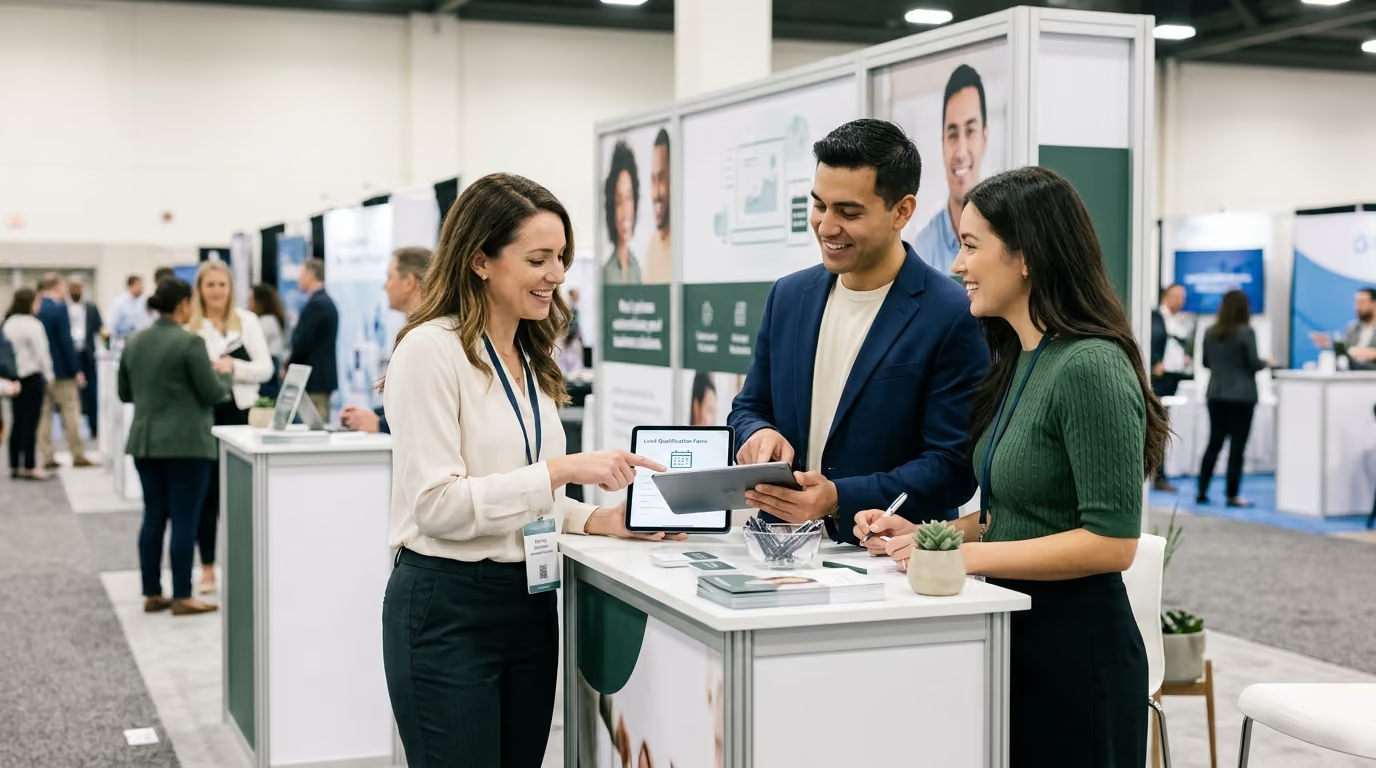
On a crowded exhibition floor, the difference between these two approaches determines whether an exhibitor generates real pipeline or simply burns budget. The floor environment is loud, chaotic, and visually saturated. Thousands of attendees walk the aisles, constantly bombarded by flashing video walls, costumed brand mascots, and rows of unattended candy bowls.
In this noisy environment, booth staff frequently default to passive distribution. They hand out branded pens, tote bags, and foam stress balls to anyone who makes eye contact. This creates the illusion of activity. The booth looks crowded, product literature disappears quickly, and staff feel productive.
Yet, when the show ends, the sales team inherits a database of unqualified badge scans from people who only wanted free merchandise. These attendees have zero buying authority, no active project, and no recollection of the company behind the swag. A strategic offer solves this problem by introducing clear qualification filters and requiring explicit buyer investment before any value is transferred.
Slashing prices on the trade show floor is often the first instinct of an unprepared sales team. While a price cut can generate short-term transactions, relying on blanket event discounts creates serious long-term commercial risks.
When you offer an unconditional 20% discount just for signing an agreement at an expo, you devalue your core product offering. Sophisticated enterprise buyers recognize that an unearned discount signals inflated standard margins or desperate sales targets. Rather than appreciating the concession, buyers begin questioning the true value of your baseline solution.
Blanket event discounts also risk conditioning your market to delay purchases. If industry buyers know your company offers steep price cuts every year at the annual trade conference, they will deliberately hold procurement orders until the event dates. This artificial delay stalls pipeline velocity during the preceding quarters and reduces your overall annual gross margin.
Academic research in consumer promotion published in the Journal of Consumer Research indicates that price cuts often reach a saturation point where additional reductions fail to increase purchase intent. Furthermore, trade show environments lack the controlled context required for standard price elasticity models. The goal of an event activation is to build long-term relationships and solve customer operational challenges, not to run a clearance outlet.
Exhibitors should replace price cuts with value-add incentives that expand account yield. Instead of offering money off the contract, offer implementation support, accelerated onboarding, custom integration hours, or extended warranty coverage. These non-price incentives deliver high perceived value to the buyer while protecting your published price points and gross margins.
Securing attendee attention cannot begin when the trade show doors open in the morning. High-performing exhibitors treat the trade show floor as the fulfillment center for an offer campaign that launched weeks prior.
Empirical field research supports the power of structured pre-show incentives over simple invitations. In a documented field study involving 4,900 trade show registrants, researchers evaluated different direct mail outreach strategies. The group that received a pre-show incentive piece followed by a matching completion piece at the booth achieved an 11.6% response rate.
That response rate was 61% higher than the next-best promotional treatment and nearly three times higher than standard invitations without an incentive structure. The gift-set cohort also showed a 37% to 304% higher recall of the invitation and expressed significantly greater goodwill toward the exhibiting brand.
A related study from Georgia Southern University evaluated three distinct pre-show outreach methods sent to registered attendees. The treatments included a standard postcard invitation, a postcard containing an imprinted magnet, and a postcard offering a premium redemption item at the booth.
Among attendees who stopped at the booths, 41% had received the premium redemption offer. In comparison, 36% had received the magnet, and only 23% had received the standard postcard invitation alone. The tangible offer generated 78.2% more booth visits than the basic postcard invitation.
However, field data must be applied with strategic caution. While pre-show incentives reliably increase booth foot traffic and brand recall, research does not prove that giveaways alone generate qualified pipeline or sales revenue. Tangible items attract foot traffic, but your booth architecture and staff qualification workflows must convert that traffic into commercial opportunities. For teams seeking comprehensive frameworks to organize their pre-event pipeline, exploring a high-conversion trade show marketing guide helps align outreach with sales execution.
To build an offer architecture that drives pipeline, exhibitors should categorize incentives into a structured three-tier hierarchy based on attendee commitment. Each tier requires a higher level of qualification and yields a more valuable commercial outcome.
Attention incentives are low-friction offers designed to capture momentary interest in high-traffic aisles. They serve as conversational bridgeheads rather than sales closers.
Examples include packaged gourmet food tastings, cold brew pours, custom espresso drinks, or specialized industry reference cards. These incentives are accessible to most floor traffic, but booth staff must use them to start an immediate qualifying conversation. The item is handed over only as an open-ended question is asked regarding the visitor's role, tech stack, or current operational pain points.
Evaluation incentives require an attendee to invest substantial time and attention in your booth. They are awarded only after the visitor completes a structured experience, such as a live software demonstration, a technical workflow audit, or a hands-on product comparison.
A comprehensive survey of trade show sales practices conducted by 4imprint showed that business-to-business exhibitors frequently align promotional items with structured interactions. Giving an incentive in exchange for a one-on-one conversation was the most common operational strategy among mid-sized companies. The second most common strategy was providing an incentive in exchange for viewing a complete product demonstration.
Evaluation incentives can include premium physical items, free diagnostic reports, trial kits, or temporary access to proprietary data sets. Because the attendee has invested 10 to 15 minutes of dedicated focus, staff can capture detailed qualification criteria before fulfilling the offer.
Decision incentives are reserved exclusively for qualified accounts with verified budget, authority, and an active project timeline. These offers are designed to accelerate post-show sales velocity and remove friction from the evaluation cycle.
Examples of high-impact decision incentives include:
A research study published by the Marketing Science Institute analyzed 2,299 attendees across 10 commercial exhibitions. The study confirmed that attendee perceptions of booth staff helpfulness, technical knowledge, and accessibility directly influenced the post-show sales cycle. The research demonstrated that post-show sales outreach was significantly more effective when the attendee experienced a high-quality, professional interaction inside the booth.
By linking high-tier incentives to deep technical conversations, exhibitors create the foundation for successful post-event sales follow-up.
A brilliant trade show offer fails if your booth operations cannot handle fulfillment smoothly. Operational bottlenecks frustrate qualified buyers, overwhelm booth staff, and create an atmosphere of disorder.
The Marketing Science Institute study identified a statistically significant positive relationship between booth staffing levels and perceived attendee experience. More qualified personnel allow an exhibitor to engage more visitors simultaneously, conduct meaningful needs assessments, and prevent crowded lines from forming around offer fulfillment stations.
Fulfillment zones must be separated from general traffic lanes. When promotional distribution occurs right on the aisle edge, unqualified crowds block serious buyers from entering the exhibit. Design your floor plan with distinct operational zones to guide visitors through a logical engagement progression.
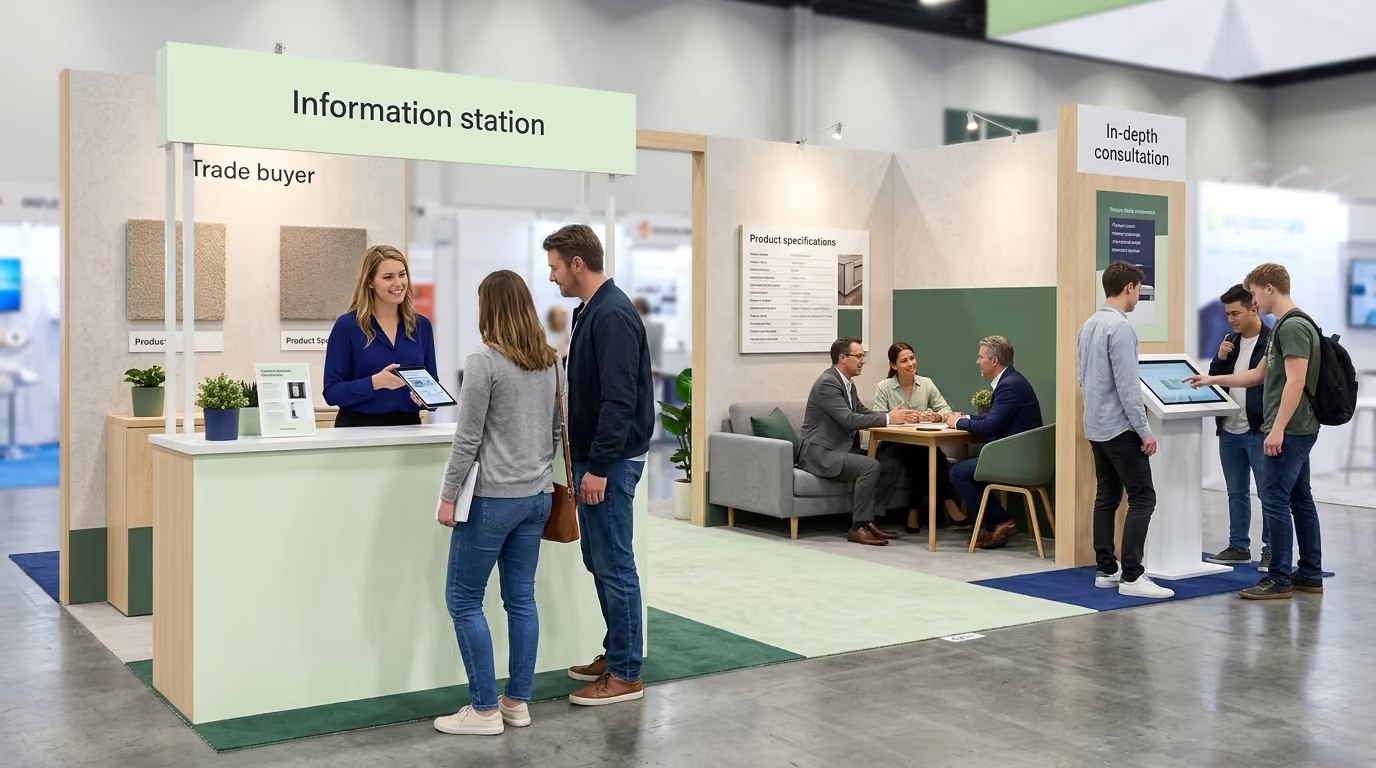
Zone one should sit at the perimeter of the booth, where staff utilize attention incentives to greet visitors and ask preliminary screening questions. Visitors who meet your Ideal Customer Profile are guided inward to zone two for product demonstrations, technical reviews, or private tastings.
Zone three should be reserved at the rear of the booth or in a private meeting room for decision-level conversations. In this quiet area, senior sales reps can deliver executive consultations and formalize decision incentives. To plan these spaces effectively, review our complete guide to planning a high-performance trade show activation.
Staff training is critical for maintaining fulfillment discipline. Booth staff must understand that their job is not to distribute inventory, but to facilitate qualified business conversations. Equip your team with clear conversational boundaries and scripts. When staff master trade show conversation scripts for better booth engagement, they can politely decline unqualified requests while keeping high-value prospects fully engaged.
Executing a high-performing offer campaign requires operational discipline before, during, and after the exhibition. Follow this step-by-step framework to ensure maximum sales conversion and pipeline integrity.
Proving the commercial success of trade show incentives requires tracking performance metrics across the entire customer acquisition lifecycle. Focusing solely on badge scan volume creates a misleading picture of event performance.
In our experience, marketing leaders must monitor both lead and lag indicators to demonstrate clear business impact to executive stakeholders. Our team provides clear reporting on reach, trials, leads, and sales to guide next steps in campaign optimization. Our measurement approach tracks awareness, engagement, and conversion, turning brand moments into actionable data that demonstrates business impact.
Leading metrics reflect immediate audience responsiveness and operational booth efficiency during the event dates.
Lagging metrics evaluate commercial conversion, sales velocity, and financial return across the multi-month sales cycle following the exhibition.
Exhibitors should manage their event budgets rigorously across all line items. Utilizing the complete trade show activation budgeting guide ensures that incentive costs, staffing investments, and booth operational expenses remain aligned with projected pipeline yield.
A national beverage brand expanding its natural energy drink line into regional grocery chains faced significant challenges at major industry trade shows. At previous expos, the brand set up standard sampling counters along the main aisle.
Thousands of attendees grabbed cold sample cans as they walked past the booth. The team handed out over 5,000 samples across three days, but post-show sales results were disappointing. Retail category managers and distributors simply treated the booth as a hydration stop, leaving no contact details and scheduling zero formal business reviews.
The brand restructured its trade show activation around a tiered incentive and qualification model. Instead of offering open sampling along the aisle, the brand redesigned the exhibit layout. The exterior of the booth featured an engaging brand message and a clear value proposition focused on retail margin performance and consumer velocity data.
Perimeter brand ambassadors offered small one-ounce tasting pours to pass-by traffic. As visitors tasted the beverage, staff asked a single screening question: "Are you sourcing ready-to-drink functional beverages for retail distribution, or are you visiting exhibits as an attendee?"
Attendees who identified as retail buyers, category managers, or commercial distributors were invited inside a semi-private retail lounge. Inside the lounge, senior sales managers walked buyers through an interactive regional retail velocity deck. At the end of the 10-minute briefing, buyers received an exclusive decision incentive: a curated retail trial kit shipped directly to their corporate headquarters, complete with customized shelf-placement mockups, localized consumer demographic data, and a guaranteed opening promotional co-op credit.
The operational results demonstrated dramatic improvement over the prior year:
By shifting from indiscriminate giveaways to structured qualification and high-value decision incentives, the beverage brand transformed a chaotic sampling station into a high-yield commercial engine.
Booth staff should maintain professional boundaries without creating friction on the show floor. Train your staff to carry lower-tier attention items, such as printed industry cheat sheets or small branded packaged snacks, to offer visitors who do not meet tier qualifications. Staff can politely explain that high-value consultations, specialized trial kits, or technical pilots require dedicated intake criteria and scheduling with engineering or executive teams.
Pre-show outreach campaigns should launch three to four weeks prior to the trade show opening date. This timing allows prospective attendees to integrate your booth demonstration or executive meeting into their crowded calendar before their travel schedule fills up. Deploy a multi-touch cadence combining direct mail, personalized email outreach, and LinkedIn messaging, with a final reminder sent 48 hours before the show floor opens.
Digital incentives and physical items serve different tactical purposes within an offer architecture. Physical items, when premium and relevant, excel at driving initial booth foot traffic, creating immediate sensory interaction, and improving brand recall. Digital incentives, such as proprietary industry benchmark reports, free software trial access, or technical audits, are superior for qualification and downstream pipeline progression because they require digital engagement and verified contact data.
Exhibitors can run split-test experiments across multiple show days or across regional event schedules. Rotate two distinct offers during alternate half-day time blocks on the show floor, holding staffing levels and demonstration workflows constant. Compare the two offers based on downstream metrics, including cost per qualified lead, meeting completion rates, and opportunity conversion velocity, rather than foot traffic volume alone.

30 Years Experiential & Retail Activation Partner for CPG & Beverage Brands | Multi-Market Demos, Roadshows & Costco/Club Programs That Actually Sell