Robbie Thain
Founder, CEO

Event selection, six-layer booth architecture, visitor flow, staffing and lead qualification decide whether an expo floor produces qualified pipeline.
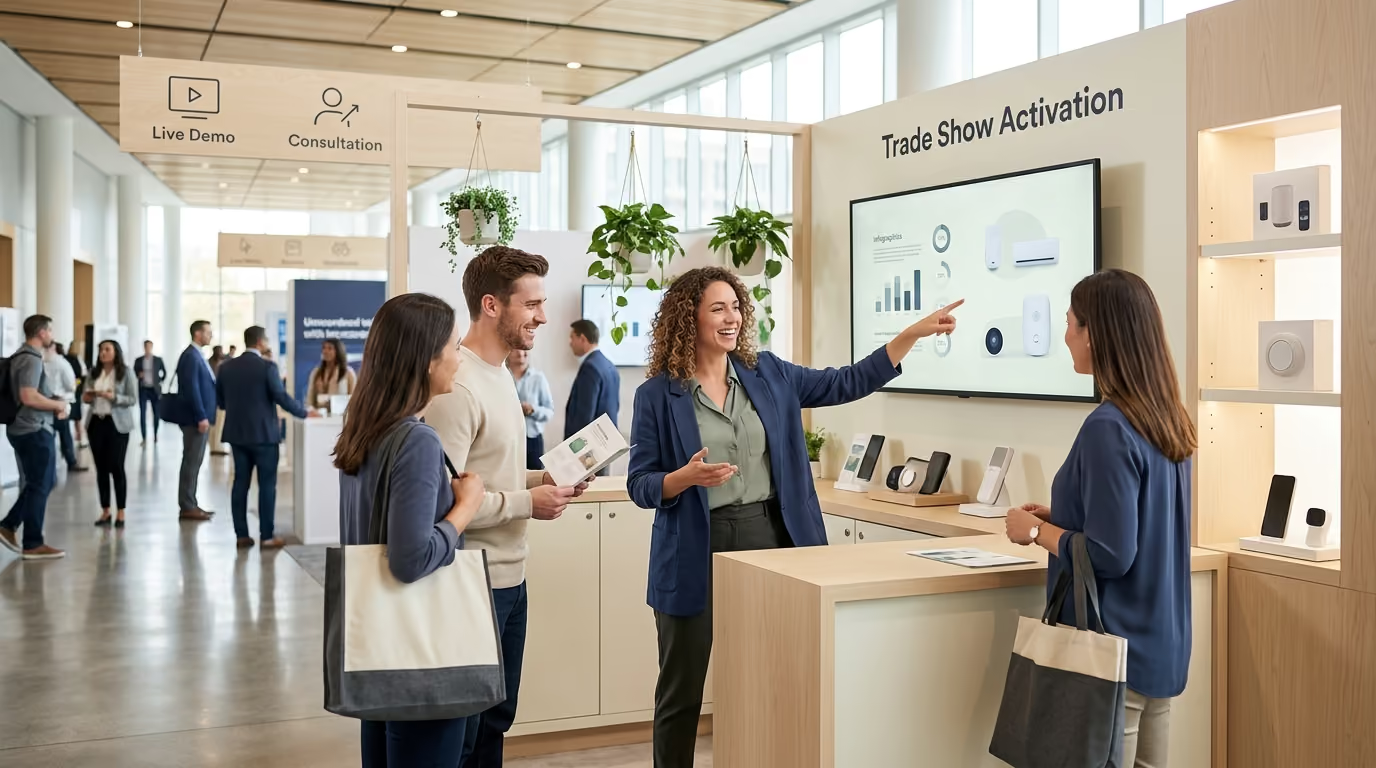
High-performance trade show activations function as integrated commercial engines that connect pre-show outreach, spatial design, rigorous qualification, and rapid follow-up directly to revenue pipeline. Marketing leaders who treat trade shows as structured sales systems rather than passive brand stages consistently generate higher conversion rates, stronger buyer relationships, and measurable Return on Investment (ROI).
A major convention hall is an expensive, loud, and unforgiving environment. Hundreds of brands line the aisles, each spending tens of thousands of dollars on bright signage, hanging banners, and promotional giveaways. Most booth spaces remain crowded with casual foot traffic, yet company executives stand around waiting for meaningful buyer conversations that rarely materialize. Staff members scan badges indiscriminately, collecting hundreds of names without capturing context, purchase timing, or clear commercial intent.
By the afternoon of day two, booth teams are exhausted. Sales representatives retreat behind counters to check laptops, while visitors grab free merchandise and walk away without understanding what the business actually sells. Weeks later, marketing sends a generic email blast to the scanned badge list, generating high unsubscribe rates and almost zero booked meetings. The finance team reviews the massive invoice for floor space, drayage, and travel, concluding that trade shows are an inefficient waste of capital.
This chaotic outcome occurs when teams treat an exhibition as a brand awareness exercise instead of an operational conversion channel. Success on the show floor does not happen by accident or through flashy visual gimmicks. It requires a disciplined, repeatable system that plans backward from commercial goals, controls the interaction at every step, and holds every square foot of booth space accountable for pipeline outcomes.
A successful trade show program begins by identifying the precise business problem the event must solve. Exhibitors commonly balance several competing priorities across lead generation, brand presence, immediate sales, distributor recruitment, product launches, customer retention, and market intelligence. According to research from the Center for Exhibition Industry Research (CEIR), lead generation remains the top exhibitor goal, with 68 percent of exhibitors ranking it among their top three objectives. Additional research from Freeman indicates that lead generation represents 35 percent of overall event importance for exhibitors, followed by brand impact at 25 percent, direct sales at 24 percent, and lead nurturing at 17 percent.
Because an event cannot do everything equally well, teams must establish a strict hierarchy of goals before making design or staffing choices:
Planning teams must also understand the operational difference between financial Return on Investment and Return on Objective (ROO). Financial Return on Investment models direct economic yield against fully loaded costs, which works well for short sales cycles or direct retail order writing. Return on Objective evaluates the achievement of specific strategic milestones, such as educating distribution partners, gathering competitive intelligence, or strengthening relationships with enterprise clients. CEIR reports that 86 percent of exhibitors use intermediate performance metrics like meetings held and qualified conversations, while 62 percent use financial Return on Investment metrics.
Every activation needs a single sentence brief that serves as a decision filter throughout planning. Write your brief using this exact format: At [Event Name], we will help [Priority Audience] understand [Specific Value Proposition] so that they take [Desired Action], contributing to [Business Outcome], measured by [Primary KPI] and [Supporting KPIs]. If a proposed booth feature, product display, or sponsorship does not directly serve this sentence, cut it from the plan.
Exhibiting at the wrong event is an unforced error that no amount of booth design or aggressive staffing can fix. Choosing events requires viewing exhibitions as an investment portfolio rather than recurring calendar traditions. Evaluate each prospective show against strict criteria: buyer density, commercial intent, historical audience quality, competitive presence, operational cost, and overall fit with your sales capacity.
To evaluate potential shows objectively, score each venue from one to five across standard commercial categories:
Never treat the attendee directory as a uniform audience. Research from Freeman shows that 81 percent of trade show attendees possess direct buying influence for exhibited products, and 48 percent arrive planning to purchase. However, these buyers enter the hall with widely divergent goals.
Segment your audience into four operational groups. Priority A accounts represent target retail buyers, existing enterprise opportunities, and high-value commercial accounts that warrant private meeting rooms and executive engagement. Priority B visitors are qualified prospects who fit your target profile but have undefined near-term timelines, requiring structured demonstrations. Priority C includes industry media, category analysts, and research professionals who need concise educational materials. Priority D includes competitors, non-target vendors, and casual passersby who should be politely acknowledged without consuming expensive staff time.
High-performing activations operate as connected commercial systems rather than isolated displays. An effective build links every touchpoint across six operational layers:
When building this architecture, teams can implement an integrated lead capture approach that connects floor interactions directly to CRM systems. If any single layer fails, the entire commercial engine breaks down. An eye-catching booth that attracts the wrong audience burns staff energy. A high volume of badge scans without proper qualification creates a bloated list that sales reps will ignore.
In our experience, activations that succeed balance high-energy engagement with disciplined operational workflows. We specialize in creating retail demos, product sampling programs, and roadshows that bring brands face to face with their audiences. Each program is designed to drive trial, build consumer relationships, and accelerate retail velocity across multiple locations.
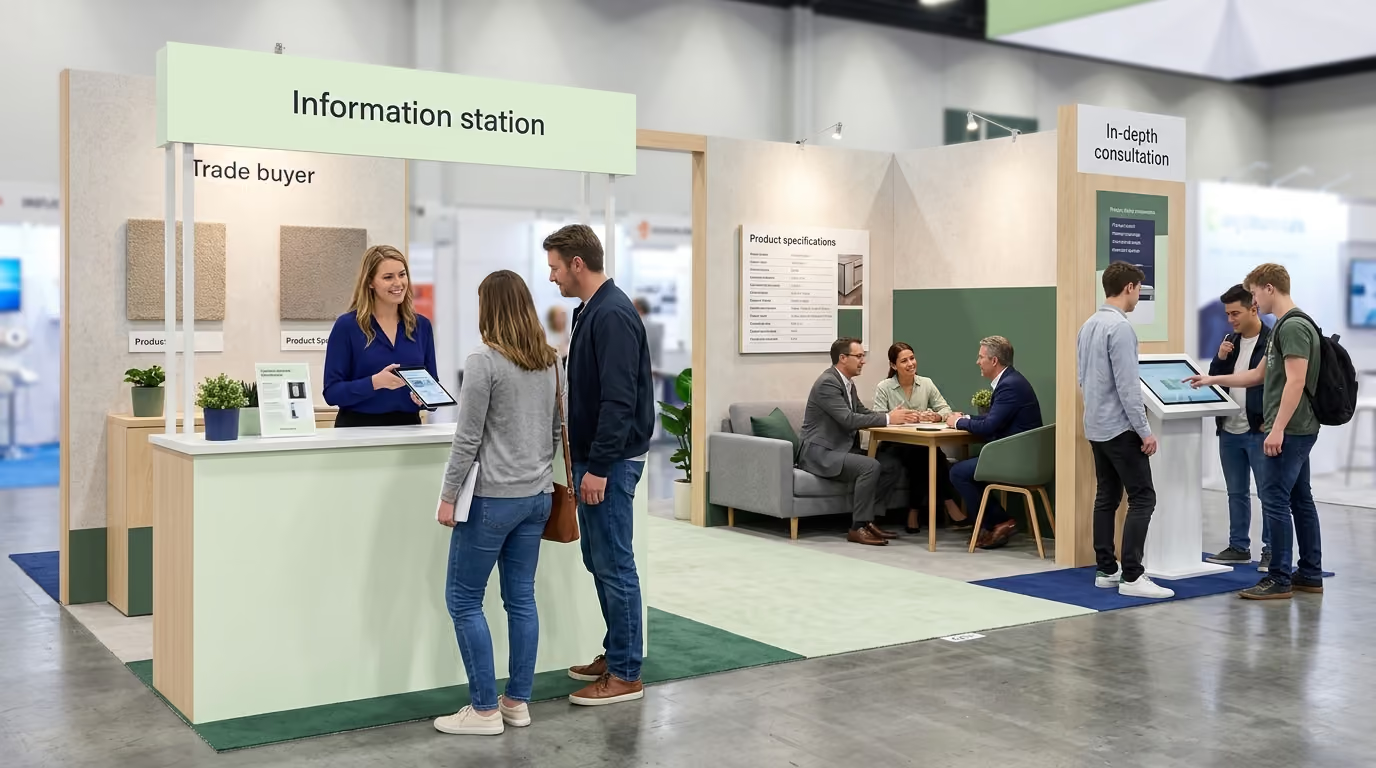
The physical floor plan must function as a high-conversion environment that directs traffic naturally from casual observation to private business discussions. Avoid cluttering the perimeter with solid walls, bulky brochure stands, or high tables that create defensive physical barriers. Instead, organize the booth into four distinct operational zones:
Signage must respect a five-level messaging hierarchy. Level one states your business category clearly so visitors know what you do from twenty feet away. Level two identifies the intended target audience so right-fit buyers know the message applies to them. Level three articulates the specific outcome or operational benefit you provide. Level four supplies verifiable proof, such as real-world performance metrics or shelf velocity figures. Level five presents a clear call to action, telling the visitor exactly what step to take next.
Product demonstrations should be engineered around commercial decisions rather than software menus or packaging details. Structure every demo in five distinct stages: establish the prospect's operational context, introduce the core bottleneck, show how your product eliminates that bottleneck, quantify the economic outcome, and ask for a follow-up assessment. If you are showing physical goods, integrate high-conversion trade show techniques that make the product trial immediate, sanitary, and memorable.
Operational parameters dictate design choices. According to International Association of Exhibitions and Events (IAEE) display rules, booth sound levels must not exceed 85 decibels when measured from the aisle. Loud audio tracks or uncalibrated microphones irritate neighboring booths and make substantive commercial discussions impossible. Keep the space organized by building enclosed storage closets for extra inventory, packing crates, and staff personal items.
A booth is only as effective as the people working the floor. Staffing an activation with whoever happens to be available produces inconsistent messaging, poor qualification, and missed commercial opportunities. A high-performing booth requires an intentional team structure with clearly assigned operational responsibilities:
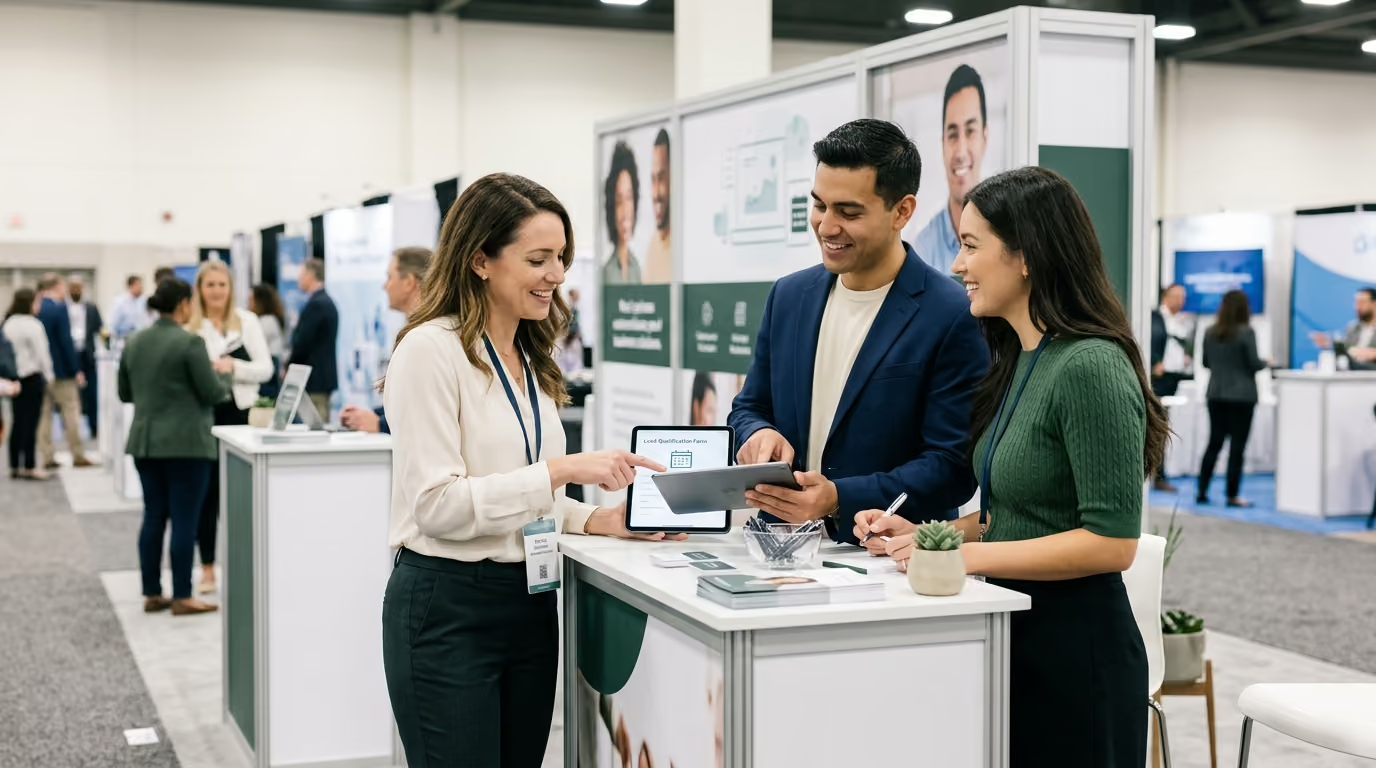
Train your staff on specific interactive behaviors rather than rigid scripts. Staff should stand upright, make eye contact, and keep mobile devices out of sight in storage lockers. Teach team members to open interactions with contextual, open-ended questions: What operational challenges brought you to this side of the hall? Are you actively evaluating options in this category, or gathering market intelligence? How is your team currently handling this process in-house?
Create a detailed staffing grid that accounts for peak attendance windows, shift rotations, scheduled client meetings, and meal breaks. The IAEE Event Operations Workbook recommends preparing a comprehensive staff information manual detailing emergency contacts, vendor numbers, show hours, dress codes, daily briefing times, and setup protocols. Establish clear accountability by evaluating staff on completed demonstrations, qualified meetings, and detailed conversation logs rather than raw badge scans.
Treating lead capture as an administrative chore after the show ends destroys commercial momentum. A successful activation relies on a four-stage process: capture, qualify, route, and follow up.
To separate serious buyers from casual visitors, collect specific qualification markers during the conversation:
Classify every captured contact into four explicit tiers before they leave the booth:
Lead management systems must comply with international privacy frameworks. Under guidance from the UK Information Commissioner's Office (ICO), consent for direct marketing must be clear, concise, and separated from general event terms. Attendees scanning a badge do not automatically grant unlimited marketing permissions.
Ensure your lead retrieval software includes explicit opt-in checkboxes for post-show communications. If you collect health, dietary, or access information during an event, note that the ICO classifies this as special-category data requiring explicit individual consent and strict data security protocols.
Set strict service-level agreements with your sales leadership before the event opens. Hot leads should be routed to designated account executives in real time through mobile CRM integrations. Ensure account owners know that rapid outreach is required while the memory of the conversation is fresh.
Relying entirely on general aisle foot traffic is a high-risk approach. A mature trade show strategy fills at least 50 percent of your on-site meeting capacity before the exhibition hall opens. IAEE planning guidelines recommend launching pre-show promotional marketing six to twelve months prior to the event date.
Develop account-based marketing lists containing the top retailers, enterprise buyers, or distributors attending the event. Pair direct outreach from sales representatives with personalized landing pages that give prospects clear reasons to book an advance consultation:
Create tailored invitations for each audience category. For retail buyers, frame the invitation around category margin improvements, packaging formats, and retail velocity support, similar to strategies used for winning retail distribution. For existing enterprise clients, position the session as an exclusive product roadmap review with executive leadership. For distributor partners, focus the agenda on territory protection, margin splits, and co-marketing commitments.
Track pre-show engagement through clear operational metrics: number of key accounts contacted, landing page conversion rates, confirmed advance meetings, and dedicated demo registrations. Entering opening day with a full calendar of qualified meetings protects your investment against low floor traffic or bad hall placement.
Executing an activation without operational friction requires a structured timeline that coordinates fabrication, shipping, staff preparation, and technical integrations across several months.
Proving the commercial value of a trade show requires looking beyond total badge scans and subjective floor impressions. Teams must track performance through a structured measurement funnel that links early attendee engagement directly to closed-won revenue:
To maintain accurate reporting, establish formal attribution rules before opening day:
Maintain visibility into post-show pipeline progression by using established metrics that prove trade show value. Monitor sales follow-up completion rates, lead acceptance metrics, and opportunity conversion velocity over a six-to-twelve-month attribution window.
A growing functional snack food brand wanted to expand retail distribution across regional grocery chains in the Pacific Northwest and Midwest. Previous trade show appearances had generated heavy foot traffic, high product sampling volume, and dozens of business cards, but very few confirmed retail shelf placements. The marketing team treated the upcoming national food expo as a structured buyer acquisition engine rather than a consumer tasting party.
The activation yielded 36 completed retail buyer meetings, resulting in 28 formal sample kit shipments. Within five months of the event, the brand secured shelf placement across 11 regional grocery chains, generating $480,000 in first-year wholesale commitments. By anchoring spatial design, staffing, and pre-show outreach to a specific retail distribution goal, the brand turned an expensive trade show appearance into a profitable, repeatable sales channel.
Review this guide whenever your organization plans an upcoming trade show, redesigns an exhibit footprint, launches a product into retail, or audits event marketing expenditure.
High-performance trade show marketing requires discipline, operational clarity, and an uncompromising focus on commercial outcomes.
#

30 Years Experiential & Retail Activation Partner for CPG & Beverage Brands | Multi-Market Demos, Roadshows & Costco/Club Programs That Actually Sell