Robbie Thain
Founder, CEO

Unilever's move to converge its beauty and wellness categories requires CPG marketers to rethink field activations, trade show execution, and retail sampling.

On September 28, 2026, Modern Retail reported that Unilever Wellbeing CEO Jostein Solheim discussed the convergence of beauty and wellness at the Groceryshop conference in Las Vegas. The event ran from September 22 through September 24. Solheim outlined a strategic transition away from routines focused mainly on appearance toward a holistic combination of beauty and health. This appearance at a major retail industry event signals a definitive shift in how consumer packaged goods companies view modern personal care.
This strategic realignment is grounded in a highly specific brand architecture. Modern Retail noted that Unilever Wellbeing currently operates seven wellness-oriented brands. Solheim identified OLLY, Liquid I.V., Nutrafol, and Grüns as four of the division's power brands. Unilever acquired Grüns earlier in 2026 to strengthen this exact portfolio.
The company sees these brands as addressing health and nutrition needs directly connected to weight-loss drugs and broader longevity goals. Modern Retail also reported that Unilever views GLP-1 drugs and AI-driven health data as factors affecting consumer expectations in the category. The financial scale of this combined market approach is massive. Premium Beauty News reported that Unilever’s Beauty & Wellbeing business generated €12.8 billion in 2025, representing about one-quarter of the company’s annual turnover.
For marketers who rely on live activations to drive retail velocity, this convergence forces a complete operational pivot. You can no longer sample a hydration multiplier or an ingestible supplement as an isolated functional fix. Shoppers evaluate these items as active components of their daily personal care routines. When consumers connect internal health data with outward appearance, physical marketing programs must reflect that sophisticated mindset.
Field teams must articulate how a wellness product supports a broader lifestyle without making unsupported health claims on the retail floor. This requires intense discipline in how we train brand ambassadors and structure retail sampling programs. We managed a four-week, multi-market Costco sampling program for Pulmuone's PlantSpired line. The program delivered more than 65,000 samples and recorded an 18 percent sold-to-sale rate.
This outcome gives us a concrete example of how structured retail sampling connects product trial directly with purchase. While that specific program focused on plant-based eating, the underlying operational lesson applies directly to the merging beauty and wellness space. Success requires treating the live consumer interaction as a cohesive lifestyle consultation rather than a simple product handover. Field teams must educate the shopper on long-term benefits while closing a measurable sale during a brief retail window.
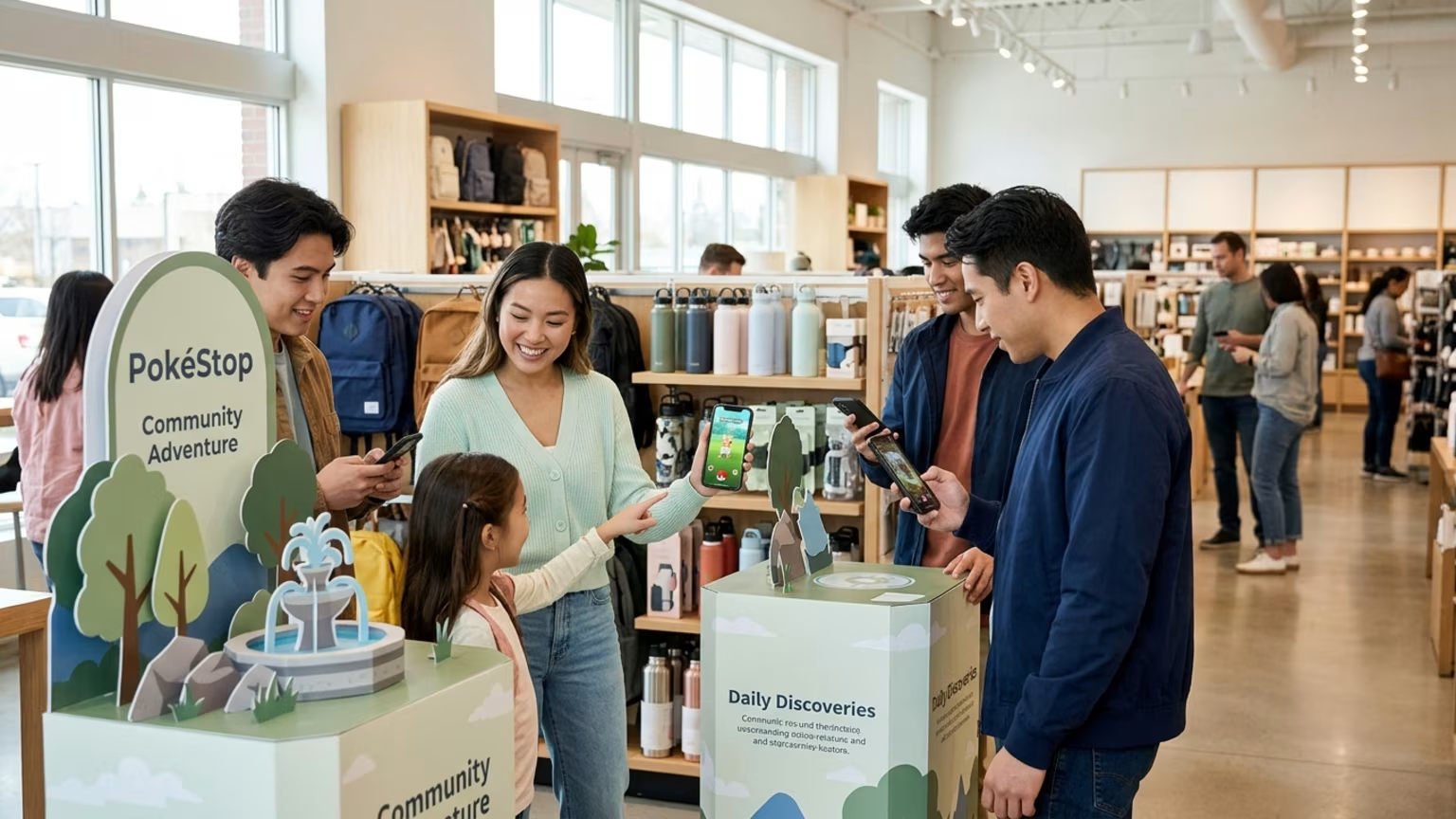
Merging beauty and wellness fundamentally alters the logistical reality of field execution. This shift touches every phase of campaign planning, from municipal health regulations to booth design and workforce management. Historically, physical retail stores divided personal care into isolated departments. Shoppers navigated the pharmacy aisles for ingestible health products and walked to the cosmetics counter for topical treatments. When brands run experiential campaigns today, they must overcome this physical separation through unified pop-up structures. Event marketers cannot rely on existing store geography to tell a holistic wellness story.
When a brand samples a topical serum alongside an ingestible powder, the permitting requirements immediately multiply. Distributing consumable beverages requires different local health department clearances than traditional cosmetic sampling. Field marketing directors must secure food handler permits, establish strict temperature controls, and build distinct sanitary stations into the footprint. These logistical layers increase the lead time required to launch a national mobile sampling tour.
Managing these regulations becomes even more complex when a brand scales from a single pop-up to a multi-city activation. Each municipality enforces its own specific timeline for temporary food and cosmetic sampling approvals. Brands that fail to centralize this compliance process often face last-minute operational shutdowns. Securing the right approvals early protects the entire field marketing investment.
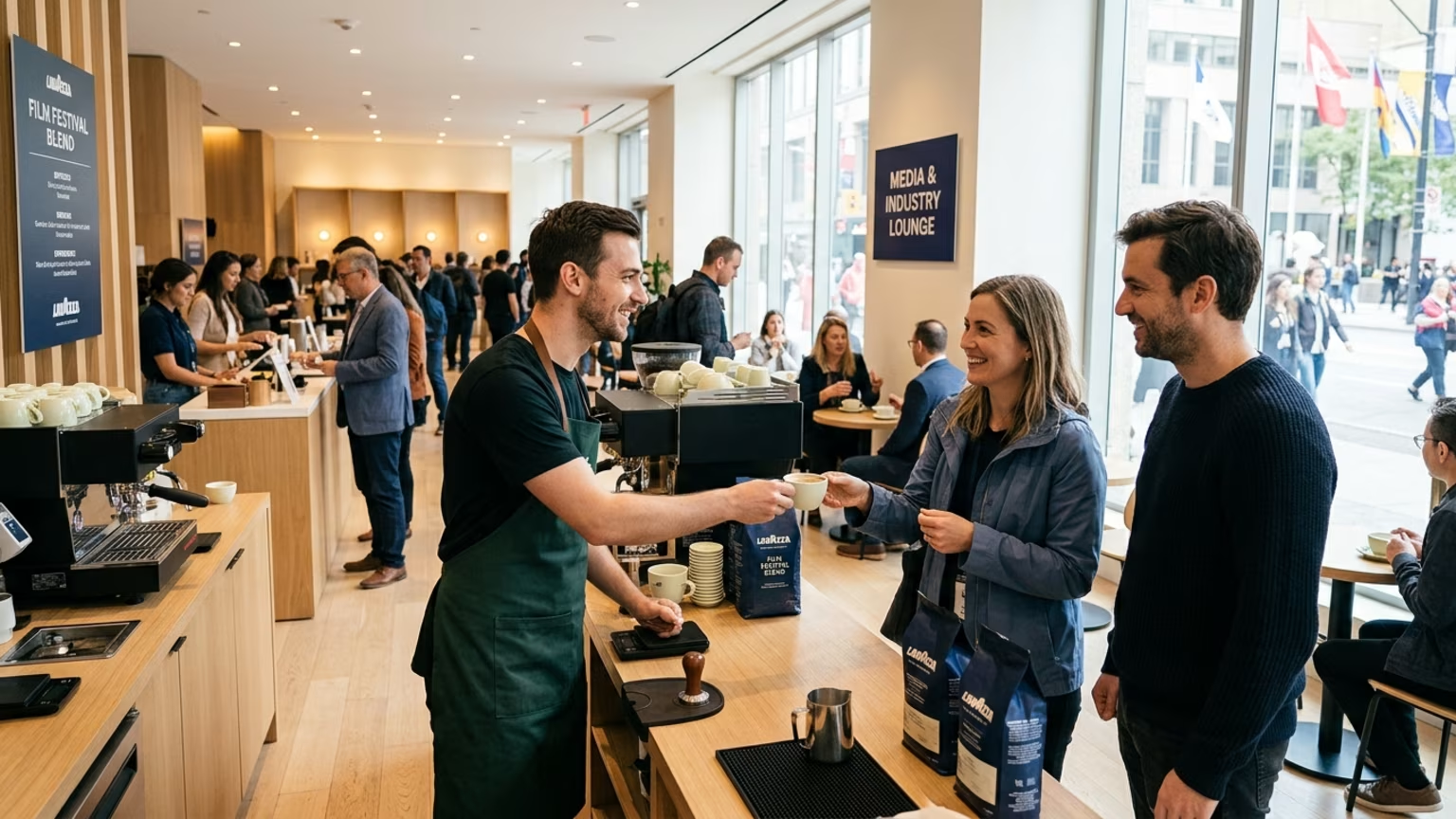
Trade show floor layouts must adapt to this unified approach. Booths can no longer isolate dietary supplements in one corner and beauty products in another. The physical space must guide attendees through a cohesive narrative that makes the connection between internal health and external results obvious. This requires careful consideration when designing the physical space to ensure smooth crowd flow.
We designed and managed a 40 by 20 foot trade show environment for Glanbia at Natural Products Expo West 2025. This activation brought think!, Isopure, Optimum Nutrition, and Amazing Grass into one coordinated space. We handled the design, operations, and staffing requirements. Our team distributed more than 14,000 recorded product samples across the activation stations during the event. Managing multiple functional products within a single footprint requires rigorous traffic management and highly organized sample distribution. The logistics team must ensure that attendees experience the full brand portfolio without creating bottlenecks near the primary sampling counters.
Staffing models face intense pressure under this converged category approach. Ambassadors cannot just pass out cups and recite basic flavor profiles. They must initiate complex, science-backed conversations about nutrition, hydration, and longevity. Engaging shoppers on topics related to AI-driven health data demands a completely different caliber of field staff.
The conversation must remain strictly focused on the approved product benefits while acknowledging the shopper's broader wellness goals. Marketing teams must provide field staff with precise, compliant talking points that bridge the gap between beauty and health. An ambassador who understands topical skincare ingredients must also be fluent in the nutritional science behind the companion ingestible product.
Moving from appearance-led marketing to holistic wellness requires new methods for tracking consumer response. Brands need to know if a wellness-focused activation drives higher retail sell-through than a traditional beauty setup. This means testing different physical displays and tracking the resulting trial and purchase outcomes. You have to isolate the variables using a strict physical measurement framework to determine which messaging actually converts foot traffic into pipeline. Without clear data, brands risk investing in complex multi-category activations that fail to move inventory off the shelf.
The rationale for this heavy operational lift comes down to a fundamental change in shopper psychology. Solheim summarized the shift as consumers increasingly believing that “you can’t feel beautiful if you’re not feeling good inside.” That single observation dismantles the historical boundaries between a cosmetics counter and a supplement aisle.
Are your field programs still treating beauty and wellness as divided categories, or are you building environments that reflect how shoppers actually live?
The most effective brand experiences no longer ask consumers to choose between looking good and feeling healthy. They simply meet the shopper at the exact point where those two desires intersect.
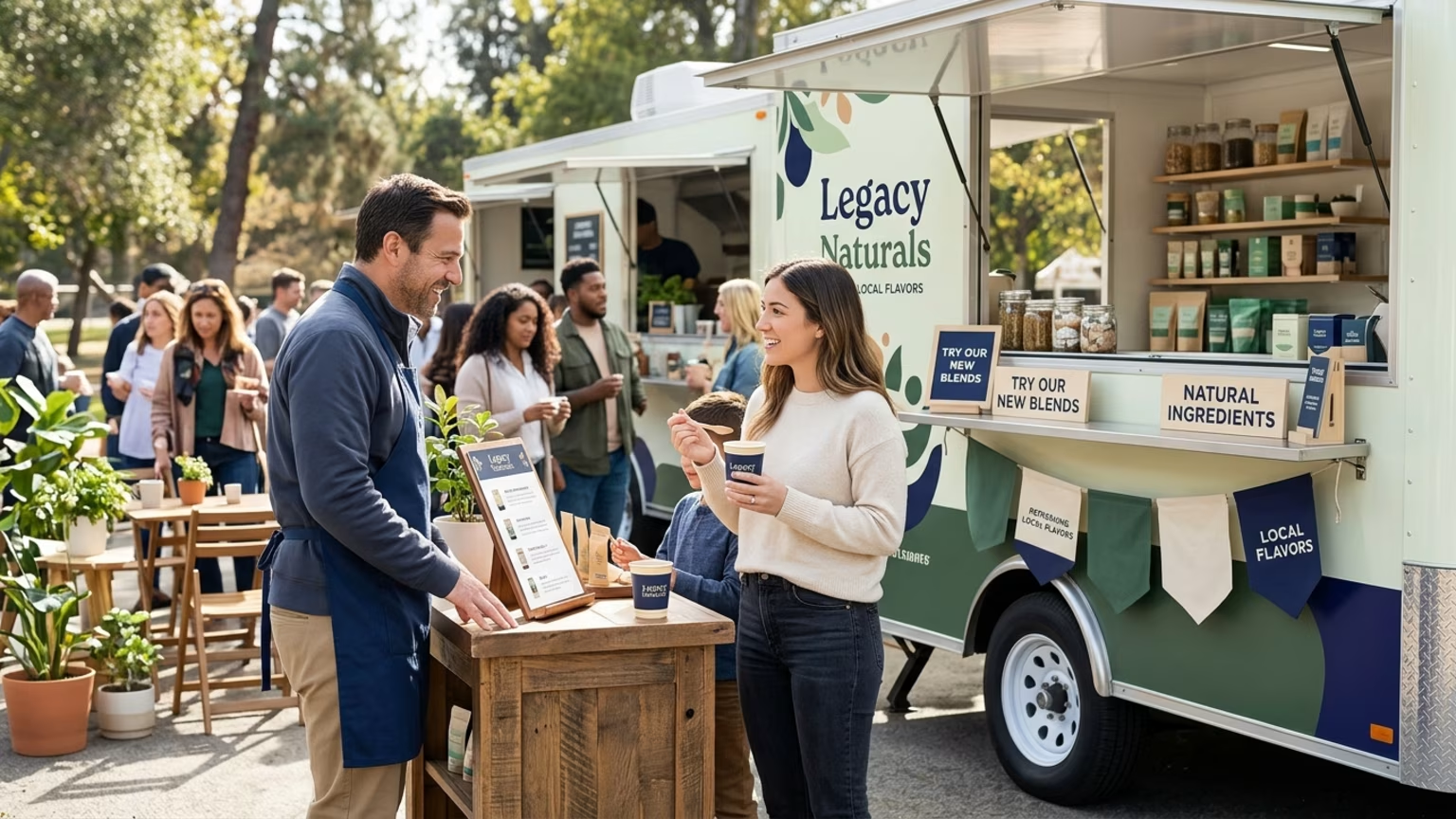
After marketing teams define a unified lifestyle positioning for their converged product lines, physically delivering that narrative across multiple markets becomes the immediate priority. To solve the problem of low quality leads from crowded trade shows, Makai manages the execution. Through our Mobile Sampling Tours service, we deliver your brand directly to audiences through on the go experiences that drive trial and awareness. Request a proposal

30 Years Experiential & Retail Activation Partner for CPG & Beverage Brands | Multi-Market Demos, Roadshows & Costco/Club Programs That Actually Sell