Robbie Thain
Founder, CEO

Learn how to turn brand theater into a measurable conversion engine. Read how spatial design and field tactics bridge the pop-up with retail checkout.

A regional marketing director stares at pallets of sample product stacked in a corner of an empty expo hall. A massive interactive booth sits mostly vacant while contract staff look down at their phones. Six figures have just been spent on this sprawling architectural installation over a single weekend. Not a single qualified retail meeting has been booked.
Your giant interactive virtual reality booth at a major trade show is bleeding you dry. Marketing leaders have been sold a lie that massive brand theater equates to long term market share. In reality, these sprawling installations prioritize vanity metrics over verifiability at every turn. They create a beautiful spectacle that generates absolutely zero qualified pipeline for the business.
Experiential marketing has suffered from a fundamental misunderstanding of spatial psychology and basic human behavior. Planners obsess over complex lighting rigs, custom fabrication, and expensive technology that looks great on a mood board. They forget that the entire purpose of a live event is to move a physical product into the hands of a buyer. When you track generic foot traffic instead of tangible outcomes, you are paying a premium for fog instead of hard evidence.
The modern consumer does not care about how much money you spent on an elaborate booth design. They care about how a product tastes, how it feels, and how it solves their specific problem. Throwing money at flashy aesthetics without a clear path to purchase is a massive waste of financial resources. It is time to abandon the bloated agency model of brand theater and return to retail fundamentals.
The mainstream approach to pop-ups fails because it relies heavily on aesthetics without any operational rigor. A Chief Marketing Officer signs off on an expensive agency concept because it looks beautiful on a digital rendering. When activation day arrives, the reality on the ground rarely matches the initial creative pitch. Late shipping crates, missing product inventory, and inconsistent staffing create a highly frantic environment where field teams scramble just to set up the display rather than focusing on the actual consumer interaction.
This logistical fragmentation turns an expensive marketing campaign into a beautiful dumpster fire. Marketing operators face immense pressure to prove that activations lead to sales lift, strong retailer confidence, and eventual repeatability. They worry deeply about poor in-store presentation, weak reporting metrics, and scattered consumer attention spans. When an experience is poorly managed on the ground, it does not matter how good the initial design looked because the total lack of standard back-end logistics ruins the interaction entirely.
We have seen brands spend their entire quarterly budget on a single weekend activation that lacks a conversion mechanism. They build physical environments that look incredibly busy but fail to capture any meaningful data for post event follow up. Consumers walk through the activation space, take a free promotional item, and leave without any psychological connection to the product. The brand captures zero contact information and books zero retail meetings with key category buyers.
The anxiety over spending six figures for zero pipeline is completely justified in this economic environment. When activations lack a closed reporting loop, marketing leaders simply cannot justify the ongoing expense to their finance teams. A successful live event requires significantly more than just showing up with a nice tent and a friendly smile, as it demands a highly structured approach to consumer engagement and rigorous measurement across every touchpoint. Without these critical elements, live events become a very expensive form of passive advertising.
There is a significantly better way to turn fleeting consumer interactions into highly qualified sales leads. We have been connecting brands with people through live experiences, retail programs, and national activations since 1995. Over three decades, we have built a track record of creating meaningful brand moments across the entire country. Our approach blends a warm, welcoming presence with absolute operational control to drive real consumer trial.
At Makai, we believe in an alternative worldview for experiential marketing that heavily prioritizes direct sales impact. It requires the approachability of an authentic aloha greeting paired seamlessly with the discipline of a field general. You must welcome people warmly while running the back end of the event with brutal operational precision. This operator mentality ensures that every interaction is measured and every sample distributed serves a specific business purpose.
Standardized playbooks improve Return on Investment (ROI) across live activations by creating predictable and scalable business results. However, recent CX strategy research notes there is a risk of losing the "social spark" if the experience feels too rigid or forced rather than authentic. The key is carefully balancing structured execution with genuine human interaction on the busy event floor. When field staff are properly trained, they build real trust through honest conversations while seamlessly driving physical product trial.
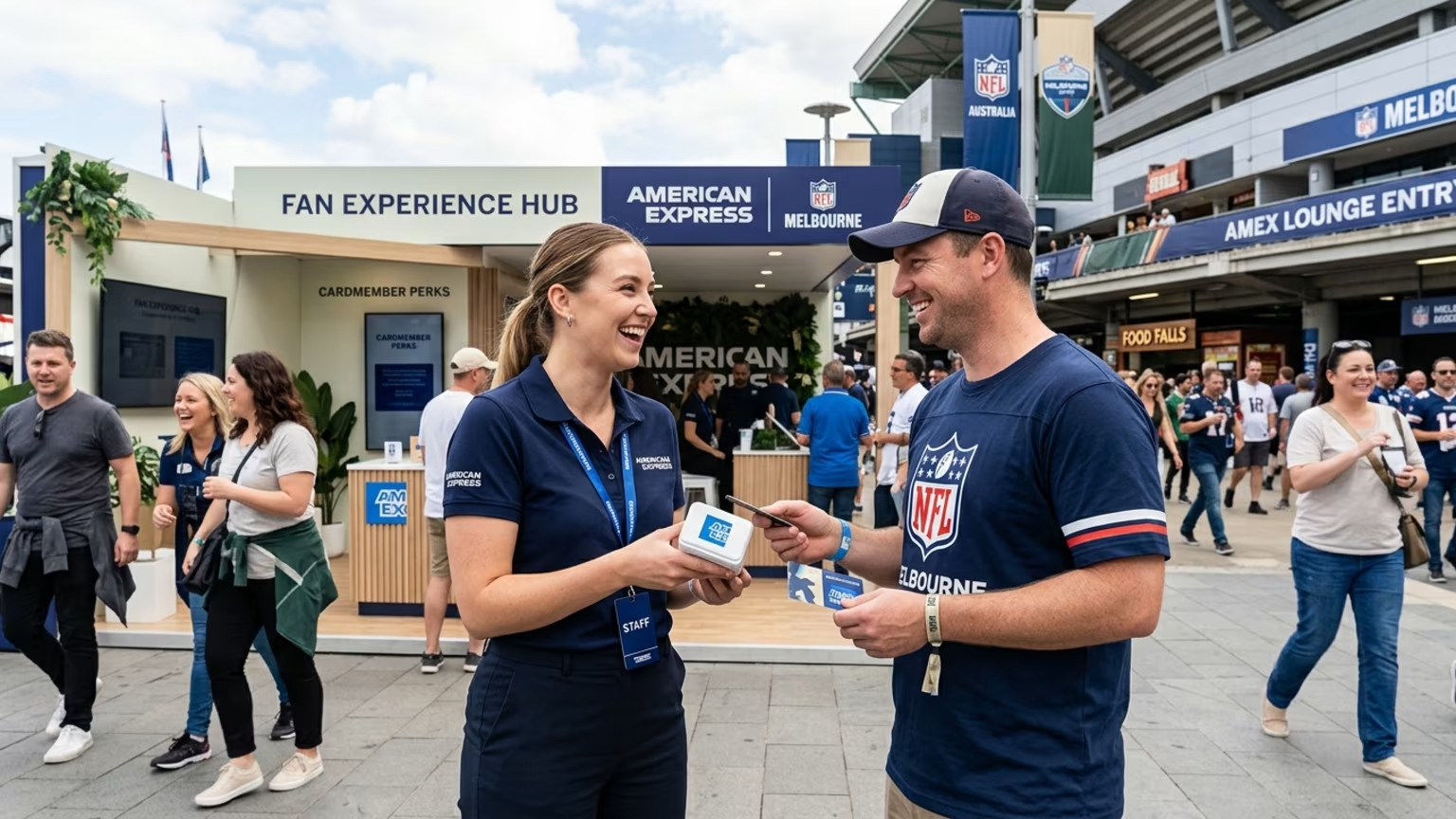
A brand ambassador must treat their role as a performance engine rather than a casual weekend gig. Brands that overhaul their event staffing protocols see far better engagement from their specific target audience. When a field team operates with this level of focus, they eliminate the friction between initial interest and actual product trial. They know exactly how to guide a visitor from the initial greeting to a detailed product conversation, which turns an abstract art project into a measurable sales driver.
To fix the broken pop-up model, marketers must fundamentally reframe their ultimate goal for physical live experiences. You need to shift your focus from tracking raw digital impressions to tracking highly tangible sales outcomes. The true measure of success is the sheer number of samples distributed to target buyers and actual retail meetings booked. Every square foot of a brand activation space must intentionally serve this specific conversion funnel.
The physical layout plays a massive strategic role in guiding consumer behavior toward a definitive purchase. Layouts should be built around how moments look on camera to ensure attendees generate "free media assets" that compound organic reach. But capturing a great photo is only the very beginning of the strategic consumer journey, as the spatial design must subtly direct visitors toward a clear point of action without feeling overly pushy. Event planners should map out distinct physical zones specifically for product introduction, meaningful interaction, and final transaction.
When executed with precision, physical spaces heavily outperform standard digital marketing channels. A recent analysis indicates that experiential campaigns demonstrate conversion rates approximately 10% higher than digital-only campaigns. Furthermore, dedicated agency case studies show they can also drive 4.2x higher engagement rates compared to traditional advertising. These numbers prove that live interactions hold massive conversion weight when they are properly engineered for a specific sales outcome.
The financial impact of a well-run campaign provides a massive advantage over standard digital noise. The average ROI for well-executed experiential campaigns in 2026 is between 3:1 and 5:1, with high-performing activations reaching as high as 10:1. According to recent event data, research indicates that 85% of consumers are more likely to purchase from a brand after attending a live marketing event. The same dataset reveals that 70% become repeat customers after having a positive live interaction with the product.
These outcomes only happen when a brand purposefully bridges the gap between the event space and the actual checkout line. Your field marketing team must know exactly how to route interested consumers directly to a specific retail shelf. By integrating smart data capture mechanisms early, you can seamlessly bridge trade show interactions with high conversion roadshows. This transforms a fleeting brand moment into a permanent customer acquisition channel that pays dividends long after the event ends.
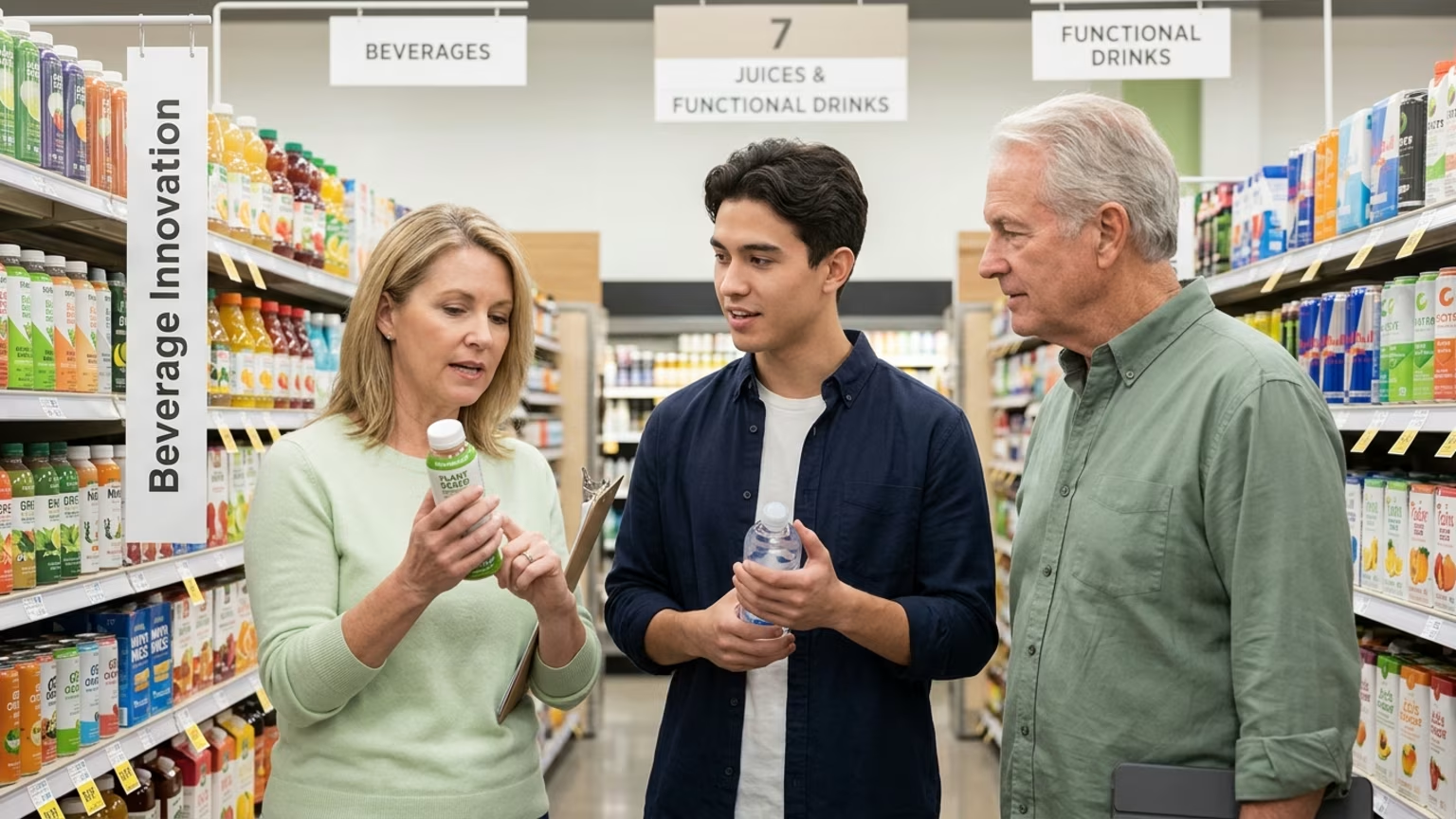
Many premium beverage and food brands heavily rely on creating human-centered in-store experiences to stand out on crowded retail shelves. The spatial journey does not end when the trade show packs up, because it continues directly onto the retail floor. Shoppers need the exact same level of disciplined engagement when walking past an endcap display. Translating the energy of a massive pop-up into a smaller retail footprint requires immense logistical control and consistent staff training.
The core takeaway for modern marketing leaders is that tangible execution will always outlast beautiful event aesthetics. Creating a highly successful pop-up requires a strict adherence to operational logic and deep spatial psychology. Every dollar spent on physical activations must be tied directly to a clear mechanism that drives trial, builds consumer trust, and prompts an ultimate purchase. If a campaign cannot clearly prove its direct impact on retail sell-through, it is simply an expensive vanity project dressed up as a marketing strategy.
Brand growth in the physical world demands a disciplined approach that deeply respects the complexity of field logistics. Marketing teams must refuse to settle for empty sample boxes and actively demand verifiable pipeline from every single event. Stay focused, stay incredibly precise, and keep driving the product trial that actually moves the needle.

30 Years Experiential & Retail Activation Partner for CPG & Beverage Brands | Multi-Market Demos, Roadshows & Costco/Club Programs That Actually Sell