Robbie Thain
Founder, CEO

Top retail brands are replacing digital noise with human-centered physical experiences to drive measurable sales lift and long-term shopper loyalty.

A shopper stands frozen in the beverage aisle of a big box retailer on a Saturday afternoon. Fifty different sparkling water brands compete for attention under harsh fluorescent lights. A digital screen flashes a generic discount code above the shelf. The shopper ignores the screen and keeps walking.
High-touch human interactions are quickly replacing purely transactional strategies on the retail floor. Brands that deploy emotionally intelligent activations capture measurable sales lift and long-term shopper loyalty.
The scenario above plays out thousands of times every hour across the country. Retailers have flooded aisles with digital screens and mobile prompts to drive immediate sales. Shoppers are tuning this noise out entirely in favor of real interactions. According to research from Mastercard, a mere nine percent of consumers report feeling satisfied with their physical shopping experiences.
Shoppers demand value and meaningful human interactions at the exact same time. Technology alone cannot fix a broken physical environment or a poorly planned event footprint. Field marketing directors often watch expensive seasonal campaigns turn into chaotic disaster zones. Staffing is incredibly inconsistent, brand messaging gets lost in translation, and the promised sales lift never materializes.
The operational reality of managing these events adds another layer of deep frustration. Marketing leaders constantly battle fragmented execution across dozens of regional markets. They receive blurry photos and incomplete spreadsheets instead of actionable performance data. This lack of transparency destroys leadership confidence in field marketing budgets.
Shopper marketing leaders are quickly pivoting toward in-aisle experiential activations to intercept customers before they reach the checkout lane. Brands face immense pressure to prove their live activations actually move physical product. Many marketing operators try to solve this problem by adding more technology to the sampling station. Mastercard notes that shoppers have very low tolerance for novel technology that lacks practical value. An augmented reality display means absolutely nothing if a shopper cannot taste the physical product.
The solution is not to abandon digital tools entirely. The winning play is deploying a human-augmented retail model where localized data supports actual people. CAAD Design reports that emotional resonance and sensory engagement make a physical location truly competitive. Brand ambassadors act as highly trained micro-advisors who deliver empathy and nuanced guidance at the point of decision.
Smart brands are targeting high-impact zones within the physical store environment. Industry analysts at Miller Zell advise companies to focus on modular experience zones near front entryways. These spaces are absolutely perfect for guided sampling and consultative product demonstrations. If you secure access to these areas, your brand commands the prime emotional real estate of the building.
We have executed over 1000 campaigns across all 50 states, bringing brands to life in every major U.S. market. From retail demos in Seattle to roadshows in Miami and events in Honolulu, our teams activate brands wherever our clients' audiences are located. In our experience, placing well-trained specialists in these high-impact zones stops shoppers in their tracks. It transforms a mundane grocery run into a highly memorable moment.
The concept of scaling human interaction is gaining massive traction across all retail categories. McKinsey research highlights that top brands use data to scale advisor relationships rather than eliminate them entirely. This exact logic applies directly to mainstream retail and consumer packaged goods. You use backend data to inform the strategy, leaving the physical human to deliver the final emotional connection.
Field execution requires operator-grade discipline to prevent costly mistakes on the retail floor. It is critical to build a reliable event checklist for every single market activation. Your team must follow a strict process to turn abstract marketing ideas into flawless physical realities. Here is the operational playbook for launching successful human-centered activations.
Shoppers arrive at the store with exact goals and varying levels of patience. You must identify the exact moments when consumers need category education or face decision friction. Place your sampling teams in these zones to intercept confusion before it stops a sale. Intervening at the right moment changes the entire trajectory of the shopping trip.
A brilliant activation will fail if it sits in a dead zone at the back of the store. Negotiate aggressively for space near the front doors or major category intersections. This premium placement allows your team to engage shoppers before they feel rushed to check out. High-visibility zones naturally command authority and draw significantly larger crowds.
Your field staff should operate as knowledgeable consultants rather than passive order takers. Train your brand ambassadors to ask simple questions that quickly identify dietary needs or taste preferences. The goal is to recommend the perfect product variation within ten seconds of the initial greeting. This rapid customization proves your brand actually respects the time of the consumer.
Give your field team mobile tablets containing product education cards and simple objection handling scripts. Technology should make the human conversation faster, much more relevant, and highly accurate. Associates can pull up inventory data or localized promotional codes instantly to close a hesitant sale. This perfectly blends digital speed with warm human empathy.
You must scale your activations quickly across multiple retail locations using adaptable booth elements. Miller Zell stresses that emotional engagement must be systematized through standardized fixtures with flexible messaging. Consistent visual presentation builds retailer confidence and protects your premium brand image nationwide. Modularity allows your team to swap out seasonal graphics without rebuilding the entire booth architecture.
Custom booth builds look fantastic on paper but often fail in real operational environments. Field teams struggle to assemble complex structures during a tight setup window before the store opens. Standardized kits eliminate this friction by prioritizing rapid deployment over unnecessary architectural flair. Your marketing budget should fund customer interaction rather than paying for overly complicated carpentry.
Every live activation must generate hard evidence for your senior leadership team. You must prove retail sampling Return on Investment beyond simple headcount to secure future operational budgets. Measuring success requires a strict separation between lead indicators and lag indicators. A disciplined approach to data collection entirely prevents arguments over campaign effectiveness.
Lead metrics track the immediate physical impact of your activation on the floor. You should measure the total number of qualified interactions and the average dwell time per shopper. A high volume of tasters means very little if the conversations lack substance and real interest. IoT For All research shows that extending the time spent with a brand correlates directly with higher basket sizes.
Lag metrics demonstrate the true financial outcome of your dedicated field marketing efforts. The most critical number is the direct sales lift compared to non-demo days in the exact same store. You must track the conversion rate among shoppers who actively tasted your physical product. Linking these results to loyalty program opt-ins provides a clear picture of long-term consumer retention.
Operational metrics track the actual health and efficiency of your field marketing machine. You need real-time data on staff check-ins, product inventory depletion, and visual merchandising compliance. If an ambassador arrives late or sets up the display incorrectly, your sales data will immediately skew downward. Tracking these logistical details protects the integrity of your entire marketing investment.
Post-event reporting must be completely automated to maintain executive trust. Field managers cannot spend hours hunting down missing data or deciphering handwritten notes from local ambassadors. Digital reporting tools allow teams to upload photos, scan inventory tags, and submit compliance forms instantly from the event floor. This streamlined data collection turns a chaotic weekend roadshow into a highly predictable revenue engine.
Retail buyers are heavily asking brand partners to deliver interactive experiences that physically stop cart traffic. Shopper marketing leaders note that retailers are increasing in-store sampling programs to fight off digital fatigue. Consumers desperately want to test physical items in real time before committing to a purchase. They are tired of risking their money on products they have never tasted or held.
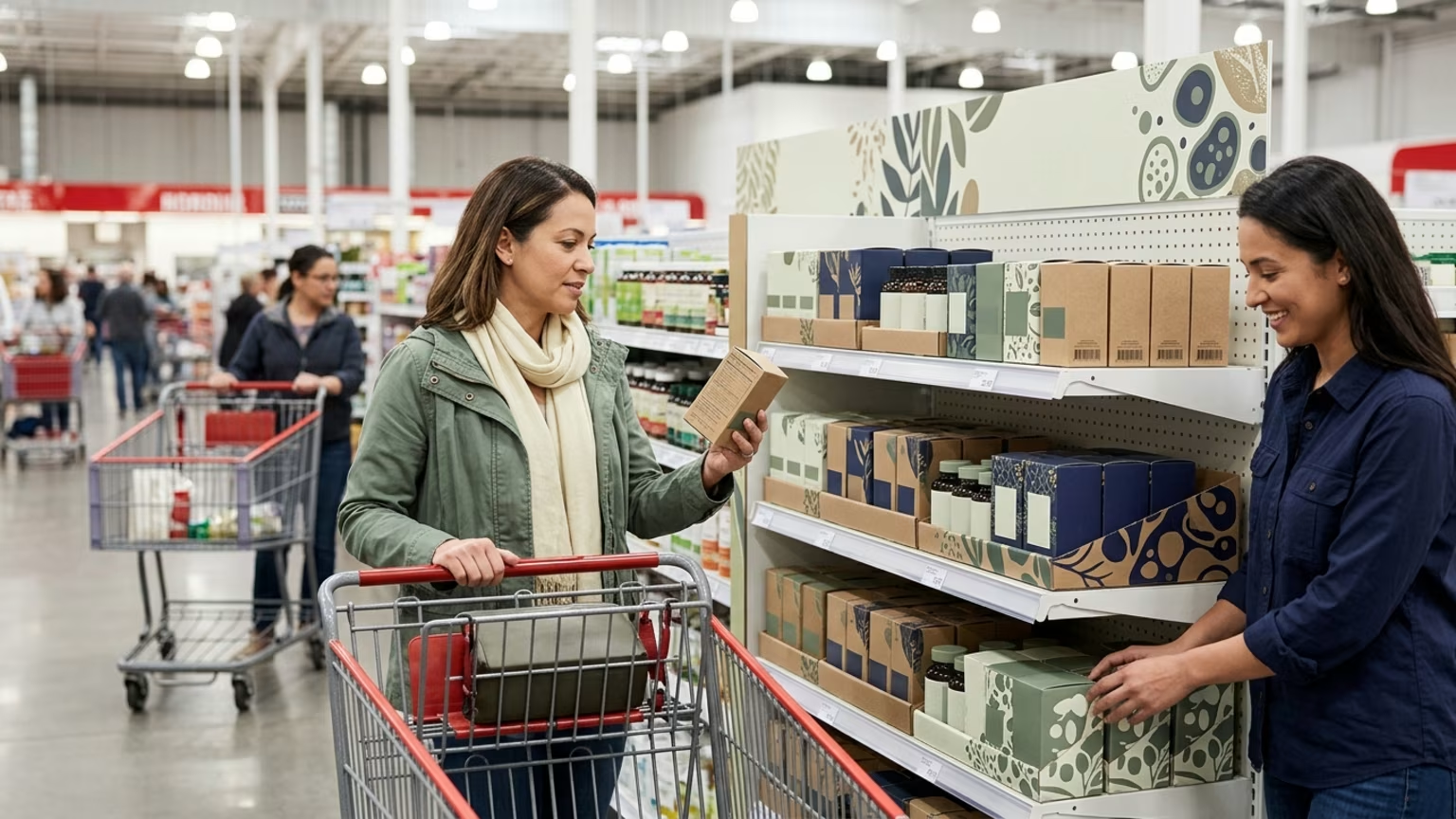
A premium sparkling water brand recently faced stagnant sales velocity in a major club retailer. Digital advertisements drove strong brand awareness online and generated massive social media impressions. Shoppers were entirely unwilling to buy a bulk case without tasting the new tropical flavors first. The massive disconnect between digital reach and physical trial created a severe sales bottleneck.
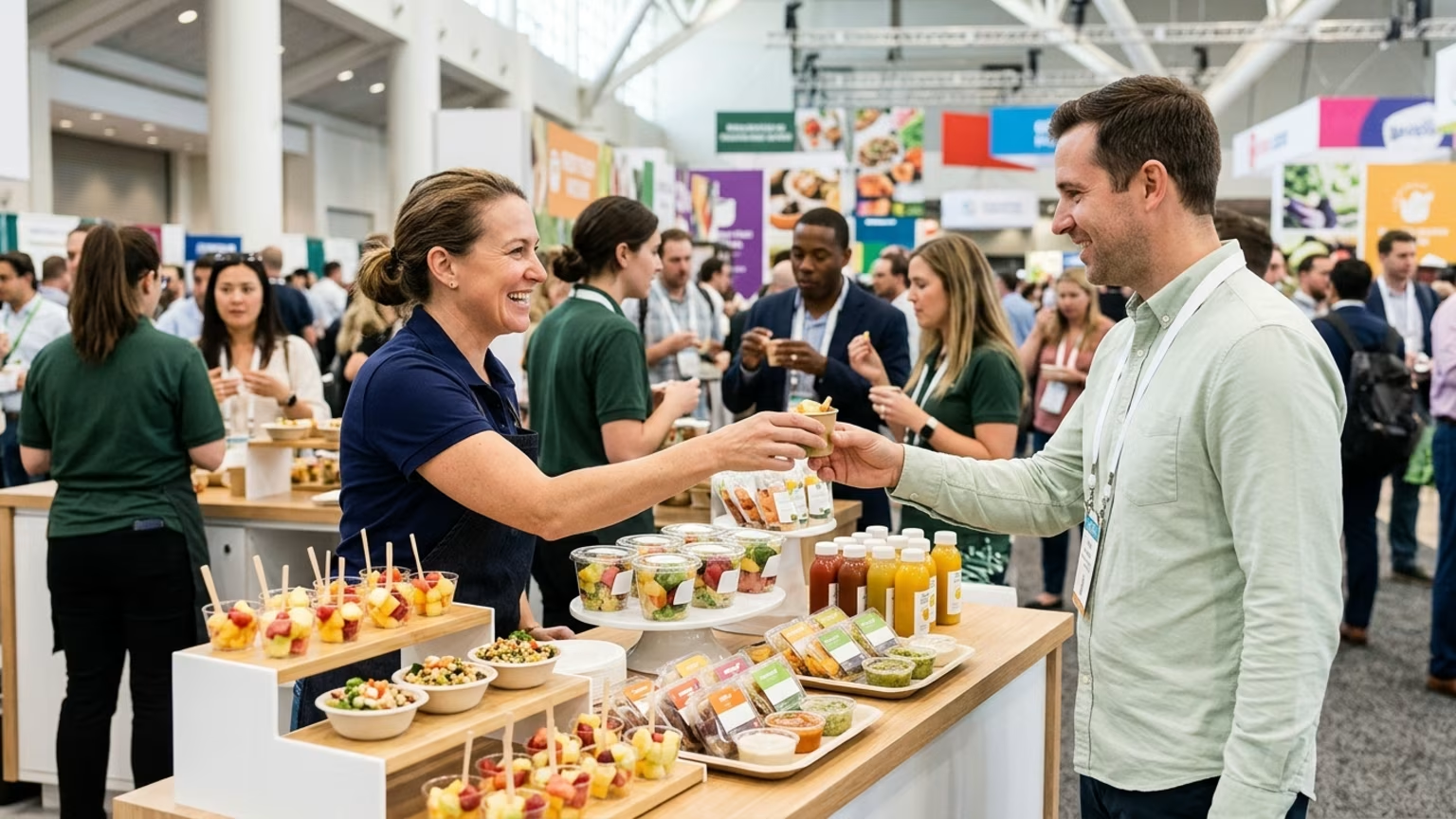
The brand replaced its static endcap displays with a live consultative sampling roadshow. Trained ambassadors asked shoppers about their current beverage habits before pouring a customized sample cup. This human-centered approach reduced decision fatigue and immediately clarified the product value proposition. The direct human interaction completely removed the perceived risk of buying in bulk.
The campaign generated a massive lift in unit sales and secured the brand permanent shelf space. Store managers reported higher shopper satisfaction scores on the days the roadshow was active. The activation proved that high-touch physical interventions outperform passive digital advertisements in high-volume retail environments. The brand now runs this exact playbook across hundreds of national locations.
Emotional intelligence is the most powerful sales tool on the retail floor right now. You cannot automate a genuine smile or the sensory impact of tasting a great product. Brands that prioritize these human elements will consistently outperform competitors who hide behind static screens. Physical touchpoints remain the absolute ultimate driver of retailer trust and consumer loyalty.
Stop guessing what works and start measuring your real-world impact. Book a strategy call with our team today to build an execution plan that turns fleeting attention into profitable action. See you on the floor.

30 Years Experiential & Retail Activation Partner for CPG & Beverage Brands | Multi-Market Demos, Roadshows & Costco/Club Programs That Actually Sell