Robbie Thain
Founder, CEO

Chobani launched a multi-city series of travel-inspired experiential pop-ups to promote a new yogurt line, driving product trial and measurable pipeline.
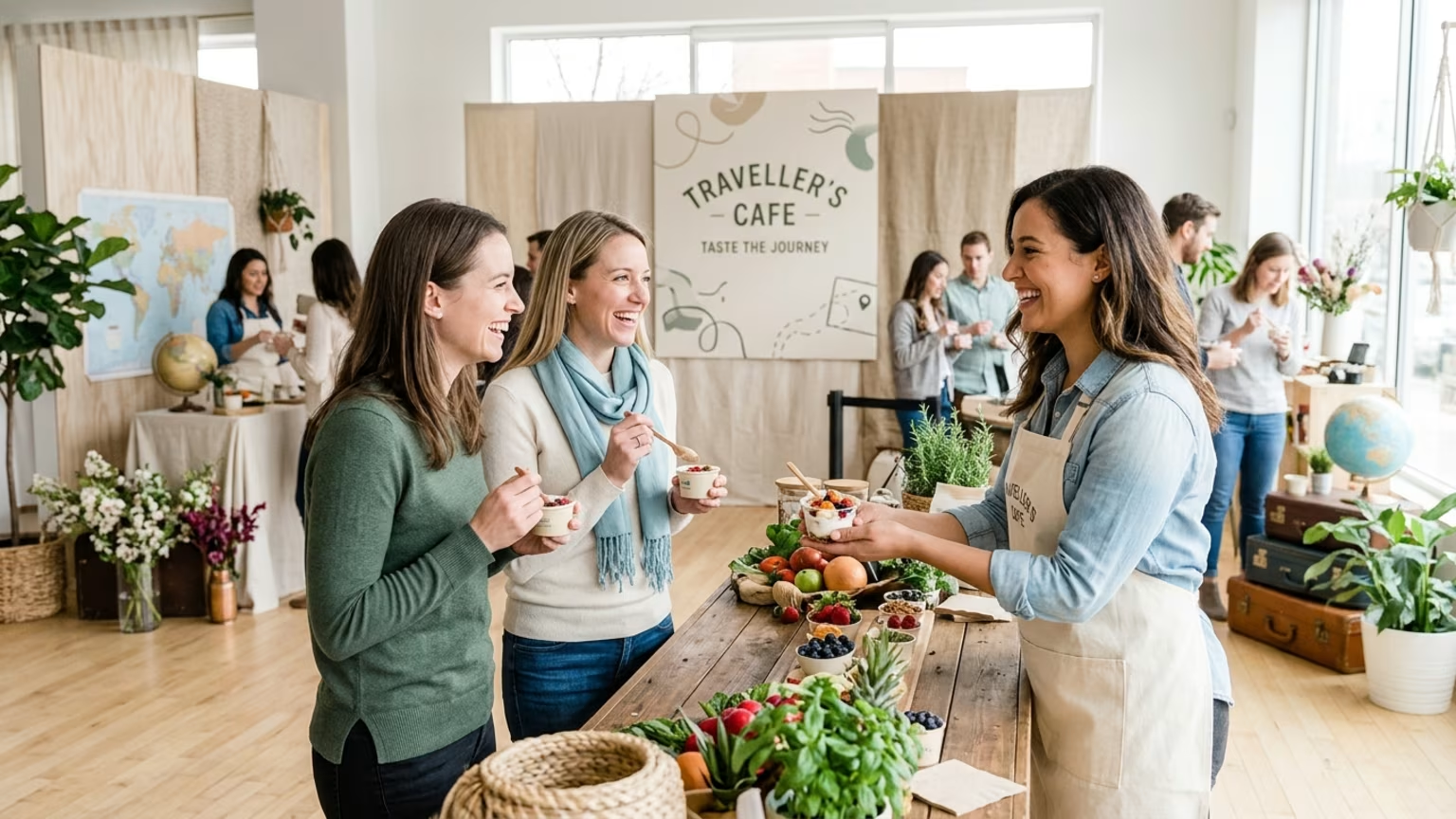
During the 2026 FIFA World Cup, Chobani attracted thousands of visitors to its cultural activation space in Los Angeles. This massive turnout proves that physical brand immersion drives far more interest than standard product giveaways. Capitalizing on this momentum, PRWeek reported on July 22, 2026, that Chobani launched a multi-city series of travel-inspired experiential pop-ups to support a new yogurt line.
The traditional product launch model relies on static sampling tables and generic banners. Chobani is replacing that outdated approach with destination-style experiences located in high-footfall urban areas. According to PRWeek, these activations blend core product sampling with immersive environments and social content capture. The ultimate goal is to drive product trial while generating measurable engagement data for retail partners.
This shift requires a total overhaul of field marketing logistics. Teams are no longer just managing product refrigeration and simple booth schedules. They must now coordinate multi-city builds that function as interactive travel destinations. Every physical element must encourage consumers to take photos and share their experiences online.
Other major brands are executing similar logistical pivots. TrendHunter reports that Sanpellegrino recently introduced the CIAO! Limoncello Club in New York City. The brand simulated a Mediterranean beach club at Manhattan’s Pier 17 to launch a new sparkling water that features five calories per serving. To reinforce the travel aspiration theme, Sanpellegrino included a sweepstakes offering a $10,000 prize toward a future trip to Italy.
These are not simple weekend promotional tents. They are complex staging operations that demand precise crowd control and premium aesthetic execution. Travel brand Mokobara mirrored this tactic by hosting a free soft-serve summer pop-up in Jumeirah to celebrate its newest luggage collection. By offering an all-day event, the brand kept consumers engaged for much longer periods. Across categories, brands are turning to highly themed physical environments to capture consumer attention.
For consumer packaged goods companies, the ultimate goal of any physical activation is securing retailer confidence and driving shelf velocity. Experienced teams at makai take a disciplined approach to these immersive campaigns. We run experiential and engagement programs coast to coast with local crews, smart logistics, and permit expertise that let us launch fast and maintain quality consistency in every region, from major metros to smaller markets. Our nationwide infrastructure enables us to activate brands wherever their audiences are located.
Retail buyers want hard proof that a new product will actually sell. A beautiful pop-up means nothing if it fails to generate Return on Investment. Chobani designed its travel-inspired series to capture actionable data that proves consumer intent. Tracking footfall, sample distribution rates, and dwell time provides the exact metrics that category managers demand.
This data transforms a localized marketing expense into a compelling national sales narrative. We see this measurement mandate growing across the industry. Brands must link their experiential footprint directly to retail success. A successful multi-city roadshow creates localized surges in product awareness that push consumers into nearby stores.
When field teams capture email opt-ins or social shares, they build a measurable pipeline that justifies the initial marketing spend. You can learn more about how brands scale multi-city roadshow campaigns to reach audiences effectively. Modern experiential marketing is less about the physical structure and more about the data collected inside it.
Executing a travel-inspired destination series creates massive operational friction. Securing permits for high-traffic urban locations is a notoriously difficult process that requires months of advance planning. Cities impose strict rules on structural builds, noise levels, and crowd capacities. A brand must secure approvals long before the first piece of flooring is laid down.
Once the site is secured, footprint flow becomes the primary logistical challenge. Immersive environments require distinct zones for arrival, product introduction, tasting, and social sharing. If visitors bottleneck at the sampling station, the destination illusion shatters. Operations managers must map out the exact consumer path to prevent overcrowding and ensure a premium experience.
This complexity extends to staffing models. A standard brand ambassador cannot effectively run an immersive destination. Staff members must act as travel guides who can articulate the brand narrative while managing high-volume product distribution. They must understand the technical specifications of the product and guide visitors toward photo opportunities. This level of execution demands rigorous training protocols and constant on-site supervision.
The airport retail sector offers a masterclass in this specific type of footprint flow. According to Moodie Davitt Report, L’Occitane Travel Retail partnered with multiple airport entities to launch an immersive activation in Paris. This activation at Charles de Gaulle and Orly airports celebrated the brand’s 50th anniversary by guiding travelers through a highly structured environment. Managing passenger flow in a strict security zone requires flawless logistical execution. You can review similar strategies in our overview of experiential marketing services to see how controlled environments operate.
Multi-city pop-up series introduce a new layer of logistical strain. When a brand moves an immersive build from city to city, the structural assets must withstand constant assembly and teardown. Operations teams must design modular kits that look premium but pack down efficiently into transport trucks. Every hour spent on a complicated build limits the actual activation time.
Inventory management also becomes vastly more complicated. A national sampling tour requires synchronized cold chain logistics to ensure the product arrives in perfect condition. Chobani must coordinate yogurt deliveries to match the exact foot traffic patterns of each urban destination. If a pop-up runs out of product, the entire experiential premise collapses.
Data collection tools must be standardized across every tour stop. If the Chicago team uses a different footfall counting method than the Los Angeles team, the final reporting will be useless to retail buyers. Field managers must deploy unified digital systems that track samples, social tags, and consumer sentiment in real time. This unified data approach is how modern systems turn mobile brand tours into trackable sales data for enterprise companies.
The distance between an immersive pop-up and the retail shelf must be as short as possible. Field marketing leaders must strategically select urban locations that sit near key retail partners. When a consumer leaves the destination experience, they should encounter the new product in a local grocery aisle within hours. Providing digital coupons or store locators at the activation site helps bridge this gap.
However, the physical integration matters just as much. Brands often invite local retail managers to the pop-up to experience the consumer enthusiasm firsthand. Seeing thousands of people line up for a new product builds massive goodwill with the buyers who control shelf space. That visual proof is often the final push needed to secure end-cap placements.
This strategy requires tight alignment between marketing and sales departments. The marketing team designs the beautiful travel environment, but the sales team must use the resulting data to secure broader distribution. When both sides operate from the same playbook, experiential marketing stops being a cost center and becomes a primary driver of commercial growth.
Those thousands of visitors who showed up in Los Angeles during the 2026 FIFA World Cup did not come just to eat yogurt. They arrived to participate in a shared physical experience. Chobani has now built an entire national strategy around that fundamental truth. As you review your own upcoming product rollouts, are your field marketing activations built to capture measurable pipeline or are you simply paying for expensive scenery?

30 Years Experiential & Retail Activation Partner for CPG & Beverage Brands | Multi-Market Demos, Roadshows & Costco/Club Programs That Actually Sell