Robbie Thain
Founder, CEO

Discover how new event tech platforms help brands route pop-up tours, track live engagement, and turn multi-city roadshows into measurable sales pipeline.
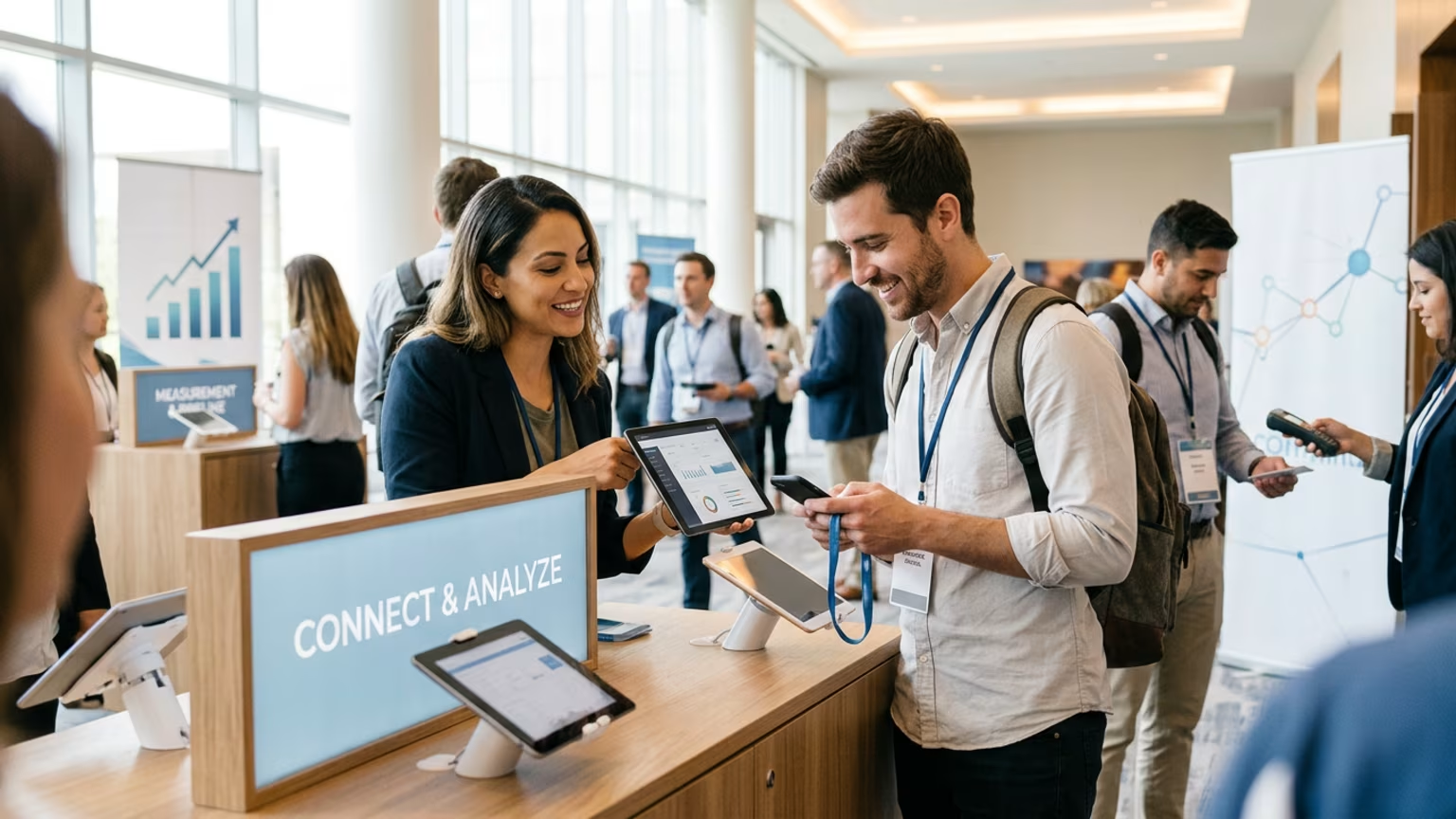
The latest event technology platforms are transforming mobile pop-up tours from simple awareness tactics into highly measurable data capture channels. By integrating route management directly with CRM systems, brands can track real-time engagement and prove clear Return on Investment.
Multi-city mobile activations often look beautiful in the pitch deck but quickly descend into operational chaos on the ground. Field teams juggle disconnected spreadsheets, unread group texts, and physical clipboards alongside shifting schedules. Weather changes, vehicle breakdowns, and sudden permit issues can derail a carefully planned activation in minutes. Brand ambassadors hand out thousands of premium samples, yet they have no reliable way to track who actually took them.
When regional managers ask for daily performance updates, they receive delayed reports filled with vanity metrics instead of actual lead data. This fragmented approach leaves sponsors frustrated and marketing directors struggling to justify their field budgets. A consumer might have a fantastic interaction with a brand ambassador, try a new beverage, and walk away ready to purchase. If that interaction never registers in a database, the marketing team cannot follow up, and the experience vanishes into thin air.
Without a proper system, tracking physical inventory across multiple state lines becomes a massive administrative headache. Missing health department permits or delayed product shipments can completely stall a stop, leaving expensive event staff standing around empty-handed. We see this disconnect happen frequently when established brands rely on outdated manual processes to run complex national campaigns. Field managers spend hours compiling weekly wrap reports from blurry text message photos and unverified headcounts.
Meanwhile, executive leaders demand to see immediate sales impact and pipeline contribution. The gap between the chaotic physical reality of a roadshow and the clean digital reporting expected by the C-suite creates extreme friction. Without a centralized platform, managers cannot quickly reallocate resources or shift staff to busier locations. This rigidity means lost opportunities and wasted budget. To bridge this gap, modern experiential teams are abandoning legacy tools in favor of integrated software solutions that provide true operational command.
Fixing this operational mess requires a massive shift from disjointed apps to a unified experiential marketing tech stack. According to recent coverage from BizBash, the newest platforms help organizers route mobile tours, track engagement at pop-up stops, and tie on-site interactions directly to CRM systems. This strategic approach treats physical activations as performance marketing channels rather than isolated field events. By centralizing staff coordination, route planning, and real-time performance dashboards, marketing leaders gain total visibility into their investments.
In our experience, we blend physical and digital touchpoints by integrating QR codes, mobile technology, and real-world activations into a cohesive layer. We view this digital connectivity not as a separate service but as a necessary upgrade to drive connected results across retail and tour experiences. The goal is to build a closed-loop system where every hand-to-hand interaction creates a distinct digital footprint. This captured data then flows seamlessly into your central marketing automation tools.
When you plan mobile pop-up tours to support retail expansion, you need software that scales alongside your ambition. The market is shifting rapidly toward tools that connect on-site behavior to downstream conversion. Brands are moving away from basic event registration tools and demanding deep operational intelligence. They want platforms that map out the most efficient driving routes, manage complex local permitting requirements, and monitor ambassador performance in real time.
This level of operational control allows experiential teams to pivot quickly if a specific activation site underperforms. If foot traffic drops at a planned stop, routing tools can instantly identify a better secondary location and notify the entire field team. Beyond routing capabilities, industry research points to a rising trend in conversational technology assisting with customer engagement. Advanced conversational tools and automated messaging agents are becoming critical components of the follow-up process.
When a customer scans a code at a pop-up, intelligent agents can instantly answer product questions or direct them to the nearest retail location. By connecting the physical excitement of a roadshow with immediate, personalized digital communication, brands can scale their impact without adding extra headcount. This technological convergence means that your event footprint is no longer limited by the physical boundaries of the booth. It extends into the digital devices of every person who walks by.
Building a modern, tech-enabled mobile activation requires precise sequencing and operator-grade discipline. Relying on hope and good weather is not a viable strategy. Here is how to implement this tech-forward approach on your next multi-city tour:
A successful mobile tour requires strict measurement that goes far beyond simple attendance numbers or social media likes. You need a balanced mix of leading and lagging metrics to truly understand how to measure success on mobile tours. Leading indicators show you how well the activation is running on a daily basis. Lagging indicators prove the final financial impact to your executive team.
Consider a recent multi-city sampling tour for a national consumer packaged goods brand launching a premium snack line. The field marketing team previously relied on manual headcounts and end-of-week email summaries to track their daily trial volume. This slow reporting cycle made it impossible to optimize the tour mid-stream. By deploying a unified event tech platform, they completely transformed their workflow and operator visibility.
They mapped their driving routes to target high-traffic retail centers and synced daily product inventory directly to a central operations dashboard. The brand ambassadors used mobile capture tools to scan attendee QR codes in exchange for exclusive merchandise and free samples. This immediate CRM integration allowed the brand to send localized retail coupons within an hour of the physical interaction. The software provided daily visibility into staffing reliability, allowing managers to focus on building repeatable teams for roadshows rather than scrambling to fill no-shows.
The software alerted the operations center the moment a regional stop opened, verifying that all staff had checked in and all demo stations were fully stocked. By the end of the tour, the brand had collected thousands of highly qualified first-party data points. They knew exactly which flavors performed best in which cities, and they could track exactly how many digital coupons were redeemed at local grocery partners. The resulting campaign proved a massive lift in regional retail sell-through and finally gave the marketing leadership solid proof of revenue impact.
It demonstrated that physical events can perform just as efficiently as digital campaigns when backed by the right systems. If you are tired of running field activations that produce zero measurable data, it is time to upgrade your approach. Our team specializes in connecting physical brand moments with strict operational tracking. Book a strategy call with us today, and we will show you how to turn your next mobile tour into a reliable revenue driver.

30 Years Experiential & Retail Activation Partner for CPG & Beverage Brands | Multi-Market Demos, Roadshows & Costco/Club Programs That Actually Sell


