Robbie Thain
Founder, CEO

Discover how operator-grade staffing models fix fragmented trade show execution. Learn to build repeatable teams that drive consistent CPG retail conversions.
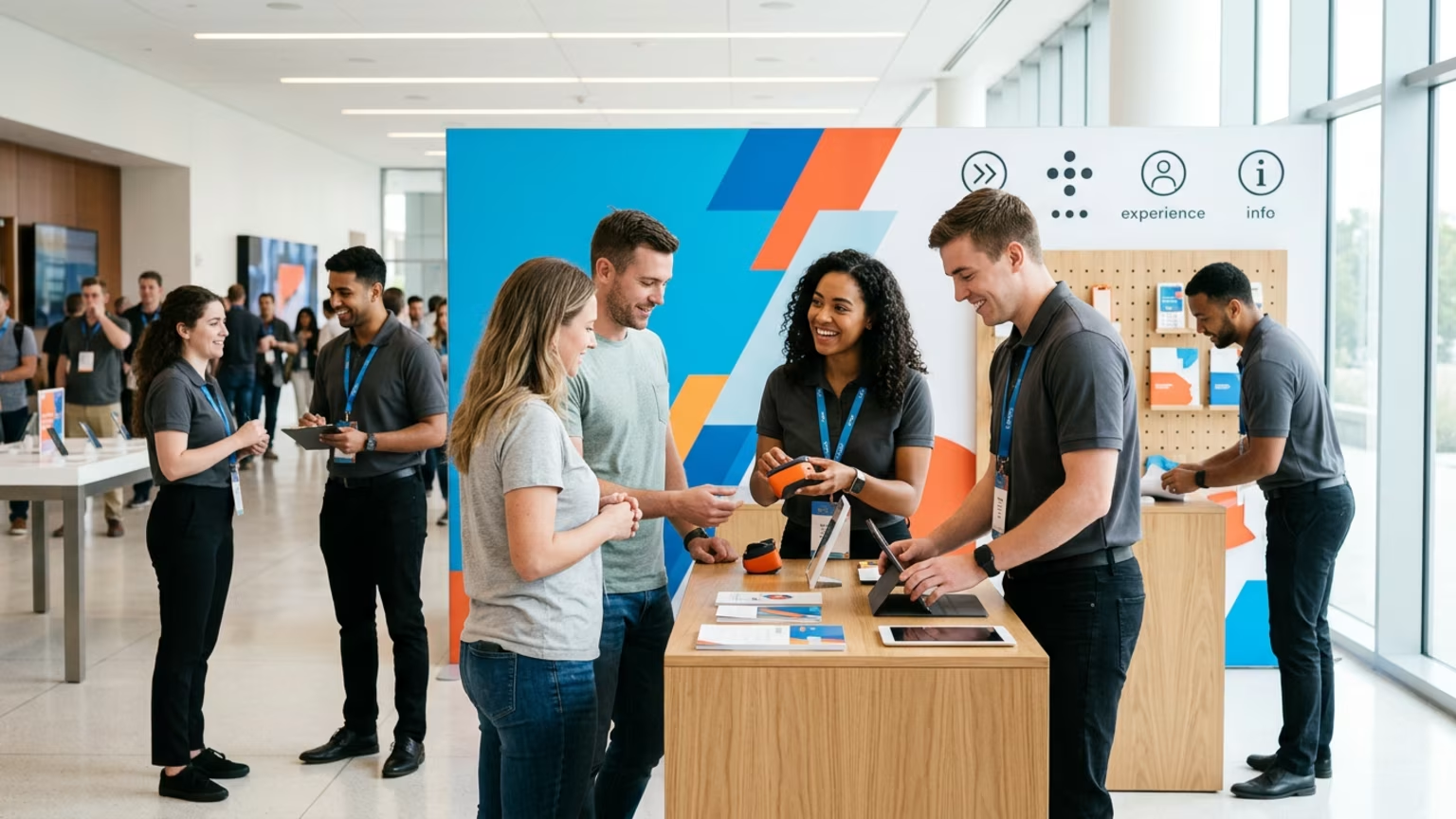
The regional field manager stands next to a pallet of premium sparkling water at 8:00 AM on a Saturday. Her brand ambassador is thirty minutes late, the sample cups are missing, and the store manager is visibly annoyed. This is the exact moment an expensive retail activation turns into an operational liability.
Precision event staffing requires replacing ad-hoc gig workers with a repeatable operator-grade model. Doing so transforms fragmented field activations into consistent revenue engines with measurable pipeline outcomes.
Marketing leaders spend months planning multi-city roadshows and premium retail pushes. They secure the permits, design beautiful booth layouts, and ship the product flawlessly. The breakdown happens in the final three feet of the consumer interaction. When you source local gig workers individually for each market, you introduce wild variance into your brand messaging.
Industry analysts report that fragmented staffing models often result in a ten to thirty percent variance in conversion across different markets. A brand might have a highly polished presence at a festival in Austin but face completely unprepared representatives at a parallel event in Chicago. This inconsistency creates a massive blind spot for marketing directors trying to prove their Return on Investment. Frequent no-shows and poor data capture leave marketers with zero proof of their field performance.
Retailers demand evidence that your promotions work, and they notice when untrained staff fail to manage a booth properly. Shopper research shows that stores with consistent field representatives outperform those with rotating temporary staff on shelf compliance and sales per visit. Relying on generalist temp pools with massive turnover rates kills operational consistency. It is a frustrating reality that turns strategic sponsorships into empty brand theater.
Brands are spending heavily on sponsorship rights for sports events and music festivals. Too often they activate these expensive properties with basic sampling tactics and minimal data capture. Sponsors with sophisticated field teams consistently report higher lead capture and more attributable sales lift. Treating a sponsorship as mere brand visibility wastes the opportunity to turn a crowd into actual customers.
The solution is shifting from a rolodex of random temporary hires to a managed roster of pre-vetted brand specialists. This strategic approach borrows from rigorous salesforce operations to standardize the consumer experience. We build festival zones, premieres, and pop-ups that turn viewers into fans and fans into advocates. We design moments people want to share using music tie-ins, screenings, and live stunts to bring stories to life, and our crews manage execution and track reach and response metrics.
Doing this requires an operator-grade discipline where human interaction is treated as a trackable asset. Instead of treating staff as a disposable commodity, high-performing experiential teams build repeatable cohorts. You assign a core group of ambassadors to your specific product category based on their past performance. These individuals undergo standardized product training and role-play exercises before ever stepping foot in a Costco or an expo hall.
Internal case studies across the marketing sector show that formal training programs yield twenty-five percent higher conversion rates. Consistency is what protects the brand image and drives immediate purchase conversion. This is exactly why refining your frontline deployment strategy remains a top priority for CPG operators. By locking down a reliable team, you reduce costly onboarding cycles and retain valuable institutional knowledge.
Not every activation requires the exact same level of staffing intensity. Precision operators use a tiered model to balance cost against the required level of expertise. Tier one events like high-stakes brand launches or major sponsorships demand your fully trained, operator-grade core team. Tier two events like standard retail demonstrations utilize a mixed model where seasoned captains guide newer ambassadors.
Standardization is highly effective, but operators must leave room for local adaptation. You want your framework to remain ninety-five percent locked and five percent flexible to handle venue anomalies. Empowering your market captains with clear guardrails allows them to handle sudden weather changes or missing shipments independently. A perfectly rigid plan shatters under pressure, but a guided framework survives the reality of a live event.
Turning this strategy into reality requires strict adherence to a field playbook. Random acts of staffing only create risk, so operators must enforce consistency at every touchpoint. Implement these steps to deploy your team:
Your staffing investment must translate into verifiable business outcomes. Retailers and brand directors no longer accept vanity metrics like general foot traffic or vague impressions. You must track precise lead and lag metrics to prove the true impact of your live activations. Relying on proxies is no longer acceptable in a data-driven retail environment.
Lead metrics give you immediate feedback on the day of the event. Track the exact number of active product demonstrations completed per hour by each staff member. Monitor the real-time sample distribution volume and the ratio of engaged conversations to passive walk-bys. These figures allow market leads to adjust team energy and positioning on the fly.
Lag metrics tell the final revenue story after the activation concludes. Measure the immediate purchase conversion rate, the total volume of qualified leads captured, and the cost per acquisition. Collect qualitative insights like common shopper objections and exact retailer compliance scores. Tying proper post-event performance indicators directly to your staffing choices justifies your operational budget.
Retail buyers are highly skeptical of brand promotions that lack concrete performance data. When you approach a store manager with a detailed report of engaged conversations and sampled units, you build immediate trust. This documentation proves that your brand is actively driving foot traffic into their exact location. Securing premium endcap placements or permanent shelf space becomes much easier when you possess operator-grade field metrics.
Consolidating this data creates a powerful case for your experiential marketing Return on Investment during executive reviews. Reporting dashboards that highlight conversion rates and sampling volumes separate professional activations from amateur setups. Integrating point-of-sale data with your field reports paints a clear picture of true consumer demand. If you need help structuring these analytics to prove your next campaign, you should book a strategy call with our team.
Consider a national beverage brand launching a new plant-based energy drink across fifty regional club stores. In the past, they relied on a rotating cast of weekend workers, resulting in weak engagement and zero attributable sales lift. The marketing department struggled to gather any meaningful data from the field. It became impossible to convince retail buyers that the product deserved permanent shelf space.
The team decided to overhaul their approach by deploying a dedicated roster of trained field captains. These captains completed an intensive digital training module focused exclusively on the unique flavor profile and health benefits of the new formula. They practiced handling objections related to taste and price through structured role-playing exercises. The brand kept these same representatives on the schedule for the entire sixty-day retail push.
This consistency meant that relationships with individual store managers grew stronger every week. The ambassadors became trusted fixtures within the retail environment rather than anonymous temporary workers. The results verified the power of precision staffing across the entire regional market. The brand saw immediate purchase conversions jump by thirty percent compared to their previous haphazard deployments.
Store managers praised the professionalism of the team, leading to preferential placement for future displays. The consistent data captured by these educated ambassadors finally proved to the executive board that live sampling drives tangible revenue. It shifted the perception of field marketing from a sunk cost into a measurable pipeline engine. The brand now refuses to launch any new retail initiative without their dedicated team in place.
Audit your upcoming event calendar today and assign one dedicated field captain to manage quality control for your next major activation.

30 Years Experiential & Retail Activation Partner for CPG & Beverage Brands | Multi-Market Demos, Roadshows & Costco/Club Programs That Actually Sell