Robbie Thain
Founder, CEO

Learn how leading sports sponsors turn passive brand visibility into measurable ROI through structured lead capture and experiential activations.
Myth: Securing a high-profile sponsorship at an event like the FedEx St. Jude Championship automatically translates into consumer engagement. Truth: Passive visibility without a structured data capture mechanism simply burns your brand budget. At the 2026 tournament, which was covered extensively by Reuters, the gap between athletic spectacle and marketing reality was perfectly clear. The tournament was played from August 13 to 16 at TPC Southwind in Memphis and opened the FedExCup Playoffs.
Recent Reuters coverage focused heavily on the competition. The report noted that Scottie Scheffler won while Rory McIlroy finished 66th out of 68 players at eight over par. However, the accessible Reuters text does not provide details about onsite product sampling, lead capture, consumer-data collection, or sponsor return on investment. Relying purely on logo placement during major broadcasts is a costly error.
It is easy for a Field Marketing Director to assume that massive crowds provide enough Return on Investment (ROI). When famous athletes compete in a playoff setting, the sheer volume of eyeballs creates a false sense of security. Agencies often sell these sponsorships based on media equivalents and theoretical reach.
During major events, fans show up in large numbers to watch the best in the world compete. The event was McIlroy’s first competitive appearance since the Open Championship nearly a month earlier. McIlroy told Reuters that he felt "so far away from where I need to be" and increasingly lost with his golf swing. His four rounds were 74, 70, 72 and 72, and he never broke par during the tournament.
Despite the poor result, McIlroy advanced to the BMW Championship because he remained 13th in the FedExCup standings. The top 50 players moved forward after the first playoff event. The field was then scheduled to be reduced to 30 players for the season-ending Tour Championship. The intense media focus on these storylines makes marketers believe their adjacent logos are doing the heavy lifting.
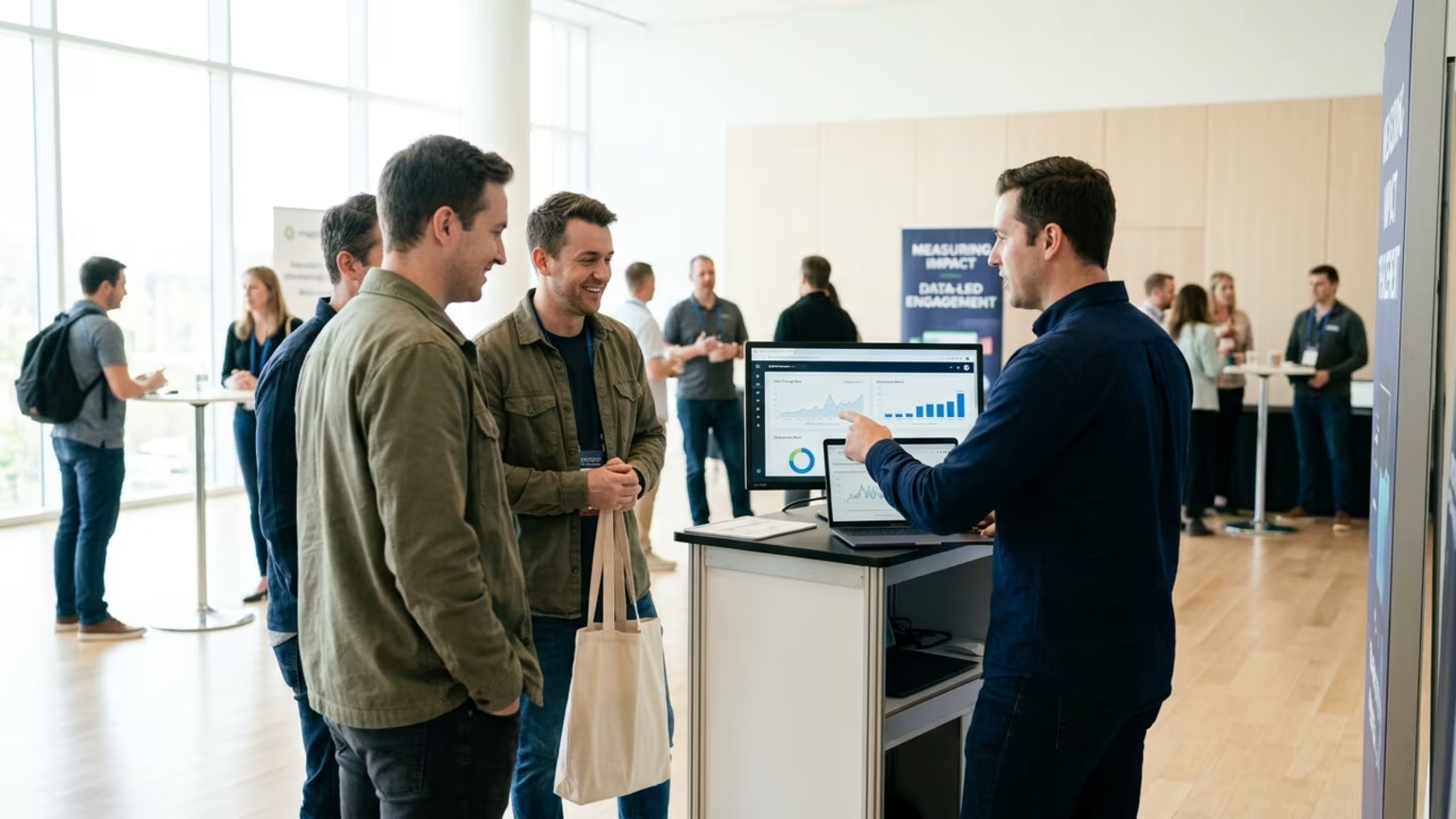
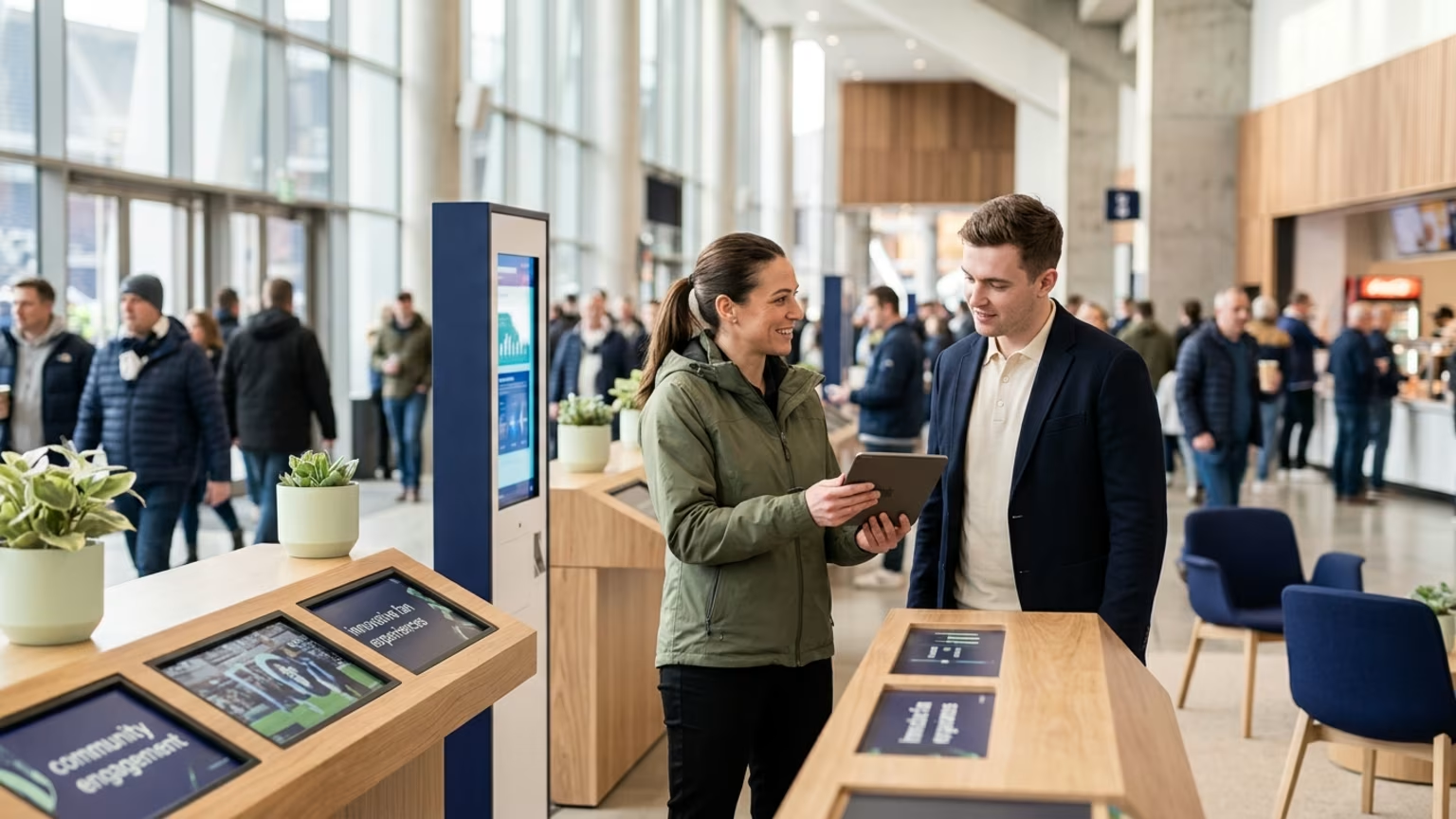
The reality of the event floor is that a crowded fan zone does not generate pipeline unless visitors take action. The FedEx St. Jude Championship demonstrated a clear shift toward participatory experiences. Instead of relying on passive signage, the official tournament program featured multiple interactive elements. Attendees could participate in auctions, sweepstakes, and equipment experiences.
The schedule also included a FedEx ceremony, a concert, a putting challenge, and a Pro-Am. These structured moments give attendees a compelling reason to interact with sponsors. For example, patient artwork was incorporated into tournament assets and merchandise. These assets included caddie bibs, shirts, headcovers, and golf bags.
These physical touchpoints create a tangible connection that a static billboard cannot replicate. The tournament also featured a sweepstakes model that generated a documented response. St. Jude reported that the sweepstakes raised $25,880 through 226 donations. This proves that fans are willing to engage when given a clear path.
The tournament’s partner programming was deliberately designed to connect commercial participation with the St. Jude mission. TaylorMade provided a truck visit and personalized club fittings for St. Jude patient golfers. FedEx created a symbolic aircraft naming ceremony honoring a St. Jude patient who was related to a FedEx team member. These initiatives gave the sponsors a role far beyond displaying a mark on a leaderboard.
St. Jude JAM was presented by HH Global and featured live music and storytelling. The concert also incorporated auctions, sponsors, entertainers, and St. Jude families. Proceeds from this event directly benefited St. Jude Children’s Research Hospital. These multi-layered events give audiences multiple ways to participate, ensuring the brand activation feels like a natural extension of the experience.
We create experiential marketing programs built to connect emotion with action. Our process blends creativity, strategy, and data to ensure every brand interaction drives measurable results. We craft experiences that engage all five senses, helping people not just see brands, but feel them, turning moments into meaningful business outcomes.
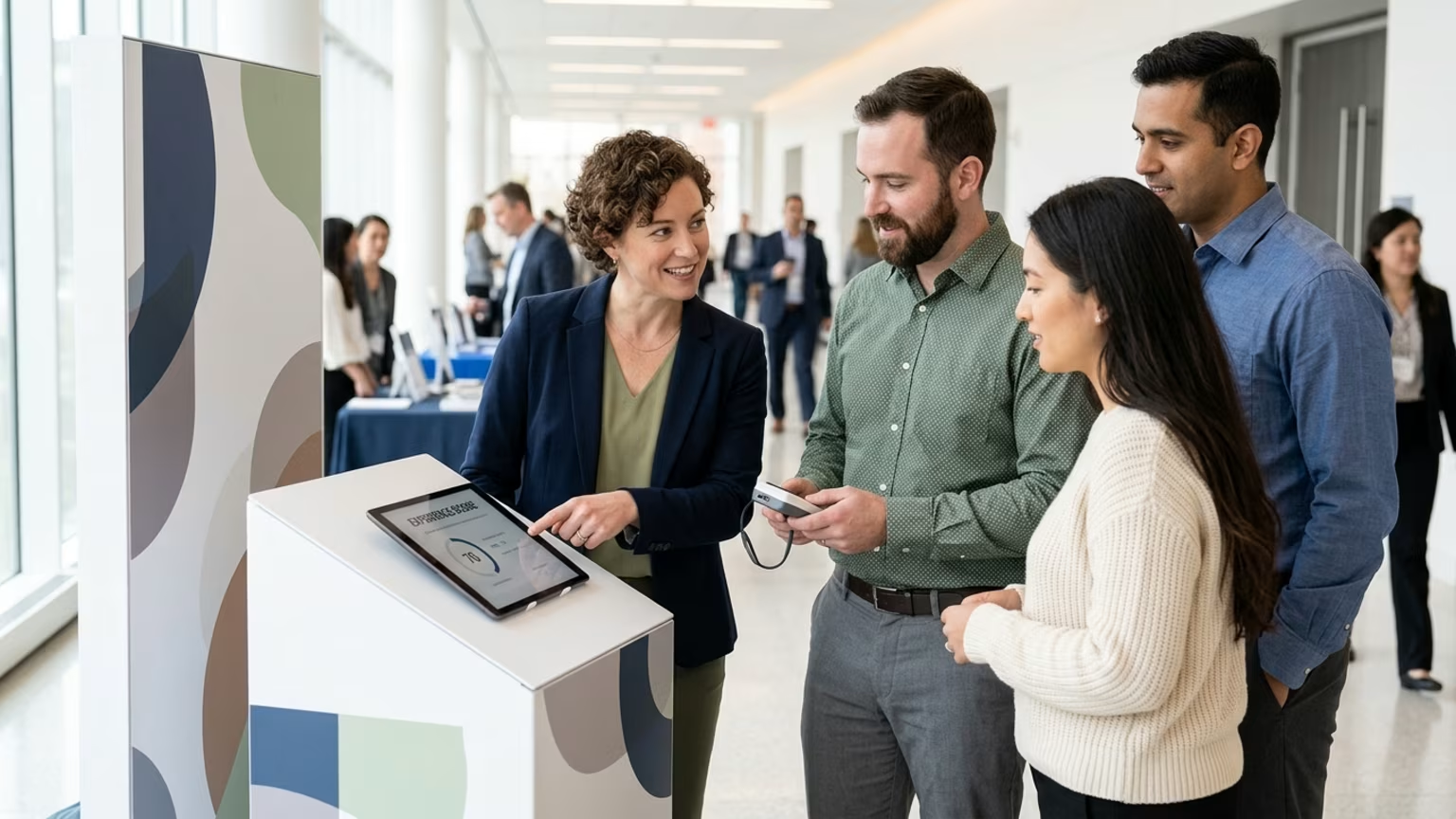
To protect your campaign pipeline, you must build a measurement strategy before the first tent goes up. A practical scorecard should separate basic reach from actual engagement, trial, and conversion. Reach includes metrics like attendees, qualified traffic, dwell time, and impressions. Engagement requires tracking completed challenges, product demonstrations, meaningful conversations, and content interactions.
A QR code on a banner is not a complete measurement strategy. The brand should decide in advance what data is collected, why it is collected, and how consent is obtained. Marketers must know where the data is stored and how the record will connect to CRM systems or ecommerce platforms. A sports activation could connect a product trial to a post-event survey, a loyalty enrollment, and a timed follow-up offer.
Most importantly, data capture metrics must include opt-in rates, profile completeness, and the explicit permission to remarket. One field-marketing agency recommends tracking samples, location-level engagements, GPS documentation, and supervisor observations. This operational rigor ensures that your field staff focuses on acquiring consented data. Teams that capture accurate field marketing metrics can easily justify their budgets.
Brands seeking commercial accountability must add a retail bridge, such as retailer-specific coupons or shoppable QR codes. Commercial impact metrics include sales lift, basket size, and repeat purchases. Teams that map physical interactions to retail purchases consistently prove their value to the wider organization.
Every physical activation requires intense logistical coordination to succeed. Without proper planning, a highly anticipated product sampling can turn into a chaotic mob. Brands must consider site lines, foot traffic patterns, and the placement of digital touchpoints. This ensures that every attendee has a seamless experience from the moment they approach the booth.
Meanwhile, operational quality requires tracking staffing coverage, wait times, and inventory availability. Supervisors must coordinate flawless event logistics to prevent failures during peak foot traffic. For multi-market programs, brands should standardize training, scripts, data capture, and photo documentation. This allows results to be accurately compared across different venues.
The strongest sampling models operate as a deliberate sequence. First, an eligible visitor enters the experience and tries the product. Next, the visitor gives structured feedback and opts into a communication channel. Finally, the visitor receives a retailer offer, and their subsequent purchase is tracked.
Recent research confirms that structured, values-driven experiences generate actual results. A 2026 study in Frontiers in Sports and Active Living found that event brand perception was associated with experiential satisfaction and emotional connection. Furthermore, that satisfaction helped explain revisit intention among attendees.
Measurement is also evolving to capture this complexity across channels. Nielsen’s described Return on Sponsorship approach combines exposure and media valuation with sales, fan, and brand-impact measures. This approach highlights that visibility is only one component of a broader measurement system.
Nielsen also reported that more than 30% of NWSL fans bought a brand after seeing an in-game sponsorship. Additionally, 60% of women’s sports fans had switched brands based on a company’s values. While these specific figures apply to women's sports audiences, they illustrate how an engaged fanbase can drive direct commercial outcomes.
Live sports sponsorships only produce real revenue when brands stop buying passive logos and start engineering measurable consumer interactions.
Relying on massive sports audiences to passively absorb your logo inevitably wastes your sponsorship budget. Makai resolves this problem of scattered attention and poor booth flow by engineering structured interactions that command focus and capture data. Through our Guerilla Marketing services, we launch creative, street level ideas that surprise, delight, and generate authentic word of mouth. Request a proposal

30 Years Experiential & Retail Activation Partner for CPG & Beverage Brands | Multi-Market Demos, Roadshows & Costco/Club Programs That Actually Sell