Robbie Thain
Founder, CEO

NIQ reports on-premise beverage activations increase stated consumer trial and retail purchase intent. Learn how brands optimize logistics to capture ROI.
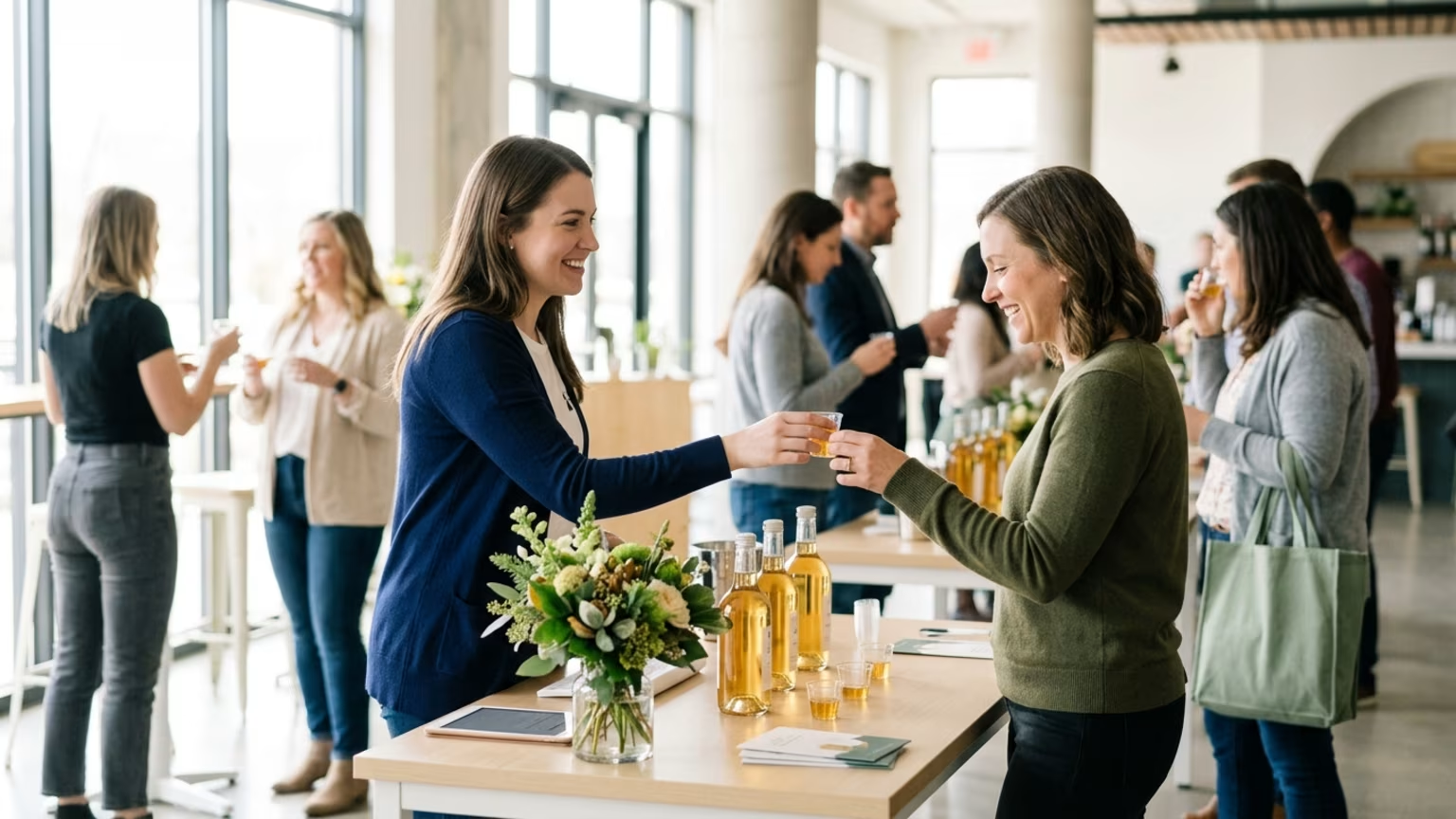
On September 25, 2026, NIQ published its BrandTrack findings detailing the influence of branded drinks activations in Britain's on-premise venues. The research specifically examined pubs, bars, and restaurants to measure consumer behavior toward eating and drinking out. NIQ describes BrandTrack as a quarterly survey of 5,000 nationally representative British consumers. This release provides new survey data regarding how live experiences affect consumer intent.
The survey results outline specific behavioral responses to live venue marketing. NIQ says 69% of consumers are more likely to try a drink they have not had before if they see a brand activation. Beyond initial trial, 68% say activations positively affect their perception of the brand itself. These numbers present a strong baseline for consumer willingness to engage with new beverage products in physical spaces.
The data also highlights effects on direct purchasing decisions. According to the report, 66% say they are more likely to order a brand when it features in an activation. Furthermore, 64% say activations increase their likelihood of buying the brand later in a supermarket. This stated intent to purchase at retail points to a relationship between on-premise trial and off-premise sales velocity.
The research also reports possible venue benefits. Specifically, 63% say activations make them more likely to enter a venue, and 62% say they are more likely to revisit it. This suggests that compelling physical experiences provide value to the host locations alongside the featured brands.
However, the same research points to a significant awareness and reach challenge. According to the data, 34% say they have never noticed a branded drinks activation in a pub, bar, or restaurant. Another 29% do not recall seeing one in the last month.
Additionally, 25% cannot remember the last time they saw one. Only 6% say they noticed one in the last week. This indicates that while consumers are highly receptive to experiences they notice, a massive portion of the audience completely misses these campaigns.
For CPG and beverage marketers, these figures present a compelling case for physical engagement while exposing a massive gap in execution. The reported 64% likelihood of later supermarket purchase highlights the direct link between live interaction and retail sell-through. Marketers often struggle to prove that expensive on-premise programs generate real business outcomes. This survey data provides directional validation that physical brand experiences can support downstream commercial goals.
But the visibility challenge tells a different story about field execution. If 34% of patrons never notice these campaigns, brands are funding invisible marketing. We specialize in creating retail demos, product sampling programs, and roadshows that bring brands face to face with their audiences. Each program is designed to drive trial, build consumer relationships, and accelerate retail velocity across multiple locations.
You cannot accelerate retail velocity if your target buyer walks right past the booth. Closing the gap requires treating field marketing as a logistical science rather than just a creative exercise. Brands must move beyond vanity metrics to capture actual consumer attention. Securing Return on Investment (ROI) requires structural planning before the first sample is poured.
By 2009, our work covered event and sponsorship activation, mobile tours, sampling, event production, and logistics at national scale. Over that time, the primary operational test has remained consistent. The brands that win are the ones that manage the physical supply chain and consumer flow with absolute precision. Marketing leaders must focus on operational control to ensure their campaigns are actually seen.
Translating consumer intent into measurable pipeline requires strict control over every downstream operational variable. When a third of your audience fails to notice your campaign, the issue is rarely the product itself. The problem usually stems from poor booth flow, inconsistent staffing, or flawed physical placement. Managing these variables requires a disciplined approach to trade show footprint flow and venue integration.
We build festival zones, premieres, and pop-ups that turn viewers into fans and fans into advocates. We design moments people want to share, using music tie-ins, screenings, and live stunts to bring stories to life. During these events, our crews manage execution and track reach and response metrics. Without that controlled execution, even the most expensive sampling program will generate fog instead of clear pipeline data.
Consider the physical reality of a high volume activation environment. We designed and managed a 40 by 20 foot trade show environment for Glanbia at Natural Products Expo West 2025. This footprint brought think!, Isopure, Optimum Nutrition, and Amazing Grass into one coordinated space. Our team handled the booth concept, field operations, and teardown.
We recorded more than 14,000 product samples distributed across the activation stations. That volume of distribution only happens when the physical flow actively pulls attendees into the space. If the layout creates bottlenecks, consumers will bypass the area entirely.
The logistics of moving product and gear to the venue also dictate success. We store your sampling product and event gear, then ship, track, and coordinate delivery nationwide so every activation stays on schedule. If your infrastructure arrives late or your trained brand ambassadors lack the right materials, the activation becomes invisible.
Proper field marketing requires aligning metrics during live campaigns with flawless supply chain management. Marketers must track how these physical touchpoints influence long term buying behavior. Measuring this requires connecting the live footprint to structured follow up systems. Brands can close the attribution gap between physical product trials and digital retargeting by standardizing their data collection at the venue.
Staffing plays a critical role in this data capture process. Trained brand ambassadors drive in store sales through real conversations and product trials. These teams must be equipped to handle objections, explain product benefits, and route interested consumers into CRM workflows. When staffing is treated as an afterthought, data collection fails.
While on-premise bar and restaurant environments offer unique discovery moments, the logistical principles apply universally across physical retail spaces. Successfully turning trial into repeat purchase demands a controlled environment where the brand story is delivered consistently. This consistency separates highly profitable experiential campaigns from disorganized sampling efforts.
We manage end to end Costco roadshows that bring brands to shoppers through live demos, real conversations, and measurable sales impact. Operating in high volume retail spaces requires navigating complex event logistics, permits, and staffing with absolute precision. When brands attempt to scale these programs without a centralized compliance team, execution suffers and trial rates plummet.
Beverage activations introduce specific operational hurdles that must be managed upfront. Pouring liquids on-premise or in retail spaces often requires specialized health permits, cold chain storage management, and precise inventory forecasting. If a brand ambassador runs out of cold product during peak foot traffic, the remaining attendees fall into the invisible demographic.
Furthermore, capitalizing on consumer intent requires immediate follow up. When shoppers complete their purchases within 24 hours of need identification, field teams must ensure product availability matches the sampling schedule. Marketing campaigns that connect digital and real world touchpoints can boost visibility and spark brand conversations exactly when buyers are ready.
Lou Finn, Senior Consumer Research Executive at NielsenIQ, stated that activations can help brands and venues. She added that many campaigns are not reaching consumers effectively. She identified improving penetration and making activations eye-catching and memorable as priorities for marketers.
If your latest on-premise activation failed to generate measurable retail lift, was the problem your product offering or your failure to physically capture consumer attention?
Turning stated purchase intent from venue activations into measurable retail sell-through requires strict logistical control. When inefficient post event follow up and CRM routing limit your campaign effectiveness, Makai steps in to stabilize the operation. Through our Engagement Marketing capability, we turn audiences into participants with live and digital experiences that invite people to try, share, and act.

30 Years Experiential & Retail Activation Partner for CPG & Beverage Brands | Multi-Market Demos, Roadshows & Costco/Club Programs That Actually Sell