Robbie Thain
Founder, CEO

MGME’s event guide separates reach from business impact. Makai examines what that means for staffing, booth flow, logistics and follow-up.

On 2026-11-05, MGME published Event Marketing: A Guide for Corporate Event Planners, separating event measurement into reach and experience, followed by behavior and business impact.
That distinction has consequences before a booth opens. For CPG and beverage leaders, our reading is that this guidance belongs in the field brief as much as the reporting deck. The operating question is whether the live encounter supports the action the business needs next.
This is a planning recommendation, not a new operating mandate. MGME recommends starting with the attitudes and behaviors a team wants to change. The team then works backward to measurement before the first invitation goes out.
The guide separates that measurement into four questions:
MGME cautions that satisfaction scores alone do not establish business impact. Lead totals alone do not show whether the experience was good. Both measures still have a job, but neither should answer a question it was not designed to address.
The guide also treats the event as a longer journey. Pre-event audience building and strategy come before onsite touchpoints and activations. Post-event outreach and surveys follow, alongside follow-up collateral. Measurement planning therefore covers more than what happens inside the footprint.
MGME cites a 2026 Incentive Research Foundation incentive-travel study in which 85% of program owners rated their programs’ business impact good or excellent. In that study, 36% were fairly or very confident their measurement could isolate that impact. Fewer than one in four tracked Return on Investment (ROI).
MGME also reports that two-thirds of those program owners reported results within a month, while only 8% expected measurable impact within that period. The guide uses that mismatch to argue for follow-up beyond the first week.
Those are incentive-travel findings, not benchmarks for CPG sampling or trade-show lead generation. The available evidence also does not independently validate MGME’s framework or establish that using it increases sales or ROI.
Makai’s stance is straightforward: welcome people warmly and run the plan with discipline. A product trial can create a human connection worth building on. Our view is that the field plan should make the intended next action clear without treating every participant as a qualified lead.
We create experiential marketing programs built to connect emotion with action. Our process blends creativity with strategy and data, including experiences that engage all five senses. For us, the commercial purpose should inform the experience rather than appear as a reporting requirement after the creative work is finished.
We also connect physical experiences with QR codes and mobile technology across retail and event programs. That connection needs a defined purpose. A scan may document an interaction, but its meaning should come from the action recorded rather than the size of the contact file.
Our reporting covers reach and trials alongside leads and sales. We believe those signals should guide different decisions: an audience problem is not the same question as weak follow-up behavior. That is why teams need to tie event measures to business goals before debating which dashboard looks best.
Commercial purpose also needs to match the format. A retail demonstration’s sales objective and a trade show’s qualified-lead objective should not be forced into the same success label. Each needs evidence tied to the goal set for that program.
Event Marketer reports Glenwright’s recommendation to limit the KPI list to five or fewer, rank those priorities, and then select the tools and processes that gather the data. That is practitioner advice rather than a proven optimum for every campaign. It offers a practical way to keep the field brief focused.
Our operational reading of MGME’s guidance is that staffing and physical execution should serve those priorities. The downstream work starts with the encounter itself and continues through the handoff after the event.
In practical terms, the outcome should shape the capture method rather than the other way around. The field team should be able to explain what a recorded action means without relying on the labels supplied by a reporting tool.
Within Makai’s retail demonstrations, trained brand ambassadors use real conversations and product trials to support in-store sales. Applying MGME’s framework means connecting that role to the intended change, not defining success only as samples distributed.
The brief should distinguish participation from the next action the campaign values. Trying a product and continuing the relationship afterward answer different questions. From an operating perspective, staffing decisions should account for the conversation the program needs rather than only the volume of interactions it hopes to record.
The same distinction belongs in how teams evaluate product trial against business objectives. A well-defined role gives the activity a purpose without asking a trial count to stand in for a sale.
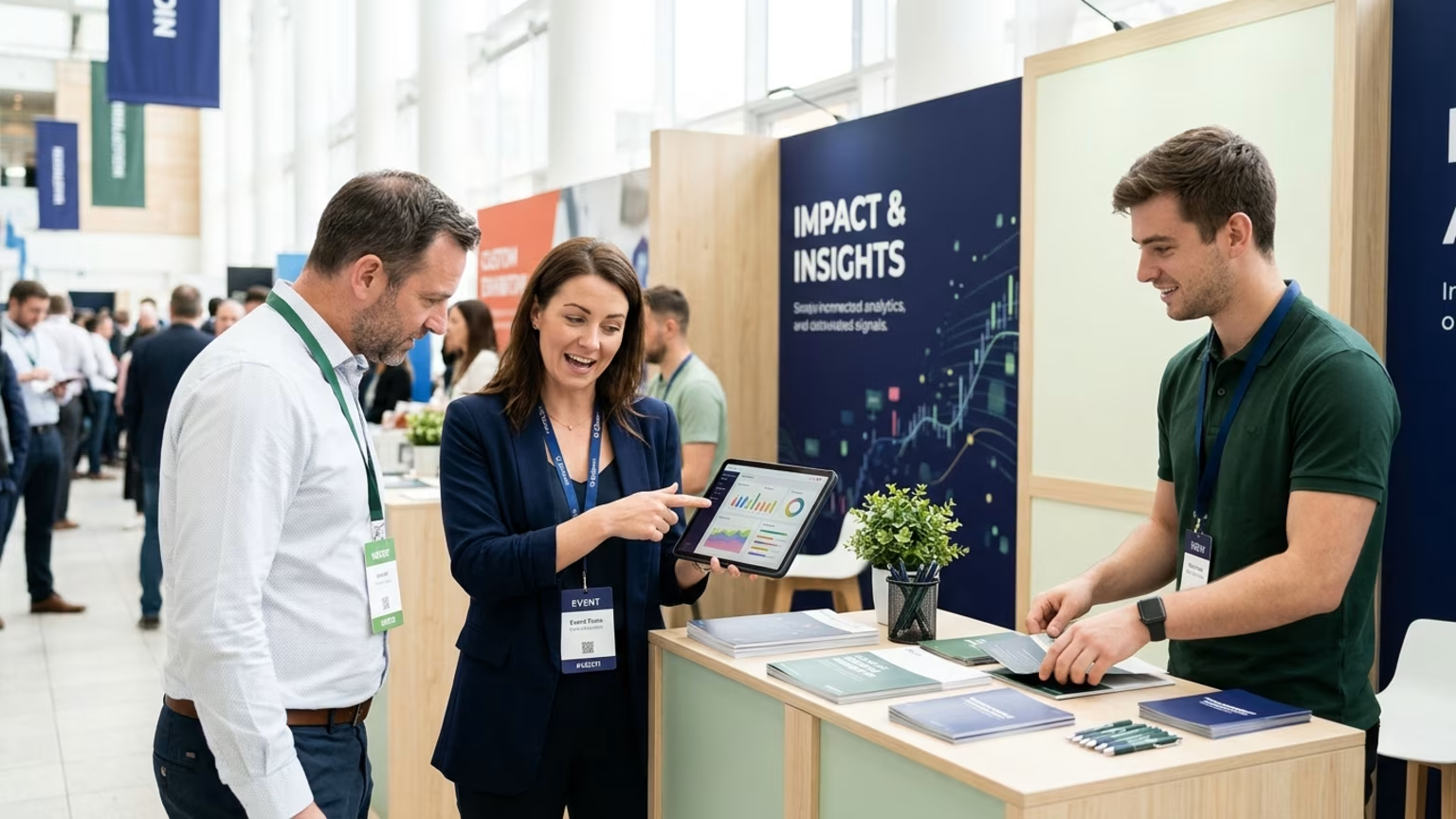
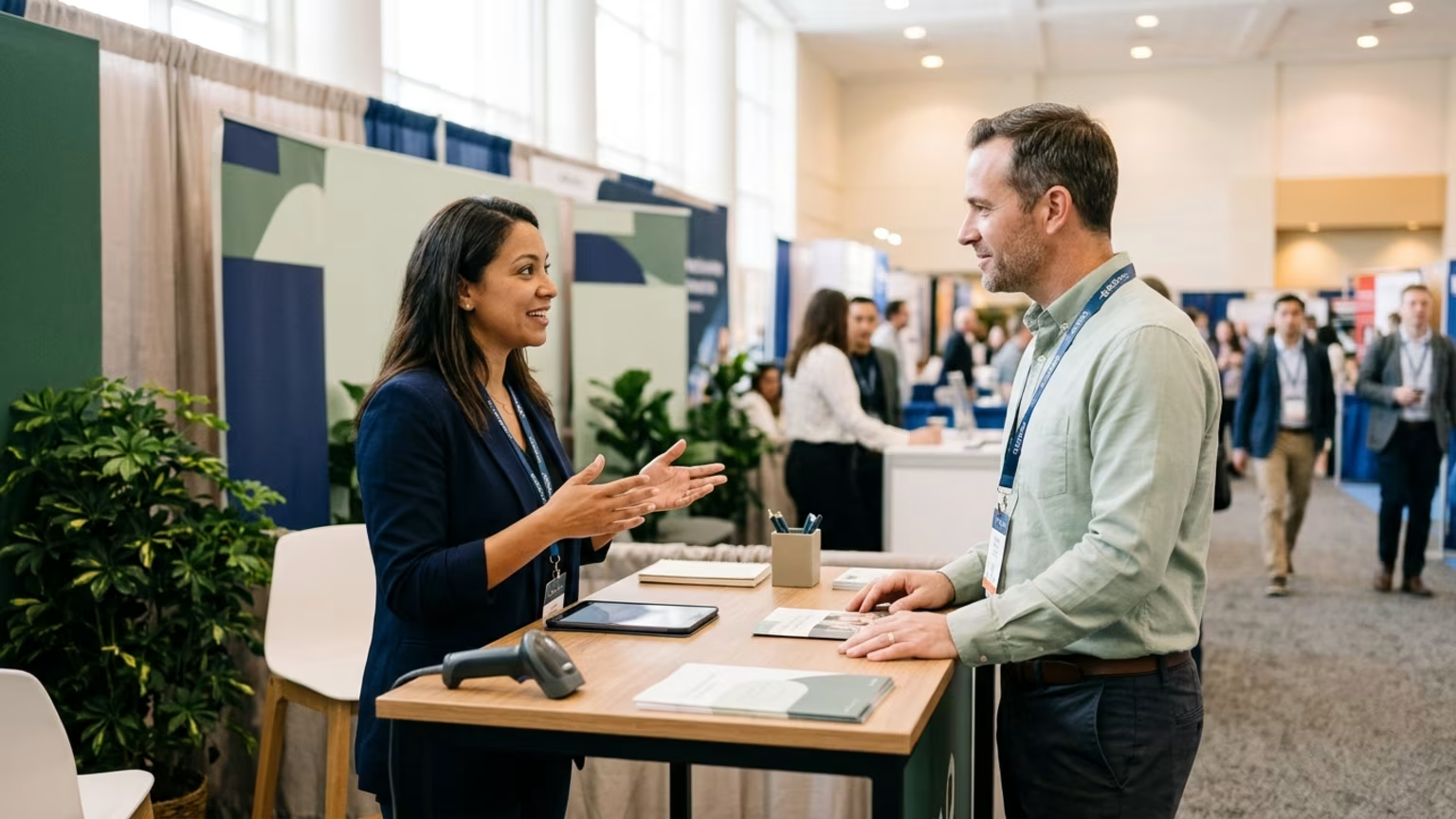
Makai plans and manages trade show spaces to attract attention and start conversations that can turn visitors into customers. Each function deserves room in the brief. Attracting someone to the footprint is not the same task as helping that person decide what to do next.
That makes booth flow a measurement issue as well as a design issue. We believe the route from product experience to continued engagement should be understandable within the space. Contact capture should serve that route, not become the reason every interaction ends at a screen.
In this reading, a busy footprint is evidence of activity. The stronger commercial question remains what happened after the interaction and whether it advanced the stated goal.
The physical plan also has to account for the product and gear behind the encounter. Makai stores sampling product and event equipment, then ships and tracks them with nationwide delivery coordination. That capability is part of making the planned experience executable.
Our recommendation is to connect those delivery decisions to the interaction the program intends to measure. Product supports trial. Event gear supports the live execution. Shipping confirmation belongs in the operational record, while customer behavior belongs in the assessment of what the experience achieved.
This keeps two responsibilities visible: delivering the activation and evaluating its commercial contribution. Treating them separately gives leadership a clearer basis for discussing execution quality without labeling completed logistics as qualified pipeline.
MGME includes post-event outreach and surveys in the wider event journey. The operational implication is to plan that continuation before launch rather than treating the contact file as the finish line.
Captured contacts should remain inputs until subsequent behavior is assessed against the objective. An initial report can account for the live experience without declaring the commercial outcome settled. Later measurement should examine the behavior and business goal MGME asks teams to distinguish.
For leadership, the useful discussion is how to define conversion evidence beyond the scan. That makes the handoff part of the original operating plan instead of a separate reporting project once the event team has moved on.
A weak result should trigger a specific planning discussion, not an automatic request for a larger footprint. Audience fit belongs in the reach discussion. The value of the encounter belongs in the experience discussion. What people do afterward belongs in the follow-up discussion.
This distinction matters when leadership reviews the next budget. More contact capture is not the answer to every shortfall. The useful question is which part of the intended journey needs attention and what evidence supports changing it. That keeps the operational response connected to the problem the measurement actually identified.
The next brief is where this guidance becomes a management decision. The CMO or VP can ask for a shared definition of the intended buyer action before judging the proposed staffing and footprint.
Aloha in the welcome. Discipline in the plan.
Before your next activation, will your staffing, booth flow and product delivery support the buyer behavior your pipeline target actually requires?
Deciding which product and event gear must support the intended buyer action brings Makai into storage and logistics, including nationwide shipping, tracking and delivery coordination. For CPG marketers facing low-quality leads from crowded trade shows, Makai combines those capabilities with trade show activations designed to turn consumer interactions into qualified leads rather than treating contact volume as the commercial result.

30 Years Experiential & Retail Activation Partner for CPG & Beverage Brands | Multi-Market Demos, Roadshows & Costco/Club Programs That Actually Sell