Robbie Thain
Founder, CEO

Set event lead qualification rules before arrival, with purpose-specific signals, concise capture records, and clear follow-up ownership.
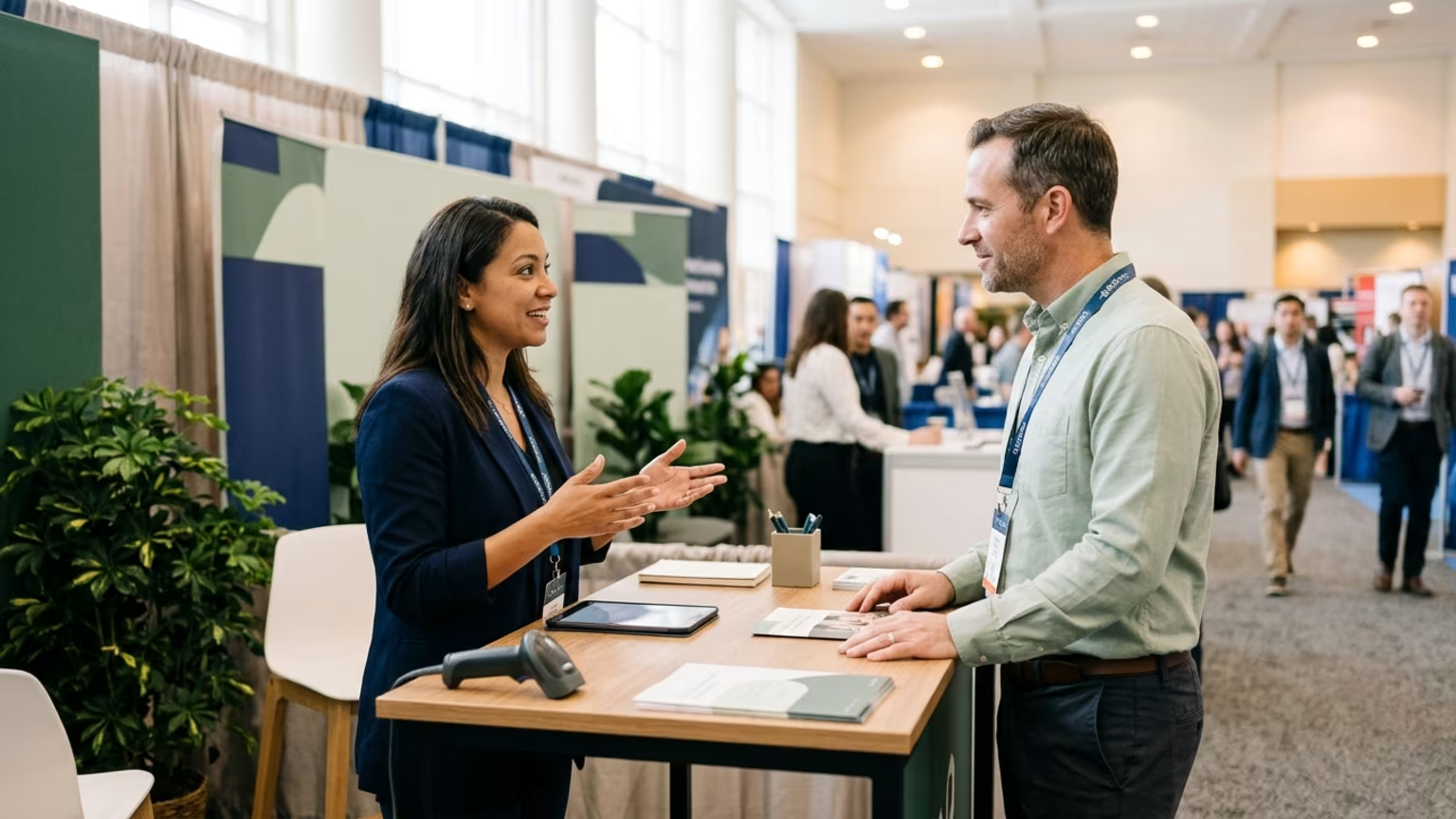
Myth: Every badge scan counts as a qualified event lead. Truth: A scan may capture contact details without establishing fit, intent, or an agreed next step.
Qualification belongs in the brief, not in a post-event debate over which records look promising. The event’s purpose should determine which signals count and what the team records. A retail-buyer conversation and a consumer product trial should not inherit the same qualification rule by default.
For a Head of Field Marketing balancing budgets and event deadlines, scan volume offers a clean-looking answer. It is easy to count and easy to place in a Return on Investment (ROI) presentation. When an agency promises a large contact list, that promise can sound like a complete commercial plan.
The appeal is understandable. The harder work is agreeing on what makes a contact worth pursuing before the booth opens. That discussion involves the event objective and the team responsible for the next conversation.
Our measurement approach tracks awareness, engagement and conversion. We report reach, trials, leads and sales because those categories describe different kinds of progress. The planning task is to connect them without collapsing them into one impressive-looking total.
A useful budget discussion starts with metrics connected to commercial outcomes, not with a larger label for every interaction.
A scanner can preserve an identity. It cannot explain an unrecorded discussion. If the record does not show what the person wanted, the receiving team has no documented reason for its next message.
A lead-capture guide recommends pairing contact details with conversation notes and next steps. The operator’s lesson is straightforward: information available during the conversation needs somewhere to go before the interaction ends.
A guide for exhibitors recommends qualification signals such as company fit and product need. It also identifies buying role and timeline as useful context.
For a retail-buying objective, a practical rule might look for a relevant account with a stated product need and a recorded next action. Buying authority and timing can help explain how that conversation should progress. The event brief should identify which signals matter to that program rather than requiring every contact to fit an identical template.
For a meeting-led event, a workable definition is a relevant contact who agrees to a meeting or another specific follow-up. The request needs to appear in the record. This proposed definition follows the guides’ focus on capturing the next step.
“Interested” is not a substitute for documenting what the person agreed to do. A meeting request should remain a request in reporting until the meeting happens. That distinction keeps the intended action separate from the completed outcome.
For our retail demonstrations, trained brand ambassadors pair real conversations with product trials to support in-store sales. That is a different task from securing a sales meeting.
An experiential-marketing measurement guide maps product-trial objectives to measures such as demos and redemptions. It distinguishes those measures from B2B outcomes such as qualified leads and meetings. A sampling interaction can therefore be valuable without being classified as a sales-qualified contact.
We managed a four-week, multi-market Costco sampling program for Pulmuone's PlantSpired line. The program delivered more than 65,000 samples and recorded an 18 percent sold-to-sale rate. Those results describe trial activity and a recorded sales measure; they should not be relabeled as a count of qualified contacts.
A trade-show measurement guide recommends deciding the qualification threshold before collecting leads. Start by writing the event’s primary objective in plain language. Then define the evidence that would support that objective.
A retail-buyer program might prioritize relevant buying conversations and their next actions. A sales-focused booth might prioritize meeting requests. A consumer activation might prioritize product trials and the purchase behavior the program can track.
This is where agreement on goals and measures belongs: before the team arrives and before the capture process is finalized.
The research consists largely of practitioner guidance rather than independent tests. It does not establish a universal qualification threshold or prove that a particular form length increases sales. The framework below is a planning choice based on those recommendations.
Build the record around information the receiving team will use. The research supports these information groups, not a requirement to create a separate mandatory field for every item:
The exhibitor guidance recommends keeping capture concise for a busy booth. A useful editing question is whether each item helps determine fit or intent, directs the record, or supports follow-up. If its purpose is unclear, reconsider why it belongs in the capture process.
A short form still needs a shared definition of qualified. Removing fields does not resolve disagreement about what the remaining answers mean.
A guide to trade-show measurement recommends planning follow-up ownership before the event. It also recommends tailoring outreach to the qualification information captured. Ownership belongs beside the promised action rather than being left for someone to reconstruct after the show.
The handoff should preserve the connection between the conversation and the response. A request for product information gives the receiving team a different task from a request for a sales meeting. The record should make that distinction visible without requiring another conversation with the booth team.
An event tag answers where the contact came from. The conversation note explains why the interaction mattered. The next step and owner explain what should happen now.
That is the foundation for follow-up built around the agreed action, rather than a generic message sent to every captured contact.
For sales-oriented events, the measurement guide recommends tracking qualified leads and meetings alongside opportunities and closed business. Scan volume can remain in the report as activity. It should not stand in for those later outcomes.
For product-trial programs, use the measures that match the objective. The experiential-marketing guide points to samples or demos and offer-code redemptions alongside purchase behavior. Contact capture is not automatically the right primary success measure for every activation.
At Makai, our reporting on reach and trials sits alongside leads and sales to guide campaign optimization. We believe that separation is useful because it gives each result an honest job: awareness describes exposure while conversion describes a further action.
The review should return to the definition agreed before arrival. Did the records contain the intended qualification signals? Were the next steps documented? Did reporting distinguish the interaction from the commercial progress that followed?
Those questions keep the event brief connected to the recap. They also give the team a practical basis for revising the next activation without pretending that a larger contact file answers every performance question.
Qualification comes from the event’s agreed criteria and recorded conversation, not from the scanner.
Field marketing managers own activation readiness; with Makai, sampling products and event gear are stored, shipped and tracked for nationwide delivery. For CPG teams also facing inefficient post-event follow-up and CRM routing, Makai’s experiential campaigns and trade show activations focus on turning consumer interactions into qualified leads.

30 Years Experiential & Retail Activation Partner for CPG & Beverage Brands | Multi-Market Demos, Roadshows & Costco/Club Programs That Actually Sell