Robbie Thain
Founder, CEO

Define qualified event leads by activation type, give field teams usable criteria, and separate contact counts from trial and commercial outcomes.
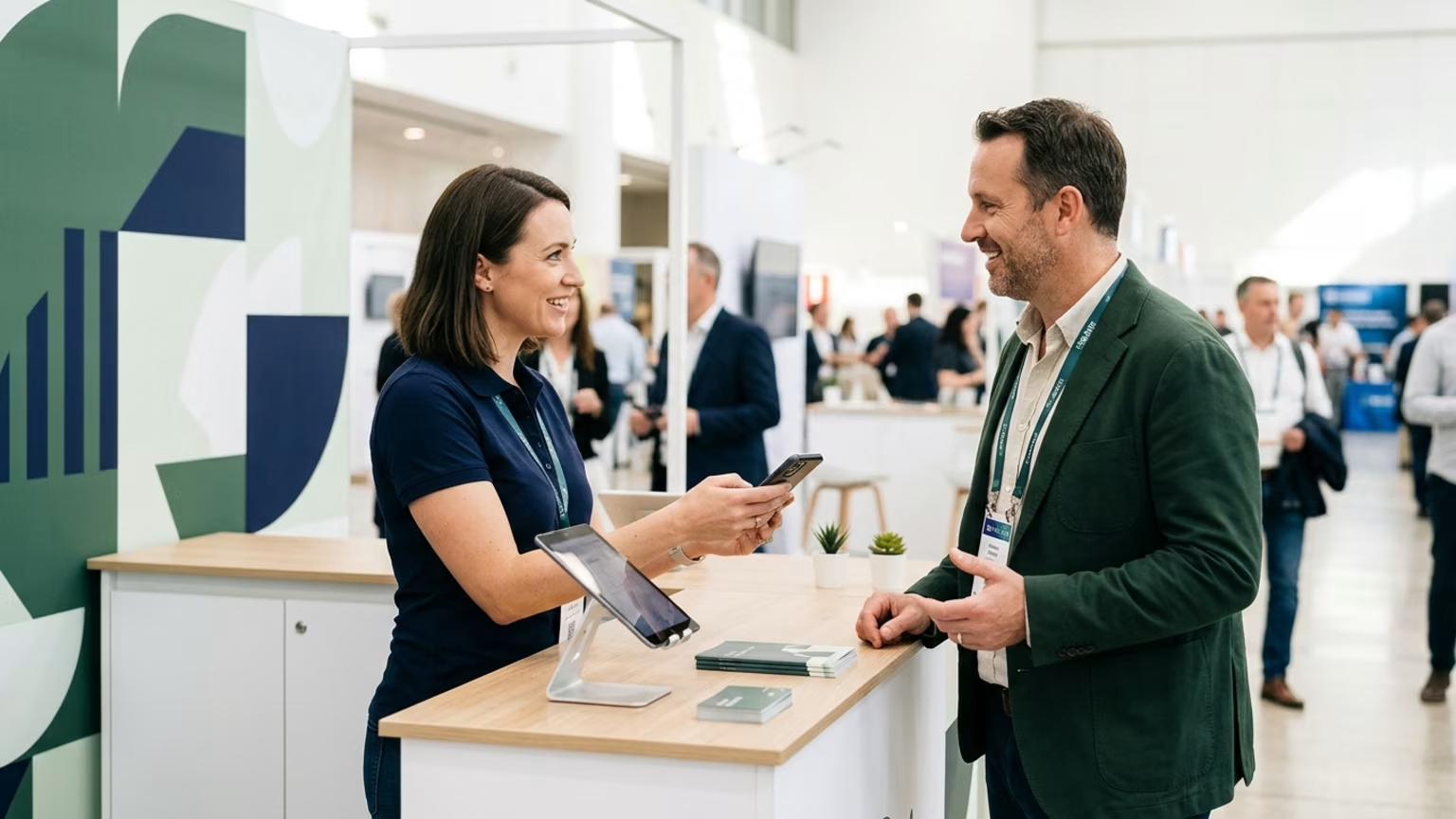
Your badge-scan target deserves less respect than your next sales conversation. A crowded booth and a long contact list can make an activation look productive without establishing who fits your market or intends to buy.
The sacred cow is volume: more scans must mean more opportunity. We disagree. A scan earns its place as a record of contact, but qualified status needs evidence beyond the scanner.
EventMobi’s exhibitor guide makes that distinction through ratings, conversation notes and exhibitor-defined questions. Our take is straightforward: decide what makes a contact valuable before the event. Then give the field team a definition it can actually use.
An activation becomes a beautiful dumpster fire when the display has a detailed brief and the lead definition has none. The brand experience gets designed down to the finish. The commercial handoff gets reduced to collecting names.
That is the CMO’s real anxiety: approving a major production budget and leaving with no defensible qualified pipeline. The photos can show a successful build. They cannot establish purchase intent or prove that a retail buyer agreed to meet.
The problem is not that staff captured contacts. It is that the report treats different interactions as if they mean the same thing. A passing visitor and a buyer discussing product interest should not become interchangeable records simply because both supplied an email address.
Event Marketer reports that GPJ recommends aligning objectives, KPIs and data capture before an event. GPJ also advises defining which company or attendee profiles could represent an opportunity, then planning how to track them.
That shifts the brief from collecting as much as possible to collecting information that answers a business question. Our view is that measurement should begin with the business goal, not with whatever the registration system happens to count.
At Makai, we believe a warm welcome and a firm qualification rule belong together. Aloha-style hospitality should make the interaction feel human. Operational discipline should keep the reporting honest.
Our retail demonstrations use trained brand ambassadors for real conversations and product trials. Our sampling programs and roadshows are designed to build consumer relationships and support retail velocity across locations. Those are different commercial settings from a trade show conversation with a potential retail partner.
The practical point is not to interrogate every shopper. It is to match the question to the encounter. A shopper trying a product deserves a useful conversation, not a business procurement interview.
We turned Kona Brewing’s sponsorship at Santa Monica Pier 360 into a beach-themed branded environment with product, giveaways and leis. Our team managed the on-site execution from setup through teardown. The festival had an estimated 50,000 attendees.
That figure describes festival attendance, not activation interactions or qualified leads. A setting can create room for people to spend time with a brand without making every person a prospect.
We believe authenticity supports trial by giving the product and the person room in the conversation. Discipline gives conversion a clearer job: define the relevant action and preserve what happened. Warmth without a usable handoff is unfinished work. Qualification without warmth risks turning the experience into paperwork.
The brief should move beyond impressions to tangible outcomes: samples distributed to target shoppers or retail meetings booked. Each outcome needs its own label and supporting record.
IBM’s Sarah Meron told Event Marketer that IBM evaluates participation, brand sentiment and business impact across experiences. She described measurement as a learning loop. Pipeline matters, but it does not have to erase the value of participation.
The evidence has clear boundaries. EventMobi’s guide describes its own product, while Event Marketer reports practitioner views rather than independently verified conversion gains. Neither supplies a universal qualification score or a guaranteed Return on Investment (ROI). Their focus is largely exhibitor and B2B capture, so the consumer definitions below are editorial recommendations rather than validated retail benchmarks.
For a trade show, qualified should mean the contact meets the campaign’s agreed opportunity criteria. GPJ’s reported guidance supports defining the relevant company or attendee profile before capture begins.
EventMobi gives budget, timeline and product interest as examples of qualifying topics. A retail meeting campaign might prioritize target-account fit and an agreed next step.
Translate those inputs into a usable definition. For example, the campaign could classify a contact as qualified when the person matches the intended account profile and expresses relevant product interest with a documented next action. The definition should say which signals the campaign requires rather than leaving staff to interpret a vague label such as hot.
At a retail demonstration, define the intended shopper action before deciding whether a contact record is useful. Product trial, a stated purchase intention and a recorded purchase are different signals. Keep them separate.
A signup should not become proof of purchase intent merely because the shopper accepted a sample. The campaign might seek trial rather than a sales conversation. In that case, report samples distributed to the intended audience and the consumer actions actually recorded.
This respects the role of connecting event activity with retail outcomes without pretending that every consumer belongs in a sales queue.
For a consumer event or mobile sampling tour, participation may be a valid objective. An opt-in or stated next action can also matter when it connects to the campaign’s purpose.
Name the action precisely. Someone who requests product information is not automatically the same as someone who agrees to a buyer meeting. Our recommendation is to report each response for what it demonstrates rather than upgrading every response into a qualified lead.
EventMobi describes a workflow in which staff scan a badge and confirm contact details. They then add a rating, qualifying answers and notes before saving the record for CRM export.
The useful lesson is to make the definition visible in the capture process. A field brief can express it through plain-language prompts:
Use the prompts that support the campaign outcome. A rating should have a stated meaning and an explanation, not merely reflect how enthusiastic the conversation felt.
Separate captured contacts from those that meet the agreed criteria. This makes the distinction between scan totals and lead quality visible in the report rather than buried in a staff member’s memory.
EventMobi’s CRM export workflow connects onsite qualification with later follow-up. The handoff should retain the qualifying answers and notes, not just the email address.
GPJ’s Mike Paglia described tracking attendee groups and their actions to help sales assess whether an event accelerated conversion, according to Event Marketer. For the campaign team, that means examining what qualified contacts did next rather than stopping at the exported list.
Report the intended action alongside its status. A retail meeting booked is different from a meeting completed. A qualified contact is different from an opportunity that progressed. Clear labels keep the original conversation connected to the later business result.
Core takeaway: A qualified event lead is a contact that meets the campaign’s stated criteria, not a scan dressed up as pipeline. The creative work should earn attention. The operational work should establish what that attention produced. Demand both, but judge execution by the quality of the trial or commercial next step it supports rather than the beauty of the booth.
Retail sampling and sales qualification serve different purposes, with Makai’s retail demonstrations using trained brand ambassadors to engage shoppers through product conversations and in-store trials. For CPG teams facing inefficient post-event follow-up and CRM routing, Makai’s experiential campaigns are designed to turn brief consumer encounters into qualified leads.

30 Years Experiential & Retail Activation Partner for CPG & Beverage Brands | Multi-Market Demos, Roadshows & Costco/Club Programs That Actually Sell