Robbie Thain
Founder, CEO

NACS 2026 exhibitors tracked scans, meetings and opt-ins. See how those choices inform staffing, booth flow and clearer reporting for CPG brands.
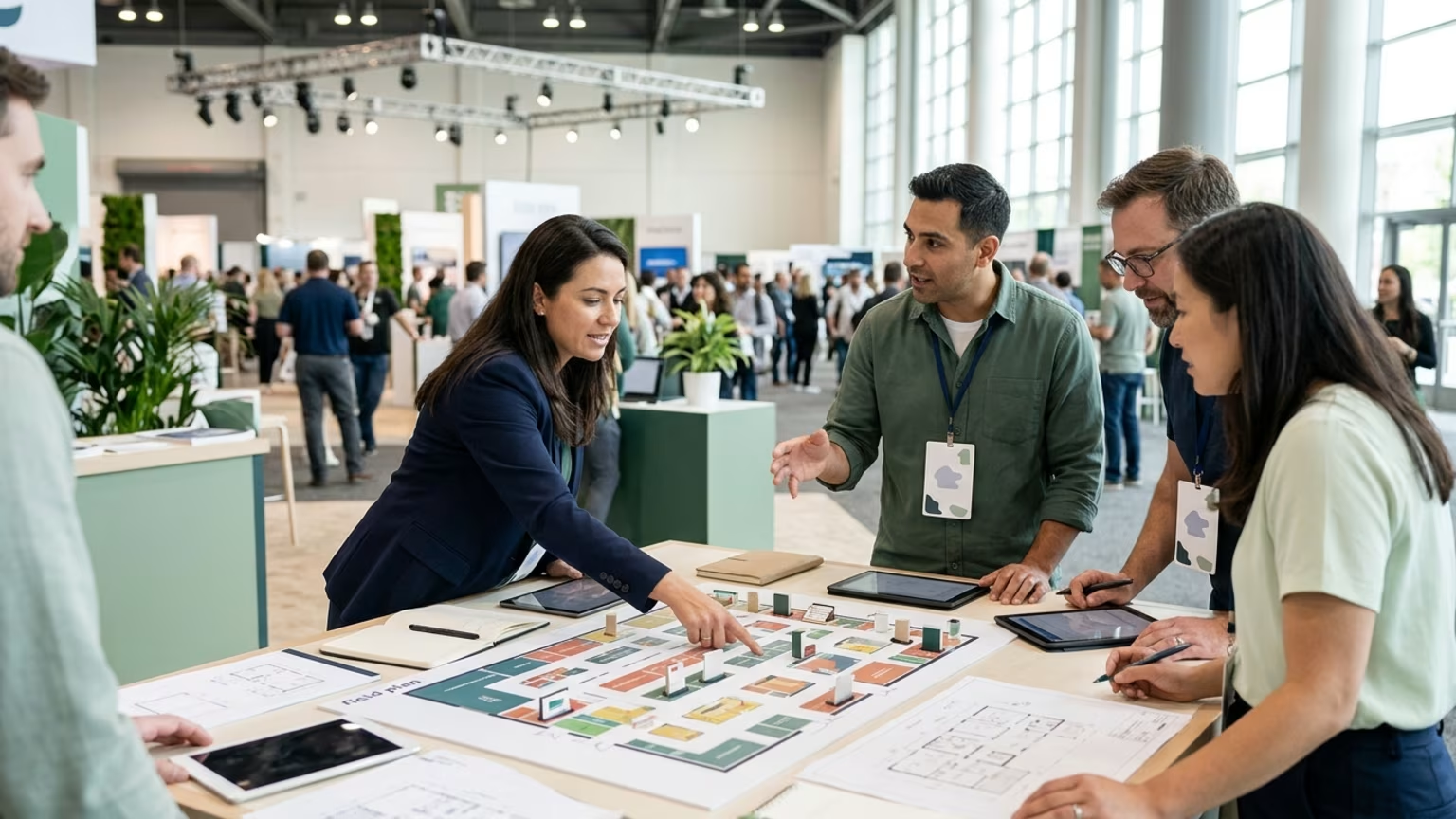
On October 15, Event Marketer reported how Electrify America and Verifone tracked attendee interactions at NACS Show 2026 in Las Vegas. The show ran October 6 through October 9, with the expo open October 7 through October 9, according to the official NACS schedule.
CSP Daily News reported 25,572 attendees from 74 countries and territories and 1,090 exhibitors. Within that large event, the useful operational detail was specific: exhibitors identified actions they wanted to observe rather than describing their booth environments alone.
For CPG and beverage marketers, that puts a practical question inside the creative brief. The experience needs to make room for the interaction being measured, whether that means a product trial or a buyer conversation.
Electrify America and Verifone offered different examples of matching a physical experience with observable engagement.
According to Event Marketer, Electrify America recreated a charging-site experience with custom-wrapped chargers and landscaping. A “Charge On” storefront served coffee and snacks. The objective was to help convenience-store retailers understand how to build and operate a branded EV charging network.
Event Marketer reported that Electrify America tracked booth QR scans and conversations. It used conversations to make real-time adjustments intended to meet its KPIs. The exhibit also sat within a campaign that included LinkedIn ads, Uber ads in Las Vegas and pre-booked meetings.
Verifone used another approach. Event Marketer described LED lighting and a rebranded cafe as expressions of its “site is always on” concept. Attendees could order drinks through a touch kiosk while booth demonstrations presented other solutions.
Verifone tracked meetings, SMS campaign opt-ins, rebate campaign opt-ins and responses to its “Your Voice Matters” NPS survey. Those measures covered several kinds of participation rather than a single booth-traffic total.
CSP Daily News supplied another example from the show floor: attendees generated more than 9,000 QR scans across 342 products in the Cool New Products room. That reporting documented product-interest activity at the organizer level.
The evidence boundary belongs alongside these examples. The exhibitor coverage provides no interaction totals, KPI targets or qualification rules. It reports no sales, conversion, revenue or Return on Investment results. Verifone’s survey tracking is not a disclosed NPS score; neither the campaign touchpoints nor the product-room scans establish sales attribution.
The practical lesson is to give each action its own meaning before assigning it a place in the performance report.
Our view is straightforward: a welcoming experience and a precise operating plan belong together. Aloha brings people into the conversation. Discipline keeps the team clear about what that conversation is meant to accomplish.
For a beverage or food brand, the physical interaction is where the product stops being a claim on a screen. People can try it and speak with someone about it. Makai’s retail demonstrations use trained brand ambassadors to support in-store sales through those conversations and product trials.
That is why we see the NACS examples as an operating lesson rather than a contest between measurement tools. The choice is not simply whether to use a QR code or schedule meetings. It is whether the experience gives the intended interaction enough attention and space.
We have connected brands with people through live experiences and retail programs since 1995. Our work includes experiential campaigns and trade show activations designed to turn brief encounters into qualified leads for premium CPG brands. That positioning makes the quality of the interaction central to the brief.
Our reporting covers reach, trials, leads and sales to guide campaign decisions. We believe those categories should stay distinct because they answer different business questions. A useful event measurement plan connects the intended experience with the evidence needed to evaluate it.
The NACS reporting supports planning around defined actions. It does not supply a universal staffing formula. The operational guidance below follows from matching those actions with the work and space they require.
A scan and a buyer conversation are different assignments. In our view, the staffing brief should reflect that difference rather than give every interaction the same treatment.
For a scan-focused activity, the planning task is to make the purpose of the interaction clear. For a product trial, the ambassador’s role includes the product conversation. For a buyer meeting, the plan needs to account for the discussion rather than count its booking as the entire experience.
This is where the definition of a meaningful interaction becomes practical. If conversations are being tracked, the brief needs a shared description of what counts as a conversation. If meetings are being tracked, the report needs to distinguish the intended meeting activity from other booth engagement.
Electrify America’s reported use of conversations for real-time adjustments also makes the human role relevant. The measurement approach included what people discussed, not just what they scanned. For marketing leaders, that supports treating on-site staffing decisions as part of measurement planning.
The booth concept should support the desired behavior. Electrify America’s recreated charging environment made a retailer proposition tangible, according to Event Marketer. Verifone’s cafe let visitors interact with a touch kiosk rather than only hear about it.
Our interpretation is that the intended action belongs in the layout discussion early. Product interaction and a longer commercial conversation place different demands on a space. Treating both as general engagement leaves the operating brief too vague.
At Natural Products Expo West 2025, we designed and managed a 40 by 20 foot trade show environment for Glanbia. It brought think!, Isopure, Optimum Nutrition and Amazing Grass into one coordinated space. We handled concept, operations, staffing and breakdown, with more than 14,000 recorded product samples distributed across the activation stations.
The relevant lesson is coordination. A shared footprint still contains distinct interaction points, and the operating plan must serve the experience across them. Our scope covered both the visitor-facing concept and the work required to run it.
For CPG teams, making room for trials and buyer conversations is therefore a design decision and a measurement decision. The activity being reported should have a recognizable place in the experience.
Electrify America’s campaign extended beyond the booth, according to Event Marketer. That makes the campaign brief another part of the operational picture.
Our recommendation is to name the action at each touchpoint instead of letting every response become a generic lead. A pre-booked meeting belongs under its own label. A booth QR scan belongs under another. A conversation provides a different kind of evidence again.
Verifone’s reported measures make the same point through a broader set of actions. Meeting activity differs from participation in an SMS or rebate campaign. Survey responses belong in the feedback category.
This separation gives the field team a clearer assignment and gives the marketing team a clearer report. It also creates a better starting point for discussing what happened after the event. The practical objective is not to collect every available signal; it is to document the signals that match the campaign’s stated purpose.
The strongest operational takeaway from NACS is that measurement belongs inside experience planning. The action being tracked should be visible in the staff assignment and the physical environment. It should also retain its meaning when it reaches the report.
For CPG and beverage teams, this keeps attention on the connection between participation and commercial intent. It allows the creative concept to remain welcoming while giving the field team a defined job. It also gives leadership a clearer basis for evaluating the evidence the activation produces.
As CMO or VP of Marketing, will you annotate your next activation brief today with the purpose of each tracked interaction and the staffing or space needed to support it?
Capturing booth activity leaves a separate question about purchase behavior; Makai’s retail demonstrations put trained brand ambassadors in stores to discuss products with shoppers. For food and beverage marketers assessing Return on Investment from live events, this work focuses on product trials and in-store sales rather than a stand-alone count of attendee activity.

30 Years Experiential & Retail Activation Partner for CPG & Beverage Brands | Multi-Market Demos, Roadshows & Costco/Club Programs That Actually Sell