Robbie Thain
Founder, CEO

Learn how to build an event measurement plan before production begins. Define objectives, set metric thresholds, and track live Return on Investment accurately.
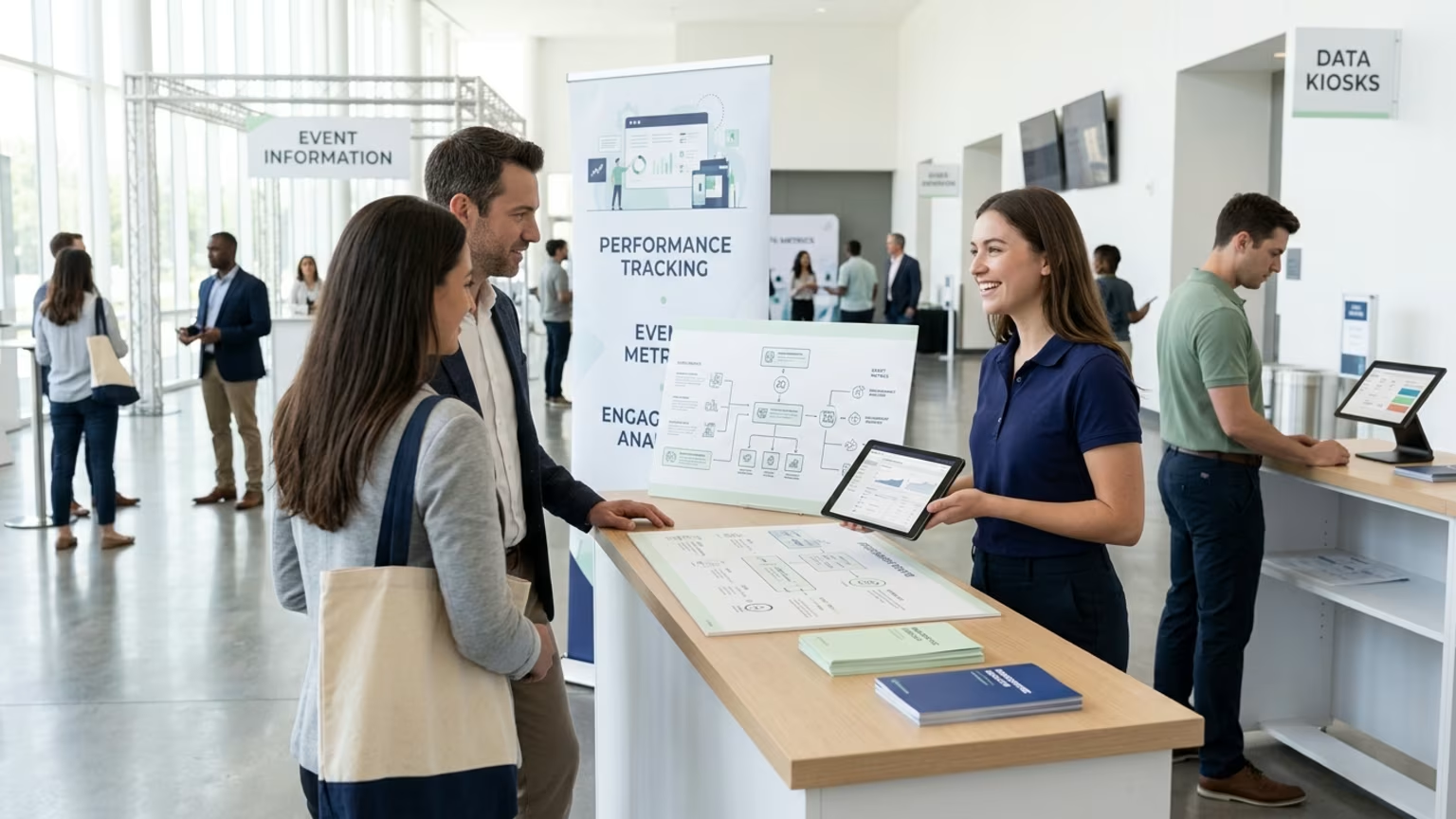
Great event measurement starts long before the creative brief. It begins with rigorous operational control over unglamorous logistics. Securing municipal permits, staging vehicles, and configuring CRM routing systems form the foundation of any measurable activation. Our team knows that skipping these steps leads to absolute chaos on the floor.
We build festival zones, premieres, and pop-ups that turn viewers into fans and fans into advocates. We design moments people want to share, using music tie-ins, screenings, and live stunts to bring stories to life while our crews manage execution and track reach and response metrics. Without this operator-grade discipline, tracking meaningful field data becomes impossible.
You cannot measure what you cannot physically control. Establishing a dedicated CRM campaign or source tag guarantees that opportunities and revenue can be tracked accurately over time. Brands that invest in connected event ecosystems secure clearer visibility into long-term pipeline. Your field marketing managers must set up these tracking systems before the first truck leaves the warehouse.
Event measurement guidance recommends defining goals and KPIs before the event begins. You must align your chosen metrics with the primary objective of your activation. This operational method provides a repeatable way to lock down your tracking plan.
Your measurement plan must serve a specific business decision rather than a disconnected dashboard of numbers. Define whether the data will tell you to expand retail distribution, change the product demonstration, or reallocate staff toward higher-value conversations. If an event is supposed to function as a launch platform, the metrics must support a future spending decision.
A practical objective should be narrow enough that a team can explain it in one simple sentence. Lead-generation events should focus on captured contacts, qualified sales opportunities, and booked meetings. A health or wellness experience should aim to build trust and encourage trial among a specific target audience. The stated goal determines which specific metrics receive priority on the final executive scorecard.
Every primary objective requires a clear chain of evidence. This sequence moves from the target audience reached to meaningful engagement, leading to a qualified action, and finally delivering a commercial outcome. For lead-generation events, measure qualified leads, meetings booked, and opportunities created alongside total attendance. Stopping at total lead volume leaves a massive reporting gap.
Establish a floor, target, and stretch goal for every single tracked metric. The floor represents the absolute minimum acceptable result. The target justifies the financial investment. The stretch goal supports scaling the program into new regional markets. A clear threshold for cost per qualified lead helps finance teams evaluate the activation against paid media alternatives.
Assign a specific leader to own each metric and its corresponding corrective action. If product trial falls below the floor, the field team lead must adjust the demo script or physical queue. The sales lead must own qualification rules, meeting quality, and opportunity progression. Building a robust KPI alignment plan guarantees that every number has an owner ready to adjust tactics in real time.
Define lead qualification rules and required consent language early in the planning process. Trade-show guidance recommends recording every conversation, qualifying leads while the interaction is still fresh, and following the lead through the sales cycle. The physical space and digital tools must be explicitly configured to capture these exact fields. The capture method must always remain frictionless for the consumer.
Leading indicators tell the team whether the event is working while it is still possible to intervene. These indicators include physical traffic from the target audience, average wait time, and demo completion rates. Lagging indicators show whether the event created durable value through brand recall, retail sell-through, or closed revenue.
Many brands fail by treating a high volume of low-quality badge scans as a massive victory. A crowded physical footprint might reflect random curiosity or basic aisle congestion rather than a compelling product experience. Freeman's event research commentary recommends examining audience segments, channels, drop-off points, and first-time attendee behavior in addition to registration totals. Relying exclusively on total registration numbers leaves marketing teams completely blind to actual engagement quality.
Another common mistake involves broken CRM routing and delayed follow-up procedures. Capturing leads on disorganized clipboards or failing to contact them quickly destroys your downstream pipeline potential. A basic Return on Investment (ROI) calculation is net profit attributable to the event divided by total event investment, multiplied by 100. Brands utilizing a proper measurement framework know they cannot calculate this metric if field data is lost in transit.
In 2025, Intel executed a rigorous measurement framework at AWS re:Invent to prove experiential value. Event Marketer reports that Intel used pre-visit and post-visit surveys, including a non-visitor comparison group, to assess its AWS re:Invent booth. Intel used a 30-by-30-foot booth featuring interactive surprise and delight elements, including a camera activation and personalized hats, with engagement occurring both on the show floor and across social media.
The measurement team surveyed attendees leaving the exhibit to assess changes in results. Attendees who had not yet visited the booth served as a control group for direct comparison. According to Event Marketer's account, Intel's measurement approach separated experience, sentiment, and ROI questions. This specific structure prevented the team from blurring temporary excitement with actual commercial intent.
This layered approach provided a clear picture of true brand impact. His recommended framework includes return on experience, return on emotion or sentiment, and ROI, with questions designed around the actions attendees take after visiting. He also stressed the importance of concrete data in demonstrating event budgets and results to senior leadership.
Your event team should review leading indicators during the activation to make rapid operational changes. Lagging indicators require more patience and highly disciplined tracking. Some event-measurement frameworks recommend reviewing pipeline around 90 days and revenue around 180 days, while adapting the window to the organization's sales cycle.
Do not rush to judge the final commercial value until the appropriate purchase window has closed. Keep your CRM tags active, monitor your attribution windows, and enforce your follow-up compliance rules ruthlessly. When you treat the physical event as a testable operating system, you generate actionable intelligence for the next campaign.
Rushing into physical activations without clear measurement architecture leaves marketing teams overwhelmed by uncoordinated staffing and blind to actual event performance. Makai eliminates the burden of navigating complex event logistics, permits, and staffing by deploying our Experiential Marketing capability. We create hands on brand moments that connect emotionally and turn customers into ambassadors. Request a proposal

30 Years Experiential & Retail Activation Partner for CPG & Beverage Brands | Multi-Market Demos, Roadshows & Costco/Club Programs That Actually Sell