Robbie Thain
Founder, CEO

CEMA Summit 2026 emphasized the critical need for event ROI and CMO alignment. Discover how top brands translate these standards into measurable field strategies.

Event return on investment is the documented contribution a live brand experience makes to commercial growth. It represents actual qualified pipeline and strategic business objectives. It replaces vague attendance metrics with concrete proof of revenue influence. This rigorous definition took center stage at CEMA Summit 2026.
The gathering took place from August 9 to 11 in 2026. The venue was the Sheraton Centre Toronto Hotel in Toronto, Ontario. Go2 Productions reported that measurement and business impact were recurring themes throughout the programming. The event framed event marketing as a discipline that must demonstrate its contribution to growth and revenue.
The gathering attracted more than 850 corporate event marketers. Attendees included strategists, industry partners, and other professionals from 19 countries. PCMA described the 2026 summit as the largest gathering in the 27 year history of CEMA. This international footprint proves that measurement standards are becoming a global priority for brand operators.
The event also included 383 first time participants. This influx shows that new practitioners are actively seeking better ways to measure live activations. PCMA reported that more than 40 education sessions covered topics like measurement, leadership, and artificial intelligence. These practitioner led sessions also discussed audience engagement and experiential design.
Physical marketing programs historically relied on total foot traffic to justify their budgets. A crowded exhibition hall was often treated as a successful outing regardless of actual conversion rates. Today, corporate leaders require definitive proof that these physical interactions move the commercial needle. The Toronto summit made it clear that this shift toward financial accountability is permanent.
Proving commercial impact requires separating actionable data from vanity brand theater. A featured summit session examined this exact operational tension. Go2 Productions reported that a session titled Inside the CMO Mindset: Defining the Value of Events in a Revenue-Driven Era examined how executives evaluate event portfolios. The presentation focused on connecting live experiences with growth, revenue, and wider business strategy.
This alignment is critical for consumer brands running physical programs. A busy booth means nothing if it fails to convert into a qualified trial or a retail conversation. Measuring physical success requires the same analytical rigor applied to digital advertising budgets. CEMA and PCMA Insights are developing an Event Marketing ROI Benchmarking Model and Toolkit to address this gap.
The initiative is being built by corporate event marketers for corporate event marketers. This insider perspective ensures the framework addresses the specific logistical realities of field execution. Generic marketing dashboards often fail to capture the nuance of a physical product demonstration. An industry specific benchmark will help operators defend their strategies in the boardroom.
CEMA said its confidential survey took about 10 minutes and had been extended through the end of August. PCMA said initial findings were expected in early 2027. A supporting member toolkit will follow those findings. CEMA described the planned model as an evergreen benchmark intended to be updated annually.
We build festival zones, premieres, and pop-ups that turn viewers into fans and fans into advocates. We design moments people want to share, using music tie-ins, screenings, and live stunts to bring stories to life while our crews manage execution and track reach and response metrics. This rigorous tracking aligns perfectly with the executive mindset discussed in Toronto. Event leaders must speak the language of corporate finance to secure future activation budgets.
Transforming a physical footprint into a measurable commercial asset requires strict structural discipline. The 2026 summit was organized around three programming pillars. These pillars were impact, influence, and intention. Translating those abstract themes into a field marketing operation requires three distinct functional components.
First, operators must define the exact business decision before launching an activation. A consumer brand must decide if it wants to measure product understanding or pure sales volume. An activation designed to generate immediate retailer interest will look different from a pure sampling tour. Defining this primary objective dictates which interactions the field team prioritizes during the planning phase.
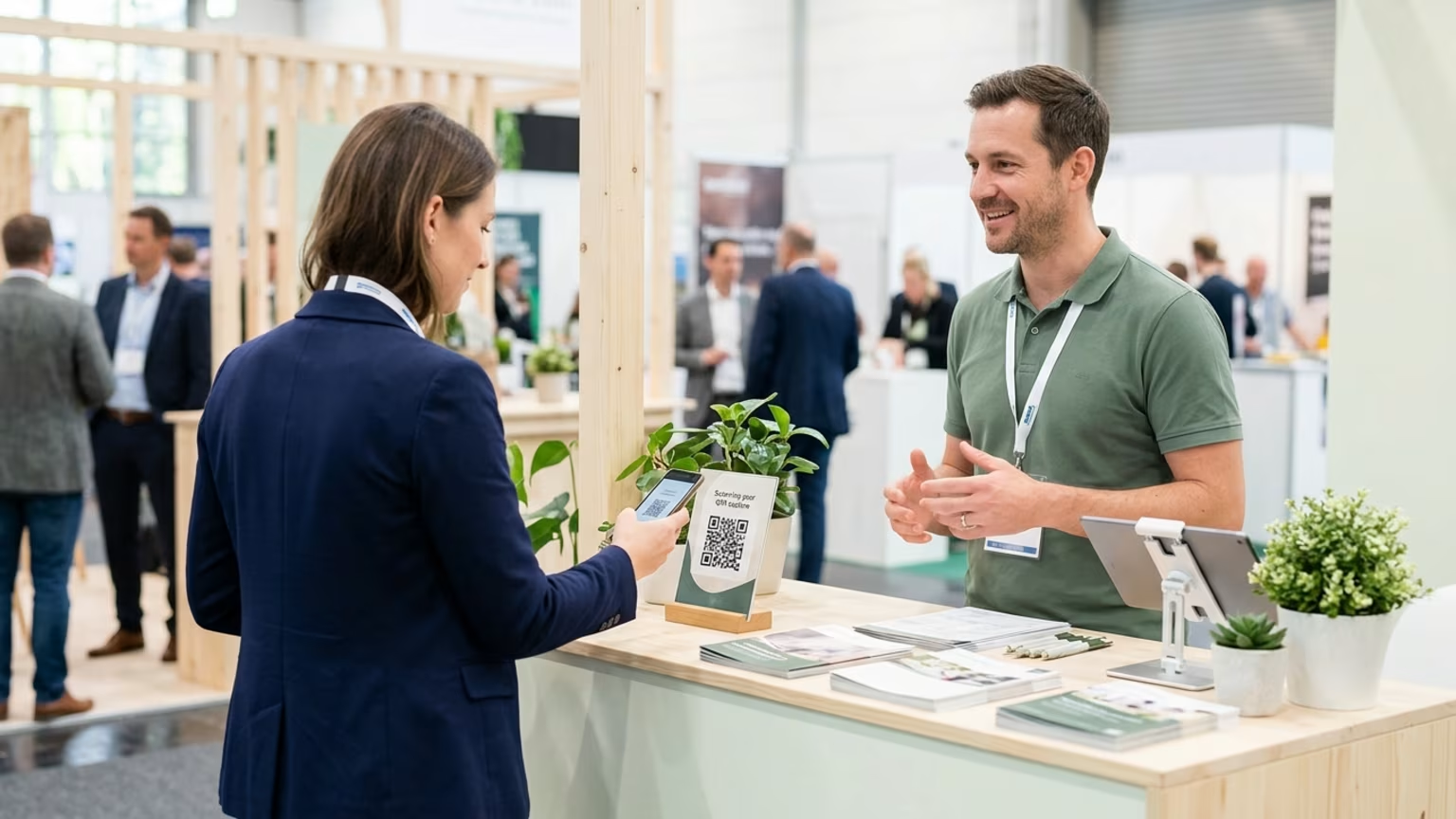
Second, teams must instrument the physical experience to capture interaction data natively. Go2 Productions noted that an experience can capture touchscreen attention, gamified participation, and QR scans. A proper centralized lead capture system ensures these touchpoints translate into structured data. Capturing these interactions allows operators to track which product categories attract the most active consideration.
Third, marketers must establish a seamless handoff to sales or retail teams. ITA Group recommended designing for momentum, linking attendee behavior to business outcomes, and comparing results with pre event baselines. This structured approach helps brands map attribution for experiential marketing directly to sales influence. Handoffs turn isolated brand interactions into active commercial pipeline.
A proper handoff also requires aligning the field marketing software stack with corporate CRM systems. Capturing high quality leads on the floor is useless if those contacts languish in a disconnected spreadsheet. Integration ensures that every scan triggers the appropriate follow up sequence immediately after the event ends. This technical alignment is the hidden engine behind any successful revenue driven campaign.
Establishing a pre event baseline is crucial for accurately measuring post event lift. If the objective is to increase trial rates, operators must document current performance levels before the activation begins. This prevents teams from moving the goalposts after the data is collected. A documented baseline anchors the entire measurement strategy in reality.
Without these pillars, field marketing remains a guessing game based on subjective floor observations. A structured handoff ensures that the energy generated on the floor translates into measurable pipeline. Proper execution requires relentless focus from the teams managing the actual footprint. Measurement must be built into the physical architecture of the booth itself.
Event value cannot be reduced to the number of people who simply attend a trade show. Sherrif Karamat serves as president and CEO of PCMA and CEMA. He said the strength of the community is measured by members willing to share successes, challenges, and lessons learned. Shared operational knowledge is critical as leaders face complex questions regarding audience engagement and business impact.
The forthcoming benchmarking initiative aims to standardize how teams communicate value. Summit coverage identified several measurement areas discussed in connection with the initiative. These areas included engagement, learning, and product interest. Other topics included sales influence, sentiment, behavioral data, and customer journey contribution.
Go2 Productions detailed these categories as practical ways to track performance beyond raw registration numbers. Moving past basic attendance figures allows marketers to isolate the specific interactions that actually move deals forward. Tracking product interest helps teams understand exactly what buyers want to discuss. Sentiment analysis reveals whether the brand narrative resonates with the target demographic.
Operators need to build dashboards that separate activity from actual commercial progression. Activity metrics like total samples distributed or total scans provide a baseline understanding of volume. However, commercial progression requires tracking qualified leads, follow up meetings, and active retailer conversations. Distinguishing between volume and value is the key to proving event ROI to a demanding executive board.
Brian Mason serves as vice president of strategy and operations for CEMA. He said the organization wanted to preserve an open, candid, and relationship driven culture as it expanded globally. Modern event teams must navigate these new tools carefully to maintain that culture. The rush to digitize data collection should never compromise the human element of a live activation.
The application of artificial intelligence in event tracking requires strict operational discipline. Automated systems can rapidly process thousands of booth interactions during a busy trade show. Yet, these systems often fail to register the subtle emotional cues that define a successful product trial. Human oversight ensures that data points reflect actual consumer sentiment rather than just digital noise.
Go2 Productions and PCMA noted that automation may improve efficiency. However, human judgment remains necessary to evaluate artificial intelligence outputs and make strategic decisions. We see this daily when managing high volume brand interactions across the country. Technology gathers the data, but trained field marketing teams are required to turn that information into context for senior leadership.
Artificial intelligence can summarize badge scans, but human operators must determine if a conversation showed genuine buying intent. Next year will offer operators a chance to refine these skills further. CEMA scheduled its next summit for July 25 to 27 of 2027. The event will take place in Denver, Colorado.
Event marketing leaders will gather again in Colorado to discuss the first round of benchmark findings. This ongoing dialogue ensures that measurement standards evolve alongside consumer behavior. Brands that adopt these rigorous measurement frameworks now will hold a massive operational advantage over competitors who still rely on vanity metrics.
Live activations only generate true commercial momentum when brand leaders replace vague attendance counts with hard evidence of sales influence and pipeline progression.
Once executive leaders align on the strategic metrics required to measure live experiences, field marketing teams must translate those standards into flawless physical execution. Makai eliminates the problem of scattered attention and poor booth flow by deploying our Retail Demonstrations capability. Trained brand ambassadors drive in store sales through real conversations and product trials. This rigorous operational control ensures your brand footprint delivers measurable commercial response.

30 Years Experiential & Retail Activation Partner for CPG & Beverage Brands | Multi-Market Demos, Roadshows & Costco/Club Programs That Actually Sell