Robbie Thain
Founder, CEO

Cata-Kor's Target launch creates retail execution questions. Makai examines possible shopper education, field staffing, permissions and measurement.
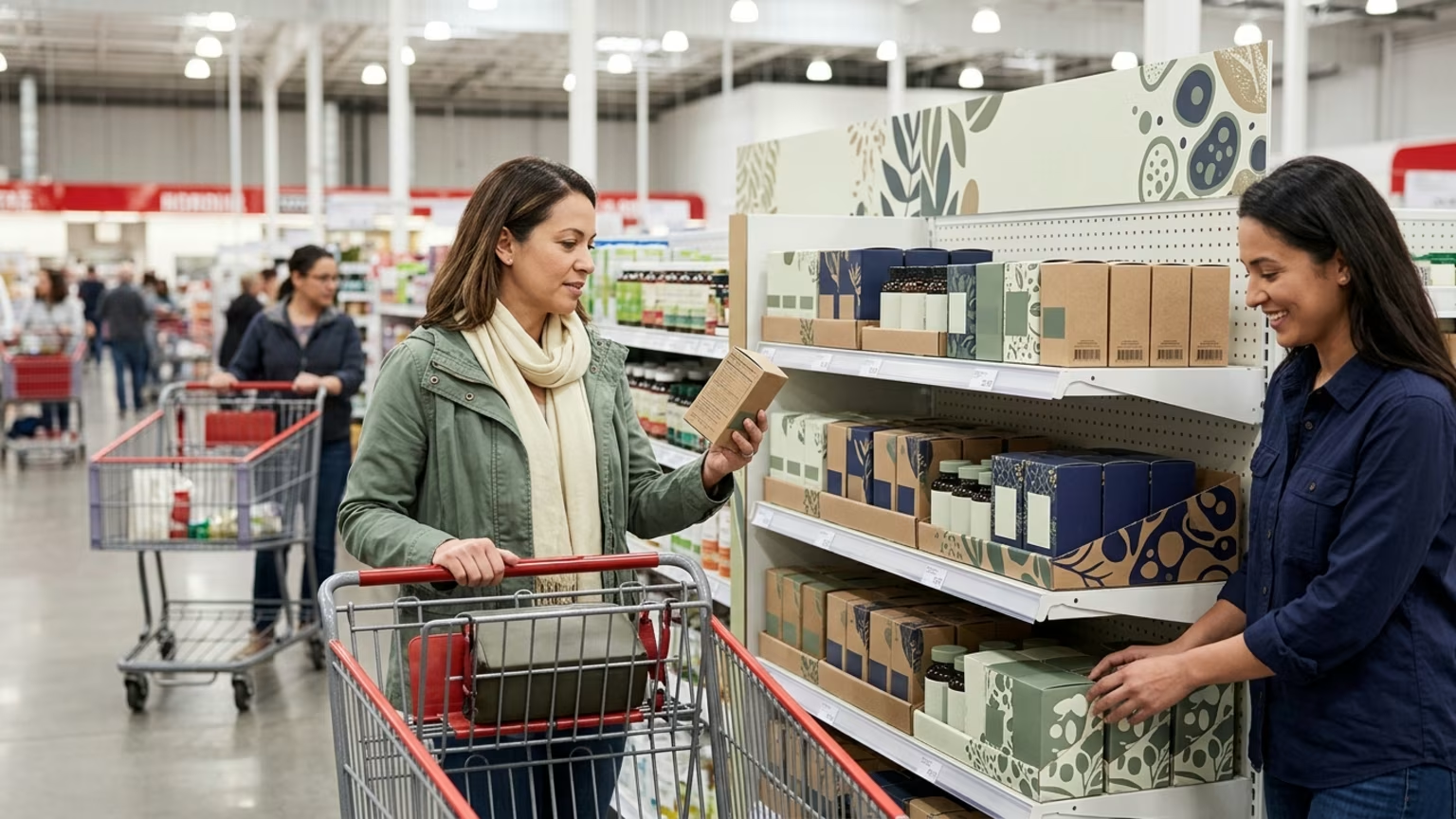
On October 14, Cata-Kor (the supplement brand) announced its entry into physical retail through a nationwide Target launch, according to its company announcement. The products are in Target's Vitamins & Supplements section. The launch also includes a store-specific pack format.
For marketing leaders, that announcement creates a useful distinction: getting a product onto a shelf and supporting a shopper interaction are separate assignments. Makai's view is that a national retail launch deserves an equally deliberate conversation about field execution.
Cata-Kor's announcement establishes nationwide retail distribution and packaging adapted for that setting. Those are changes in availability and presentation. They are not evidence of a shopper-facing activation.
The company describes two formats within its portfolio: one based on an NMN precursor and another based on direct NAD+ delivery. These are company product descriptions rather than independent findings about comparative effectiveness.
The release reports no demonstrations or sampling and provides no staffing or education-material details. It also provides no sell-through data or measured shopper response, so the launch's commercial impact is not established. The announcement is a company press release distributed through a press-release channel rather than independent verification of performance. It states that the supplement statements have not been evaluated by the FDA and that the products are not intended to diagnose, treat, cure or prevent disease.
That leaves a clear factual foundation: a physical retail entry with a retail-specific format. The marketing opportunity is what a brand might build around that placement.
There is relevant retailer context. In an October 12 interview with Progressive Grocer, Target SVP of Food & Beverage Merchandising John Conlin said the retailer was expanding wellness-related assortment. He described an emphasis on products that fit shoppers' routines and offer value.
Conlin also called functional beverages one of the fastest-growing areas of Target's food and beverage business. Those comments concern food and beverage assortment, not Cata-Kor's supplement performance. For this article, they provide context for the retailer's wellness direction rather than a forecast for the launch.
Our reaction is straightforward: welcome the new retail opportunity, then separate the distribution milestone from the work of earning a useful shopper interaction. Aloha belongs in the conversation. Discipline belongs in the plan.
We specialize in retail demonstrations, product sampling programs and roadshows that bring brands face to face with their audiences. Those programs are designed to drive trial and build consumer relationships while supporting retail velocity across locations. That work makes the distinction between product availability and meaningful participation central to our perspective.
For us, the store-specific pack is a reason to examine the shopper conversation. What information belongs in that exchange is a planning decision. It should not become an excuse to add unsupported product promises.
For CPG and beverage marketers, the broader lesson concerns the handoff between commercial ambition and physical execution. A launch brief may prioritize distribution while a field brief must address the interaction itself. We believe those briefs should connect without treating them as interchangeable.
Across our history, we have delivered more than 1,000 campaigns in all 50 states for more than 200 brands. That breadth informs how we look at national field coverage: one national objective still contains many local execution questions. Our experience spans different retail settings and event formats rather than a single activation model.
The business objective also needs precision. A shopper conversation is an engagement. A purchase is a commercial action. A qualified lead belongs to a defined pipeline process. In Makai's view, combining those categories into one activity total makes Return on Investment harder to evaluate.
For a proposed activation around a retail launch, the downstream questions reach beyond a demo table. Staffing and permissions shape what is possible. Product handling and shopper movement shape how the proposed interaction would work.
The following considerations are Makai's planning analysis for that opportunity.
A proposed ambassador brief would need to distinguish between explaining the product's presentation and making a claim about its effects. The two formats described by Cata-Kor provide a reason to make that distinction clear. Explaining how the company positions them is not the same as promising a health outcome.
Makai's retail demonstrations use trained brand ambassadors for real conversations and product trials. For us, the strength of that format is the human exchange rather than a longer sales script. A useful brief gives the interaction a purpose without turning every shopper question into a sales opening.
Staffing should therefore follow the proposed interaction. A short product explanation and a more involved engagement are different assignments. We would evaluate the role before treating ambassador coverage as a finished line item.
That is an operational judgment, not a recommendation for a particular staffing quantity. The evidence supports evaluating the work rather than inventing a crew size.
A national distribution announcement should not be treated as permission to conduct product sampling. Makai's position is that placement and activation approval belong in separate parts of the planning conversation.
For a proposed program, the scope would need to be clear: product education or another agreed shopper interaction. Any permissions and permitting questions should be assessed against that actual scope. This is not a new rule announced by Target or Cata-Kor.
The practical value is clarity. A field concept should describe what would happen in the store before it becomes a staffing or logistics commitment. A broad instruction to “support the launch” leaves too much unresolved.
Our view is that an in-store activation should make participation understandable without making the shopping trip harder to navigate. The planning question is not simply where a display could fit. It is how a shopper could approach the interaction and then continue shopping.
That calls for thinking about the product conversation alongside the physical footprint. Materials and supplies take space even when the creative concept looks compact. A proposed education-led interaction should be evaluated as an activity within a store rather than as a small trade show booth.
Makai plans and manages trade show spaces that attract attention and start conversations. The related principle here is focus: the physical environment should serve the intended exchange. It should not compete with it.
For Makai, measurement should begin with the commercial question the proposed activity is meant to answer. A program intended to support product understanding has a different evaluation task from one designed to generate qualified contacts. Neither should be judged solely by how busy the space appears.
A proposed measurement plan could distinguish participation from purchase and follow-up. Where a program includes lead capture, the definition of a qualified lead should remain separate from a general shopper interaction. Those distinctions make the reporting question more precise without assuming a result.
For marketing leadership, connecting live activity with business outcomes is a stronger objective than collecting an impressive activity total. The goal is a clear relationship between the program's purpose and the evidence used to evaluate it.
The next planning conversation should start with the role of the physical interaction. Education and trial are possible approaches, not automatic additions to a retail launch. The choice should follow the product information and the commercial objective.
From there, the proposed field scope can be evaluated as a whole. The ambassador role should fit the interaction. The footprint should fit the setting. The reporting should answer the question leadership actually needs answered.
For Makai, that is the balance: a warm welcome backed by a disciplined plan.
As a CMO or VP of Marketing, will your next retail launch brief define what happens between shelf availability and a measurable shopper action before the field budget is committed?
A nationwide supplement listing can leave a gap between shelf availability and a useful shopper conversation. Makai's retail demonstrations bring trained brand ambassadors into stores for product trials and direct shopper conversations. The service is part of its work for CPG marketers and food and beverage brand managers managing regional or national campaigns.

30 Years Experiential & Retail Activation Partner for CPG & Beverage Brands | Multi-Market Demos, Roadshows & Costco/Club Programs That Actually Sell