Robbie Thain
Founder, CEO

Del Monte’s six-product IFPA sampling plan highlights the staffing, logistics and buyer follow-up decisions behind a unified portfolio showcase.
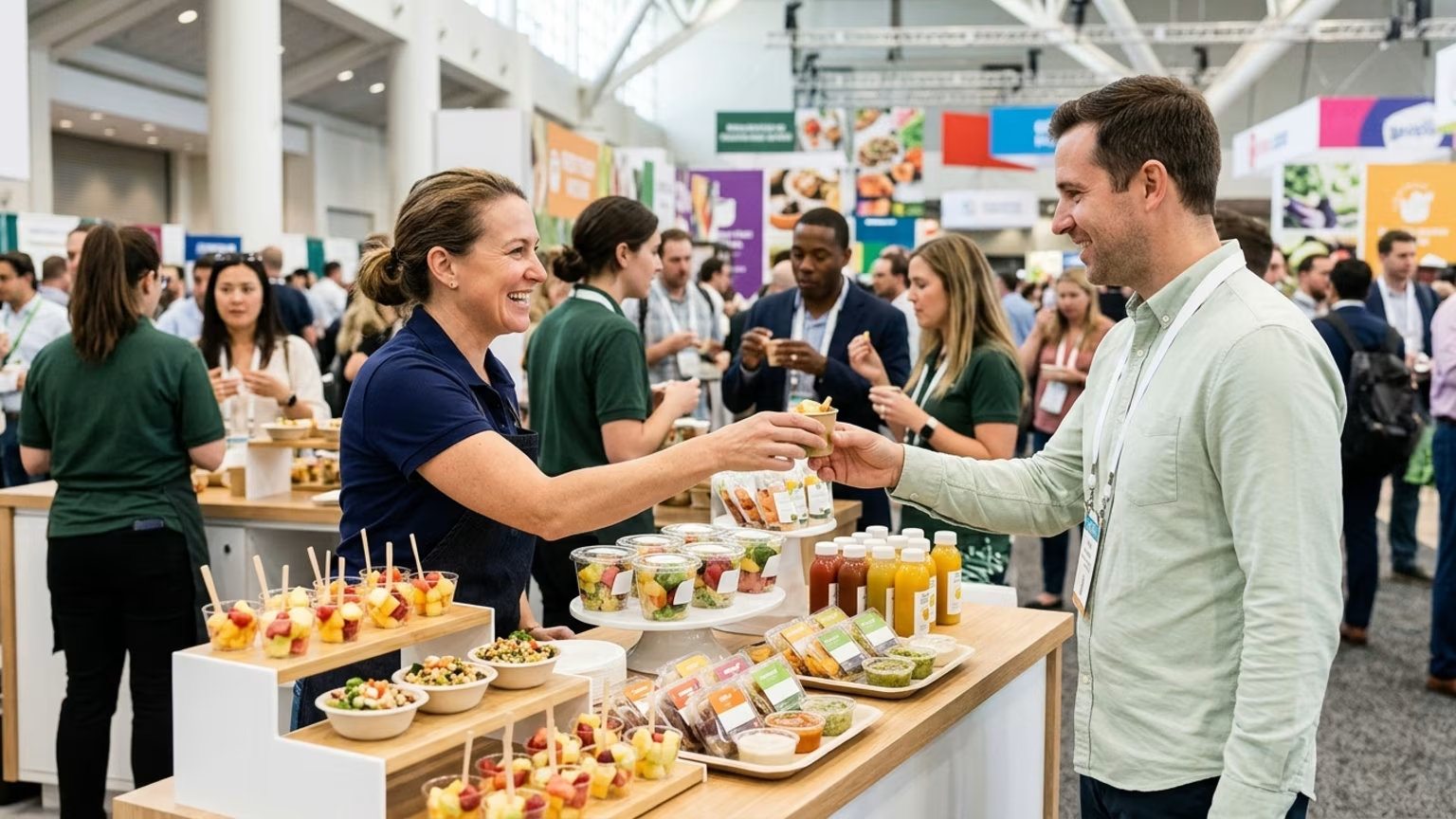
On October 14, 2026, Del Monte Corporation announced six new products for its IFPA Global Produce & Floral Show showcase in Orlando. The company said attendees could sample the offerings at booth #1642 during its participation on October 15 and 16, 2026.
Grocery Business reported that the overall show was scheduled for October 14 to 16 at Orlando’s Orange County Convention Center. Del Monte’s stated participation dates cover October 15 and 16.
Del Monte described the planned showcase as its first unified fresh-and-shelf-stable presentation since acquiring select Del Monte Foods assets. The company said the brand had been reunited under one global owner for the first time in nearly 40 years.
The practical change is a shared presentation across those parts of the portfolio. Del Monte’s announcement identified these six new products:
Del Monte described the Açaí Parfait as a single-serve cup with açaí, fresh fruit, yogurt and granola. It reported 6 grams of protein per cup. The company said the Fruit Kabobs combine five fruits.
Del Monte said the Premium Snack Fruit Trio Tray includes Honeyglow and Pinkglow pineapple with cantaloupe. Those details give the launch brief distinct product propositions rather than interchangeable tastes.
A separate Gold Pineapple presentation was also on the brief. Del Monte said it would feature single-serve chunks plus multi-serve chunks and spears packed in 100% juice. The company described these formats as one of the first collaborations between its Fresh and Foods teams. They are separate from the six announced debuts.
The launch details come from a paid company release, not independent reporting on buyer response. It provides no staffing plan, sampling schedule, permit information or booth layout. It also provides no sample count, conversion data, retailer commitments or sales results. The supported story is a planned launch-and-trial opportunity, not demonstrated Return on Investment (ROI).
For us, aloha belongs in the welcome and discipline belongs in the operating plan. A buyer should feel invited to taste without having to untangle the portfolio. Our view is that a unified brand story earns its place on the floor when the product experience is equally clear. For us, the job is to make a moment of product interest legible to the team responsible for the next conversation.
We specialize in retail demos, product sampling programs and roadshows that bring brands face to face with their audiences. Each program is designed to drive trial and build consumer relationships while supporting retail velocity across multiple locations. From that perspective, the Del Monte announcement is more than a menu of products. It is a brief for coordinating different reasons to stop and taste.
For CPG and beverage marketers, the commercial objective should stay visible inside that brief. Product trial is the beginning of a conversation about fit and interest. We believe the next interaction should clarify which product matters to the visitor and what kind of follow-up has value.
We managed a four-week, multi-market Costco sampling program for Pulmuone’s PlantSpired line. The program delivered more than 65,000 samples and recorded an 18 percent sold-to-sale rate. The useful lesson is the distinction between participation volume and a purchase-related measure. They describe different parts of the commercial picture.
For a buyer-facing show, the corresponding planning priority is relevance rather than volume alone. A useful contact record connects the person with the product discussed and a commercial next step. That is the thinking behind treating booth conversations as qualification. It gives performance reporting a clearer business purpose than a total of tastes or badge scans.
For comparable portfolio activations, our operational analysis centers on staffing and product movement plus the booth footprint. These decisions connect the invitation to taste with the opportunity for a useful commercial conversation.
With several products sharing one presentation, the staffing brief needs more than a general brand introduction. Staff roles should connect product explanation with buyer relevance. A person interested in one offering should not have to restart the entire conversation to discuss another.
That does not mean every ambassador needs the same assignment. It means the plan should make ownership clear across tasting and commercial discussion. For us, warm hospitality and precise handoffs belong together. The goal is a conversation that feels natural without losing the reason the buyer stopped.
The staffing decision also affects what gets recorded. A sampling interaction and a qualified buyer discussion are not interchangeable evidence. A useful event brief defines the information needed for follow-up before asking staff to collect it. That keeps the reporting objective connected to the work happening on the floor.
A combined portfolio presentation also puts product movement inside the launch brief. The planning task is to connect the product list with responsibility for storage and delivery. Availability at the booth belongs in the same discussion as the invitation to sample.
Makai stores sampling product and event gear, then ships and tracks those materials while coordinating delivery nationwide. That is the physical side of a face-to-face program. For a portfolio launch, we see logistics as the connection between what the brand promises attendees and what the activation is ready to present.
We also design mobile activations and roadshows around 90-day product launch windows. That experience makes us view launch timing as part of the product-trial plan rather than a separate shipping conversation. On a route-based program, the same thinking informs matching stops to retail availability. For a show, the focus is keeping the tasting opportunity and product availability in the same operating brief.
The brief should also distinguish the public promise from the delivery work supporting it. Product descriptions belong in the visitor-facing story. Storage and shipment responsibilities belong in the operating plan. Both should be settled together so the launch is not treated as a creative project with logistics added later.
We designed and managed a 40 by 20 foot trade show environment for Glanbia at Natural Products Expo West 2025. The space brought together think!, Isopure, Optimum Nutrition and Amazing Grass.
Our scope covered concept, operations, staffing and breakdown. More than 14,000 recorded product samples were distributed across the activation stations.
The lesson we take from that work is coordination across a shared footprint. Several products can belong to one brand story while still needing distinct points of conversation. The layout should make those distinctions readable rather than leaving every explanation to the staff.
A sampling station and a buyer conversation have different jobs. Booth flow should support both without treating every taster as a prospect. The objective is not to turn the entire footprint into a queue. It is to give product interest somewhere commercially useful to go.
This is also where connecting physical trial with follow-up belongs in the plan. Contact capture should serve the conversation rather than interrupt it. From our perspective, a smaller set of relevant discussions is more useful to evaluate than a busy-looking space with no clear account of buyer interest.
The working distinction is between inventory movement and buyer movement. Product distributed belongs in the execution record. Buyer interest belongs in the commercial record. A completed shipment supports product presentation, but it is not itself a qualified lead.
The post-event review should keep separate accounts of what was available and what buyers asked to discuss next. A shipment record answers an operational question. A documented follow-up answers a commercial question. Neither needs to be inflated into a stronger result than it supports.
For a CMO or VP, this is also a management choice. The launch can be reviewed as a collection of busy activities or as a coordinated path toward relevant buyer engagement. Our preference is the latter, with execution evidence and commercial evidence kept distinct.
Del Monte’s announcement gives the market a clear invitation: come to a specified booth and taste a newly presented portfolio. For marketing leaders, the useful response is not to copy the product count or treat a full booth as proof of success.
The quieter work is deciding what the interaction should reveal and whether the operating plan supports it. For your next portfolio launch, will your team’s operating plan give buyers the same clarity you expect from the brand presentation?
When a portfolio sampling plan moves into product delivery, Makai takes over storage and nationwide coordination of shipping, tracking and delivery. Poor lead quality at crowded trade shows remains a separate challenge for CPG marketers; Makai designs activations intended to turn brief consumer interactions into qualified sales opportunities.

30 Years Experiential & Retail Activation Partner for CPG & Beverage Brands | Multi-Market Demos, Roadshows & Costco/Club Programs That Actually Sell