Robbie Thain
Founder, CEO

Learn how to choose roadshow stops that drive retail sales by aligning physical activations with consumer density, retail availability, and local events.
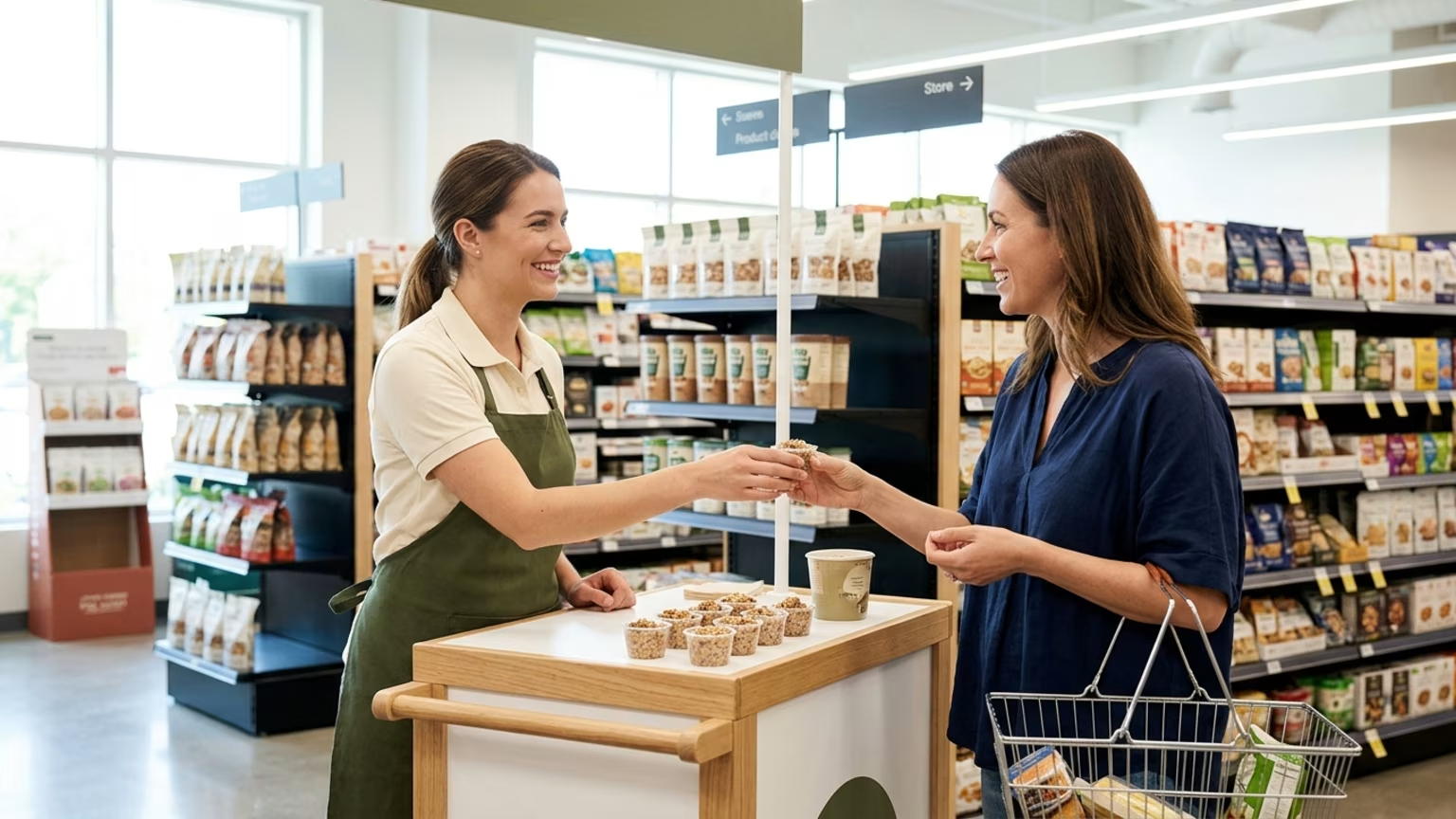
A field marketing manager watches hundreds of premium snacks disappear into a midday crowd. The sampling tent looks incredibly busy. The closest retail partner is twenty miles away. The tension is obvious because high footfall rarely equals actual product adoption without a direct path to purchase.
How do you select roadshow stops that actually drive measurable retail sales? American Guerrilla Marketing recommends selecting markets using consumer density, retail distribution, competitive conditions, and strategic priority. You must combine quantitative traffic and demographic data with qualitative knowledge of the consumer context. Choosing individual stops based on where the target audience gathers is critical for long term performance.
We design mobile activations and roadshows that accelerate consumer trial, build trust, and boost retail velocity during 90-day product launch windows. Our structured approach transforms initial product trial into sustained consumer confidence and retail performance. We specialize in creating retail demos, product sampling programs, and roadshows that bring brands face to face with their audiences. Each program is designed to drive trial, build consumer relationships, and accelerate retail velocity across multiple locations.
Finding a great location is only the first step of planning an effective activation route. Teams often ask how to handle the heavy logistics and permitting required for mobile sampling programs. We handle end to end integrated services from initial permitting to final reporting. The physical setup must align directly with where consumers can actually buy the product right now.
American Guerrilla Marketing recommends aligning consumer packaged goods field trials with retail availability. Programs should position these trials near active retail accounts to shorten the path from product encounter to purchase. The same agency argues that routes must follow the product's distribution footprint. If consumers cannot find the item after sampling, the entire permit and setup effort is wasted.
Logistics teams must verify store inventory levels before securing municipal permits or venue approvals. A beautiful physical activation means nothing if the target buyer faces an empty shelf nearby. This operational discipline prevents brands from spending their entire budget on empty brand theater. Securing the right permits near stocked retail accounts guarantees a better consumer experience.
By 2009, our work covered event and sponsorship activation alongside mobile tours. We managed sampling, event production, and logistics at a national scale. Makai was included in the 2009 PROMO 100 ranking published by PROMO and Chief Marketer. This recognition reflected the breadth of the agency's promotional marketing work at that time.
Field marketers frequently ask how to maintain consistent brand messaging across dozens of different tour stops. The answer relies heavily on human connection and a structured training approach on the floor. We create hands on brand moments that connect emotionally and turn customers into ambassadors. Our aloha methodology ensures that every consumer interaction feels warm, practical, and deeply authentic.
Trained brand ambassadors drive in store sales through real conversations and product trials. We turn audiences into participants with live experiences that invite people to try, share, and act. A knowledgeable team transforms a simple product sample into a memorable and persuasive interaction. This disciplined field execution is what makes consistent retail demos successful across national markets.
Relying on temporary staff without proper brand immersion often hurts the overall campaign outcomes. True consumer engagement requires staff who understand the nuances of the food and beverage sectors. Our team treats every single interaction as an opportunity to build trust. This focus on human interaction separates successful roadshows from forgettable product giveaways.
Brands invest heavily in physical activations and need to know how to capture qualified leads on the floor. Moving a consumer from a physical handshake to a digital customer relationship management record requires strict protocols. For mobile tours, American Guerrilla Marketing recommends tracking inputs like stops and activation hours. Teams must also track outputs such as consumer interactions and total product distributed.
Capturing purchase intent signals helps teams prove the Return on Investment of their marketing programs. American Guerrilla Marketing notes that tracking pre and post retail sell-through data is a direct measurement approach for retail activations. Accessing that data relies entirely on securing cooperation from your retail partners in advance. We integrate these data flows so brands can build high ROI roadshows and route information seamlessly.
Accurate data routing allows marketing operators to justify their field budgets to senior leadership. Measuring the actual sales lift provides a clear picture of how the activation performed overall. Brands can adjust their routing strategy mid tour if the initial data reveals poor retail conversion. Real time data collection keeps the entire campaign focused on generating measurable sales pipeline.
Even the best planning cannot prevent every unexpected problem on the road. Field leaders frequently ask how to recover when a key venue cancels or technical equipment breaks down. A seasoned field general knows that contingency plans are the only way to keep a tour moving. We specialize in managing the nuances of high volume roadshows to minimize these exact disruptions.
Our team manages storage and logistics to keep every single component functioning properly. We store your sampling product and event gear securely between activation dates. We then ship, track, and coordinate delivery nationwide so every activation stays on schedule. If an issue arises on the floor, our operational systems allow teams to adapt without losing valuable sampling hours.
We ran the Little Debbie Share a Smile Tour as a 21-market mobile activation using a branded truck, trailer, and Cupcake Smart Cars. We distributed 224,534 cupcakes across the tour. The activation generated more than 2.4 million brand impressions. We captured 9,500 photos and 340 videos while earning coverage from three local television stations.
Managing that volume requires flawless logistical support. Without strict contingency plans, a single broken vehicle could derail an entire regional leg. A reliable backup plan often determines whether a weekend activation succeeds or fails completely. Field teams require fast solutions that do not require complex corporate approvals.
Budgeting for a multi-city activation requires an understanding of both fixed and variable expenses. American Guerrilla Marketing gives estimates of $30,000 to $100,000 in fixed costs for a single-vehicle program. Variable costs generally run between $3,000 and $8,000 per activation day depending on the market. These financial commitments require brands to be highly strategic about their exact route selections.
Another agency source identifies fuel and accommodation as variable tour costs. Local staffing and venue fees also add to daily expenses. Restocking and daily operations round out the variable budget for these complex campaigns. Understanding these costs helps brands align their marketing spend with their anticipated retail sales lift.
These investments can yield significant outcomes when executed correctly in the right markets. American Guerrilla Marketing reports that one example campaign recorded approximately 18,000 engagements and distributed 14,000 samples. This same campaign saw a 22% increase in units sold per store per week during its campaign window versus the prior two weeks. An agency published beverage tour planned stops around local events and places considered relevant to its target audience. This specific tour produced measurable sell-through lift in its active markets compared with control markets.
Selecting the right stops requires a practical framework rather than just chasing the largest crowds. Before finalizing your next route, audit your retail distribution networks in each proposed market. Aligning your physical presence with active shelf space is the most reliable way to generate true retail velocity. You can also select activation locations that convert by mapping local events that naturally attract your target demographic.
A rigorous planning process prevents teams from wasting resources on locations that cannot drive sales. The most successful field campaigns treat each stop as a deliberate business decision. Reviewing past performance data helps narrow down the most viable regions for your next tour. Applying this disciplined framework ensures your physical marketing efforts actually support your broader commercial goals.
We manage end to end Costco roadshows that bring brands to shoppers through live demos. These programs create real conversations and measurable sales impact. Planning a route involves checking these large retail accounts to guarantee immediate purchase opportunities. A strong logistics partner ensures your brand never arrives at a location where your product is missing.
Measuring the true sales impact of a physical roadshow requires precise tracking and coordinated field execution. Makai solves the difficulty measuring real ROI from live events by turning interactions into structured data. Through our Promotional Campaigns, our campaigns connect digital and real world touchpoints to boost visibility and spark brand conversations.

30 Years Experiential & Retail Activation Partner for CPG & Beverage Brands | Multi-Market Demos, Roadshows & Costco/Club Programs That Actually Sell