Robbie Thain
Founder, CEO

Plan CPG sampling around trained ambassadors, product availability, clear next actions, and reporting that separates trials, leads, and sales.
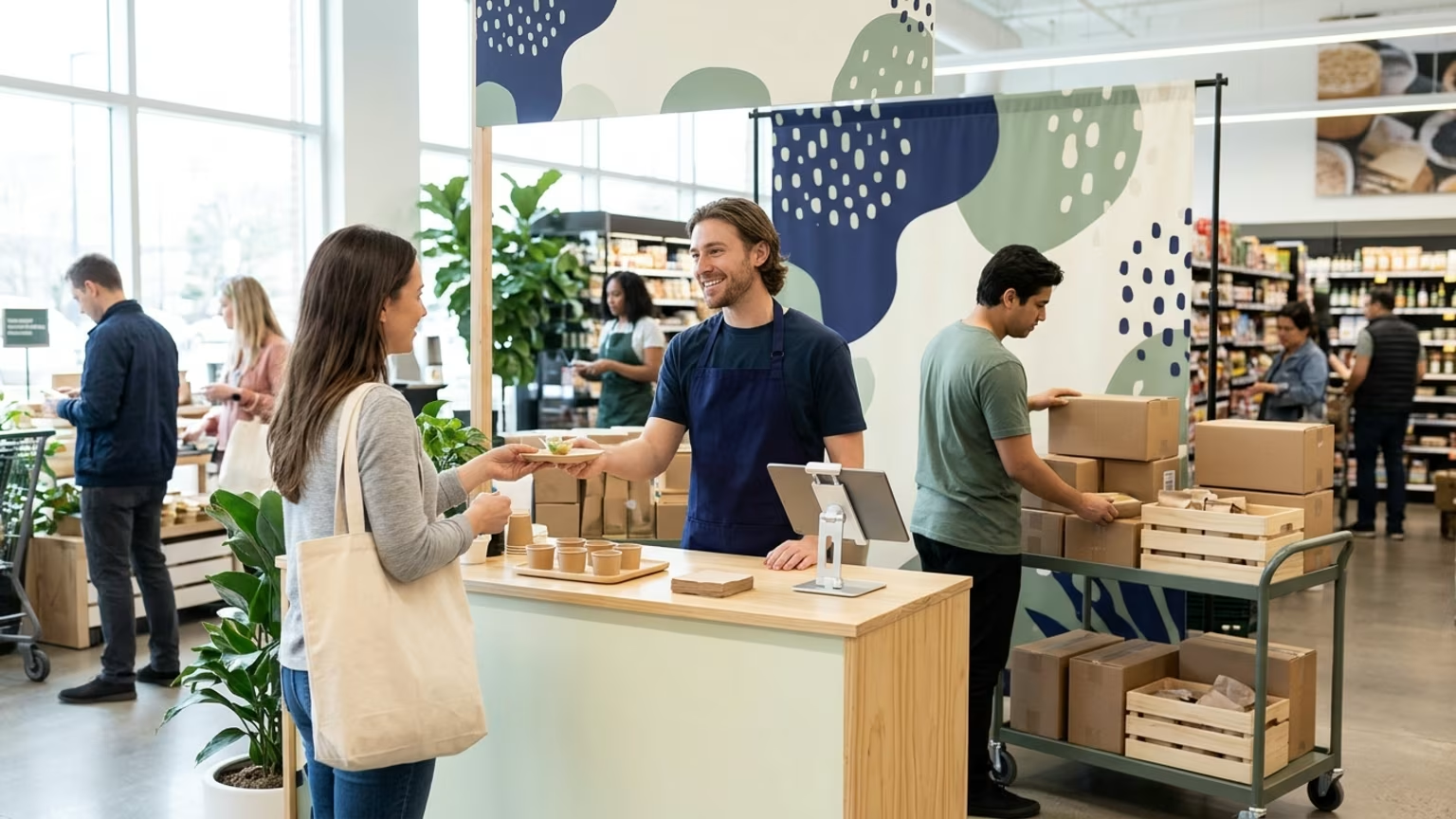
A better CPG sampling strategy connects an appropriate audience and occasion to an understandable trial, trained staff, and a clear next action. Plan the purchase route alongside the product experience. Measure distribution separately from shopper response and recorded sales so a busy activation does not become a misleading success story.
Practitioner Jeff Symon recommends connecting audience relevance with useful trial and product availability. His central distinction is straightforward: sample volume measures distribution rather than customer acquisition. That makes the planning question bigger than how many units the team can hand out.
We specialize in retail demonstrations, product sampling programs, and roadshows designed to drive trial and build consumer relationships. For Makai, the commercial purpose is to connect face-to-face engagement with measurable outcomes. The framework below applies that positioning to the operational questions behind a sampling program.
Treat permitting as an explicit planning workstream rather than an assumption attached to a location booking. Makai's integrated services span permitting through CRM reporting. That scope places permissions and post-event measurement within the same overall execution assignment.
This guide provides a planning framework rather than a jurisdiction-specific permit checklist or software integration specification. The applicable permissions and technical requirements need their own documented answers within the activation plan.
For the sampling experience itself, Symon recommends choosing locations around intended-customer concentration and occasion relevance. He also advises confirming that the product is available nearby and easy to purchase afterward.
Translate that guidance into a setup brief built around these questions:
A Food Trade News & Food World commentary adds practical merchandising guidance. It recommends timing demonstrations around shopper decisions and making related products easy to find. Those are planning recommendations rather than guaranteed performance drivers.
The useful setup question is therefore not just where the sampling station fits. It is whether the proposed experience helps someone understand the product and act on that understanding. Our discussion of how to match a trial to a shopper's purchase decision develops that connection further.
Train for a conversation with a purpose rather than a script delivered at speed. Symon's guidance calls for trained representatives. The trade commentary likewise recommends knowledgeable demonstrators who can explain the product and direct shoppers to it.
Makai's retail demonstrations use trained brand ambassadors to support in-store sales through real conversations and product trials. For us, an aloha approach means treating the shopper as a person rather than a distribution opportunity. Warmth and operational discipline belong together.
An ambassador briefing can organize the supported guidance around three jobs:
The conversation should leave room for the shopper's question. We believe a concise explanation is more respectful than forcing every interaction through the same lengthy pitch. The aim is clarity rather than verbal volume.
Product knowledge and purchase guidance also need to agree. An ambassador's explanation should not point toward a purchase route that the plan has not confirmed. Symon's availability recommendation makes that an operational issue rather than merely a messaging issue.
For a closer look at the briefing itself, see our guidance on connecting ambassador conversations to verified purchase routes.
Start by separating a product trial from a lead. A shopper can taste the product without becoming a contact for follow-up. A recorded contact can also exist without a recorded purchase.
Our reporting covers reach, trials, leads, and sales. That separation matters because each measure answers a different business question. Combining them into one engagement total obscures what happened after the interaction.
For CRM planning, the handoff from a physical handshake to a record needs continuity. The record should preserve the relevant interaction context and the intended next action. This is a recommended information requirement rather than a claim about a particular capture tool or automated workflow.
A practical planning sequence is:
This sequence is an editorial application of Makai's qualified-lead positioning and end-to-end reporting scope. It does not establish that every participant should enter a CRM.
The distinction between intent and behavior deserves particular care. The trade commentary cites a Harris Poll in which 69% said sampling made them more likely to purchase a food product. It also reports that 86% said they had bought something after trying an in-store sample. These are self-reported findings rather than observed conversion rates for the activation being evaluated.
Sales attribution requires another distinction. Symon cautions that a weekend sales increase alone does not demonstrate that sampling caused it. His guidance supports comparing campaign-period outcomes with a credible baseline or comparison where possible.
The practical implication for Return on Investment is to connect reporting with the business outcome being evaluated. Do not substitute purchase likelihood for revenue or sample distribution for acquired customers. Our guide to connecting physical engagement with pipeline data addresses that planning connection.
The contingency plan should protect the same commitments as the original strategy: understandable trial, trained representation, product availability, and credible measurement. The priorities below are recommended planning decisions rather than claims about a tested Makai emergency protocol.
If an ambassador is absent, reassess the conversation before protecting the sample count. The supported staffing model depends on trained people who can explain the product and guide shoppers. The recovery question is whether that capability remains available. If it does not, the plan should account for interrupted or reduced activity rather than describing execution as unchanged.
If capture technology fails, distinguish the interaction from the record. A conversation may have happened even when a lead record was not created. For reporting purposes, unrecorded interest should not be relabeled as a captured lead. A technical recovery plan should also resolve how the intended follow-up remains connected to any records that are retained.
If the purchase route breaks, revisit the next action. Symon's recommendation is to confirm product availability rather than assume it. Continuing to direct shoppers toward an unavailable product would contradict that planning objective. The proposed recovery should reconnect the experience with an achievable action.
If results look unusually strong, check the outcome definition. Ask whether the report describes distribution or trials. Then distinguish reported intent from recorded sales. Finally, examine whether the sales comparison supports the conclusion being drawn.
For us, control on the floor includes being honest about what changed. A smaller documented result is more useful for the next planning decision than a larger number with an unclear meaning.
Build the next brief around the links between audience and occasion, trial and explanation, and interest and action. Assign a clear business meaning to each reported outcome. Keep the permitting questions and CRM implementation decisions visible alongside the creative work.
Then select the next question the campaign should answer. It might concern location fit or whether the product explanation addresses shopper questions. Review results by location and execution conditions as Symon recommends, then use those findings to shape the next test rather than turning one campaign into a universal benchmark.
A useful tasting and a usable follow-up record are different deliverables; Makai addresses that gap through retail demonstrations and experiential campaigns for premium CPG brands. Its trained brand ambassadors support in-store sales through conversation and product trial, while its experiential work addresses inefficient post-event follow-up and CRM routing with a focus on qualified leads.

30 Years Experiential & Retail Activation Partner for CPG & Beverage Brands | Multi-Market Demos, Roadshows & Costco/Club Programs That Actually Sell


