Robbie Thain
Founder, CEO

Learn how to turn branded vehicles and pop-ups into structured pipelines. Master exact experiential metrics and data capture steps for measurable event ROI.
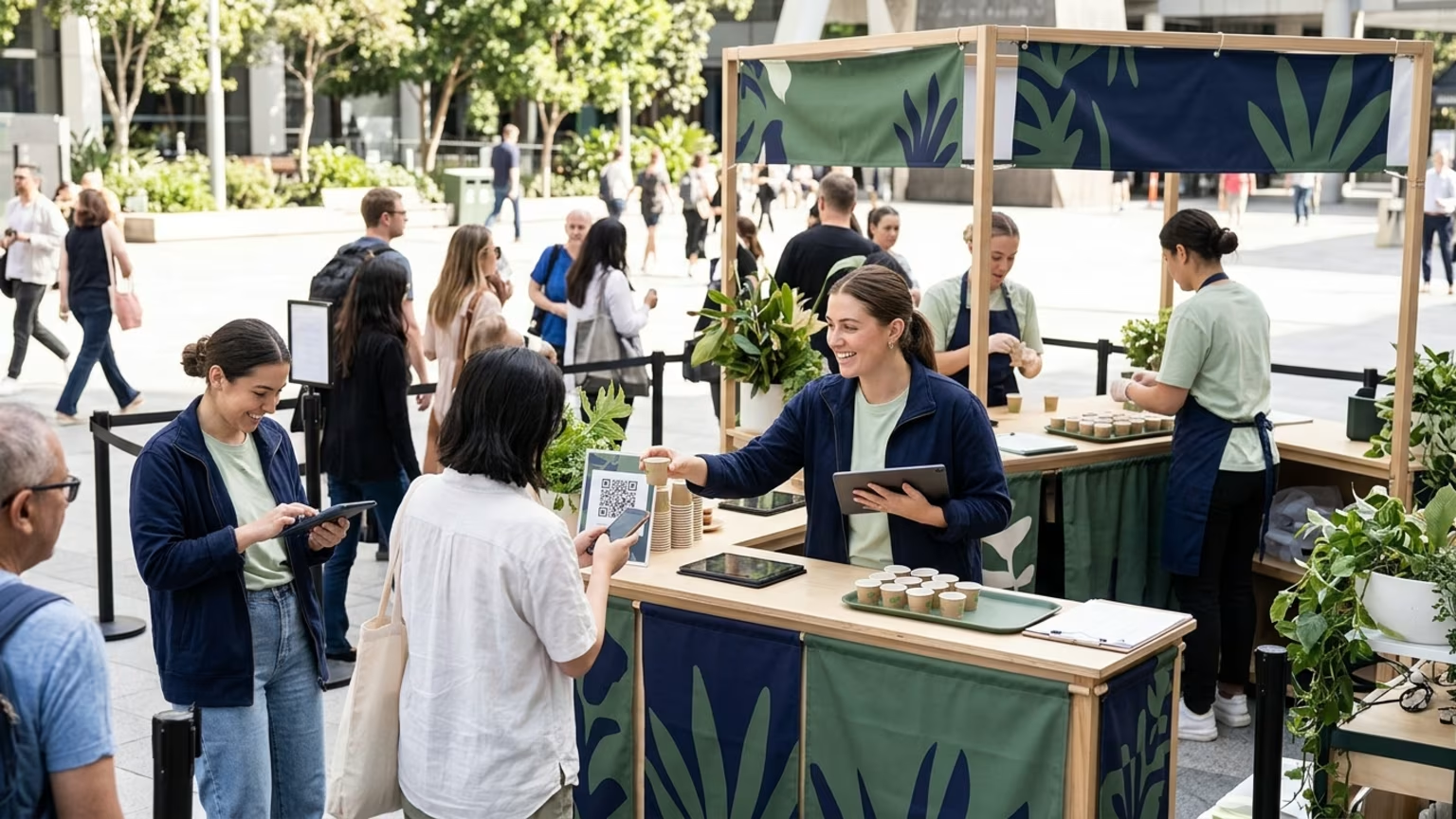
Sampling stations and branded pop-ups only drive revenue when they connect physical trials to structured digital data. By designing a precise consumer journey, marketers can turn chaotic roadshow foot traffic into measurable CRM leads and retailer confidence.
The weekend pop-up is completely packed. The sampling team cannot pour cups fast enough to meet demand. Yet Monday morning arrives with a totally empty sales pipeline. The operation delivered loud crowds but zero attributable data.
Retail demo programs often get judged on cups poured rather than on incremental pipeline. That mismatch is why so many live campaigns look successful in person but fail in the boardroom. Marketers invest heavily in beautiful branded vehicles and energetic staff. They assume that a great physical experience will naturally lead to a purchase.
Without a deliberate mechanism to capture data, that foot traffic remains anonymous. People take the sample, smile, and walk away. The brand has no way to follow up, retarget, or prove that the activation influenced a retail purchase. This is a massive missed opportunity for brands allocating large budgets to physical channels.
A 2026 industry synthesis estimates the experiential marketing sector at 128 billion dollars. The exact figure cited is $128.35 billion globally. Enterprise marketing departments now dedicate about 29 percent of their total budgets to experiential marketing, according to a Guac Digital guide. You cannot justify that level of spend with just crowd photos and empty cups.
The solution is treating your physical activations as structured demand-generation channels. This requires building the measurement layer before you design the creative elements. You have to map the exact route a consumer takes from initial visual contact to final follow-up. This pathway must be frictionless, logical, and highly trackable.
At makai, we provide clear reporting on reach, trials, and leads. We also track sales to guide next steps in campaign optimization. Our measurement approach tracks awareness, engagement, and conversion, turning brand moments into actionable data that demonstrates business impact. We design the consumer journey backward from the exact data point we need to capture.
If the goal involves turning trade show sampling into retail pipeline velocity, the experience must incentivize an opt-in right at the station. Experience marketing experts advise adding interactive digital layers to physical events. Yellow House Events outlines four core pillars for experiential strategy. These pillars are objectives, audience insight, experience design, and measurement. They serve as the critical link between creative campaigns and actual business outcomes.
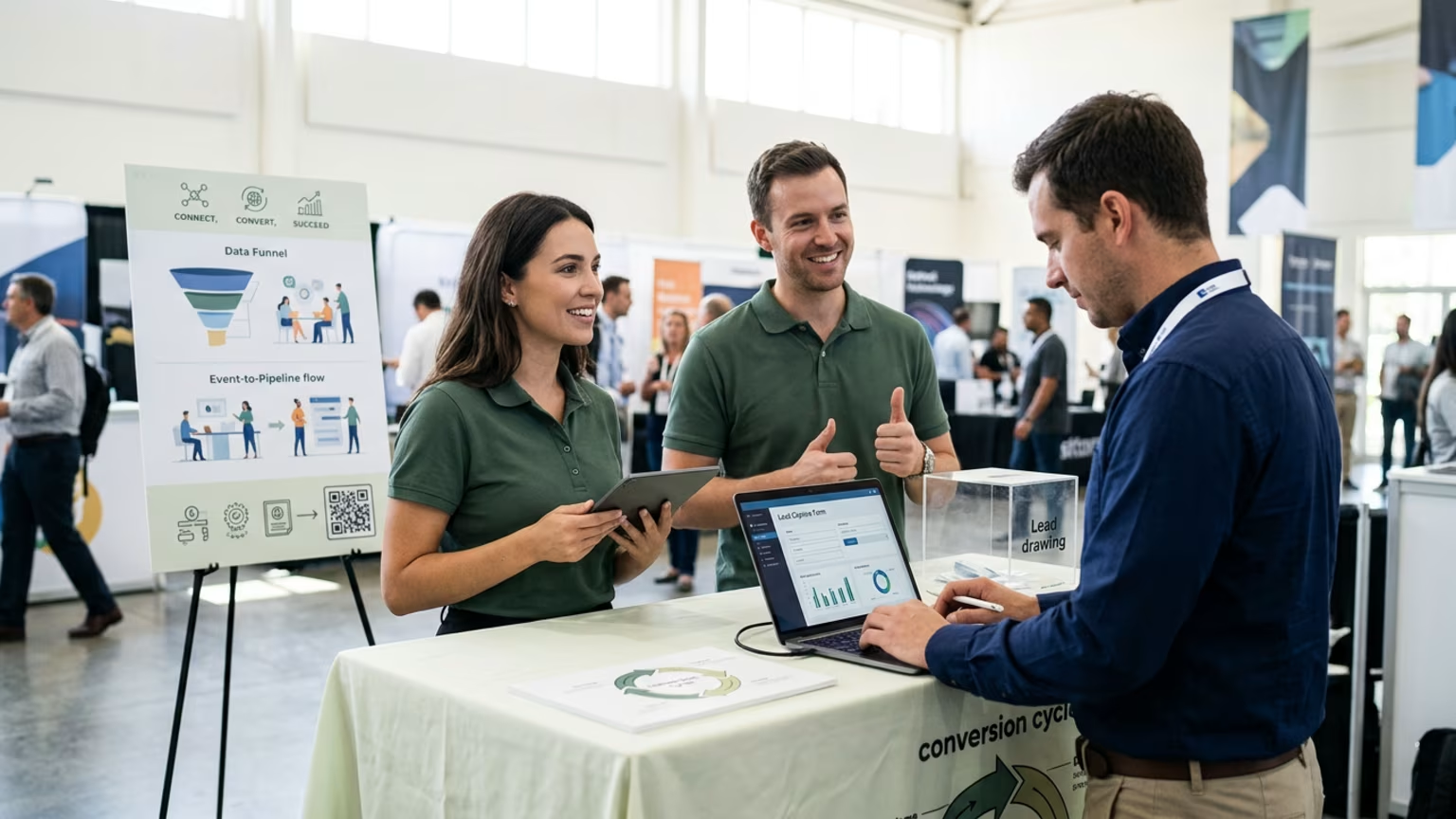
Tools like scannable QR codes or wireless access systems enrich the event and simultaneously funnel qualified leads to sales. You offer immediate value, such as a discount or an exclusive piece of content, in exchange for a quick scan. This creates a fair trade between the consumer and the brand. This approach requires tight alignment between your event technology and your CRM.
Practitioners recommend practical tools like QR codes and tablet-based forms. You should also use event-specific UTMs and CRM tags to track performance, according to Carlos Alba Media. These tools capture leads and attribute experiential behavior accurately. This is how you turn trade show chaos into sales pipeline with CRM-integrated lead capture.
When someone interacts with your brand actively rather than passively, they become highly primed for conversion. Eventstaff cites industry research suggesting that consumers who actively engage with a brand through experiential marketing may be about 74 percent more likely to buy. This massive jump in purchase intent requires a capture mechanism to be fully realized. Otherwise, that elevated intent benefits a competitor when the consumer eventually goes shopping.
Moving consumers from a physical interaction into a digital system requires flawless execution. You need a tight playbook that leaves nothing to chance on the event floor. Here is how to execute this strategy effectively.
Raw attendance numbers and total samples distributed are no longer sufficient for marketing leadership. Measurement-focused practitioners highlight outcome-based KPIs for experiential programs. These metrics include purchase intent lift, brand conversion rate, and revenue per visit. You should also track opt-in rate, data capture rate, and experience Return on Investment (ROI).
Tracking these specific metrics separates profitable roadshows from expensive brand theater.
By focusing on these numbers, marketers can confidently report on true business outcomes. This operational rigor helps secure future budgets and builds deep trust with retail partners. It changes the conversation from aesthetics to analytics.
When physical activations are treated as precise data engines, the results consistently outperform traditional passive channels. A 2026 experiential marketing guide reports aggregated data showing average returns around 5.8x ROI for experiential campaigns. This compares favorably against 2.8x for digital advertising and 1.5x for traditional media.
According to EventTrack data referenced by CupShup, 91 percent of consumers report more positive feelings toward brands after events. Also, 85 percent say they are likely to purchase after an experiential interaction. These numbers validate the strategy of connecting live physical experiences directly to trackable systems.
A 2026 guide groups experiential campaigns into several distinct formats. These formats include live brand activations, pop-ups, and roadshows. You can also apply this strategy to trade show experiences and hybrid campaigns. While the physical footprint varies, the demand for measurable pipeline remains constant across all these formats.
The most successful brands replace manual clipboards with automated workflows and real-time analytics. They know exactly which roadshow stop generated the highest lifetime customer value. They can show retailers exactly how much local demand they generated over a single weekend. Data capture is the universal requirement for modern field marketing.
Stop letting valuable physical interactions disappear into thin air. Build a trackable pathway that captures data and proves the true value of your field marketing. Book a strategy call today to design a measurable roadshow that directly fuels your sales pipeline.

30 Years Experiential & Retail Activation Partner for CPG & Beverage Brands | Multi-Market Demos, Roadshows & Costco/Club Programs That Actually Sell