Robbie Thain
Founder, CEO

A crowded booth is not a business outcome. Pair human hospitality with disciplined flow planning, observation, and clear measures of commercial progress.

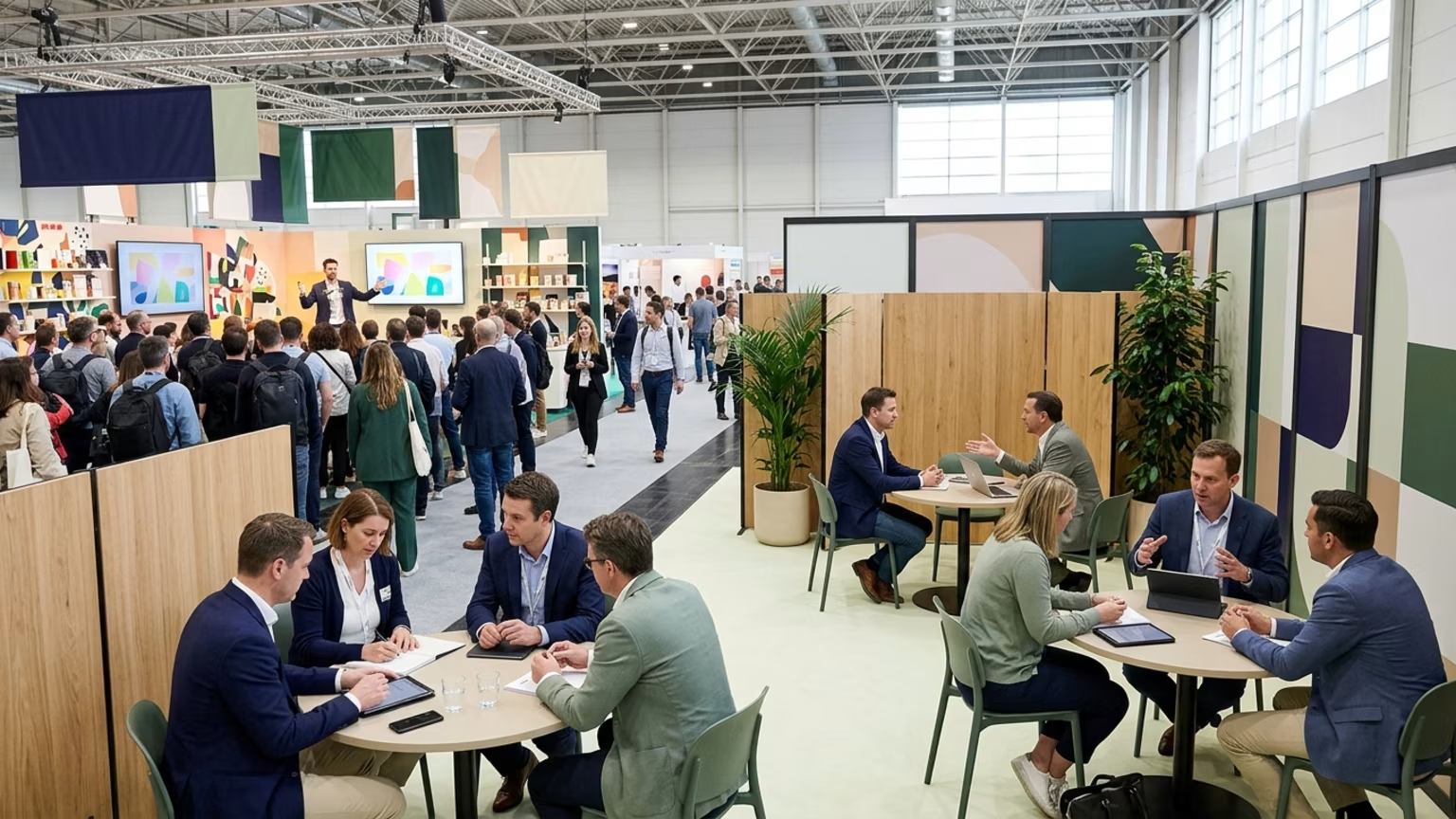
Your beautiful trade show booth is not doing its job just because people stop to look. A crowd is not a conversion strategy. If the layout attracts attention but leaves visitors confused about where to participate or talk, the design has an unfinished assignment.
The sacred cow worth questioning is the idea that a more impressive build automatically creates a more valuable experience. Visual ambition deserves a place. It should not get to overrule the practical question of what a visitor can actually do inside the space.
Our position is simple: judge booth design by the interactions it supports. The rendering matters less than whether someone can enter, try the product, have a useful conversation and leave with a clear next step.
The CMO’s nightmare is paying for a six-figure production and receiving a photo album instead of qualified pipeline. The uncomfortable part is that the recap can look convincing. Packed aisles and enthusiastic participation make compelling images even when the commercial story remains unanswered.
In our view, that disconnect begins when the booth is treated as a collection of attractions rather than a working environment. A sampling station has one job. A retailer conversation has another. Asking both to happen in the same crowded pocket creates competing demands on the space and the people staffing it.
Consider the questions a rendering can leave unresolved. Can someone understand where participation begins? Does waiting for a sample block access to a conversation? Can an interested retail buyer speak with the right person without interrupting the activity everyone else came to see?
These are operating questions rather than arguments for smaller ambitions. A dramatic installation can still have a clear purpose and a workable route through it. The failure is approving the spectacle before deciding how its interactions should function together.
Staffing belongs in that decision too. A layout cannot explain every product benefit or recognize every relevant buyer. Thinking through how field roles support the activation puts the human work alongside the physical design instead of treating it as a later detail.
For Makai, aloha-style warmth is not a substitute for a clear plan. We believe people should feel welcome without having to decode the experience. Brutal operational discipline means asking difficult questions about the plan before visitors have to navigate its weaknesses.
We have connected brands with people through live experiences, retail programs and national activations since 1995. Our experiential work blends creativity with strategy and data. We craft experiences that engage all five senses because a physical encounter offers more than another surface for a logo.
But sensory ambition and operational control should work together. Makai’s integrated services span permitting through CRM reporting. Our retail demonstrations put trained brand ambassadors into product trials and real conversations, while our logistics services cover product storage and nationwide delivery coordination.
At Natural Products Expo West 2025, we designed and managed a 40 by 20 foot trade show environment for Glanbia. It brought think!, Isopure, Optimum Nutrition, and Amazing Grass into one coordinated space. Our scope covered concept and operations as well as staffing and breakdown.
More than 14,000 recorded product samples were distributed across the activation stations. For this discussion, the useful lesson is not that a large footprint is good or bad. It is that multiple brand experiences belong within one coordinated operating scope rather than competing as separate attractions.
Our work also includes festival zones, premieres and pop-ups where crews manage execution and track reach and response. We see no conflict between memorable creative work and disciplined delivery. The creative idea deserves an operating plan capable of supporting it.
That is the Makai alternative: make the welcome human and the execution accountable. The aim is to give product trial and commercial conversation a workable setting, not to make visitors feel processed through a machine.
Booth flow starts with a question about purpose: what meaningful action should this space support? For a consumer activation, that might be product trial among the intended audience. For a trade show program, it might include qualified retailer conversations and meetings booked.
The wider event journey provides useful context. Freeman says its Pre-Event Edition draws on a September 2026 survey of 3,459 attendees and exhibitors. It reports that 84% of attendees decided to go a month or more before registering.
That finding concerns the decision to attend an event. Our planning question is what visitors have already been told before they reach the aisle, and whether the booth makes that promised experience understandable.
Jack Morton argues that an event experience extends beyond the exhibit to include pre-event communication and follow-up. We agree with that broader frame. A booth should be considered a handoff point within the relationship rather than the entire relationship itself.
Our recommendation is to sketch the intended visitor experience before treating the layout as final. Map entry and participation alongside conversation and exit. Then identify where those activities might compete for the same space or require clearer direction.
The research does not establish a tested booth-layout sequence or a causal link between traffic, dwell time and sales. Treat this mapping exercise as an operational hypothesis to observe and refine, not a promised conversion formula.
The useful questions are concrete:
This is not a search for one perfect route that every visitor must follow. Different intentions belong in the planning discussion. Someone seeking a quick product trial does not necessarily need the same interaction as a buyer seeking a retail meeting.
Thinking about the relationship between throughput and product trial helps frame the trade-off. The question is not simply how many people fit inside the footprint. It is what useful activity the space can accommodate.
During the show, record what actually happens at those interaction points. Note where people pause or leave. Watch where they need direction and where activity interrupts conversation.
Keep observation separate from interpretation. A departure before a staff conversation is an observable action. Disinterest is an explanation that requires more evidence. Likewise, a long pause could represent participation or waiting rather than commercial intent.
IAEE describes its partnership with Zenus as using sensor data to report traffic and dwell time and help show management evaluate sessions and high-density traffic flow. That is a useful distinction: movement data describes behavior in the space. The business objective determines what else needs to be recorded.
The practical purpose of observation is to identify a specific friction point worth addressing. A vague impression that the booth feels busy offers less direction than a clear record of where participation and conversation interfere with each other.
A useful scorecard gives different outcomes their own names. It does not promote every interaction into a lead or treat every lead as pipeline.
For this kind of activation, the reporting discussion can distinguish:
The Glanbia sample count is a documented distribution result. A claim about retailer meetings or qualified pipeline would need its own supporting record. Keeping those categories distinct makes the result more useful rather than less impressive.
That distinction should carry into how live interactions become usable lead records. A marketing leader evaluating Return on Investment needs to know which result is being reported and how it connects to the original objective.
The goal is not to ban impressions or dwell time from the recap. It is to stop asking them to answer questions about qualified demand that belong to different evidence.
Core takeaway: A booth deserves credit for what it helps people do, not just how it looks when the aisle fills up. Demand a clear purpose for each interaction and a practical way to observe where the experience breaks down. Pair a warm human welcome with disciplined execution, then report product distribution and commercial progress as distinct outcomes. Aesthetics can express the brand. Execution must carry the experience.
Spectacle without a place to participate leaves an activation’s purpose unclear; Makai’s brand activations are designed to move awareness toward measurable consumer response. For CPG marketers dealing with fragmented attention and awkward booth movement, Makai plans and manages trade show spaces intended to start conversations and turn visitors into customers.

30 Years Experiential & Retail Activation Partner for CPG & Beverage Brands | Multi-Market Demos, Roadshows & Costco/Club Programs That Actually Sell