Robbie Thain
Founder, CEO

Circana’s October retail data points to more focused shopping trips. Makai examines how to test mission-led demos and measure purchase outcomes.

On 2026-11-16, Circana reported that U.S. retail sales revenue rose 1.1% year over year in October 2026 while unit demand declined 1.4%. More dollars moved through retail, but fewer products did.
The same readout described shoppers making more trips while buying fewer items per visit. For CPG and beverage marketers, that smaller basket presents a practical challenge: give product trial a specific purpose rather than assume the event itself supplies one.
Circana’s food and beverage figures followed the overall pattern. Revenue increased 1.5% while unit sales fell 1.2%. Nonedible CPG, excluding tobacco, recorded revenue growth of 2.4% while units fell 2%.
The distinction matters when setting an activation objective. Higher retail revenue is not the same thing as shoppers purchasing more products. A demo brief aimed at increasing purchase needs a purchase-related measure rather than a general reference to retail growth.
Circana also reported that shoppers made nearly 3% more trips than a year earlier while purchasing fewer items per visit. The company characterized this as a move toward more targeted shopping missions. In the same report, half of consumers said retailer promotions were less compelling than they had been one to two years earlier.
Circana’s Kiara Barrett argued that brands should connect products with valued consumer occasions and experiences rather than rely solely on promotions. That interpretation gives marketers a direction to test: make the product relevant to the reason for the trip.
Mass Market Retailers also reported the October revenue and unit-sales figures as Circana findings rather than separately collected results. Circana’s public release does not disclose the methodology behind the promotion finding or provide the underlying shopping-behavior tables. It also does not establish that occasion-led demos or sampling cause incremental sales.
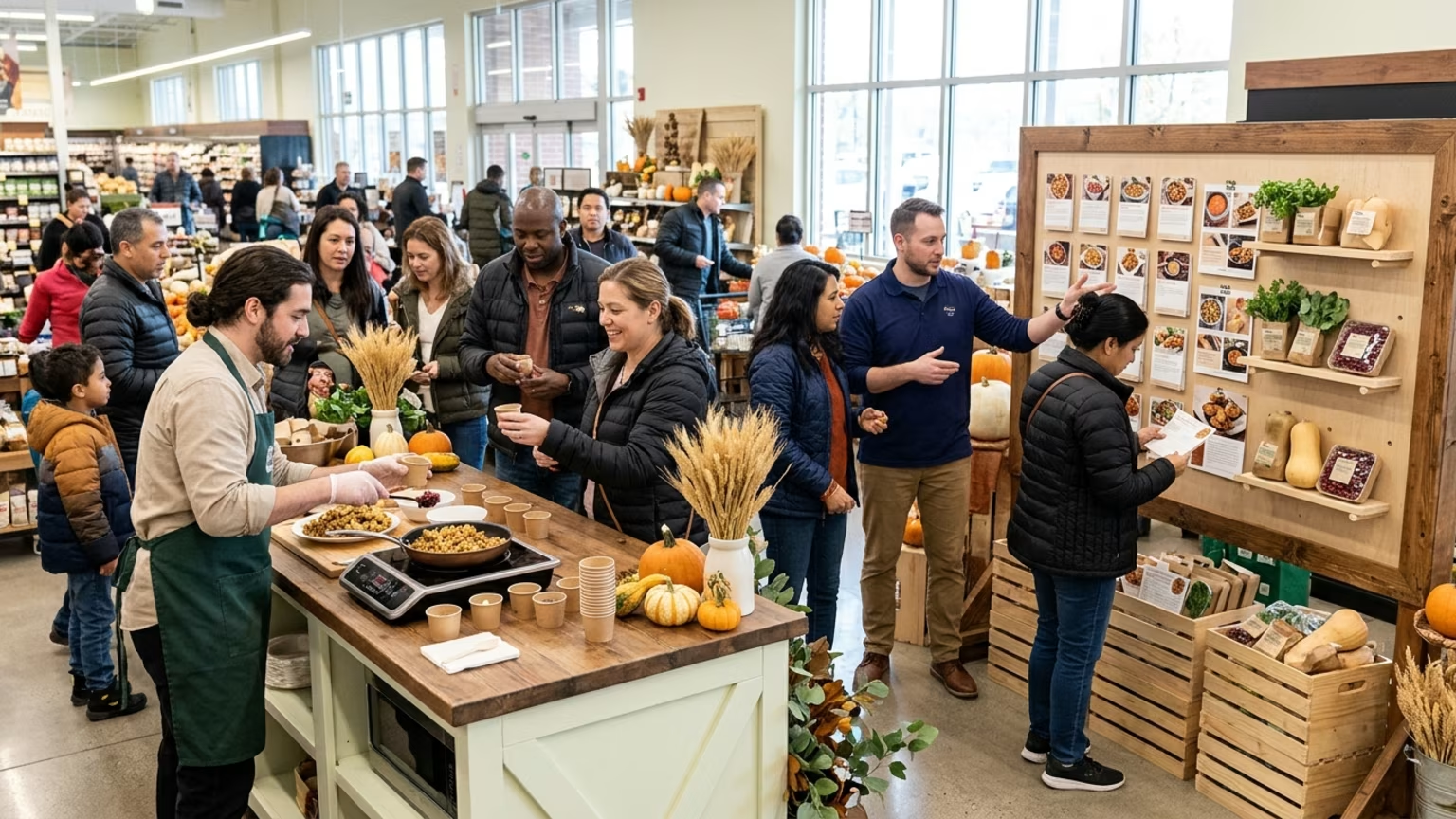
Our view at Makai is straightforward: be generous with the welcome and disciplined about the purpose. A shopper should not need to adopt the brand’s event agenda before understanding why the product belongs in their basket.
We specialize in retail demos, product sampling programs, and roadshows that bring brands face to face with their audiences. These programs are designed to drive trial and build consumer relationships while supporting retail velocity across locations. Circana’s findings make the purpose of that interaction a useful starting point for the next brief.
For us, the question is not whether an activation looks occasion-focused. It is whether the occasion gives the product demonstration a useful job. Helping someone understand a product’s role in a gathering is a more specific objective than generating general excitement around a display.
Our face-to-face activation services connect hands-on product experiences with measurable consumer response. The commercial objective should remain visible even when the creative concept centers on an occasion. Warmth and accountability belong in the same plan.
We managed a four-week, multi-market Costco sampling program for Pulmuone’s PlantSpired line. The program delivered more than 65,000 samples and recorded an 18 percent sold-to-sale rate. That gives us a concrete example of structured retail sampling connecting trial with purchase.
The useful lesson here is the distinction between distribution and a sales-related outcome. Sample volume tells part of the story. A purchase measure gives the discussion another dimension and creates a stronger basis for evaluating Return on Investment.
For Makai, the operational response is to test a more focused proposition without losing the discipline that makes field execution measurable. That changes the proposed message and the work assigned to ambassadors. It also changes what the program needs to report.
The research brief supports testing a proposition tied to a gathering, a gift, or a personal need. The planning task is to choose a relevant mission and explain the product’s role in it. Occasion language should clarify the demonstration rather than merely decorate it.
A tasting is the format. Helping a shopper decide whether the product fits a particular need is the proposed job. Keeping those ideas separate gives the creative brief a clearer purpose without treating every shopper as if they arrived for the same reason.
Price and product value still belong in that conversation. Circana’s promotion finding is a reason to test relevance alongside value messaging rather than remove value from the plan.
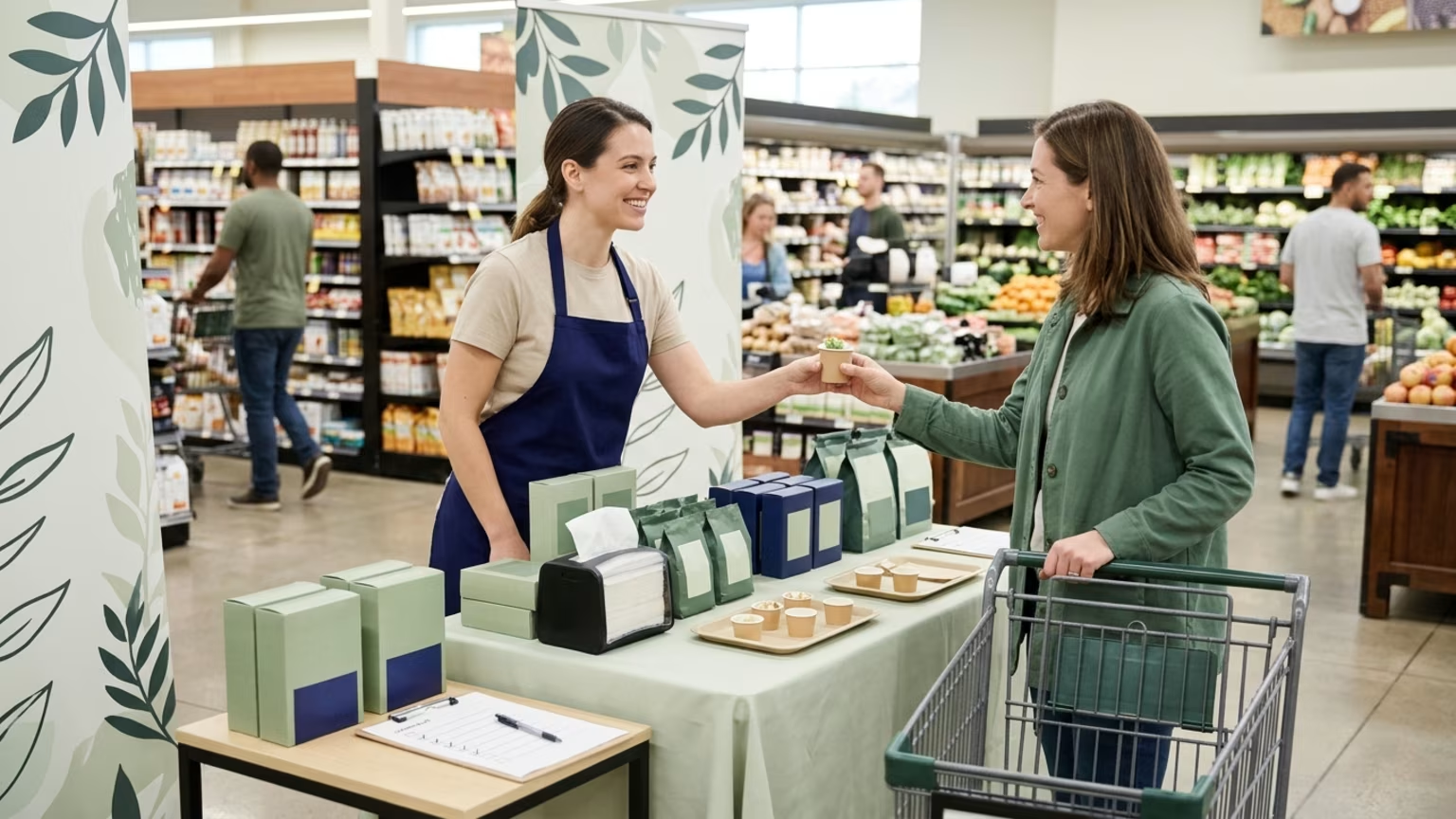
Makai’s retail demonstrations use trained brand ambassadors to drive in-store sales through real conversations and product trials. Within that model, an occasion-led test should give ambassadors a clear product-use proposition to communicate. The staffing brief should describe the shopper decision the demonstration is intended to support.
This is not an argument for cutting staff based on an aggregate retail report. It is an argument for defining the work more precisely. Handing out a sample and explaining why a product fits a need are different assignments.
The operational recommendation is to align the ambassador’s message with the activation’s stated purpose. If the program is testing occasion relevance, the field conversation should contain that relevance rather than leave it entirely to signage.
Makai plans trade show spaces around attracting attention and starting conversations that can lead to customers. For a retail demo, our recommendation follows the same commercial logic: make the relationship between the trial and the intended purchase easy to understand.
The footprint should support the product interaction and its value message. A shopper should be able to understand what the sample demonstrates and what action the program invites. An occasion-led concept does not need to become a larger physical production to make that connection.
This is a planning choice about clarity rather than a claim about a particular layout’s performance. The aim is to keep attention on the product’s role in the shopping mission instead of asking the display to carry the whole experience.
The research brief recommends pairing activation counts with measures suited to the retailer and program. Those choices include:
The appropriate measure should follow the objective. A program testing immediate purchase needs a different evaluation from one intended to support later repeat buying. Sample distribution remains useful context, but it should not stand in for either outcome.
For an occasion-led test, the reporting plan should identify how purchase performance will be evaluated before the results arrive. That keeps a busy activation from becoming its own proof of success. It also gives marketing leaders a clearer basis for deciding whether to repeat or revise the concept.
Our guidance on building reports around operating decisions offers a related lens: reporting should help determine what happens next rather than simply document what happened.
A completed retail purchase and a qualified lead are different outputs. Our view is that the reporting should keep them distinct. Combining them under a broad engagement total makes the commercial discussion less precise.
Where an activation includes qualified lead capture, follow-up and CRM routing should be part of the program’s intended path. Makai’s positioning connects face-to-face experiences with measurable sales pipeline. That makes the transition after the interaction relevant to the original brief rather than a separate administrative concern.
For retail demonstrations, the purchase result may be the immediate focus. For other activation formats, qualified pipeline may carry more weight. The practical discipline is to name the desired outcome and evaluate the program against it.
A useful post-event operational review can then examine whether the message and physical experience supported that outcome. The next version of the program should respond to what the evidence shows rather than preserve the original concept by default.
When you approve the next demo brief as CMO or VP of Marketing, will it explain how product trial earns a place in the shopper’s smaller basket, or only how the event attracts a crowd?
More focused shopping missions put product relevance ahead of event scale, and Makai works within that trade-off through trained ambassadors delivering in-store conversations and product trials. For teams managing the handoff after an interaction, Makai addresses follow-up and CRM routing challenges through experiential campaigns and trade show activations designed to generate qualified leads for premium CPG brands.

30 Years Experiential & Retail Activation Partner for CPG & Beverage Brands | Multi-Market Demos, Roadshows & Costco/Club Programs That Actually Sell