Robbie Thain
Founder, CEO

A practical in-store demo checklist covering inventory, pricing, placement, ambassador preparation, reporting and day-of contingencies.
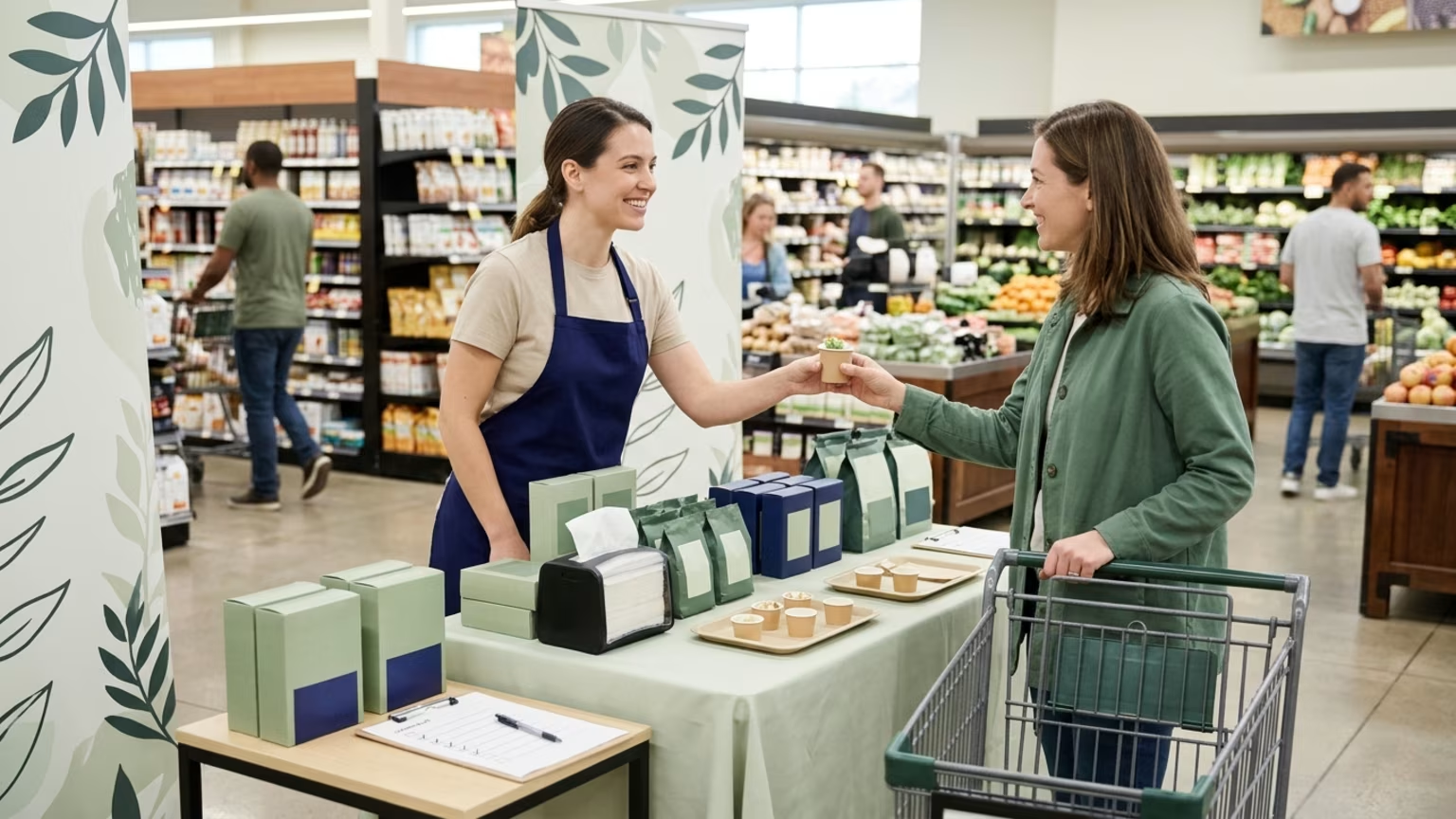
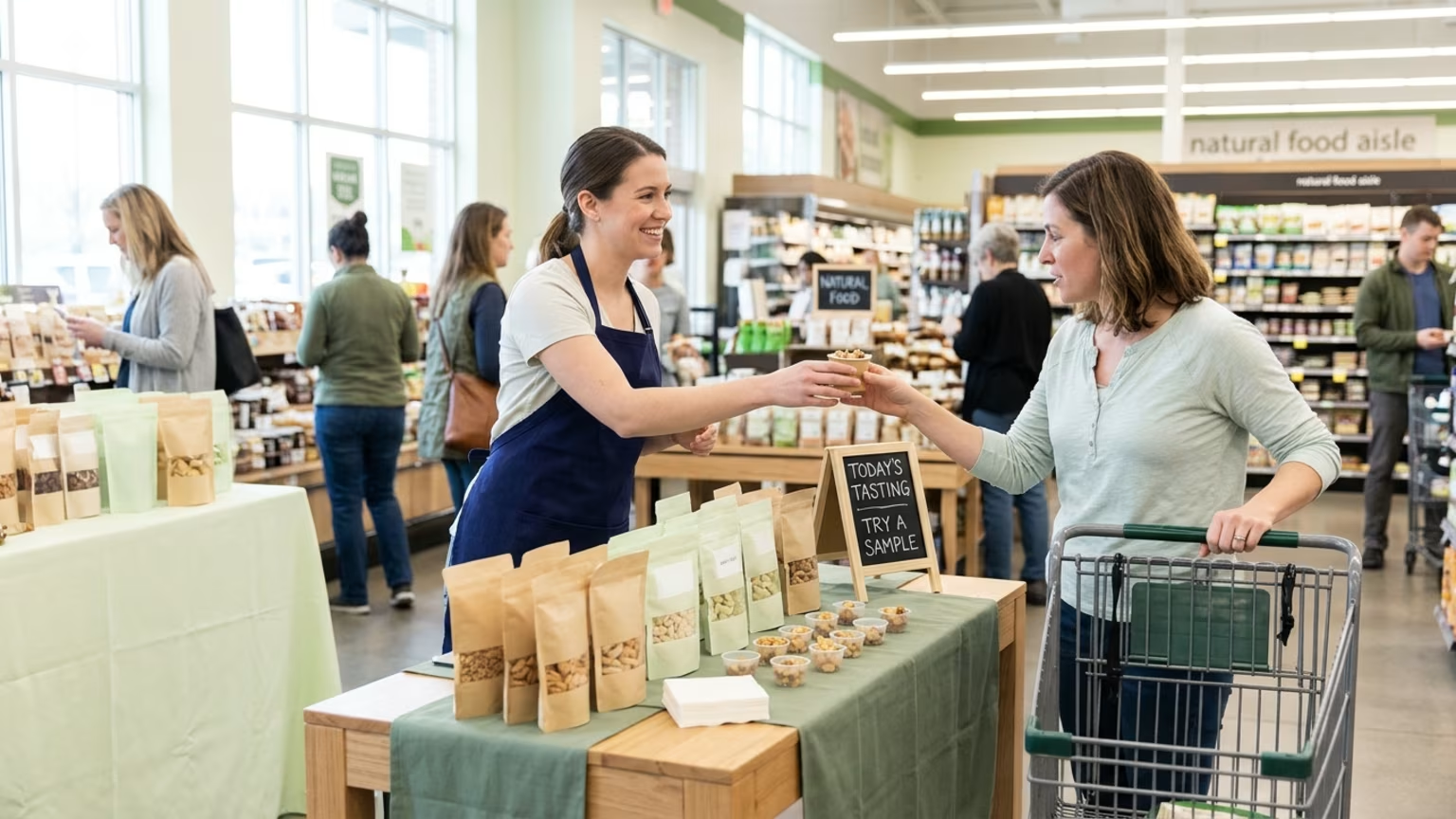
At a demo station, a shopper should be able to try a product and find it on the shelf without searching the store. A readiness checklist connects that moment to available inventory, verified pricing and approved placement. It also covers staff preparation and a defined recap.
Before the event, confirm retailer approval and store arrangements. Verify the product’s location and current promotion. Give the ambassador approved talking points plus an escalation contact, then agree what the team will record.
Food Trade News makes the shopper-path case in its November 2026 coverage: sampling should fit the purchase decision, with related products within easy reach. It warns against leaving shoppers to search after tasting.
We specialize in retail demos, product sampling programs and roadshows that bring brands face to face with their audiences. For us, readiness means treating product access and the consumer conversation as parts of the same commercial job.
A vendor-published sampling guide recommends confirming operating details before the event and checking in on arrival. Its process is a planning reference, not a universal retailer requirement. Confirm store-specific rules directly with the retailer and store team.
Use these checks for a shared review with the retailer, field partner and store team:
Keep unresolved items visible in a shared field brief that can travel between locations. The point is a common reference for the people approving the event and those delivering it.
Price deserves its own check because the brief and the store presentation are separate things to verify. The guide also recommends documenting price or promotion in the recap. That gives the planning team a record of what the ambassador encountered.
Makai’s retail demonstrations use trained brand ambassadors to support in-store sales through conversations and product trials. We believe an aloha approach means greeting people warmly while respecting their attention and choices. The conversation should help a shopper decide, not pressure someone into accepting a sample.
The operational guide recommends briefing ambassadors on approved product talking points and escalation contacts. It also calls for the current price, promotion and shelf location. Confirming attendance belongs in that preparation rather than being left until arrival.
Food Trade News describes a demonstrator’s practical role: explain preparation, suggest pairings and direct shoppers to the display. That is useful human connection because it addresses what someone needs to know before buying. Keep the purchase prompt factual and tied to the verified location or offer.
We managed a four-week, multi-market Costco sampling program for Pulmuone’s PlantSpired line. The program delivered more than 65,000 samples and recorded an 18 percent sold-to-sale rate. Our planning takeaway is that trial and purchase deserve separate attention within the same program.
For a readiness review, the useful question is whether the ambassador has the information needed to continue the conversation after the tasting. Product knowledge matters, but so does knowing where the shopper can pick up the item.
For us, proving Return on Investment (ROI) starts with separating event activity from commercial outcomes. A sample count is not a sales result or a qualified lead. Decide what the program is intended to produce before choosing the recap measures.
The vendor guide supports agreeing in advance what the team will record. Its examples include:
Agree how and when that recap will be delivered. Food Trade News also recommends looking beyond event-period units sold to related-item movement and category sales. The appropriate measures depend on the objective and the data available.
Keep the measurement limitations together: the guide cautions that restocks can distort shelf-count estimates. Shopper engagement needs a clear definition because it can otherwise be subjective. Comparisons against a sales baseline require store or retailer sales data.
That distinction is central to separating sample distribution from sales performance. An activity recap and evidence of commercial impact answer different questions.
Makai’s integrated service scope extends from permitting to CRM reporting. For a lead-oriented activation, our recommendation is to settle how the conversation will be captured and who receives the resulting record before the event. The physical interaction needs a defined capture method before it can become a usable CRM record.
A capture tool, required record fields and a routing protocol are not established by this checklist. Those mechanics need a separate handoff specification. Do not assume that recording samples or conversations automatically creates qualified pipeline.
The vendor guide supports attendance confirmation, arrival check-in and named escalation contacts. Our recommendation is to organize exceptions around those agreed contacts and the store’s planned response. That keeps the contingency discussion tied to the approved operating plan.
These are recommendations for handling exceptions, not claims about a specific retailer’s recovery procedure. Replacement staffing and technical recovery arrangements should be settled with the operating team during preparation.
Food Trade News identifies labor, food safety and waste as constraints alongside available space. It also notes that not every product or store justifies a demonstration. The readiness review should leave room for that decision rather than treating every booked event as automatically suitable.
The next step is a joint review of the store details, ambassador brief and reporting plan. Resolve open questions about approval and product availability alongside staffing. Then confirm that the shopper can move from tasting to finding the item without a separate search.
Use that review to identify what still needs a decision from the retailer or field partner. Once those operating details are settled, examine how the tasting connects to the purchase path. That is a more useful next phase than adding activity without a clear commercial purpose.
A completed purchase is the measurable goal behind demo readiness; Makai’s trained ambassadors support in-store selling with product trials and shopper dialogue. For food and beverage managers coordinating permits, field staffing and event logistics, Makai brings retail demonstrations into stores with a focus on face-to-face engagement and sales.

30 Years Experiential & Retail Activation Partner for CPG & Beverage Brands | Multi-Market Demos, Roadshows & Costco/Club Programs That Actually Sell