Robbie Thain
Founder, CEO

Build a repeatable in-store demo playbook covering local requirements, ambassador training, lead capture, field reporting, and contingency planning.

A repeatable in-store demo playbook should not make every store identical.
It should standardize the decisions and records that let teams plan consistently and understand what happened.
Local food-handling rules and retailer requirements still belong in each location’s plan.
Build the playbook around a defined objective, clear staff responsibilities, confirmed store readiness, and consistent field reporting. Keep the product story and measurement definitions shared across locations. Adapt handling procedures and setup to applicable requirements. These recommendations follow practitioner guidance on activation planning, rather than a validated formula for sales performance.
At Makai, we specialize in retail demos, product sampling programs, and roadshows that bring brands face to face with their audiences. Our programs are designed to drive trial and build consumer relationships across multiple locations. For us, repeatability should protect that human interaction while giving marketing teams useful operational evidence.
Start with the requirements that apply to the location. The FDA describes its Food Code as a model for jurisdictions developing retail food-safety rules. It is not a single rulebook that automatically replaces local requirements.
For food sampling, verify applicable jurisdiction and retailer requirements before setting handling procedures and staff training. The playbook should capture those requirements without assuming that approval or preparation in another market settles the question.
A vendor planning guide recommends confirming the following operational details:
Add the applicable food-handling requirements to that location’s brief. This connects the national plan to the conditions under which the demo will actually operate.
Keep sample inventory and saleable stock distinct in the planning discussion. Both appear in the preparation guidance, but they answer different questions. Product available for sampling does not establish that shoppers have stock available to purchase.
The useful distinction is between a shared planning format and location-specific answers. Every brief can ask about display placement without requiring the same placement everywhere. Every brief can record handling requirements without pretending those requirements are identical.
For broader planning discipline, use a shared field execution framework to organize the information. Treat checklist completion as evidence of preparation, not proof of campaign performance.
Staff around the work the activation requires. The activation planning guide recommends anticipating peak demand and distinguishing product explanation from sampling. It also identifies data capture and shift leadership as responsibilities that need clear ownership.
That guidance supports role clarity, not a universal staff-to-shopper ratio. A repeatable playbook should describe the responsibilities before assigning them to people. Otherwise, the team may share a schedule without sharing an understanding of the job.
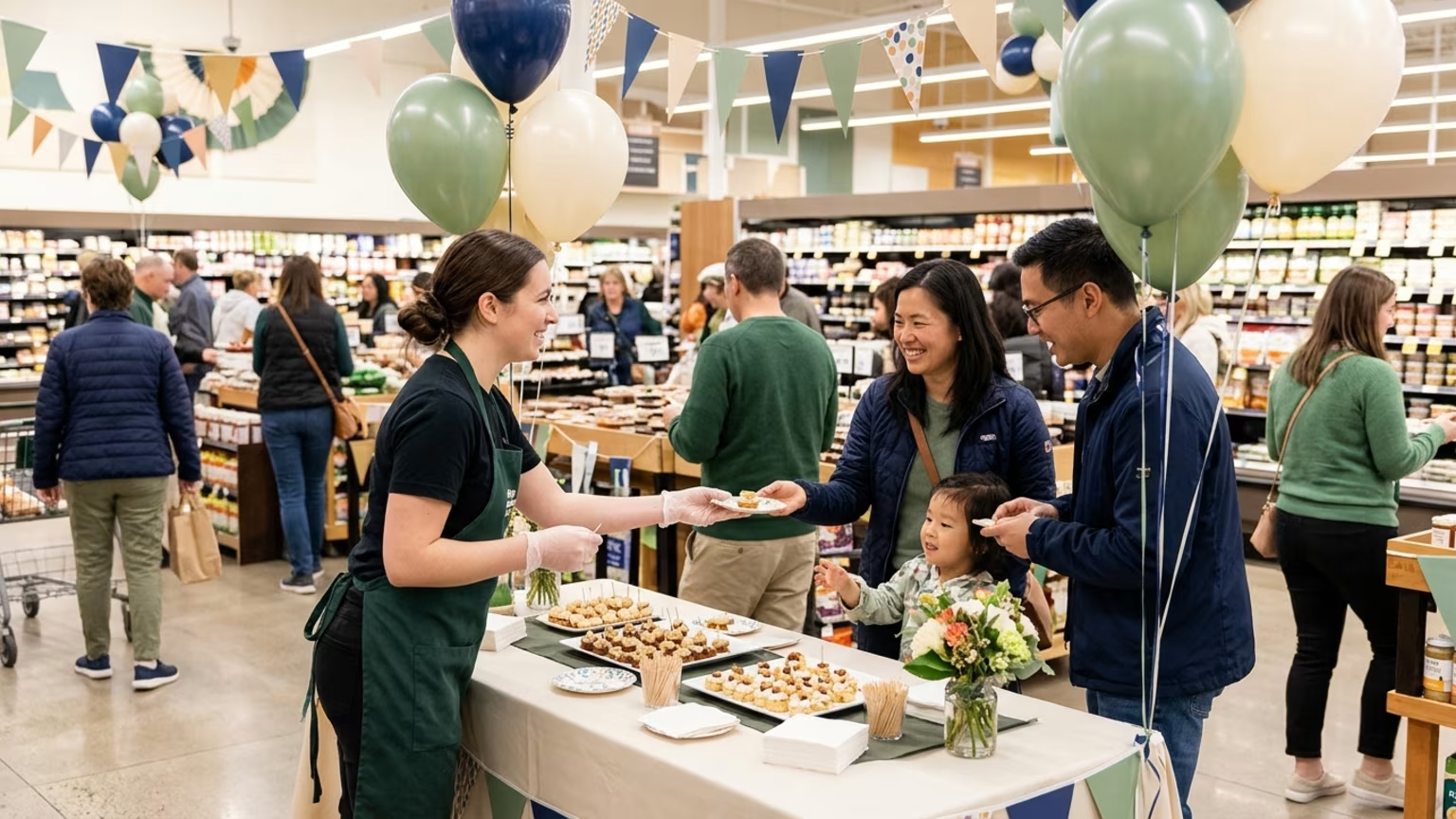
Makai’s retail demonstrations use trained brand ambassadors to support in-store sales through conversations and product trials. For us, an aloha approach means warmth paired with discipline. The goal is an approachable interaction that respects the shopper while staying faithful to the product story.
The practitioner guidance supports a shared brief covering:
There is consumer context for prioritizing physical interaction. P2PI reports that a study found 85% of consumers considered seeing, touching, or trying products important to their in-store shopping confidence. That is a reported shopper attitude, not proof that a demo causes sales lift.
We believe the brief should support a genuine conversation rather than turn the ambassador into a script reader. Teams reviewing their approach to repeatable staffing should keep both sides visible: operational responsibility and human connection.
Start by deciding whether lead capture belongs in the activation objective. A product trial, a shopper comment, and a sign-up are different records. Do not label every interaction a qualified lead simply because it happened at a branded display.
The activation planning guide recommends agreeing on measures before shifts begin. Its examples include conversations and samples alongside sign-ups and redemptions. Select measures that match the intended outcome rather than asking the field team to collect everything without a clear purpose.
The supported path from a face-to-face interaction to a usable record has these components:
A retail activation workflow guide recommends consistent post-shift reports containing photos, counts, shopper comments, and notes on store issues. That record helps distinguish the intended plan from what the team actually encountered.
The cited guides do not specify CRM import fields, transfer methods, or routing rules. Those mechanics require a separate technical specification. Makai’s integrated service scope extends from permitting to CRM reporting, but a shift report alone is not a complete CRM handoff.
For Return on Investment (ROI), separate operational evidence from outcome evidence. Samples distributed and setup photos document activity. Sales answer a different question. The planning guidance suggests comparisons with similar stores without activity, while cautioning against treating activity counts as proof of incremental impact.
A report should therefore explain what each measure means. A sign-up count describes captured interest. A sales comparison describes an observed difference. Neither should silently become a claim that the demo caused an added sale or generated a financial return.
Use that distinction when evaluating sampling performance, so a busy shift does not become a substitute for evidence.
A contingency plan should preserve the distinction between planned execution and actual execution. The field lead needs to know which responsibilities remain covered and which measurements remain available. A disrupted shift should not be reported as though nothing changed.
The practitioner sources support role clarity and issue reporting, not a tested replacement-staff or technology-recovery protocol. Use those supported controls as planning prompts rather than assuming that a backup crew or offline capture system exists.
Review the responsibilities already defined in the brief: product explanation, sampling, data capture, and shift leadership. Identify which remain covered. Record the staffing issue so the final report does not imply that the planned coverage was delivered.
This is also where role definitions earn their place. A missing person is a staffing fact. An uncovered sampling or capture responsibility is an execution consequence that the report should make visible.
Review which agreed measures are still available. Report unavailable information as unavailable rather than replacing it with another activity count. A sample count should not become a sign-up count because capture technology stopped working.
The exact recovery method belongs in the project’s technical contingency plan. The reporting principle remains the same: preserve the meaning of each measure.
The retail activation workflow guide specifically recommends noting stock-outs and store issues. Include those conditions alongside the counts and shopper comments. They help explain why a shift differed from the plan without proving what sales would have occurred under different conditions.
For food handling, keep the applicable local requirements and retailer procedures as the reference point. A contingency plan should not substitute an improvised handling procedure for those requirements.
The next planning step is to compare your current briefs and reports. Look for inconsistent definitions, unassigned responsibilities, and location requirements that have been left implicit. Resolve those gaps before adding more complexity to the program.
Then review the intended learning. Can the report distinguish preparation from execution? Does it separate trial from captured interest and sales? Are stock issues and store constraints visible beside the results?
A useful playbook makes those distinctions clear. It gives teams a common operating language while preserving the local information needed to interpret each shift honestly.
A common demo plan still has to accommodate local requirements, while Makai contributes trained brand ambassadors for in-store product trials. For food and beverage marketers balancing permits with staffing and event logistics, Makai’s retail demonstrations connect shopper conversations with opportunities to try products and support in-store sales.

30 Years Experiential & Retail Activation Partner for CPG & Beverage Brands | Multi-Market Demos, Roadshows & Costco/Club Programs That Actually Sell