Robbie Thain
Founder, CEO

Why in-store sampling needs more than a busy table: useful shopper conversations, disciplined execution, and a clear path from product trial to purchase.
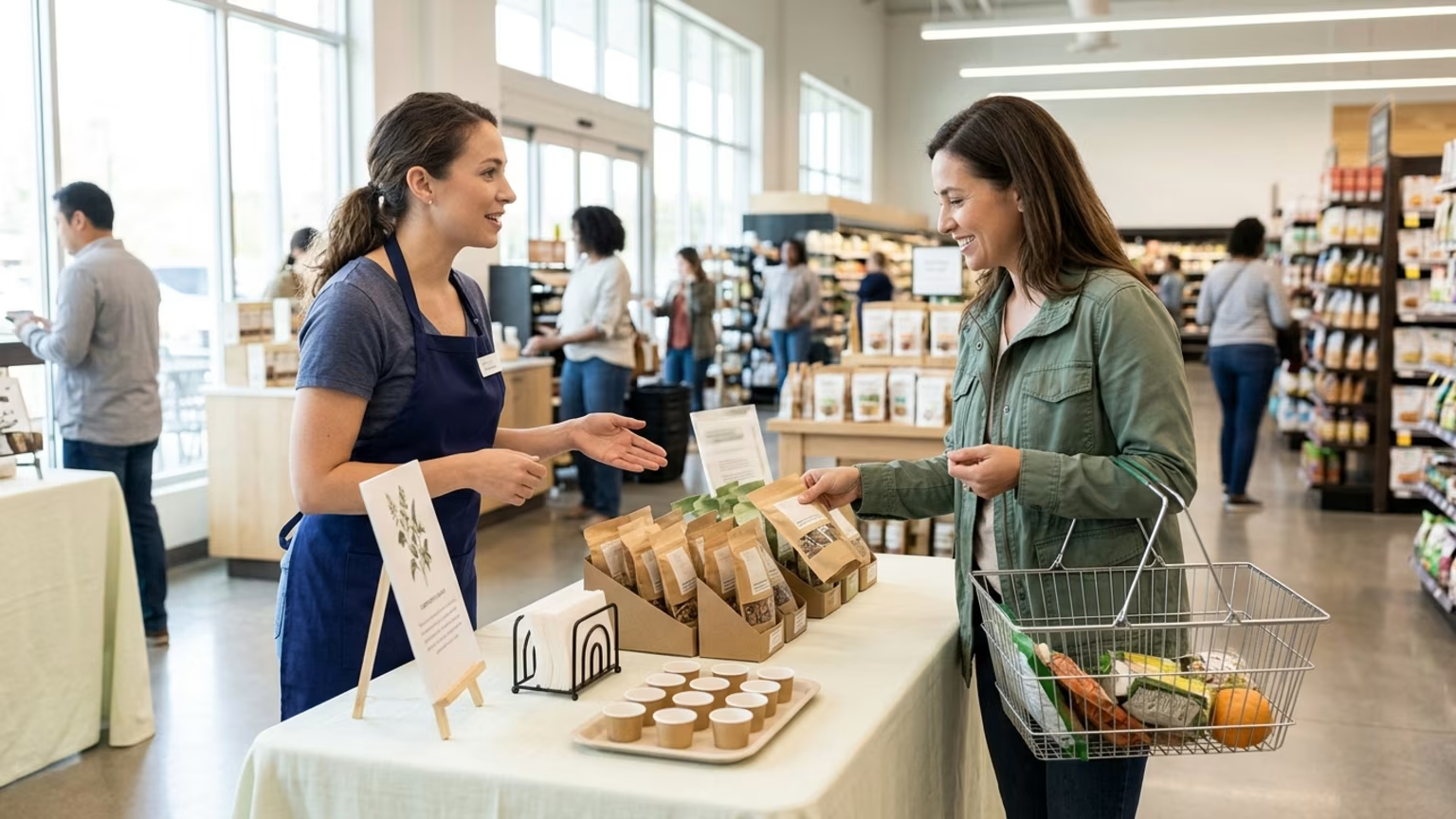
Stop treating an empty sample tray as proof of a successful activation. A beautiful table and a steady line can still leave the purchase unfinished. In-store sampling should make the product easier to understand and buy, not just easier to taste.
That is the sacred cow worth retiring: the idea that generous distribution is the same thing as commercial performance. Creative design matters. But when the recap celebrates handouts without explaining what followed, the activation has answered the easiest question in the room.
The harder question is whether the right shopper had a credible path from curiosity to purchase. That is where we believe the real work belongs.
A CMO considering a six-figure activation commitment is not only buying visibility. The anxiety is paying for a polished experience and ending up with no qualified pipeline or defensible purchase evidence. Busy photos do not settle that concern.
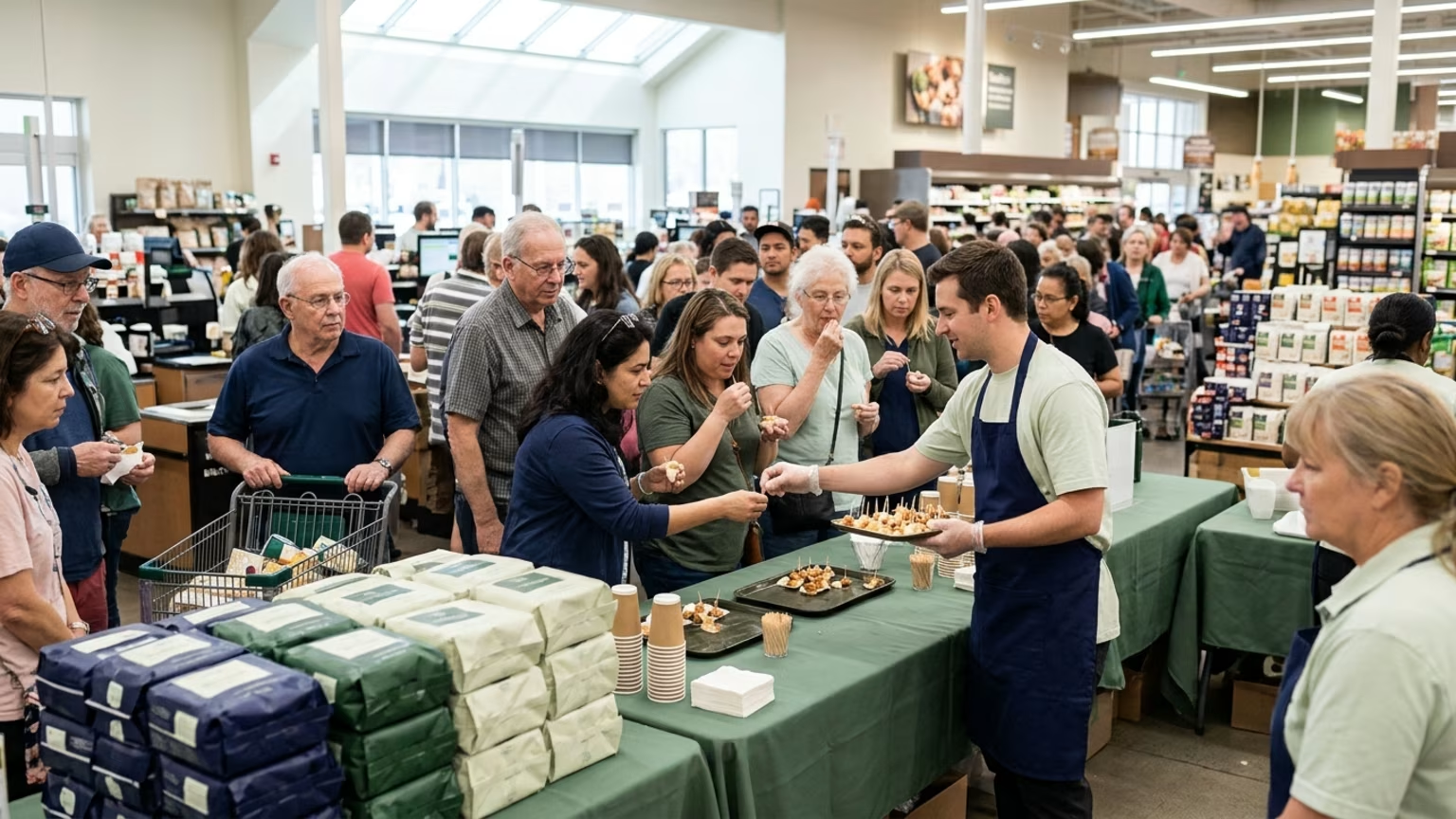
The mainstream mistake is to treat the sampling station as a self-contained attraction. Staffing becomes coverage. Product becomes giveaway inventory. Reporting becomes a count of whatever was easiest to record.
Our view is that this fragments the actual job. A useful product conversation does not resolve an unclear purchase route. A clear purchase prompt does not resolve unavailable product. Each deserves attention before the creative work is declared finished.
The creative review can make that gap hard to see. A rendering shows the station and the branding. It does not answer whether the selected store fits the shopping occasion or whether the team can explain the next purchase step. Those questions need the same scrutiny as the design because they define what the experience is meant to accomplish.
This is why designing for the shopper's buying decision is a better starting point than designing for the recap. It asks what the activation is supposed to help someone do, not merely what it should look like.
There is useful evidence for planning in context. Grassroots Marketing's analysis, discussed on the Startup CPG podcast, covered 34,000 demos across four grocery chains. It included more than 500 brands and over 1,000 stores across 19 states.
The evidence has boundaries. The podcast presents operational data rather than a randomized test and does not report a general sampler-to-purchase conversion rate. The snack research summarized here concerns four snack categories, while the grocery-study summary does not establish a universal staff-interaction effect. Nor do the sources isolate a specific sales lift from coupons or purchase prompts.
At Makai, we believe aloha-style hospitality and operational rigor belong together. Warmth should make the interaction feel human. Discipline should keep that interaction connected to the product and its commercial purpose.
Our retail demonstrations put trained brand ambassadors into real conversations and product trials focused on in-store sales. That is a different ambition from simply keeping a table staffed. The person offering a sample is part of the experience, not decoration beside it.
That does not mean turning every conversation into a hard sell. We believe a welcoming interaction respects the shopper's attention while making the product's purpose clear. Operational discipline should support that exchange through preparation and coordination rather than make the ambassador sound mechanical.
A summary of a U.S. grocery-chain field study covering six products over six weekends reported that shoppers who interacted with sample distributors seemed more likely to buy. The practical question is what makes that interaction useful: product information that answers a genuine question rather than a rehearsed monologue.
On the Startup CPG podcast, Grassroots Marketing's David Heiser recommended preparing ambassadors and providing product and promotional materials. Those included postcards and coupons. For us, that supports an operating principle: give the human interaction substance rather than expecting personality to carry an underprepared program.
The same logic applies behind the table. Makai's services span permitting through CRM reporting. Our storage and logistics work includes storing sampling product and event gear alongside nationwide shipping and delivery coordination. Those capabilities belong in the commercial discussion because execution is part of what the brand is buying.
We managed a four-week, multi-market Costco sampling program for Pulmuone's PlantSpired line. The program delivered more than 65,000 samples and recorded an 18 percent sold-to-sale rate. The value of that reporting is the presence of a purchase-related result beside the distribution total.
That is our alternative to brand theater: welcoming conversations backed by operational discipline. Neither warmth nor process needs to crowd out the other. We believe the strongest brief asks both to serve the same purchase opportunity.
Impressions can describe exposure. They should not stand in for the outcome an activation was funded to pursue. The more useful question is what evidence would show that this particular program did its job.
Store reputation is not a shopping occasion. The Startup CPG speakers recommend considering whether people are doing a full grocery shop or making a lunch or grab-and-go visit. Their point is to match the setting to the product rather than select a location for its name alone.
That puts store choice back inside the purchase path. A program brief should explain who the intended shopper is and why the chosen visit creates a relevant trial opportunity. This is a planning hypothesis to test against local results.
Timing deserves the same treatment. In the Grassroots Marketing analysis discussed on Startup CPG, Saturday demos averaged about 20% more shopper engagement and 14% more dollars sold than weekday demos. Saturday morning was the strongest time slot in the analysis.
The speakers also noted that local shopping patterns could favor other times. Use that finding to inform a scheduling test rather than make Saturday a standing rule. A calendar should serve the store context, not replace it.
A secondary summary of a Journal of Retailing study reports short- and longer-term sales effects from sampling across four snack categories. It also reports that repeated events sustained effects longer than a single event.
For planning, that introduces another question: is the program designed only to document the day or to learn from repeated execution? Our view is that repetition deserves a commercial purpose, not an automatic calendar renewal. The result to review should match the intended goal for the program.
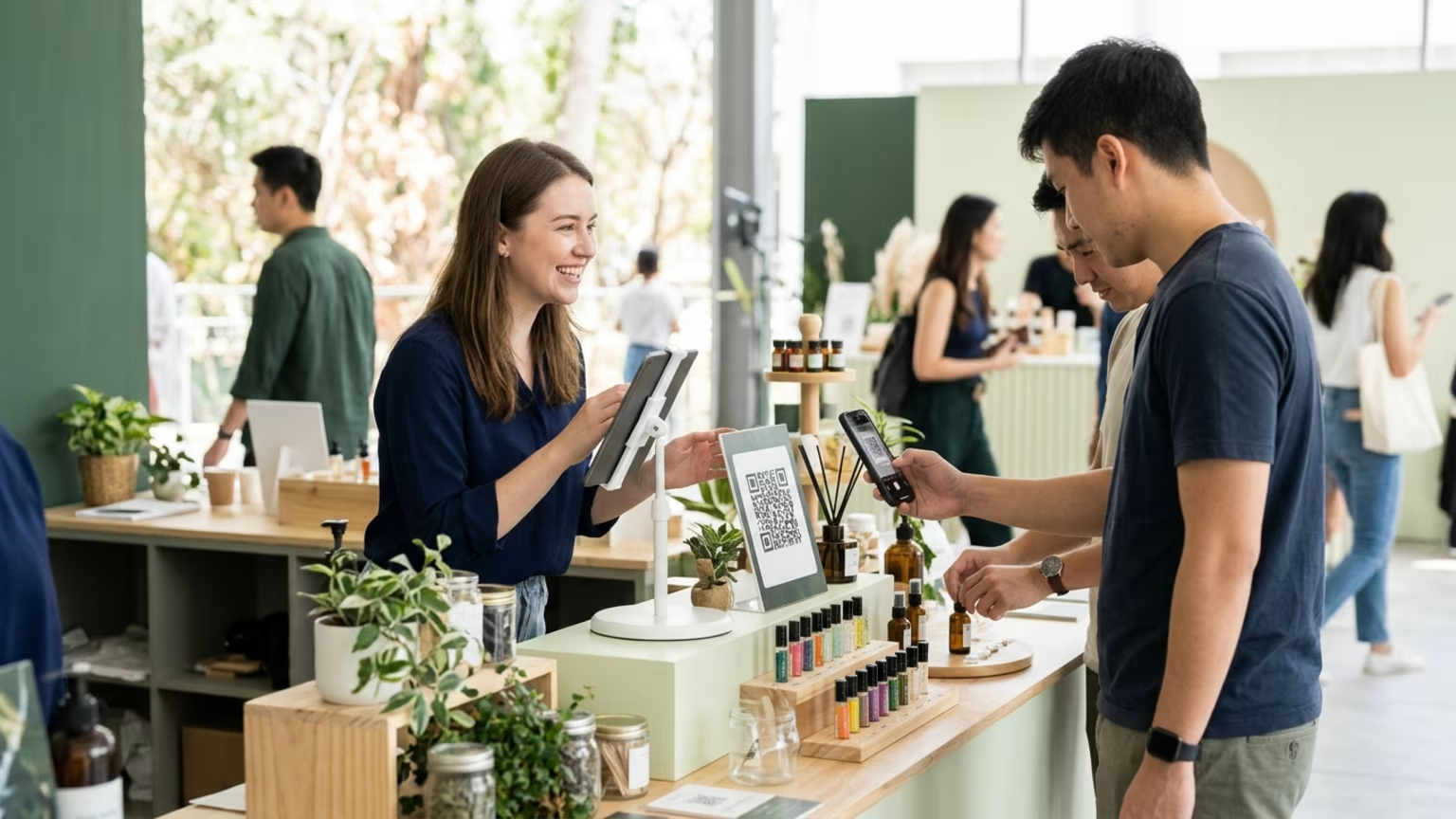
Our position is straightforward: the sampling plan should account for what happens after someone likes the product. The next step belongs in the experience brief rather than being left to the shopper to work out.
That means resolving concrete questions:
These are execution questions, not a demand for a more elaborate display. The podcast's recommendations on product information and promotional materials offer useful tools for that discussion. Choose tools that fit the next step rather than adding them because the table looks sparse.
A useful recap should keep different outcomes distinct:
These measures answer different questions. For an in-store activation, relevant trial and purchase evidence deserve the foreground. For a trade show, booked retail meetings may be a more meaningful commercial outcome than a pile of badge scans.
Define the conversion measure before calling a sales figure a conversion result. Keeping activity separate from purchase impact gives the marketing team a clearer basis for discussing Return on Investment. A busy activation and an effective activation are not interchangeable descriptions.
The operational details should then be evaluated against that goal. Product availability and staff preparation belong in the same review as sample totals. Otherwise the team can see how much activity occurred without seeing where the purchase path needs work.
The core takeaway is simple: sampling creative should earn its place through the quality of the execution it supports. The design needs to serve a welcoming conversation and a clear purchase path. The reporting needs to show relevant trial and commercial progress without relabeling one measure as another. Demand the operational plan behind the attractive rendering, then judge the work by what the shopper could understand and do.
Food and beverage brand managers carry daily responsibility for demo staffing and logistics; when Makai runs the demonstrations, trained ambassadors bring product trials into shopper conversations. For teams balancing permits with complex event coordination, the work stays focused on in-store sales instead of treating event activity as the final outcome.

30 Years Experiential & Retail Activation Partner for CPG & Beverage Brands | Multi-Market Demos, Roadshows & Costco/Club Programs That Actually Sell