Robbie Thain
Founder, CEO

Build CPG sampling around qualified trial, clear cost accounting and retail sales comparisons instead of treating sample volume as conversion.

Stop treating a beautiful sampling activation as a sales strategy. Free product and a crowded counter are not evidence of retail conversion. Creative work deserves a place in the plan, but it should not get to write the performance report.
A sample is an opportunity to learn something about a product. A purchase is a different action. When the reporting treats those actions as interchangeable, the program starts answering a question nobody in finance asked: how much product did we give away?
The better question is whether the experience helped the intended audience move toward a defined commercial outcome. For a retail program, that means examining purchase behavior. For an activation with a trade objective, it may also mean relevant retail meetings. Neither objective gets clearer because the backdrop photographs well.
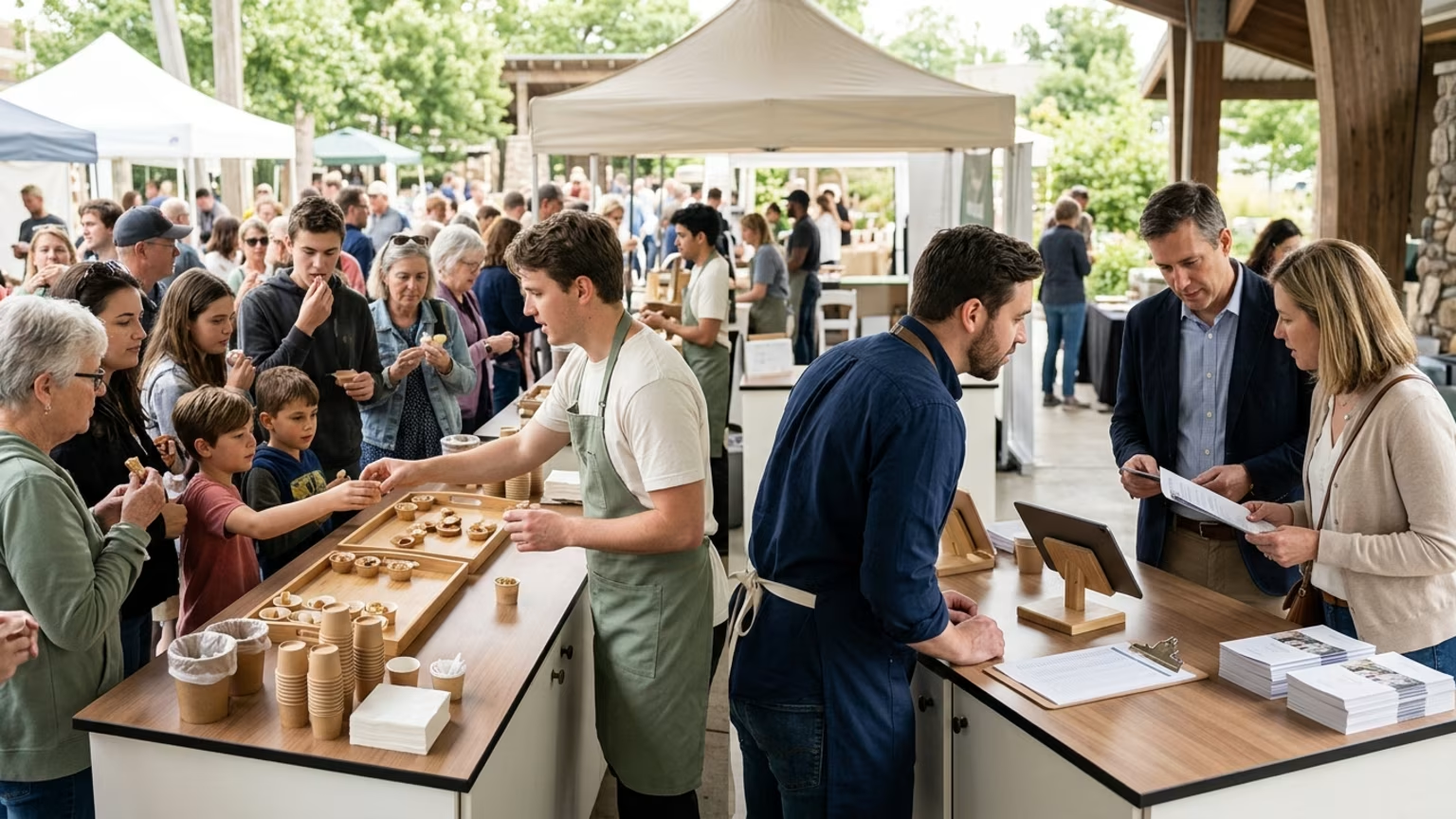
The mainstream approach fails when the handout becomes the strategy. The team builds an attractive environment and staffs it with friendly people. Then sample volume becomes the headline result because it is easy to count. The missing piece is a defined connection between the encounter and the business objective.
For a CMO approving a major activation budget, the nightmare is not necessarily an empty event. It is a full event followed by an empty pipeline. The recap shows smiling visitors and steady distribution, but nobody can explain whether the right people participated or what happened afterward.
That is the beautiful dumpster fire: visible activity wrapped around an unanswered commercial question. It does not require bad creative or an uncommitted field team. It requires a brief that rewards activity without defining what useful progress looks like.
A conversion-focused brief needs a clear audience and a reason for offering trial in that setting. It also needs a product explanation that makes the encounter useful. The planning question is not simply whether someone will accept something free. It is whether the trial addresses a real purchase question.
That distinction should shape how teams connect sampling with a purchase opportunity. Distribution belongs in the report. It should not be allowed to stand in for every other result.
At Makai, our view is that aloha and accountability belong together. A welcoming interaction should feel human rather than rehearsed. The operation behind it should be disciplined enough that the product encounter can happen as intended.
We specialize in retail demos, product sampling programs and roadshows that bring brands face to face with their audiences. These programs are designed to drive trial and build consumer relationships while supporting retail velocity across multiple locations. The human exchange is central to that work, not a decorative addition.
Warmth should make room for an honest product conversation. Discipline should support that conversation through staffing and coordinated execution. Our position is not that logistics replace creativity. It is that creative ambition needs an operating plan capable of carrying it.
An experiential agency's account of retail activations describes combining product preparation and usage occasions with tasting. That offers a useful design hypothesis: show what the product does in someone's life rather than treating taste as the entire message. The appropriate explanation will differ by product and setting.
Our experience with Pulmuone's PlantSpired line gives this discussion a concrete reference point. We managed a four-week, multi-market Costco sampling program that delivered more than 65,000 samples and recorded an 18 percent sold-to-sale rate. The useful editorial lesson is to keep the distribution result beside the sales-related result instead of allowing volume to dominate the story.
There is an operational side to that argument too. Makai's capabilities include permitting through CRM reporting, along with storage and nationwide delivery coordination for sampling product and event gear. Those are not background details when the brief depends on a physical product reaching a live audience.
For us, logistics and data tracking belong in the same commercial conversation. The product encounter and the evidence about its performance should be planned together. Otherwise the team risks designing a polished experience first and searching for a defensible business explanation afterward.
Start the evaluation with a primary business outcome. Then identify the supporting measures that explain what happened along the way. This is a planning recommendation, not a claim that one scorecard works for every product.
A retail sampling brief and a trade activation brief should not inherit identical definitions of success. Consumer trial may be central to both, but retail buyer development adds another outcome. Keeping those objectives distinct makes the eventual report easier to interpret.
A useful scorecard separates activity from commercial response:
Impressions can remain a supporting measure when awareness is part of the objective. They should not substitute for qualified trial or purchase evidence. Likewise, a retail meeting belongs in the buyer-development record rather than being blended into a consumer conversion figure.
Practitioner guidance on demo analytics describes comparing demonstration-period sales with a comparable prior store period or a similar non-demo store. It also describes using aggregate point-of-sale data when individual shopper tracking is unavailable. Sample counts versus units sold are presented as a rough trial-to-purchase indicator.
The same discipline applies after the event. A vendor's summary of two Marketing Science field experiments reports sales effects observable as long as 12 months afterward. It also reports that effectiveness varied substantially between brands in the same category.
The outside evidence here consists of practitioner guidance, agency examples without measured sales outcomes and a secondary study summary whose underlying paper was not independently reviewed here. It supports testing rather than a universal conversion benchmark. Aggregate sales changes and sample-to-sales ratios do not identify which sample recipients purchased. Our recorded sold-to-sale figure is a program result, not a category-wide target.
Where data access permits, identify the comparison before activation. Record the dates and conditions used for the demonstration period and its comparison. Then describe the result at the level the data supports: aggregate sales movement remains aggregate sales movement.
This is where teams need to separate sampling activity from commercial impact. A report should make the basis of comparison visible rather than hide it behind a conversion label. The practical value is a clearer decision about what to test next.
A credible Return on Investment discussion needs a stated cost basis. For planning purposes, that means accounting for product and labor alongside shipping and event operations. Those costs belong in the evaluation whether the activation produces an attractive recap or a disappointing one.
The cost of distributing a sample and the cost of generating a commercial result answer different questions. Neither should disappear from the discussion. A program can be efficient at handing out product while leaving the purchase question unresolved.
Choose the business outcome before selecting the efficiency measure. If the purpose is retail sales, evaluate the available sales evidence against the program's cost basis. If buyer development is also in scope, report the relevant meetings separately rather than inventing a financial value for them.
Treat the activation period as one reporting window and subsequent sales as another. Define those windows in the plan using the data available. The research does not justify imposing one follow-up schedule on every brand.
The practical task is to test the product in its actual context. Ask whether the immediate result supports repeating the format and whether later observations change that judgment. A longer reporting window should answer a separate question, not serve as a place to hide an unclear immediate result.
Core takeaway: Demand an execution plan before rewarding an aesthetic concept. A strong sampling program should make the product encounter useful and define the commercial question it is testing. Warm human engagement belongs at the center, supported by disciplined logistics and reporting. Judge the work by qualified trial and relevant commercial outcomes, not by how convincingly the recap makes a crowd look like conversion. Beautiful work earns its place when the operation and the evidence can stand beside it.
A sampling budget must account for moving product and event gear as well as presenting them; Makai works within that trade-off through Storage & Logistics. Makai stores sampling product and event gear and coordinates nationwide shipping, tracking and delivery to support activation schedules.

30 Years Experiential & Retail Activation Partner for CPG & Beverage Brands | Multi-Market Demos, Roadshows & Costco/Club Programs That Actually Sell