Robbie Thain
Founder, CEO

Discover how to turn CPG sampling programs into measurable retail sales. Compare mass distribution tactics with commerce-driven experiential marketing.
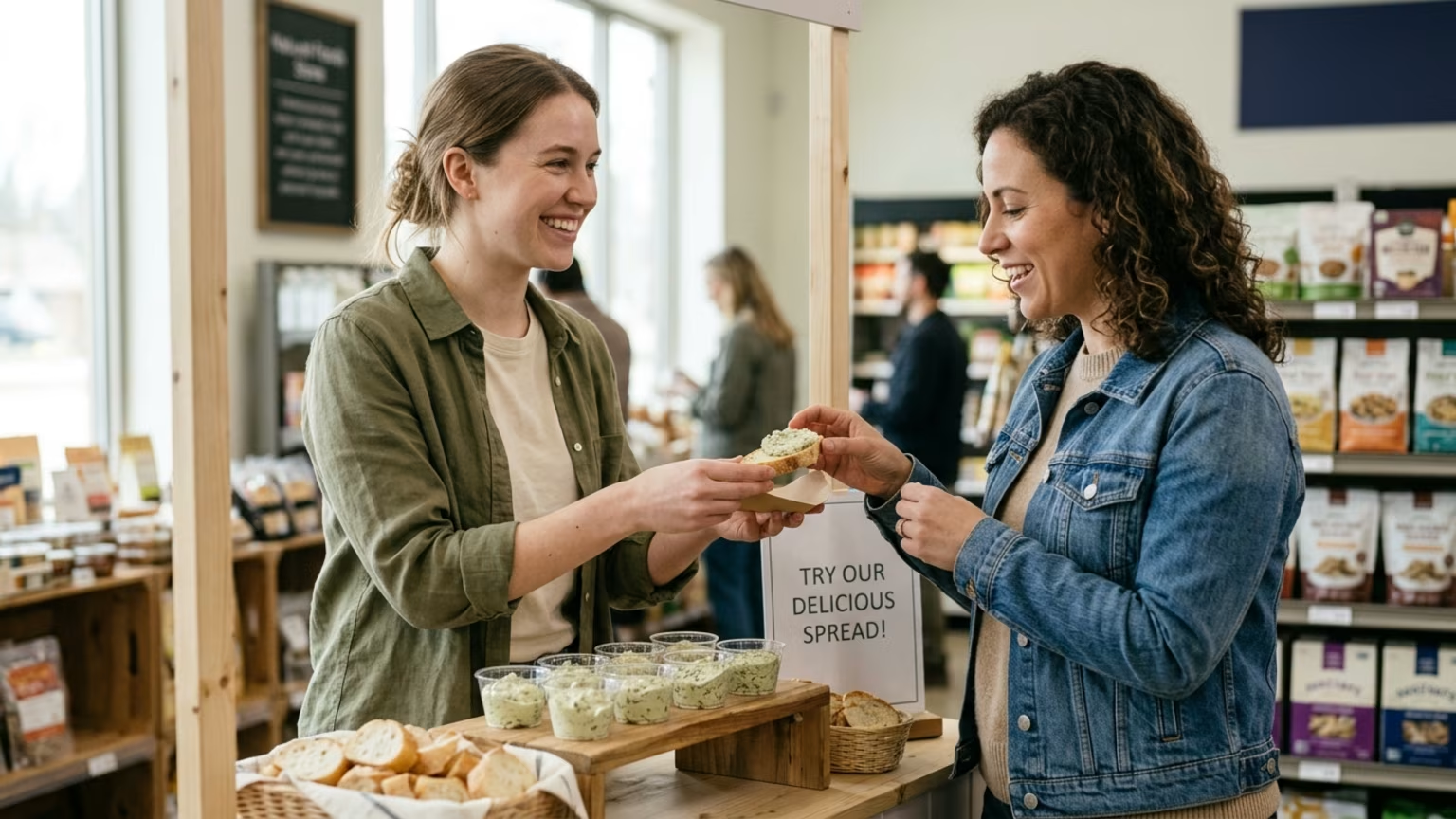
Retail demo programs get judged on cups poured, not on incremental pipeline. A folding table in aisle six, or a retrofitted airstream in downtown Austin, often looks like a success based on foot traffic alone. That mismatch is exactly why marketing leaders struggle to connect live trials to measurable sell through. The strategic choice comes down to running a product giveaway versus building a commerce driven sampling engine.
The traditional approach to experiential marketing focuses primarily on maximum reach. Brands set up activations in high traffic locations and attempt to hand out as much product as possible. The primary logistical constraint in this model is simply volume management and inventory control. Field teams must focus heavily on queue speed to ensure product moves efficiently.
Marketing leaders often rely on this tactic to generate immediate brand visibility. The scale of these operations reflects broader industry growth trends across the consumer landscape. Global experiential marketing spending increased 8.3% to $138.94 billion in 2025, with another 10.3% growth forecast for 2026, according to PQ Media data cited by Marketing Charts.
Consumer experiential marketing represented approximately 70% of global experiential spending in 2025. Within that consumer segment, event sponsorships accounted for $50.25 billion. Meanwhile, live event marketing accounted for $46.99 billion during the same period. PQ Media data cited by Marketing Charts identified the United States as the largest experiential market, representing 46.4% of global spending and growing 9.3% in the measured period.
Given this massive investment, brands naturally default to volume based metrics to justify their budgets. Common metrics include samples distributed, consumer interactions, and coupon redemptions. Teams also track digital activity and sales lift in activated markets compared with control markets. However, distributing a sample does not automatically establish that a purchase occurred.
The alternative approach treats sampling as a highly targeted commercial sequence. Sampling practitioners stress that the program should begin with a defined commercial objective, such as launching a new product, entering a new geography, or improving sales of an underperforming item. Every subsequent decision serves that specific business goal. Instead of maximizing raw foot traffic, this model prioritizes relevant shopper demographics.
Kaizen Loyalty specifically recommends refining the audience to match the brand’s ideal customer instead of distributing samples indiscriminately. This ensures that the people receiving the product are actually qualified prospects. The execution footprint differs entirely from a mass giveaway because it requires deep product education. Trained staff must be able to explain the specific product benefit and the intended usage occasion.
A physical sample should answer more than just whether the product tastes good. Staff should be fully trained to explain what the product is, who it is for, and the key product benefit. For food and beverage brands, this often means a prepared serve or a side by side comparison. The format should make the intended consumption occasion entirely clear to the shopper.
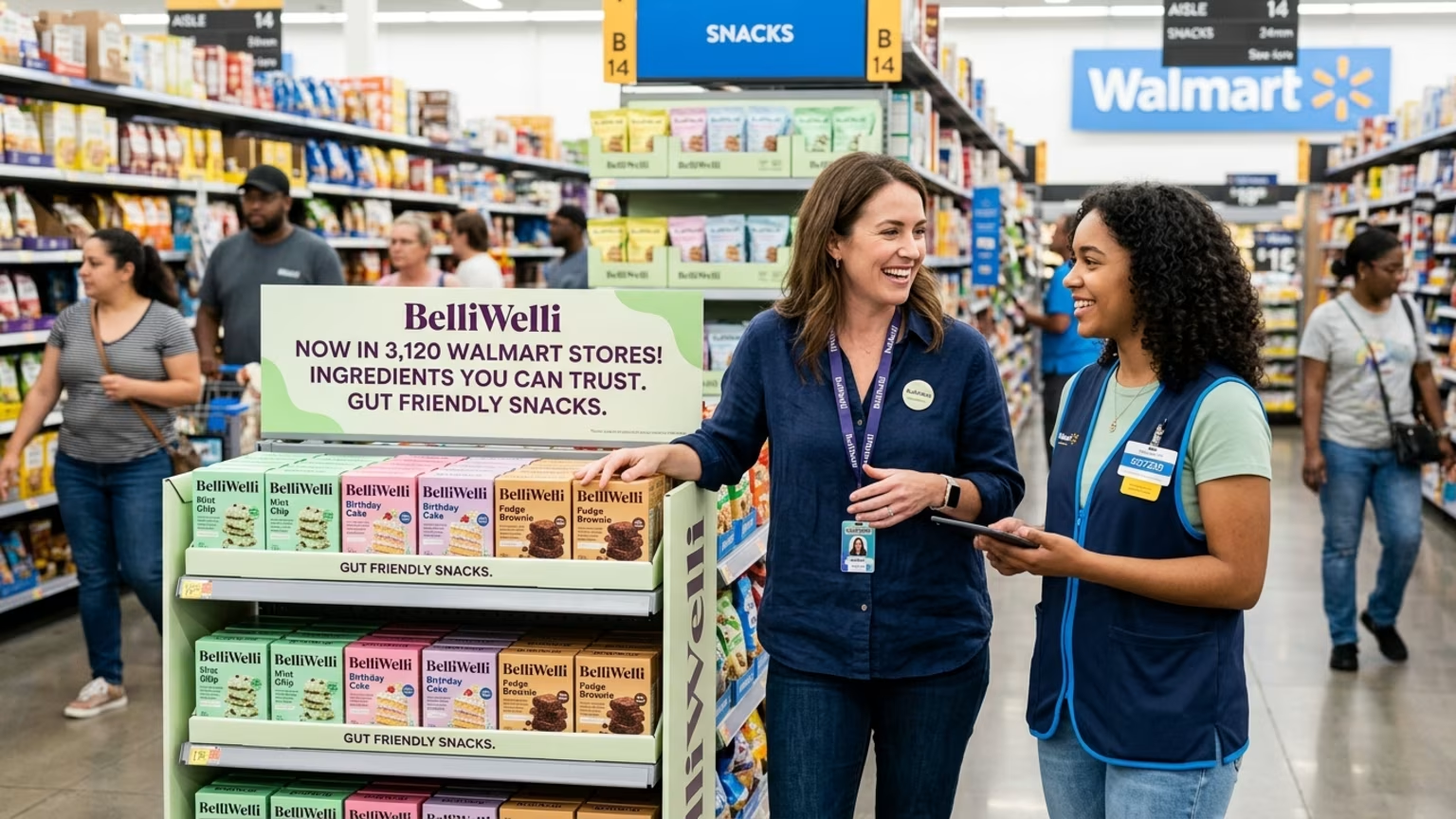
We specialize in creating retail demos, product sampling programs, and roadshows that bring brands face to face with their audiences. Each program is designed to drive trial, build consumer relationships, and accelerate retail velocity across multiple locations. Retail proximity is a mandatory design requirement for this strategy. The sample must be placed near the relevant shelf, endcap, or checkout path.
If the activation happens off site, teams must provide a direct path to purchase. Recommended mechanisms include QR codes, unique coupon codes, and landing pages. Teams also utilize surveys and CRM capture. These digital tools help bridge the physical interaction to an eventual shopping basket. When planning a beverage sampling strategy, timing the follow up is critical to match the purchase cycle.
Mass distribution remains the unarguable winner when the sole objective is broad risk reduction. Sampling is generally intended to reduce the consumer’s perceived financial risk, generate feedback, and move people from awareness toward purchase. When a brand simply needs millions of people to taste a new flavor, volume tactics excel. Budget constraints often force brands to prioritize cost per interaction over qualified lead generation.
These campaigns thrive in massive crowd aggregation scenarios like festivals or major sporting events. Freeman’s reported 2025 research found that 74% of respondents viewed in person events as the best place to find new products, while 96% said touching or testing a product increased their confidence in advocating for it. Physical touchpoints remain incredibly powerful for basic product introduction.
Volume sampling also works beautifully when the product benefit is entirely self evident. If a new snack chip requires zero explanation, high speed distribution makes logistical sense. The brand does not need to invest in lengthy educational conversations at the booth. The taste alone acts as the primary driver of future consideration.
However, brands must accept that conversion tracking will remain opaque in these scenarios. A high volume event might move thousands of units on site without proving incremental retail demand. Marketers must be comfortable using broad brand lift studies rather than strict transactional data. AnyRoad defines brand lift measurement as a comparison between exposed and matched control groups across metrics such as awareness, favorability, or purchase intent.
Targeted sampling dominates when brands are under strict mandates to prove Return on Investment. Marketing operators must increasingly show that live activations generate immediate and verifiable retail sales. A 2025 Walmart Connect Canada/Leger survey cited by Field Agent Canada found that 50% of Canadian shoppers said sampling influenced their immediate in store purchase decisions. While this provides directional context, operators must build localized plans for their specific retailers.
This approach is mandatory for complex product launches that require consumer education. If a beverage contains unfamiliar functional ingredients, a quick taste will not suffice. Brand ambassadors must take the time to explain the science, the health benefits, and the ideal consumption time. This level of engagement turns a curious passerby into an informed buyer.
Retail sampling agencies recommend connecting the activation window to point of sale data and comparing activated locations with matched control locations. This rigor is mandatory when managing high stakes retail expansions. For instance, executing Costco roadshows that turn sampling into sales requires meticulous alignment with warehouse inventory systems. You cannot rely on assumptions when warehouse managers expect daily volume reports.
This tactic also dominates when a brand needs to revive a sluggish SKU at a specific grocer. By deploying targeted activations directly at the underperforming store, marketers can stimulate localized velocity. The team can track exact basket attachment rates during the operational window. Following best practices for grocery store sampling ensures these efforts translate into long term shopper loyalty.
Targeted programs also allow brands to use precise promotional offers to overcome specific purchase barriers. A simple same day coupon can drive immediate conversion for a hesitant buyer. Meanwhile, a digital bounce back offer can secure a second purchase after the consumer uses the product at home. Track redemption separately from full price sales to compare the economics of discounted units with incremental margin.
Connecting live interactions to verifiable sales requires a disciplined approach to data collection. American Guerrilla Marketing recommends tracking both activity measures and downstream indicators such as coupon redemption, digital follow up, and sales lift against control markets. A matched market design can provide a more defensible estimate of incrementality than a simple before and after comparison, provided the markets and measurement windows are appropriately selected. This comparison works best when the entire funnel is tracked.
Retail scanner data can show what sold, where, and at what price, while household panel data can add information about who bought and whether they returned. Teams must separate intermediate actions from actual commercial outcomes. A QR code scan represents engagement, but it does not guarantee a finalized transaction. Measuring the full funnel prevents brands from celebrating empty metrics.
The industry frequently struggles with vendor reported metrics that lack independent verification. Field Agent Canada cites vendor reported figures of a 41.6% average sales lift and localized surges of up to 2,000%, but the underlying public evidence should be independently verified before publication. Savvy marketing leaders know that correlation does not automatically equal causation. Sales might rise during a sampling window due to external factors like weather or concurrent media support.
A control market helps isolate the true impact of the field team. By comparing activated locations against nonactivated locations, brands can identify their actual contribution margin. This financial clarity transforms sampling from an expense into a measurable growth lever. True measurement requires honesty about what the data actually proves.
Building a repeatable field marketing system requires consistency across multiple campaigns. A single weekend activation might produce great photos, but it rarely changes long term market share. True commercial impact comes from running disciplined programs week after week. The final output of any event should be a refined operating playbook for the next city.
Operators must identify which audience converted best and which retail locations produced the highest velocity. They need to understand which product explanation actually improved consumer understanding. This iterative learning process ensures that every dollar spent works harder than the last. Experiential marketing becomes a compounding asset rather than a sunk cost.
Ultimately, the objective is to build lasting relationships rather than brief transactions. Offers should be simple, trackable, and directly related to the current purchase barrier. A bounce back coupon can encourage a second purchase and solidify a new habit. Sustainable growth relies on turning that initial trial into a permanent spot in the shopping cart.
The verdict is clear regarding the future of physical brand activations. Over indexing on mass distribution without a conversion plan creates wasted budget. Under investing in targeted consumer education leaves potential revenue sitting idle on the shelf. Brands must evolve past counting cups and start measuring actual incremental units.
The gap between a temporary event and a profitable campaign is bridged by operational discipline. Proper measurement requires planning the sales outcome before the first booth is ever built. When the lights go down and the crowds disperse, only the data remains. A sample only matters if it changes what a shopper reaches for tomorrow.

30 Years Experiential & Retail Activation Partner for CPG & Beverage Brands | Multi-Market Demos, Roadshows & Costco/Club Programs That Actually Sell