Robbie Thain
Founder, CEO

Learn how CPG brands turn in-store grocery sampling into a measurable growth engine with strict food safety, prime placement, and precise ROI tracking.
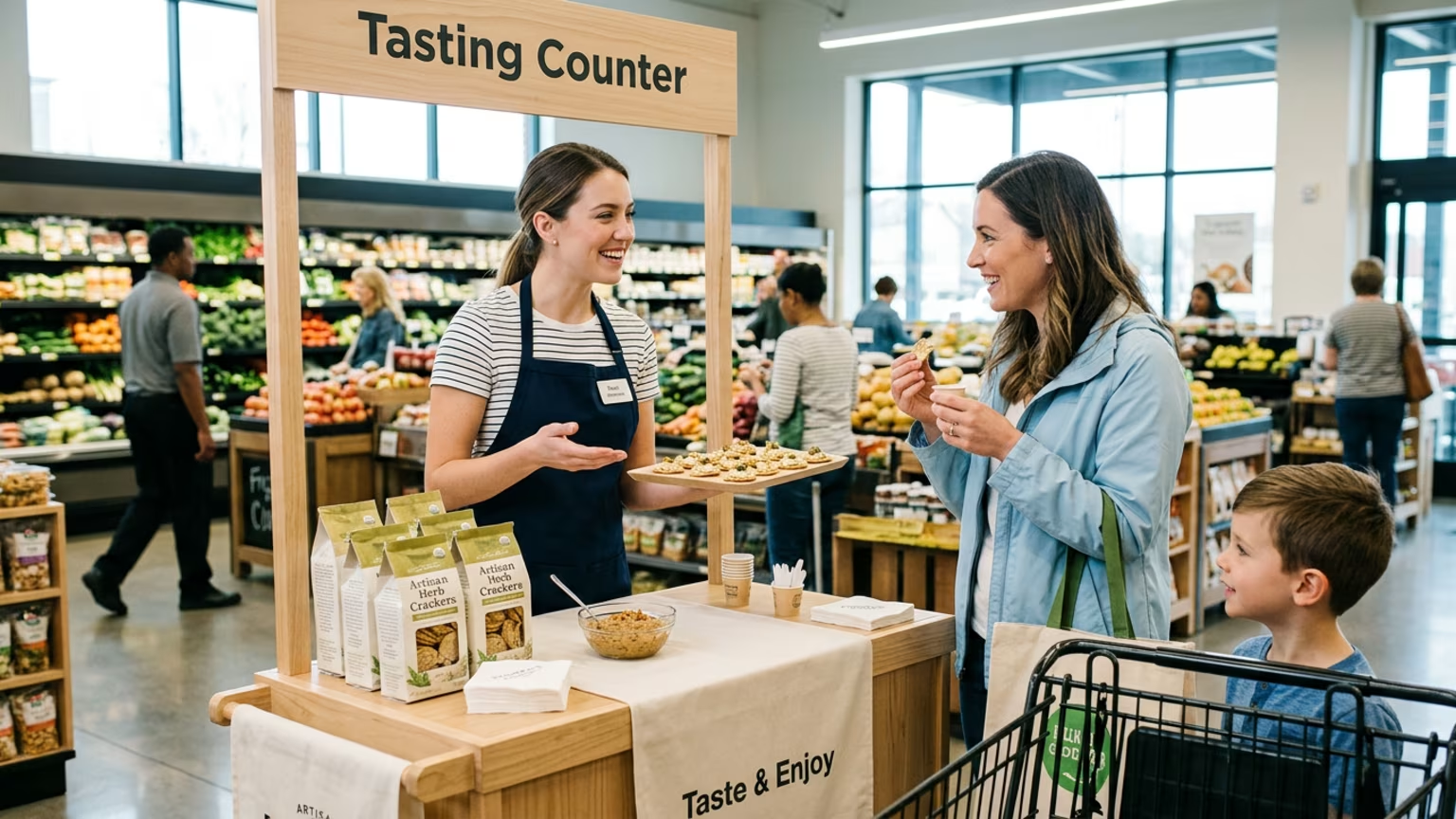
This guide provides a systematic framework to transform casual grocery sampling into a measurable sales driver. Marketing leaders will learn how to align food safety, station placement, and staff training to generate proven Return on Investment.
It is a Saturday afternoon at a crowded grocery chain. A brand ambassador stands behind a folding table with lukewarm product samples. The station sits fifty feet away from the actual shelf stock. Shoppers take a sample and walk away without a second glance.
The field marketing manager receives a report showing hundreds of samples given but zero incremental sales. This chaotic scenario plays out daily across national retail chains. Brands burn through budget on events that produce fog instead of evidence. The disconnect between a physical tasting and a register transaction is a massive point of failure.
Many consumer packaged goods brands struggle to justify the high labor costs of these live activations. Poorly trained staff fail to deliver a compelling product narrative. The lack of standardized reporting leaves marketing teams guessing about the true business impact. These operational blind spots turn a powerful marketing channel into a frustrating cost center.
This friction happens when brands treat sampling as a simple logistics task. They ship a box of product to a store and assume the item will sell itself. Shoppers today need a compelling reason to disrupt their routine and try something new. Without a trained ambassador to guide the experience, the product becomes background noise.
The hidden costs of poor execution drain marketing budgets quietly. Throwing away unserved product, paying for unproductive labor hours, and missing out on potential lifetime customers hurts the bottom line. Retailers notice when a brand runs a sloppy event on their floor. A failed demo damages the relationship with local store managers and regional buyers.
The solution requires treating live demos as a strict performance channel rather than ad hoc brand theater. Michigan State University Extension notes that sampling works best as a combination of storytelling and connection. We must apply rigorous operational standards to every single interaction. This framework relies on precise food handling, strategic station placement, and aggressive inventory management.
Brands must stop hoping for accidental sales and start architecting a clear path to purchase. Proper execution means aligning the physical display with a well-practiced sales script. The goal is to lower the friction between tasting the product and placing it in the cart. This systematic approach forces every element of the activation to justify its existence.
We provide clear reporting on reach, trials, leads, and sales to guide next steps in campaign optimization. Our measurement approach tracks awareness, engagement, and conversion, turning brand moments into actionable data that demonstrates business impact. This visibility allows brands to scale their programs with absolute confidence. Precise analytics separate successful roadshows from expensive sampling mistakes.
Linking the in-store experience to digital targeting can further amplify your results. According to Gourmet Ads, programmatic sampling uses automated technology to deliver targeted product trials. We can bridge these targeted digital experiences with physical retail events to track the full consumer lifecycle. This alignment creates a closed-loop system for tracking true retail velocity.
The post-pandemic retail environment demands heightened attention to consumer trust. Shoppers expect visible sanitation practices and clear communication from demo staff. A premium brand experience requires flawless presentation and pristine conditions at all times. Meeting these expectations raises the perceived value of your product.
Sampling must anchor itself in deep consumer education. This rings true for better-for-you snacks, functional beverages, and plant-based foods. Consumers need to understand the exact benefits, the key ingredients, and the optimal usage occasions. A demo that teaches the consumer will always outperform a demo that simply hands out food.
Running a high-converting demo requires absolute precision from the field team. Our team relies on a proven operational sequence for live events. The field staff must execute every step with operator-grade discipline.
A demo program is only as good as its data. Marketing leaders must define hard metrics before setting up a single table. Lead metrics include the raw number of samples distributed and the immediate conversion rate. You must track the percentage of triers who buy the product on the same shopping trip.
Lag metrics focus on long-term retail velocity and repeat purchases. You must calculate the incremental units sold versus baseline control weeks. Tracking the cost per incremental unit sold helps justify the entire field marketing investment. Robust analytics turn a fleeting brand interaction into a proven pipeline asset.
Industry studies frequently demonstrate the financial power of these activations. Research indicates that sampling can lift same-day sales by up to 300 percent for new or unknown brands. Following up with robust tracking helps you capture that long-term halo effect. Integrating this data allows brands to refine their retail demonstrations and turn tasting into sales lift.
Brands should run consistent tests to optimize their per-store metrics. Try varying the dayparts, positioning, and promotional offers to see what drives the highest yield. Tracking basket size and attach rates provides a deeper view of consumer behavior. These insights form the foundation of a high-performance marketing strategy.
Many retailers now link coupon redemptions directly back to specific sampling events. This integration closes the loop between a physical tasting and a verified purchase. You can evaluate the cost per new buyer with absolute clarity. Finance teams demand this level of precision to approve ongoing field marketing budgets.
Proper reporting uncovers the true value of your in-store traffic. If a demo yields high trial numbers but low sales, you can immediately adjust the messaging or pricing offer. Without data, you are simply guessing at the root cause of the failure. Detailed analytics separate high-impact experiential campaigns from expensive vanity projects.
Awake Chocolate treats in-store demos as its top marketing tool. The caffeinated chocolate brand runs sampling events systematically when entering new retail environments. They commit to running monthly or bimonthly demos for the first six months. This sustained approach builds a solid base of repeat customers.
First-time samplers convert at a massive rate. Nearly 40 percent of those initial buyers return for future purchases. The brand relies on this disciplined cadence to turn new retail accounts into highly profitable relationships. This strategy removes the guesswork from scaling physical product distribution.
This kind of disciplined execution mirrors the success we see across the food and beverage sector. By focusing on consumer education, brands can offset premium pricing and improve their overall conversion numbers. These methods form the core of how food brands turn multi-city demos into measurable retail sales. When executed flawlessly, physical sampling delivers an unmatched return on ad spend.
Often, the highest returns happen when brands integrate their demos with larger promotional events. Securing secondary display spaces alongside the demo table maximizes product visibility. This strategy aligns perfectly with promotional campaigns that turn interest into sales. Every touchpoint must work together to close the sale.
Brands entering wholesale clubs face an even higher barrier to entry. Managing high-volume trial events requires specialized logistics and trained sales personnel. We run Costco roadshows that turn sampling into sales by applying these exact same performance principles. Precision execution scales beautifully across different retail formats.
Think back to that Saturday afternoon at the grocery store. Imagine a compliant station right next to a fully stocked shelf with a trained ambassador driving real conversations. Shoppers taste the product, place it directly in their carts, and return weeks later to buy more. Book a strategy call to turn your next demo into a measurable revenue engine.

30 Years Experiential & Retail Activation Partner for CPG & Beverage Brands | Multi-Market Demos, Roadshows & Costco/Club Programs That Actually Sell