Robbie Thain
Founder, CEO

Learn how premium food brands use structured multi-city retail demos and targeted social media content to drive product trial and measure live event sales lift.
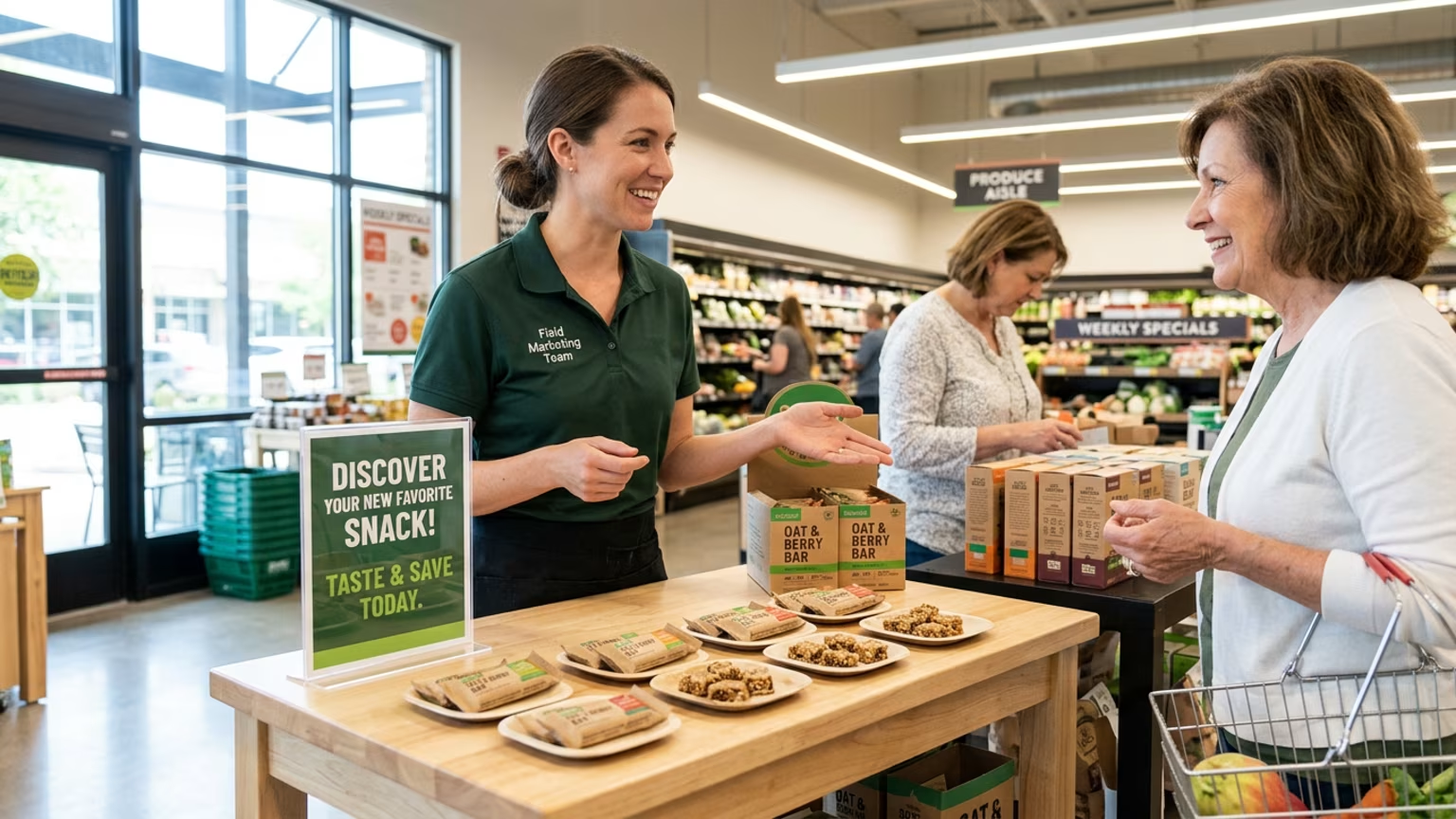
She stood behind a tasting table in Manhattan as the lunch rush started. Her phone vibrated with urgent texts from the Connecticut team about delayed inventory. The premium snacks were perfectly staged. The background logistics were falling apart.
Running multi market sampling campaigns turns direct consumer interaction into proven sales lift when backed by operational discipline. By combining physical retail demos with social media validation, food brands generate immediate product trial and secure long term retail distribution.
Brand leaders know the value of physical product trial. The plan usually looks perfect in a presentation deck. A premium food brand schedules a high volume consumer activation at a Connecticut food event on Saturday. The same team plans to launch a retail demo series in Manhattan by Sunday morning.
The actual execution rarely matches the pristine schedule. Inventory gets stuck in transit between state lines. Brand ambassadors arrive without proper talking points or uniform guidelines. The Manhattan team struggles to set up the booth before the doors open.
Many marketing directors assume that hiring a local staffing agency will solve the logistical burden. This assumption usually leads to disconnected brand messaging and poor sample handling. Food and beverage products require precise temperature controls, sanitary serving conditions, and accurate portion sizes. When a local team lacks proper training, they often hand out full products instead of measured samples.
This drains inventory rapidly and inflates the perceived cost per engagement. The Connecticut team might burn through their entire stock by noon. Low foot traffic hurts the Manhattan team when their booth placement is hidden. These inconsistencies make it impossible to compare performance between different retail environments.
This fragmentation destroys the Return on Investment for field marketing teams. When execution is inconsistent, the data becomes useless for retailer conversations. Buyers at major grocery chains want proof of velocity. They do not care about a few nice photos on a corporate feed.
Analysts at eMarketer report that prominent marketing pushes are often required to lift sales in challenging retail environments. This lack of operational control forces marketing directors into reactive modes. You spend your weekend managing basic inventory problems instead of analyzing consumer feedback. You can avoid these errors by studying how to run multi-stop brand roadshows.
The solution requires treating live events as an operational science. Moving from a festival in Connecticut to a retail floor in New York requires a strict framework. You must separate the logistical planning from the creative consumer engagement. This allows field teams to focus entirely on selling the product.
First, centralize your inventory routing through a dedicated staging facility. Do not rely on local store managers or event coordinators to hold your perishable products. You need clear chain of custody protocols for every box of product. According to retail execution data from FieldAssist, proper shelf visibility and stock availability strongly influence consumer purchase decisions.
Second, align your digital content capture with the physical sampling flow. The goal is to turn the tasting moment into a documented brand asset. Train your field staff to record defined angles and positive consumer reactions. This bridges the gap between the physical taste test and the broader online audience.
A critical element of this framework is establishing a real time communication loop. Your central operations team needs immediate visibility into both markets. If the Connecticut event sees an unexpected surge in a particular flavor preference, the Manhattan team needs that data. They can instantly adjust their display to highlight the trending item.
This agility separates standard sampling programs from data driven experiential marketing. You must treat every consumer interaction as a data point for future retail strategy. When you gather qualitative feedback on taste profiles, you give your sales team powerful ammunition. They can present this verified local data to regional grocery buyers during category reviews.
Finally, mandate uniform talking points across all activation locations. A customer in Manhattan should hear the exact same value proposition as a festival attendee in Connecticut. Consistent messaging builds the repetition needed for strong brand recall. You maintain this standard when you correctly hire, train, and manage field teams across multiple territories.
Taking this strategy to the field requires strict adherence to a standard operating procedure. This playbook prevents the usual friction of multi market activations. Follow these direct steps to run parallel events smoothly.
Reporting determines the survival of any field marketing program. You cannot justify the budget without hard data linking the event to sales revenue. You need to track both immediate actions and long term results.
Lead metrics tell you if the activation is working in real time. Count the total number of qualified interactions at the booth. Track the exact number of samples consumed per hour. Monitor the immediate social media mentions and QR code scans from the booth signage.
Lag metrics prove the long term financial impact. You must measure the thirty day retail sales velocity in the surrounding zip codes. Track the repeat purchase rate from consumers who signed up for your digital coupon program. Measure the final cost per acquisition for each documented new customer.
Measuring the earned media value of the activation remains an absolute priority. When consumers post their own photos with your product, they generate authentic digital reach. Track the usage of your campaign hashtag and the number of user generated content tags. This organic reach lowers your overall marketing acquisition costs.
Another metric to evaluate is the retail partner conversion rate. Monitor how many independent store managers request a stocking order after witnessing a successful demo. A strong in store activation often convinces hesitant retailers to expand your shelf space. This immediate B2B impact is just as valuable as direct consumer sales.
Return on Investment calculations require accurate expense tracking. You must account for travel costs, staffing hours, and product waste. Connect these numbers to give your retail buyers a clear performance narrative. You can find detailed breakdowns on the right metrics to prove field activation ROI to refine your reporting.
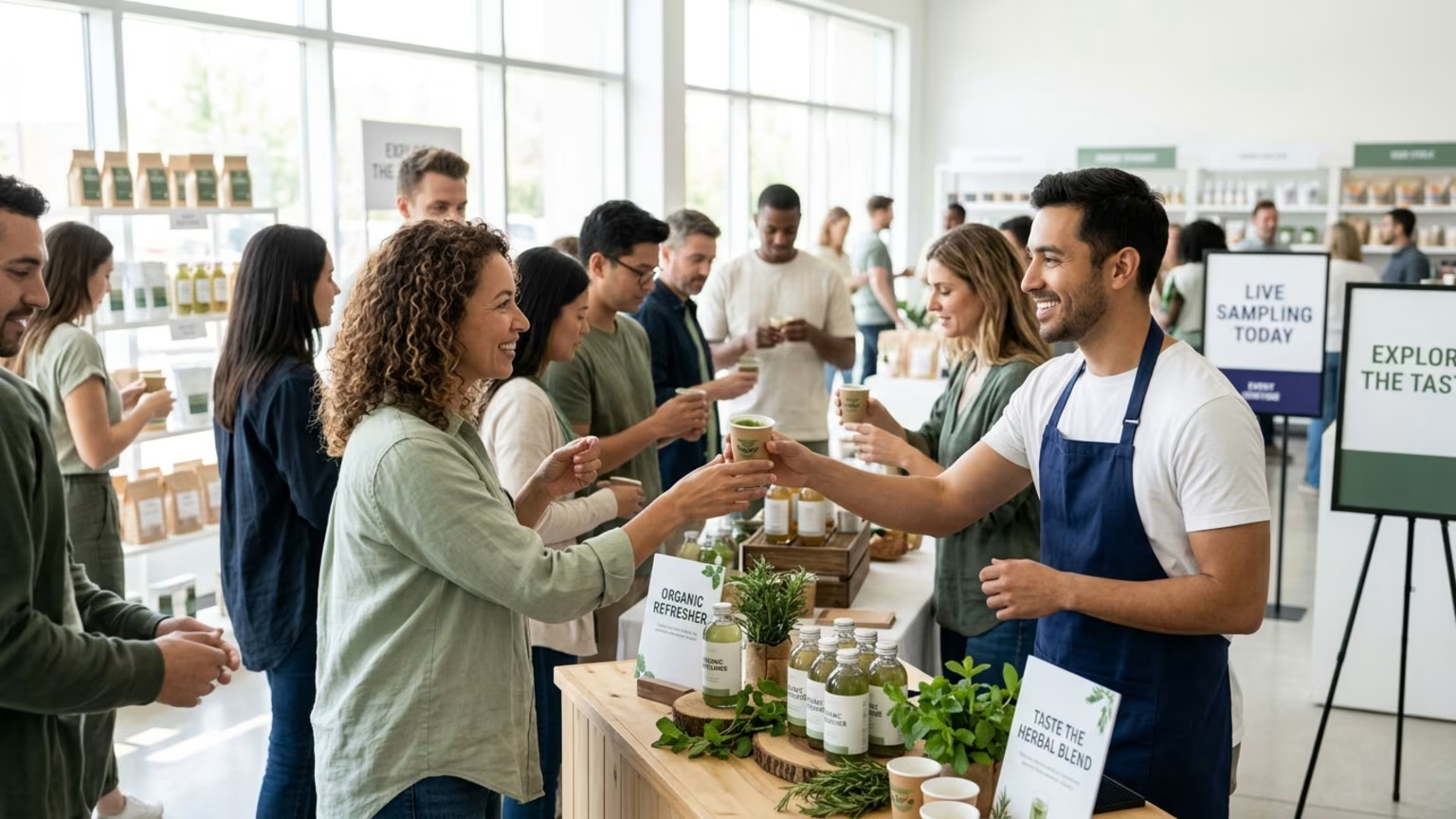
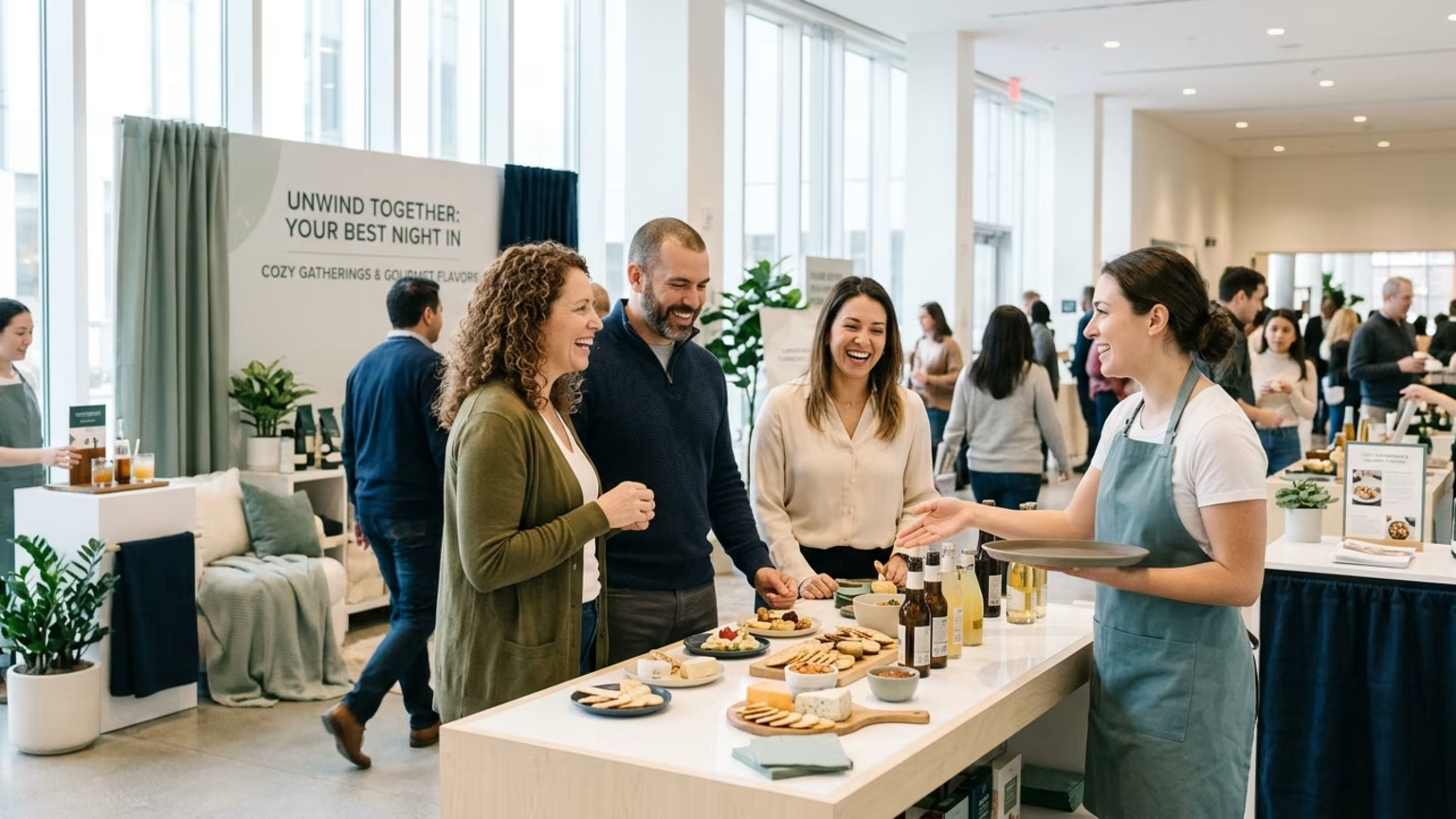
The power of this structured approach becomes clear in practice. A rising food brand recently executed a major retail demo program spanning two highly competitive markets. They started at a prominent Connecticut food event to generate mass awareness. They immediately followed it with a targeted activation in Manhattan retail stores.
The brand used social media platforms to document the entire sampling experience. They recorded live consumer reactions as people tasted the product for the first time. The crew captured footage of their display positioned next to legacy competitors. This visual proof demonstrated their market presence to both consumers and retail buyers.
The brand team recognized that capturing attention in Manhattan requires a different energy than a regional festival. They adapted their physical signage to reflect the fast paced nature of city shoppers. The messaging focused on quick, healthy snacking for busy professionals. In Connecticut, the messaging leaned into family friendly weekend treats.
This subtle messaging shift was executed without changing the core brand identity. The central operations team managed the physical logistics, and local ambassadors delivered tailored pitches. The resulting data proved that physical activations generate immediate sales lift in both environments. Retail buyers responded positively to the comprehensive campaign reports.
The dual market approach created a compound effect. The festival generated high volume sampling and immediate content creation. The Manhattan retail demos converted that regional awareness into direct grocery purchases. The structured execution allowed them to operate in two demanding environments without burning out their field staff.
We have been connecting brands with people through live experiences, retail programs, and national activations since 1995. Over three decades, we have built a track record of creating meaningful brand moments across the country.
If your brand is ready to turn scattered events into a unified sales engine, you need a proven strategy. We can help you build a roadshow that actually drives retail velocity. Book a strategy call with our team today.

30 Years Experiential & Retail Activation Partner for CPG & Beverage Brands | Multi-Market Demos, Roadshows & Costco/Club Programs That Actually Sell