Robbie Thain
Founder, CEO

Learn how multisensory sampling strategies turn passive foot traffic into immediate retail sales. Capture impulse buys and prove experiential marketing ROI.
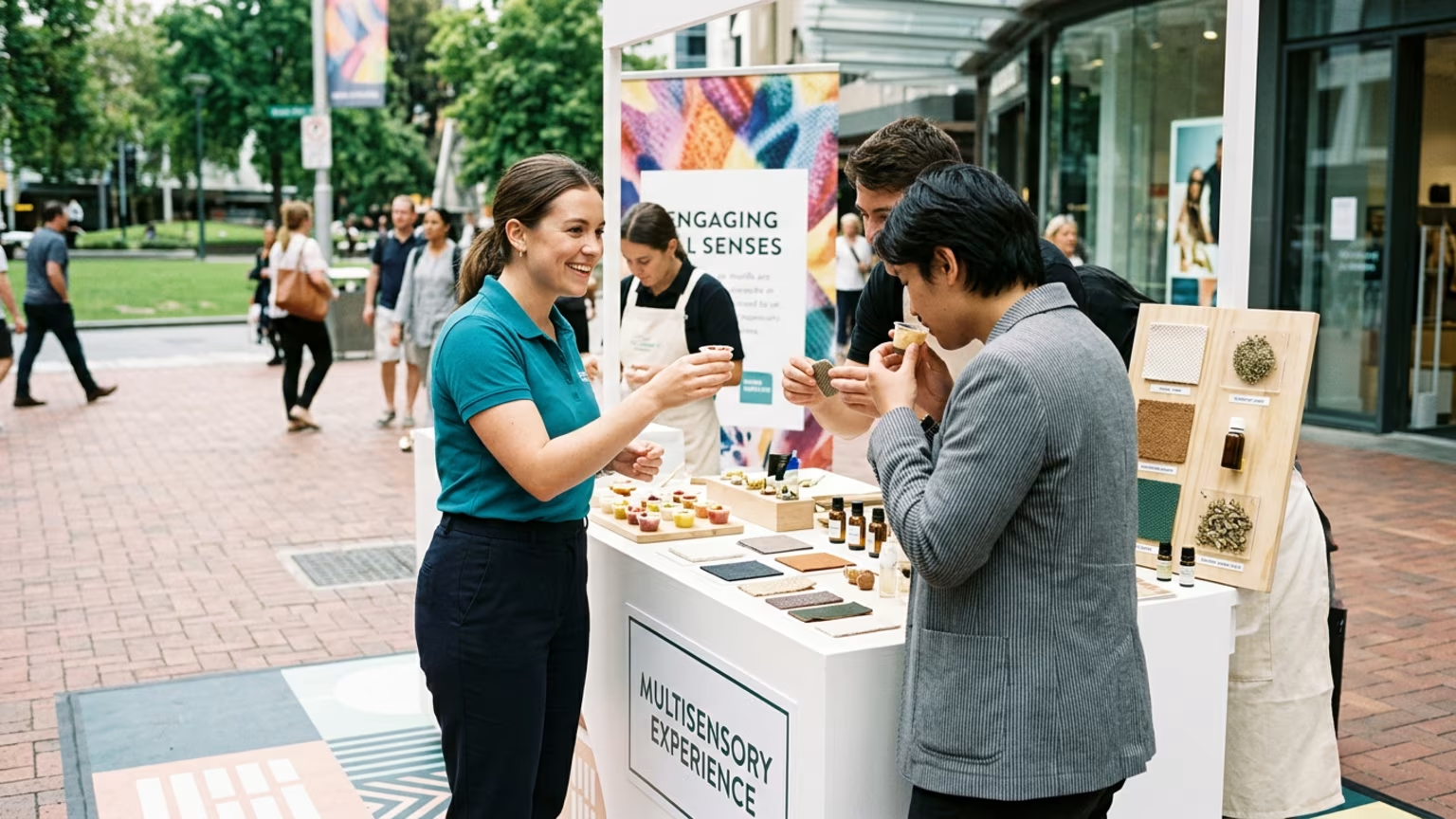
Research from industry analysts shows that 75 percent of human emotions are triggered by smell alone. This biological reality completely changes the way consumer goods brands must plan their street campaigns. Multisensory sampling strategies turn passive foot traffic into immediate retail sales by systematically engaging sight, taste, and touch. Marketing leaders can use this operator-grade framework to capture impulse buys and prove Return on Investment in competitive categories.
Pedestrians rush past a generic pop-up tent on a crowded sidewalk. Brand ambassadors thrust warm sample cups at uninterested shoppers who are glued to their phones. The field marketing manager watches their budget drain into the gutter. This fragmented execution creates a beautiful dumpster fire instead of a measurable sales channel.
The pavement is crowded with visual noise from competing digital billboards. Field marketing teams try to hand out coupons to pedestrians. Shoppers keep their headphones in and avoid eye contact entirely. The brand ambassador tries to shout a rehearsed pitch over city traffic.
This scenario wastes massive amounts of operational energy. The brand invested heavily in a new product launch. The retail buyer expects to see an immediate bump in local store movement. A weak street presence jeopardizes that retail relationship.
We have been connecting brands with people through live experiences, retail programs, and national activations since 1995. Over three decades, we have built a track record of creating meaningful brand moments across the country. We see the exact same logistical nightmares play out repeatedly. Brands waste thousands of dollars hoping a free snack will magically drive retail sell-through.
Shoppers are currently experiencing severe price stress at the grocery store. They ignore traditional visual ads and demand immediate sensory validation before spending their money. A poorly planned street presence produces fog instead of clear evidence. Busy-looking events often fail to generate a single verified retail purchase.
You must attack this problem with a structured operational framework. The multisensory stack methodology layers distinct physical inputs to bypass consumer skepticism. According to recent studies, touch and taste demonstrations increase product trial rates by up to 40 percent in high-traffic environments. We design these environments to naturally intercept foot traffic without forced interaction.
A social-first multisensory roadshow fits seamlessly into urban spaces. It pairs bold visuals to draw attention with interactive product handling to build deep consumer trust. This approach works exceptionally well as audiences look to escape endless screen time and digital fatigue. Experiential agencies emphasize that these campaigns create moments for consumers to actually live.
Taste requires absolute trust from the consumer. You cannot force a person to ingest a new beverage without first building a comfortable environment. We use clear signage and immaculate staging to project safety and quality. Touch allows the shopper to feel the weight of the packaging.
It creates a physical memory that outlasts a fleeting social media scroll. Entertainment and tech activations often use augmented reality to augment the visual and tactile experience. They prioritize repeatability over massive one-off stunts.
You must match the sensory delivery to the specific environment. Tailgate-friendly beverage sampling makes perfect sense outside a stadium. A quiet tasting zone works better near a major wholesale club expansion. Careful environmental fit prevents your campaign from becoming an irritating obstacle on a busy sidewalk.
We blend physical trials with digital amplification for maximum scale. Analysts note that hybrid models outperform pure physical campaigns by delivering a 25 percent higher Return on Investment. This is required for solving disjointed physical execution across multiple regional markets. You capture the immediate impulse buy and retarget the consumer later.
Turning a sensory strategy into a live event requires absolute operational discipline. You need a step-by-step approach to deploy these campaigns without losing control of the budget.
You must track engagement data to demonstrate real sales lift to your retail partners. Fluffy brand theater does not secure shelf space or satisfy a demanding chief marketing officer. We track strict lead and lag metrics to validate every dollar spent on the street.
Lead metrics tell you if the sensory environment is holding consumer attention. Real-time data often shows an average dwell time of five to seven minutes for mid-scale pop-ups. You can deploy artificial intelligence tools to track engagement data. Heatmaps record touch interactions to help you refine the booth layout on the fly.
Lag metrics focus entirely on the cash register and post-event pipeline. We demand a 15 percent to 20 percent sell-through uplift in nearby retail locations. Tracking via QR codes reveals a 25 percent to 30 percent conversion rate from engagement to actual purchase. Tracking these figures lets you prove true retail activation returns beyond mere headcount.
Marketing leaders face intense scrutiny from finance departments regarding experiential budgets. They need dashboards that show real-time consumer interactions across different time zones. We set up daily reporting rhythms to monitor exactly how many samples leave the booth. If a location underperforms, we adjust the street placement immediately.
This agility prevents wasted inventory and maximizes the local brand impact. Brands using multisensory elements report two to three times higher immediate sales lift compared to digital-only campaigns. The data clearly shows that 20 to 35 percent sales lift is achievable in highly competitive categories. You just need the discipline to measure flavor preferences via taste logs and tie them to local store movement.
Store managers demand concrete proof that your pop-up will not just create a mess in their parking lot. You provide that proof by showing historical data from previous market deployments. When you bring heatmaps and verifiable trial metrics to a buyer meeting, the conversation completely changes. The retailer starts treating your brand as a strategic partner rather than an operational nuisance.
A major consumer packaged goods company faced intense economic pressure in the snack category. They deployed a street activation that let people try, experience, trust, and buy on the spot. The Snickers style model generated a massive 30 percent trial-to-buy conversion rate.
They utilized bold branding to capture visual attention and immediate tasting stations for flavor validation. The brand placed pop-up tasting zones directly adjacent to key retail partners. This environment-fit roadshow captured immediate impulse buys right before shoppers entered the store.
The brand collected flavor preference data and mapped it against regional retail sales. This level of tracking gave their sales team hard evidence to bring to retail buyers. The campaign proved that a physical product proof delivers undeniable commercial value when executed with precision.
The campaign completely bypassed digital advertising fatigue by offering a real physical interaction. Shoppers stopped their daily commute to engage with the brand ambassador. The tactile experience of unwrapping the product reinforced the bold visual branding on the street tent. The campaign delivered a repeatable playbook that the brand now uses for every new market entry.
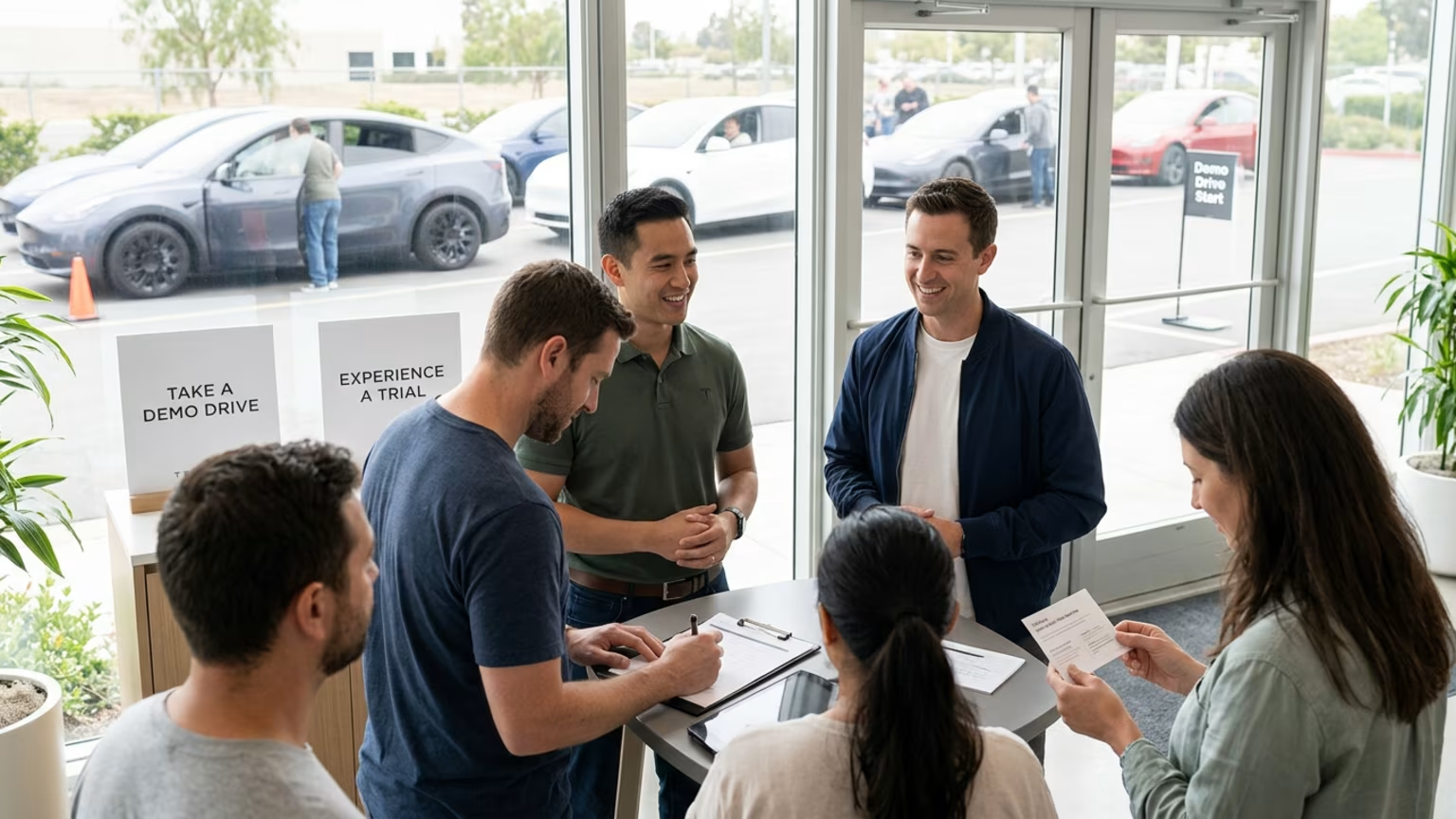
The food and beverage sector is not the only category profiting from this framework. Automotive brands deploy similar tactile stations to let drivers feel premium interior materials at outdoor festivals. Technology companies use augmented reality overlays on top of physical hardware to demonstrate hidden software features. The multisensory playbook adapts perfectly to any product that requires physical validation before purchase.
It proved that live experiences can scale just as effectively as digital media buys. That crowded city block from our opening scene holds incredible revenue potential. By designing complete sensory environments, that generic pop-up tent becomes a highly tuned conversion engine. 75 percent of consumer emotions wait to be activated by a simple scent or taste.
You have the power to transform a chaotic street corner into an organized retail pipeline. The right sensory stack turns skeptical pedestrians into verified brand advocates. They will remember the scent, the taste, and the conversation long after they leave the event footprint. Stop accepting vague metrics and fragmented execution from your field campaigns.
Do not let your next live event produce fog instead of evidence. You can stop handing out ignored flyers and start building a measurable pipeline today. Book a strategy call with our experiential marketing team to plan your next high-converting activation.

30 Years Experiential & Retail Activation Partner for CPG & Beverage Brands | Multi-Market Demos, Roadshows & Costco/Club Programs That Actually Sell