Robbie Thain
Founder, CEO

Stop losing sales to inconsistent field execution. Learn the operational playbook to standardize CPG activations and drive measurable retail conversions.
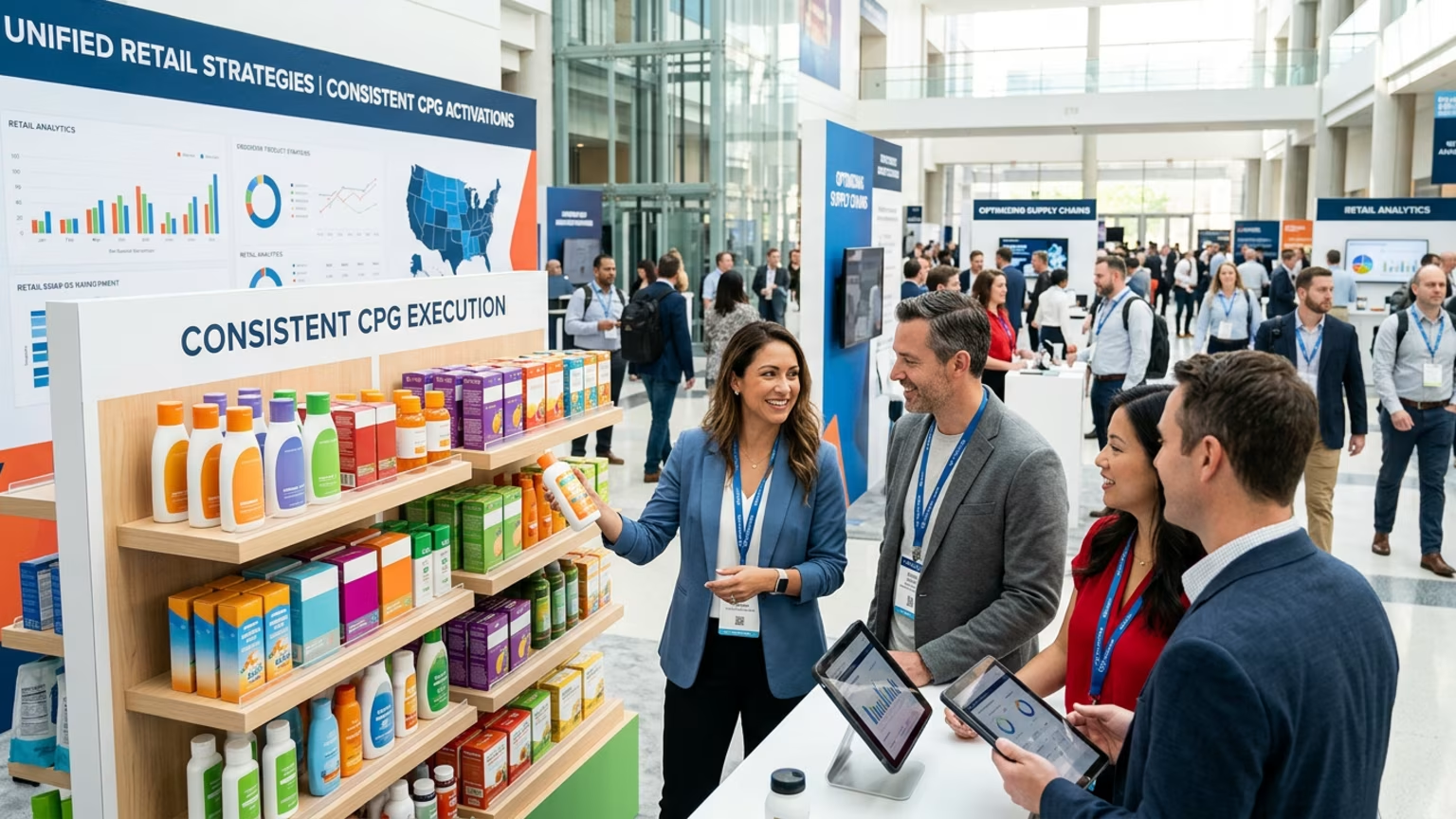
A pallet of new energy drinks sits in the backroom of a regional grocery store. Out front on the floor, the brand ambassador is handing out warm samples without the approved talking points. The promotional signage never arrived from the distributor. Consumers walk past the table without a second glance.
This scenario plays out thousands of times every weekend across the country. Brands invest heavily in physical activations to win attention in the real world. They want shoppers to try the product, trust the company, and buy the item immediately. Instead, they get fragmented execution that looks busy but produces zero verifiable evidence of success.
Scaling a physical brand presence across dozens of retail locations demands rigid operational discipline to prevent fragmented consumer experiences. Marketing operators must implement standardized execution playbooks to turn chaotic field events into reliable revenue drivers.
The reality of multi-market activations is often a mess of disconnected teams and missing assets. Brand directors sit in headquarters looking at beautiful renderings of upcoming retail displays. The actual execution on the retail floor looks entirely different. Research from T1 Solutions Group shows a staggering seventy to eighty percent of consumer packaged goods growth initiatives fail. This failure stems from poor alignment between retail execution and supply chain operations.
Store-level fragmentation kills momentum during critical product launches and seasonal pushes. A nationwide Costco roadshow requires exact replication across hundreds of warehouses to protect the brand promise. When field teams operate in silos, the messaging gets lost in translation. Shoppers receive a disjointed experience that fails to build trust.
Pricing conflicts further complicate these disjointed physical touchpoints. Retailers like Walmart continuously launch aggressive private-label lines that eat into established category share. McKinsey notes that years of price-led growth have eroded the core value proposition for many manufacturers. Brands must win on product trial and physical availability instead of relying on discounting alone.
Consumer packaged goods manufacturing faces constant product and packaging changes. Digital tools are necessary to standardize operations across all these varying sites. Without tight integration, a new product label might ship to retail stores before the corresponding promotional signage arrives. Field teams are then left trying to explain the discrepancy to confused shoppers.
Direct-store-delivery networks allow rapid scaling for high-growth segments like energy drinks. These partnerships boost distribution efficiency across complex regional markets. The downside is that brands surrender a massive amount of control over the final in-store presentation. Relying entirely on partner networks without independent field auditing leads to invisible execution failures.
Experiential marketing requires more than enthusiastic staff and branded tents. The strategic fix is an intelligent operational framework that aligns field marketing with regional sales goals and supply chain realities. Everest Group notes that retail operations are undergoing a structural reset into intelligent systems that directly influence revenue and brand consistency. This approach replaces outdated spreadsheets with real-time analytics for staffing and compliance.
Every touchpoint must follow a centralized system of governance. Marketing leaders need to design scalable workflows with absolute role clarity for regional managers and frontline ambassadors. Streamlined operations allow teams to spend less time managing work and more time driving actual results. This eliminates the friction between creative asset creation and live event deployment.
A unified cross-channel strategy prevents account-by-account decisions from cannibalizing your overall volume. Experts in revenue growth management argue that channel strategy and product mix must be designed together. You cannot optimize an in-store demo schedule without matching it to predictive inventory replenishment data. Building a strong operating backbone minimizes friction and provides clear visibility into daily field performance.
Intelligent store operations are dominating retail execution across the country. AI platforms power dynamic staffing and automated merchandising compliance. This shift moves service providers away from basic scale models toward fully integrated ecosystems. Brands can finally support complex fulfillment options with a highly trained workforce.
Standardization promises incredible consistency across your entire portfolio. You must balance this rigid operational control with the human element of brand building. Technology alone cannot replace a passionate brand ambassador having a real conversation with a cautious shopper. You need a hybrid approach that blends digital oversight with authentic human engagement.
Turning this strategic framework into a live event reality requires a strict sequential process. You must build a playbook that field teams can actually follow. This removes ambiguity and sets clear expectations for every single activation. Follow these exact steps to lock in your operational standards.
Confirm that product allocation matches the activation schedule before booking any promotional staff. Running a tasting event with missing inventory destroys consumer trust instantly. Brands must sync their promotional calendar directly with their distribution partners. This prevents expensive marketing teams from standing next to empty retail shelves.
Adopt digital platforms that connect regional logistics with live field data. This creates a reliable feedback loop for predictive inventory replenishment. You can see exactly which retail locations are running low on stock during a live campaign. It gives your operations team time to react before the heavy weekend rush.
Build a mandatory certification program that covers precise brand messaging and physical setup guidelines. Do not send untrained temporary staff to represent your premium product. Every single ambassador needs to know the correct talking points and the exact method for preparing samples. A documented standard operating procedure removes all guesswork from the equation.
Require field teams to submit timestamped photos of their physical setup at the start of every shift. They must report accurate starting and ending inventory counts directly into a centralized system. This digital paper trail forces accountability across thousands of decentralized locations. Management can spot a sloppy retail display and correct the issue within minutes.
Schedule mandatory monthly commercial reviews that bring field marketing and operations together. These meetings must connect raw field data directly with regional sales goals. It breaks down the internal silos that typically plague large manufacturing companies. Everyone looks at the exact same numbers to judge the success of the physical activation.
Use real-time analytics to adjust your headcount based on actual foot traffic and store volume. Sending three brand ambassadors to a quiet suburban grocery store wastes massive amounts of marketing budget. You must align your labor force directly with anticipated consumer volume at each specific location. This lean approach protects your profit margins without sacrificing the consumer experience.
Many brands still judge their live events by the number of people who simply walked past the booth. Total store footfall is an irrelevant metric for measuring actual pipeline growth. You must look closely at lead indicators that track operational health in real time. On-time setup rates and uniform compliance scores dictate the professionalism of your campaign.
Volume-led indicators tell the real story of your financial Return on Investment. Direct sales lift during the actual event window proves immediate consumer interest. You must also measure the sustained retail sell-through over the following four to eight weeks. If a product demo drives immediate sales but zero repeat purchases, you have a critical product issue.
Revenue growth management strategies are rapidly evolving to match these new tracking capabilities. According to research from Revenue ML, this elasticity-driven approach is replacing outdated annual pricing cycles. Marketers integrate trade planning with sales and operations to counter shifting shopper habits. Transparent reporting allows leadership to adjust their approach based on hard evidence.
A national snack brand faced a massive crisis during a regional product launch. Their rollout spanned eighty different retail locations across three states. The brand relied on a fragmented network of local staffing agencies to execute the tasting events. Headquarters received glowing anecdotal reports from the field teams but saw zero movement in actual retail sales data.
An internal audit revealed a complete operational collapse on the retail floor. Ambassadors were arriving late and serving the snacks without the required pairing ingredients. Promotional coupons were left inside boxes instead of being handed to actual shoppers. The brand realized that their localized execution strategy was actively damaging their retailer relationships.
The marketing director fired the disjointed local agencies and hired a unified specialized experiential agency. The new team deployed a digital tracking platform that mandated photo verification for every single display setup. They standardized the ambassador training program to guarantee absolute message consistency. According to industry analysis from INDX, deploying digital platforms to standardize operations reduces execution risk by up to fifty percent.
Within three months, the brand recovered their shelf space and documented a thirty percent increase in verifiable product trial. They successfully transformed a chaotic logistics nightmare into a highly predictable pipeline generation engine. Clear operating procedures gave the brand total confidence to expand their physical footprint nationwide. The marketing team finally had the hard data they needed to secure their next quarterly budget.
Flawless field execution is never an accident. It requires operator-grade discipline to turn live brand experiences into measurable pipeline. Stop accepting mediocre physical presentations and fragmented field reporting. Book a strategy call today to build an activation framework that actually converts.

30 Years Experiential & Retail Activation Partner for CPG & Beverage Brands | Multi-Market Demos, Roadshows & Costco/Club Programs That Actually Sell