Robbie Thain
Founder, CEO

Why do Costco roadshows still work in 2026? Learn how live demos beat passive shelf presence, drive trial fast, and help brands prove retail velocity.
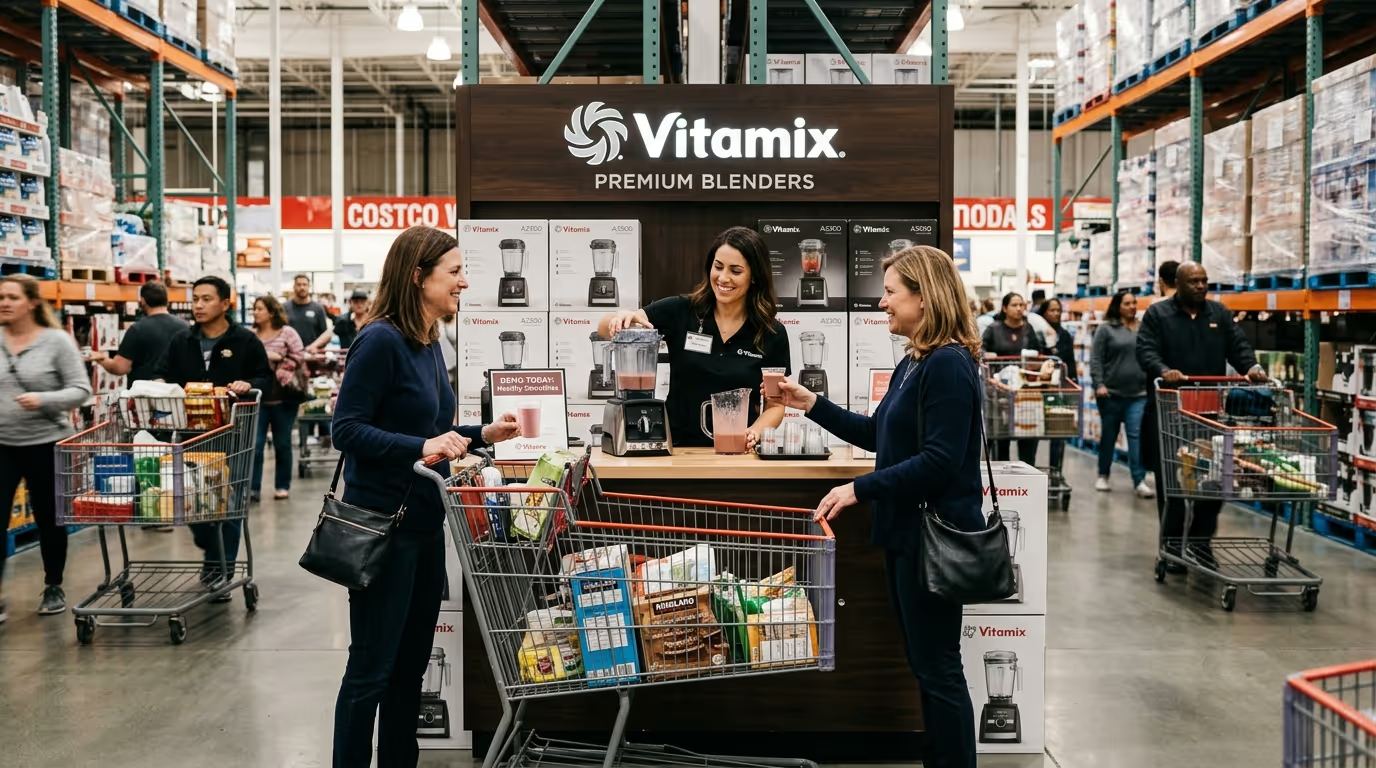
Some retail environments reward packaging first. Costco rewards clarity, value, and confidence. That is why roadshows still matter in 2026.
A roadshow does something a passive shelf cannot. It stops people, proves the product fast, answers the first objection, and gives the shopper a reason to buy now instead of “maybe later.” In a warehouse built around volume and value, that matters.
This is the real reason Costco roadshows still work. They do not just create awareness. They create movement. A shopper sees the booth, understands the offer, tries the product or sees it work, and decides whether it belongs in the cart. That full sequence can happen in a few minutes.
For brands, that makes a roadshow more than a short event. It becomes a live retail test. It shows whether the product can win attention, hold up under questions, and move with the kind of velocity Costco expects.
This post explains why roadshows still work, what brands get wrong about them, and how to treat them like a distribution test instead of a one-off activation. If you want the service page view first, start with Costco roadshows.
A Costco roadshow is a limited-time in-warehouse event where a brand gets more space than a standard demo cart to show the product, explain it, answer questions, and sell on site.
A normal demo is usually about quick trial. A roadshow can behave more like a mini storefront. It gives the brand more room for product education, bundle value, and a clearer selling flow.
Because Costco shoppers already come in with buying intent. They are looking for value and useful finds. A strong live proof moment helps them decide faster than passive shelf presence alone.
The strongest format is simple. Stop, try, teach, close. First earn the stop. Then prove the product. Then explain the value clearly. Then ask for the cart.
Track units sold by hour, demos or samples by hour, close rate, stock health, top questions, top objections, and next-step learnings for future stores or future waves.
They treat the roadshow like a booth design problem instead of a retail operating system. The booth matters, but the real win comes from speed, staffing, stock discipline, and a clear value story.
Passive shelf presence works best when the shopper already knows the product or the category is easy to understand. Costco is not always that kind of environment. A lot of products need a little more help. They need context, proof, or a quick explanation of why the value is good.
That is where a roadshow wins.
A roadshow gives the product a voice. It lets the brand explain use count, bundle value, quality difference, or everyday utility in real time. It lets the shopper ask the first question that would otherwise stay unanswered. It also lets the brand turn hesitation into movement while the shopper is still in the aisle.
This matters even more for products that are premium, unfamiliar, higher ticket, or easier to sell through a sensory or live proof moment. Food, beverage, cookware, home goods, wellness products, and many non-food items all benefit from this kind of live retail logic.
If the shelf says “trust me,” the roadshow says “let me show you.” That difference is why live retail still wins in this environment.
Costco shoppers tend to move with purpose. They are there for value, volume, and useful discovery. That does not mean they want a long pitch. It means they will stop when something feels like a smart find and the value is easy to understand.
A strong roadshow works because it matches that mindset.
It does not start with a brand speech. It starts with a clear cue. A fast taste. A quick demo. A visible stack. A short line that tells the shopper the booth is worth a look.
Then it adds one more thing the shelf cannot do. It builds confidence. A shopper can see the product in action, hear the answer to a question, or understand the savings in plain terms. That lowers hesitation.
This is why roadshows are not just “nice to have” theater. In the right category, they are one of the clearest ways to speed up the path from attention to cart.
The best roadshows are rarely complicated. They just do the basics well and do them all day.
First, earn the stop. From a distance, the shopper should understand there is something worth looking at. This can come from visual simplicity, a live motion cue, a sample handoff, or a product setup that reads clearly from the aisle.
If the booth is confusing from ten feet away, the team has already lost time.
Second, prove the product. For food and beverage, that often means a fast taste. For non-food, it may mean a live demo, a comparison, or a simple show-and-tell moment. The try phase should happen fast. It should not feel like a process.
This is the moment where attention becomes real interest.
Third, explain the value. Keep it short. Costco shoppers do not need the whole brand story first. They need to know why this makes sense here. That can be servings, uses, quality, time saved, bundle logic, or price per use.
The key is to translate product features into Costco math.
Last, ask for the sale. Not with pressure, but with clarity. The team should make the next move easy. Put it in the cart. Try the bundle. Grab it while it is here. The close should feel natural because the shopper already understands the value.
That four-step sequence is simple, but it is still the strongest roadshow structure in 2026.
A lot of brands think the hard part is getting the event approved. That matters, but it is not the full story. The harder part is running the booth like a clean retail machine once the event starts.
Too many teams try to say everything at once. Long product stories slow down the booth. At Costco, clarity beats cleverness.
A roadshow that looks thin feels weak. Empty stock signals lost demand, even when the issue is just poor restocking. Inventory has to support a full look from open to close.
One person should not try to greet, sample, explain, restock, and close all at once during peaks. Roles matter. A smoother team usually sells more because the shopper experience feels easier.
Roadshows need hourly visibility. If the team waits until the end of the day to notice a slow close or a stock problem, a lot of learnings are already lost.
The roadshow is not only there to move product in that moment. It is there to teach the brand something. Which message won. Which objection kept coming up. Which daypart worked best. Which store looked strongest. Those insights help the next wave.
This is where Costco roadshows become much more valuable than a basic sales event. They can act like a real-world distribution test.
If the product performs well in a roadshow setting, that does not guarantee full-scale success. But it does give the brand stronger evidence than a shelf guess or a deck alone.
A good distribution test asks a few clear questions.
That is why hourly reporting matters. Units sold by hour is not just a sales number. It is a signal. It tells you whether the message is working, whether staffing is right, whether the booth is easy to shop, and whether the product has real momentum.
A brand that treats the roadshow as a learning lab leaves with much more than sales. It leaves with a smarter case for broader distribution, stronger retailer conversations, and a clearer plan for future rollouts.
If you only track traffic or total units, you miss too much. A better roadshow scorecard should combine sales, operational health, and shopper insight.
These numbers help the brand decide what to keep, what to change, and whether the product deserves a bigger retail push. This is the same discipline behind experiential marketing reporting. Clean numbers make it easier to trust the next recommendation.
The best roadshow teams know that most of the work happens before the first sample ever goes out.
They reduce the booth language down to one clear value statement and one proof moment. That makes the team easier to train and the shopper easier to convert.
Inventory is not just a back-end issue. It changes how the booth feels. Strong teams plan floor stock, backup stock, and restock timing so the setup stays full and calm.
A lot of booth training focuses on product details. Strong teams focus on the first ten seconds first. How to greet. How to offer the sample. How to explain the value quickly. How to keep the line moving.
They do not wait for the end of the event. They track the right numbers and notes during the day, so they can make changes while the roadshow is still live.
If you want the broader planning guide behind this article, it pairs naturally with Costco roadshows guide to planning sampling at scale and retail demonstrations how to turn tasting into sales lift.
If you are a brand lead, CMO, sales lead, or field lead, ask these questions before you approve the next Costco roadshow run.
These questions keep the roadshow grounded in business value. Without them, the event risks becoming expensive motion instead of useful proof.
If you want a Costco roadshow plan built for sales, learning, and stronger retail decisions in 2026, Makai can help with strategy, staffing, execution, and reporting. Start with Request a proposal, explore services, or review Costco roadshows to map the right program.

30 Years Experiential & Retail Activation Partner for CPG & Beverage Brands | Multi-Market Demos, Roadshows & Costco/Club Programs That Actually Sell