Robbie Thain
Founder, CEO

Discover how experiential marketers use AI-powered consumer insight platforms like Suzy to pre-test concepts, validate messaging, and drive measurable ROI.
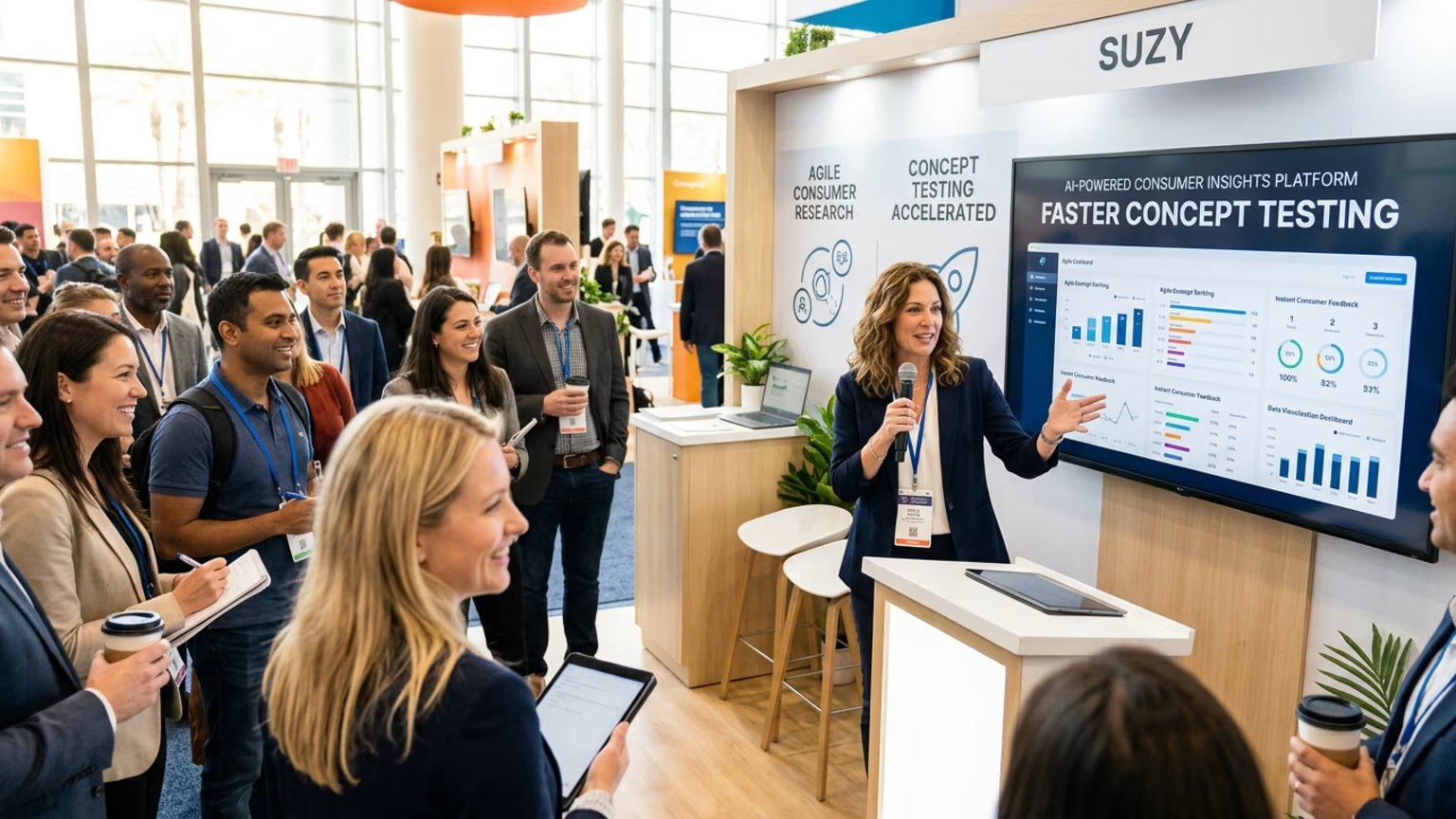
The pallets are dropped on the convention floor. You have thirty feet of booth space and a six-figure invoice. Yet you have zero proof your messaging will actually convert. This is the moment most brand managers realize they are just guessing.
Marketing teams are abandoning slow research cycles to pre-test experiential concepts using AI-powered consumer insight platforms. This rapid validation process turns live brand experiences into predictable revenue engines.
Building a physical brand experience requires massive capital allocation. Experiential activations like large scale tours and retail roadshows frequently run into the six or seven figures. Many marketing teams lack a structured way to test their offers before committing. They ship expensive assets to a venue and hope the creative connects with the crowd.
The result is often an expensive event that produces zero pipeline. Brand ambassadors hand out premium samples to people who will never buy the product. The messaging falls flat against the chaotic backdrop of a crowded convention center. Teams try to track trade show chaos into measurable revenue but end up with weak metrics.
This massive disconnect happens when brands treat live activation as a guessing game instead of a measurable channel. Industry research indicates that seventy to eighty percent of purchase decisions are made in-store. Packaging and booth design act as the primary drivers for shelf conversion. Every failed packaging decision represents months of lost retail velocity.
Experiential and shopper marketers face immense pressure to prove Return on Investment from these live moments. They need a way to stack the deck in their favor before spending trade budgets. Moving forward requires a better way to validate ideas. Field marketing directors cannot afford to launch a new product format without concrete evidence of shopper demand.
Without pre-testing, teams fall back on the highest paid person's opinion. This internal bias leads to activations that look great on a slide deck but fail in reality. Shoppers are distracted, time-poor, and overwhelmed by competitive noise at the shelf. A message that seems clever in a boardroom often fails to trigger an impulse purchase in a noisy retail club.
The fix requires shifting consumer research from a slow siloed function into an always-on decision engine. Research firm Suzy highlights an AI-powered insights platform that merges quantitative validation with virtual qualitative feedback. Marketers can now test ideas and iterate in real time before spending a single dollar on fabrication. This hybrid approach allows teams to prioritize the concepts that have the highest revenue potential.
Leading agile research firms argue that AI automation puts message validation directly in the hands of product teams. According to industry analysis from Dig Insights, companies using rapid research approaches are two to three times more likely to exceed revenue growth targets. Faster learning loops allow operators to make frequent and evidence-based decisions. This speed completely changes the way operators plan retail programs.
Platforms like User Intuition offer AI-moderated interviews with hundreds of consumers in just forty eight hours. This capability closes the gap between raw data and deep behavioral understanding. Teams can refine go-to-market strategies using always-on consumer feedback. Suzy emphasizes that these tools transform raw data into actionable insights and actionable insights into revenue.
The entire test and learn cycle happens in days rather than months. Human interpretation is still required to connect these insights to a broader brand strategy. No algorithm understands a retail venue the way a seasoned field operator does. The technology acts as a powerful copilot for your marketing team.
Agile research providers highlight a major shift toward self-serve interfaces for marketers of all skill levels. Non-researchers can launch tests, target precise consumers, and analyze results without going through a traditional research department. This democratized access allows field teams to test their own targeted offers on demand. Updating legacy brand platforms becomes a data-driven process instead of a creative risk.
This shift removes the operational bottlenecks that previously slowed down campaign deployment. It puts the power of enterprise grade insights into the hands of the people actually managing the live events.
Building a test and learn culture requires strict operational discipline. You must validate your physical assets before rolling them out to retail environments. We specialize in creating retail demos, product sampling programs, and roadshows that bring brands face to face with their audiences. Each program is designed to drive trial, build consumer relationships, and accelerate retail velocity across multiple locations. You can apply our exact validation sequence.
Testing these variables upfront completely changes your negotiation power with retail buyers. You can enter sponsor negotiations with evidence-backed offers to justify premium placement. Faster pre-testing protects both marketing and trade budgets from preventable execution errors.
Proving Return on Investment requires tracking precise lead and lag indicators. Lead metrics predict the success of your activation before the event starts. You should measure concept clarity scores and perceived value ratings during your AI pre-testing phase. Another critical lead metric is the top-two-box purchase intent score from your virtual panels.
These numbers tell you if your offer will resonate on the crowded show floor. Lag metrics prove the financial impact after the pallets are packed up and shipped home. The most critical lag metric is the demo conversion rate at the actual shelf. You must track regional retail sell-through and the true cost per qualified lead.
Tying these lag metrics back to your real-time reporting tools provides undeniable proof of performance. Experiential teams must move away from vanity metrics like total booth impressions or foot traffic estimates. Tracking qualified conversations and sample-to-sale ratios gives a much truer picture of campaign health.
These exact figures give sales leaders the confidence to expand future roadshow programs. When you present data showing a high correlation between pre-tested concepts and actual sales lift, budget approvals become much easier. Building an internal library of tested messages gives your entire organization a massive competitive advantage. You transition from hoping for success to systematically engineering it.
The alignment between field execution and measurable consumer response creates a highly defensible marketing strategy.
A premium beverage brand recently faced immense pressure to perform during a national warehouse club rollout. The stakes were incredibly high for their physical retail presence and future buyer negotiations. The brand needed to choose between a minimalist visual approach and a bold ingredient-forward booth design. They used an AI-powered consumer insights platform to run a rapid concept test on both options before finalizing fabrication.
The automated platform gathered feedback from hundreds of verified club shoppers in under two days. The data revealed that the minimalist design completely confused shoppers about the functional benefits of the drink. Shoppers loved the aesthetic but could not immediately grasp the value proposition. The brand pivoted to the bold design and adjusted their ambassador scripts based on the qualitative feedback.
The resulting roadshow crushed their retail velocity targets and secured a permanent shelf placement in all regions. The cost of running the rapid survey was a tiny fraction of what a failed activation would have cost in lost sales. This pragmatic approach protected their budget and fortified their relationship with the retail buyer.
Stop guessing what your buyers want to see on the floor. Get expert help to structure your next live activation for maximum conversion. Book a strategy call with our team today.
Start your next campaign by uploading two competing booth concepts into a rapid testing platform to let actual shoppers pick the winner.

30 Years Experiential & Retail Activation Partner for CPG & Beverage Brands | Multi-Market Demos, Roadshows & Costco/Club Programs That Actually Sell