Robbie Thain
Founder, CEO

Coca-Cola plans more than 270 Holiday Caravan stops. Makai examines the staffing, local execution, and reporting questions for CPG leaders.
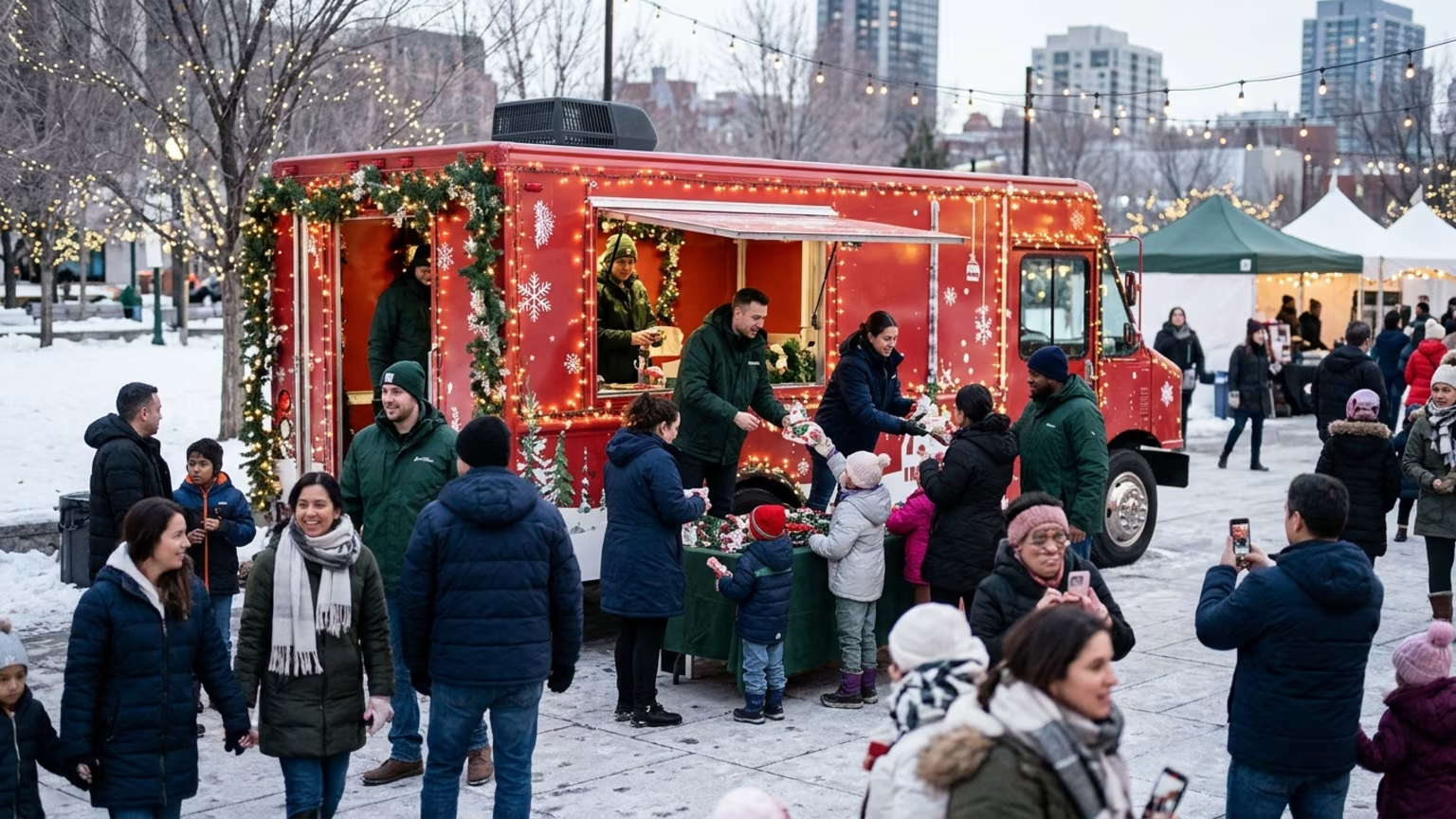
On November 5, 2026, Coca-Cola’s 2026 Holiday Caravan began its U.S. tour in Nashville, according to trade coverage. The tour brings an in-person experience into the beverage brand’s holiday campaign.
Marketing-Interactive reported that Coca-Cola’s “Refresh Your Holidays” campaign includes a Holiday Caravan planned to make more than 270 stops across over 28 U.S. cities. Coverage also listed a Times Square stop in New York for November 24.
Reported experiences include:
The wider campaign includes “Enjoy Joy” films and digital experiences, according to Marketing-Interactive. The caravan is the physical component of that broader seasonal platform.
These are planned stops rather than a final count of completed events. The coverage does not disclose attendance or sampling volume. It also does not report sales lift, conversion, cost, or Return on Investment (ROI). Nor does it establish that the films produced tour results or the reverse.
The logistical distinction matters: the announced experience has a national identity but includes location-specific participation. For an operator assessing a comparable program, that means the itinerary and the activity brief are separate planning documents with different jobs.
Our position at Makai is straightforward: give people a warm welcome and give the field team a clear purpose. Aloha belongs in the interaction. Discipline belongs in the planning and the evaluation.
For CPG and beverage brands, the useful feature here is the connection between a recognizable campaign and a physical encounter. Our view is that the encounter should have a defined business role before the itinerary becomes the headline.
That role might be product trial or a qualified sales conversation. A photograph and a product trial serve different objectives. Both can belong in an experiential campaign without being treated as interchangeable evidence of commercial progress.
Makai’s mobile sampling tours bring brands directly to audiences through experiences designed to drive trial and awareness. Our broader experiential positioning connects face-to-face engagement with measurable sales pipeline. That is the lens we bring to a large touring announcement.
On the Little Debbie Share a Smile Tour, we ran a 21-market mobile activation using a branded truck, trailer, and Cupcake Smart Cars. Our team distributed 224,534 cupcakes across the tour. Those facts describe both distribution volume and the different physical assets involved in delivering the experience.
The lesson we draw is not that every beverage tour needs that format. It is that scale needs an operating definition. A count of markets describes coverage; a count of distributed products describes a different part of the work.
For brands pursuing retail growth, we believe connecting live engagement with the intended retail outcome belongs in the campaign brief. Otherwise, an ambitious route risks becoming the objective rather than the delivery system.
For comparable CPG programs, our assessment starts at the location level. A consistent campaign idea should give field teams direction without hiding differences in what each stop is expected to deliver.
In our view, a staffing brief should describe the activities scheduled for that location rather than repeat the national campaign description. Photo opportunities and giveaways represent different work from a partner-led participation opportunity. The brief should make the intended experience understandable to the people delivering it.
The point is not to add staff by default. It is to define the job before judging readiness. For a sampling program, Makai’s positioning puts trained ambassadors and real product conversations at the center of that job.
For us, staffing quality should be evaluated against the interaction the brand intends to create. A team supporting product trial needs a clear connection between that encounter and the desired consumer response. Being present is not the same objective as helping someone engage with a product.
We believe the physical footprint should be judged by the interaction it supports rather than by its dimensions alone. For teams adapting a touring model, the design brief should connect the promised experience with the space in which people will participate.
That principle also applies to trade shows. Makai plans and manages trade show spaces designed to attract attention and start conversations. In our view, a busy-looking footprint is less useful than one organized around the engagement the brand actually wants.
The connection between event fundamentals and measurable outcomes belongs in that discussion. Creative presentation and operational planning should answer the same commercial brief rather than compete for attention.
Permitting and logistics belong in this location-level evaluation too. Makai’s integrated services extend from permitting to CRM reporting. We also store sampling product and event gear, then coordinate shipping and delivery nationwide. For us, those functions belong alongside creative in the discussion of execution.
A cause-related component deserves clear scope in consumer-facing materials and reporting. The practical recommendation supported by this story is to distinguish the broader campaign from the activities available at a particular location.
For a comparable program, we would favor language that describes the participation actually planned for that stop. A national partnership message should not blur the local experience being offered. That is a matter of matching the invitation to the activity.
The same distinction belongs in evaluation. Reporting on a partner activity should remain connected to the locations where that activity occurred. Otherwise, the campaign total can hide the specific contribution the team is trying to understand.
We ran a four-week Dole Whip summer sampling program across San Francisco, Boston, Tampa, and Orlando. The activations distributed more than 64,000 servings. Our team built the creative assets so the concept could be reused in future campaigns.
That experience gives us a practical reason to value reuse during development. A creative concept can be built for future use without making the itinerary itself the measure of success. Reusability and a clear purpose for each location can sit in the same brief.
For a sampling program with a sales objective, connecting the route to retail availability is part of defining that purpose. Our view is that a stop needs a reason to exist beyond extending the map.
Our recommendation is to report at both levels. The tour view communicates overall activity. The location view helps a team examine variation and compare outcomes without allowing the campaign total to absorb every difference.
A useful evaluation starts with the objective already assigned to the experience. For a sampling campaign, product trials are relevant. For a buyer-facing activation, qualified leads are relevant. Neither should be replaced by a total of places visited.
Our experience across more than 1,000 campaigns in all 50 states for more than 200 brands informs that position. The range spans different products and audiences rather than a single activation format. We believe that breadth makes a clear reporting purpose more useful than a universal scorecard.
The leadership question is whether the reporting reflects what the program was designed to accomplish. A location should remain visible in the evaluation as a place where a particular experience happened. The national total then provides context rather than replacing that detail.
The useful response to a large touring announcement is not to copy the stop count. It is to evaluate whether the brand’s own route connects a clear consumer promise with a workable field brief and a meaningful business objective.
For Makai, warmth and operational discipline belong together. A welcoming experience deserves an equally clear account of what the team intended to achieve.
As CMO or VP of Marketing, will you review an upcoming tour stop today and confirm that its promised experience, field responsibilities, and success measure match?
Location-level tour performance is a day-to-day concern for CPG marketers; when Makai runs the mobile experience, product trial and awareness guide the activation. Makai brings brands directly to audiences through mobile sampling tours for food and beverage teams managing regional or national campaigns.

30 Years Experiential & Retail Activation Partner for CPG & Beverage Brands | Multi-Market Demos, Roadshows & Costco/Club Programs That Actually Sell