Robbie Thain
Founder, CEO

Stop relying on wrap reports. Learn how to deploy real-time reporting tools and turn live event activations into measurable sales pipeline.
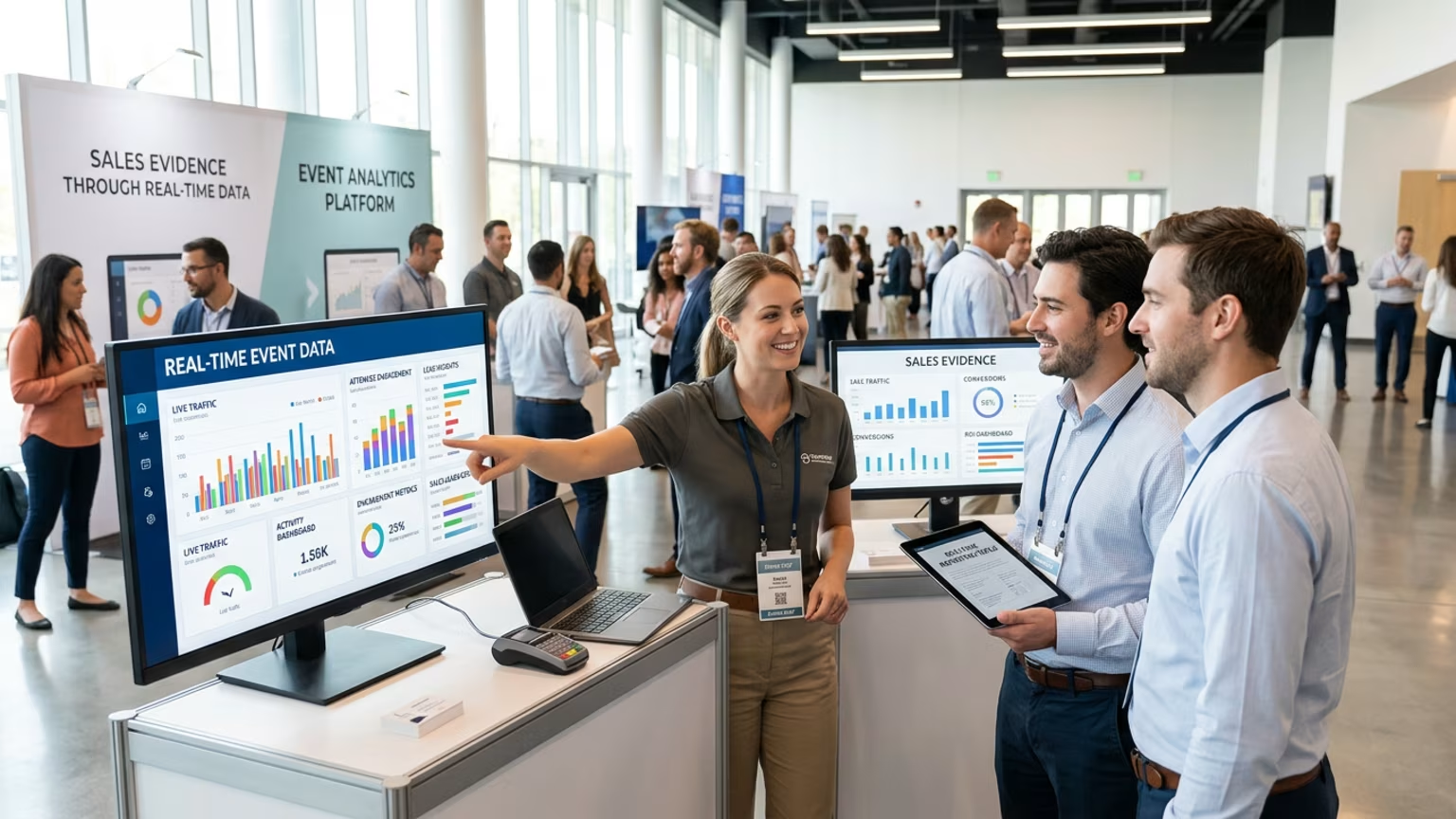
The line snakes around the corner of your 10x20 trade show booth. Brand ambassadors are handing out samples of your new sparkling beverage as fast as humanly possible. Badges are scanned in a blur of motion. It looks like a massive success right up until the CMO asks for the sales data.
Live events must produce measurable evidence of sales lift rather than just busy photos for the wrap report. By deploying real-time reporting tools on the floor, marketers can turn fleeting interactions into qualified pipeline.
It happens at almost every major expo across the country. The booth is packed with people holding your product. Your team works for ten hours straight collecting badges and chatting with potential buyers. You pack up the crates and fly home feeling victorious.
Then reality sets in a week later when you review the metrics. The event data is full of missing fields. The lead scanner only captured names and emails. You have zero proof that those hundreds of samples actually led to retailer sell-through or closed deals.
Experts in the industry warn against relying on this vague gut feeling. According to event leaders like Sarah Cox, post-event reporting alone leaves revenue untapped. Without instant data capture, the connection between a live product trial and a retail purchase disappears. You are left defending your budget with nothing but anecdotal feedback about long lines.
The problem stems from treating data as an afterthought. Field teams often view lead scanning as a distraction from the consumer interaction. This mindset creates a disconnect between the beautiful brand moment and the actual business result. A new approach is required to bridge this gap.
A successful activation requires treating data capture as an operational input. You need a system that links mobile apps and point-of-sale systems directly to your customer relationship management platform. This allows you to measure Return on Investment with absolute precision. We provide clear reporting on reach, trials, leads, and sales to guide next steps in campaign optimization.
Our measurement approach tracks awareness, engagement, and conversion, turning brand moments into actionable data that demonstrates business impact. When you monitor point-of-sale data instantly, you can optimize inventory and prevent stockouts. Case studies from recent festivals show that monitoring live wristband payments maximizes revenue on the spot.
Leading platforms now integrate radio frequency identification and mobile apps. This setup reduces wait times by up to 50 percent at major gates and venues. Faster entry means more time for consumers to experience your brand and spend money. This proves the direct value of capturing real-time first-party data during your shows.
The strategy involves piping behavioral data directly into your data warehouse. Open source platforms like Snowplow capture these events from mobile and server sources. This creates a clear pipeline for custom sales attribution models. Marketing teams can finally tie a specific booth scan to a subsequent retail purchase.
Choosing the right technology requires balancing ease of use with deep analytical power. Platforms like Handbid highlight live tracking for performance and participation without heavy engineering needs. You can adjust your pacing and improve your outcomes before the event even ends.
On the other end of the spectrum, open source tools require more setup but offer complete control over your tracking models. When using these custom solutions, you own every piece of consumer information from the first scan. You can pipe this directly into your existing business intelligence tools. This alignment prevents the dreaded data cleanup phase that usually stalls post-show momentum.
Translating a data strategy into a live activation requires strict discipline. Your field team needs exact instructions for capturing information without ruining the consumer experience. Here is the step by step process for implementing this in a live setting.
This framework replaces anecdotal feedback with concrete evidence. The best experiential reporting systems treat lead capture and handoff as one unified motion. They remove the manual cleanup hours that usually follow a major trade show.
By standardizing this approach across your calendar, you build true repeatability. You can compare the performance of a local pop up against a massive national expo. This visibility is what separates professional field operations from amateur brand theater.
To justify your activation spend, you must track both immediate actions and downstream results. Lead metrics show you the health of your event in real time. These include total booth check-ins, average wait times, and qualified badge scans per hour. If these numbers dip, you can redeploy staff or change your messaging on the fly.
Event platforms like PheedLoop stress that comprehensive reporting covers lead capture volume and sponsor activity. This gives organizers the exact evidence they need to make confident decisions. You stop relying on hopes and start managing your footprint like a retail storefront.
Lag metrics prove the long-term financial impact of your physical presence. You need to measure retail sell-through rates in the activation zip code over the following month. You should track the conversion rate of event leads into actual pipeline revenue. Finally, you must calculate the exact cost per qualified lead acquired during the show.
When you connect these two types of data, you build a bulletproof case for your field marketing program. Data platforms like Salesforce can pull this information into visual dashboards. This turns an overwhelming spreadsheet into a clear story about revenue generation. Your finance team stops questioning the budget and starts treating live event growth as a predictable channel.
Bringing these numbers together requires a central hub. Modern integrations allow customer relationship platforms to ingest field data continuously. When your sales representatives log in on Monday morning, they see hot leads already prioritized by engagement level. They do not have to wait for marketing to format an Excel sheet.
This direct handoff bridges the gap between marketing spend and sales execution. It turns field ambassadors into true revenue generators rather than just friendly faces. Proving this exact connection elevates experiential marketing from an expense category to a primary growth driver.
Consider a national beverage company launching a new product line at a massive food expo. In the past, they measured success by the number of empty sample cups at the end of the day. For this launch, they deployed offline mobile scanners tied to a live analytics pipeline.
Every visitor who tasted the product answered two quick qualification questions on a tablet. The dashboard updated instantly and showed that 40 percent of samplers were regional retail buyers. The field team saw this data mid-day and shifted their pitch from basic product awareness to bulk ordering incentives.
Within two weeks, the brand tracked those specific leads to a massive spike in regional distribution. The real-time visibility allowed them to adjust their strategy on the spot rather than waiting for a post-mortem report. The integration of live insights completely changed their trajectory.
This level of insight transforms the annual planning process entirely. When the marketing director reviewed the quarterly budget, she did not have to defend the experiential spend. She simply showed the executive team the exact pipeline generated from the live scans. The data proved that the physical activation outperformed their digital advertising campaigns in that specific region.
This same logic applies to high volume retail environments. Managing Costco roadshows that turn sampling into sales requires tracking product movement by the hour. When you know exactly what is selling, you can adjust your demonstration script to push higher margin items.
Brands that adopt this mindset secure better retail partnerships by bringing evidence to the table. Retailers want to see that your field efforts actually drive shoppers into their stores. Providing them with concrete numbers from your recent activations builds massive trust.
If you want to stop guessing and start proving your field marketing results, you need a custom approach. Book a strategy call with our team to map out your next data driven activation. We will help you build a reporting stack that actually works.
Stop letting your best brand moments fade into unproven memories. Turn every sample and scan into the hard evidence your business demands.

30 Years Experiential & Retail Activation Partner for CPG & Beverage Brands | Multi-Market Demos, Roadshows & Costco/Club Programs That Actually Sell