Robbie Thain
Founder, CEO

Turn trade show chaos into measurable pipeline using real-time strategies and first-party data. Learn how to capture buyer intent and prove your event ROI.
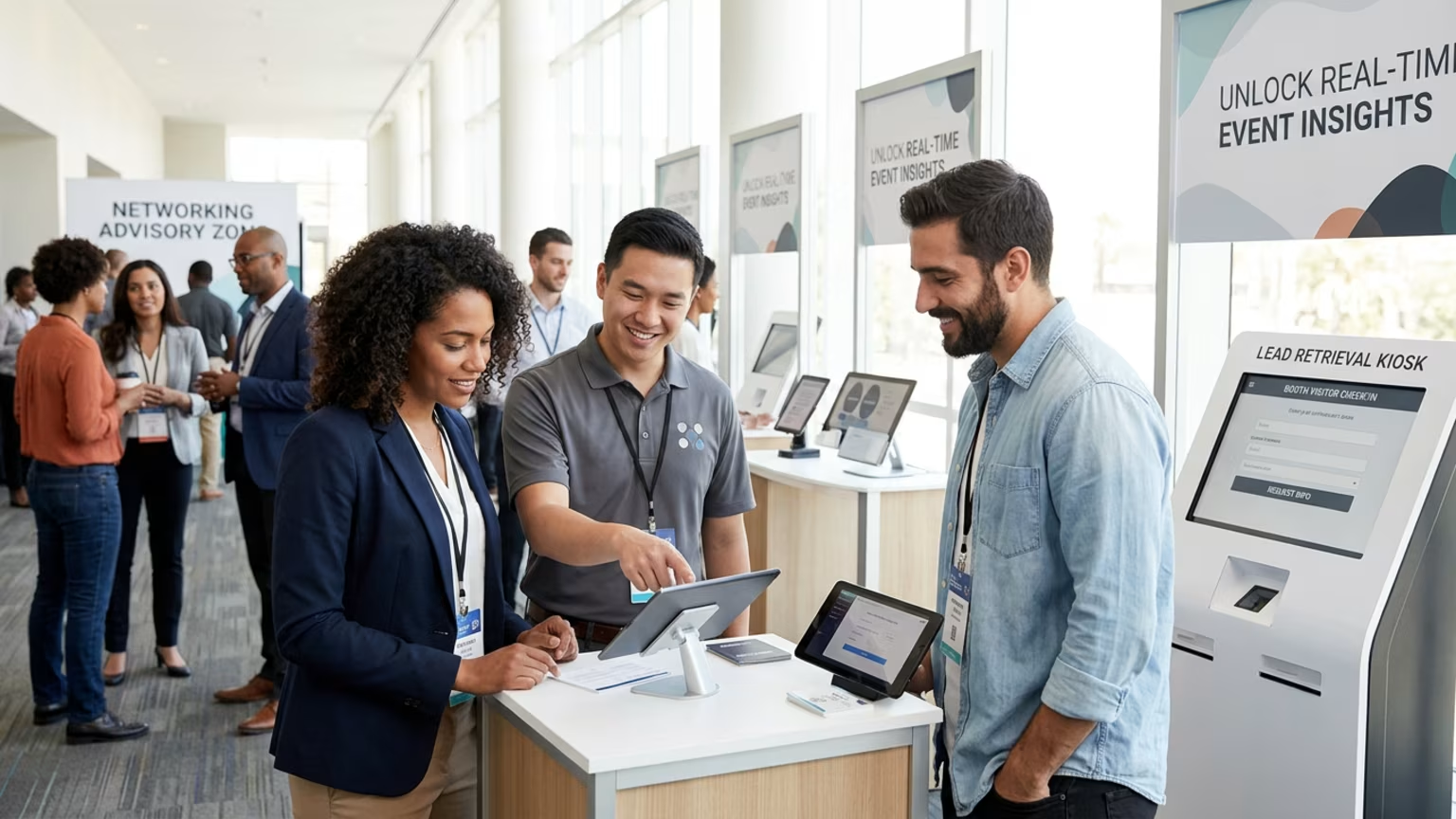
The field marketing director stares at the packed trade show booth. Hundreds of attendees are grabbing free beverage samples and scanning badges. Yet her stomach drops when the sales team asks for qualified leads. She has plenty of foot traffic but zero proof of buyer intent.
Event marketing budgets are rapidly shifting from mass outreach to real-time engagements driven by first-party data. Brands that prioritize behavioral triggers over raw attendance turn fleeting interactions into measurable pipeline sequences.
The typical experiential setup feels like a win when the floor gets crowded. Brand ambassadors hand out snacks to a massive line of people. Badges scan constantly throughout the day. The optics suggest a massive success for your newest product launch.
The reality sets in 48 hours later. Your customer relationship management system fills up with bad data. Sales teams waste hours calling people who only wanted a free protein bar. The disconnect between a crowded booth and actual retail sell-through is terrifying.
This chaos happens repeatedly at national expos and local retail activations. Marketing leaders feel immense pressure to justify their physical footprint. Executive boards want to see tangible Return on Investment, not just a beautiful booth design. They ask hard questions about how many samples actually turned into retail purchases.
When field teams cannot answer those questions, future budgets get slashed. The focus must shift from collecting business cards to capturing behavioral signals. People walking past your display offer zero value until they demonstrate true intent.
We create experiential marketing programs built to connect emotion with action. Our process blends creativity, strategy, and data to make sure every brand interaction drives measurable results. We craft experiences that engage all five senses. This helps people feel the brand instead of just seeing it, turning moments into meaningful business outcomes.
The solution requires shifting from volume to intent. Smart brands treat live events as physical data capture engines. They use real-time marketing tools to track behavioral triggers during the actual activation. This approach replaces outdated post-mortem reports with immediate adjustments.
Industry analysts report that companies following up within 24 hours of an event see three times higher pipeline value than those waiting a week. You cannot hit that window without proper data plumbing. Event attendees must be tagged with specific metadata right on the floor. This separates casual samplers from high-intent buyers.
Relying on first-party data creates an undeniable financial advantage. Recent studies show that brands utilizing first-party data achieve a five to eight times return on ad spend. The data feeds directly into your advertising platforms for revenue optimization. This creates a closed loop where physical experiences inform digital targeting.
Timing is everything when capitalizing on event momentum. Real-time marketing generates substantially higher engagement than scheduled posts in the first 24 hours. Social platform algorithms prioritize recency. If you wait until Monday to process your Friday leads, the algorithmic window has already closed.
Implementing real-time infrastructure requires a calculated investment. Current benchmarks show these systems require significant engagement lift to break even. This means you should deploy high-tier software primarily for high-value activations. A simple consumer sampling tent might not need instant data synchronization.
A massive automotive test drive or a national product launch demands it. You must match your technology spend to the potential revenue impact of the campaign.
Winning brands use a rigorous playbook to connect physical engagements to digital revenue. It requires disciplined execution before the event doors even open. Brands that invest in event measurement before launch see higher returns when their teams know exactly what to track. You must define the rules of engagement clearly.
The best operators do not leave data capture to chance. They script the entire process from the first handshake to the final contract signature.
Every step focuses on moving the prospect through a lifecycle engagement sequence. If the data plumbing fails, the entire activation turns into expensive vanity theater. The math is quite simple. The actual execution requires operator-grade discipline.
You must separate your indicators into clear categories to prove real business impact. Vanity metrics like total foot traffic or social media impressions only tell half the story. You need a mix of leading and lagging indicators to justify your budget. Clean CRM hygiene is non-negotiable for this step.
When your data is chaotic, your measurement models will fail completely. Proper experiential marketing reporting relies on tracking the speed and quality of post-event actions.
Leading indicators tell you if the live activation is working in real time. Track the percentage of leads tagged with high-intent qualifiers on the floor. Monitor your team response time to verify follow-ups happen within the critical 24-hour window. Measure the engagement lift on your social channels immediately after a live product demonstration.
Lagging indicators prove the final financial outcome over a 90-day period. High-performing event teams aim to generate three times their event cost in pipeline within a 90-day window. You must measure pipeline velocity. Research shows that events accelerate deals, resulting in twenty percent faster close times for attendees compared to non-attendees.
Look at average deal size differences between those who experienced a high-touch activation versus general inquiries. Building this capability requires a structured 90-day adoption plan. For the first thirty days, audit your current data hygiene and enforce strict tagging rules. During the next thirty days, activate your first-party data streams to improve advertising match rates.
Finally, use the remaining month to shift toward value-based bidding models. You will stop optimizing for raw lead volume and start optimizing for contract size. This progression transforms your field marketing from an expense category into a predictable revenue channel.
Consider a premium beverage brand launching a new sparkling water at a major industry expo. They skipped the massive open-floor sampling station. They opted for an invitation-only tasting lounge combined with strategic retail demonstrations. The goal was driving wholesale accounts and retailer confidence.
The team tracked RSVPs and check-ins using real-time analytics software. Brand ambassadors used tablets to log specific retailer feedback on flavor profiles instantly. This data fed directly into their customer management platform. Every conversation was tagged with the exact product sampled and the buyer timeline.
This immediate data capture triggered automated emails to regional distributors within hours. The brand did not wait for the show to end to start selling. The clean data allowed them to sync audience lists with digital ad platforms seamlessly. They targeted attendees with follow-up messaging when the taste was still fresh in their minds.
The result was a clear view of how physical trial led to actual sales lift. They saw a massive reduction in wasted sales calls. They proved the exact financial impact of their trade show presence to the executive team. The success of this activation was not an accident.
The marketing director built her entire request for proposal around data transparency. She demanded that her agency partners provide historical pipeline data rather than just beautiful event renderings. This upfront alignment set clear expectations for lead capture on the floor. Her team knew exactly which interactions signaled buying intent before the first sample was ever poured.
Learning how to turn live event growth into retail sales requires this exact blend of physical presence and digital intelligence. If your brand needs to stop guessing and start measuring, it is time to upgrade your field strategy. Book a strategy call with our team to build an experiential program that converts.
Check your current event follow-up data and verify if your team routinely responds to high-intent leads within 24 hours.

30 Years Experiential & Retail Activation Partner for CPG & Beverage Brands | Multi-Market Demos, Roadshows & Costco/Club Programs That Actually Sell