Robbie Thain
Founder, CEO

Adweek's 2026 Media Plan of the Year proves experiential marketing must connect physical creativity with measurable retail outcomes to drive real business value.
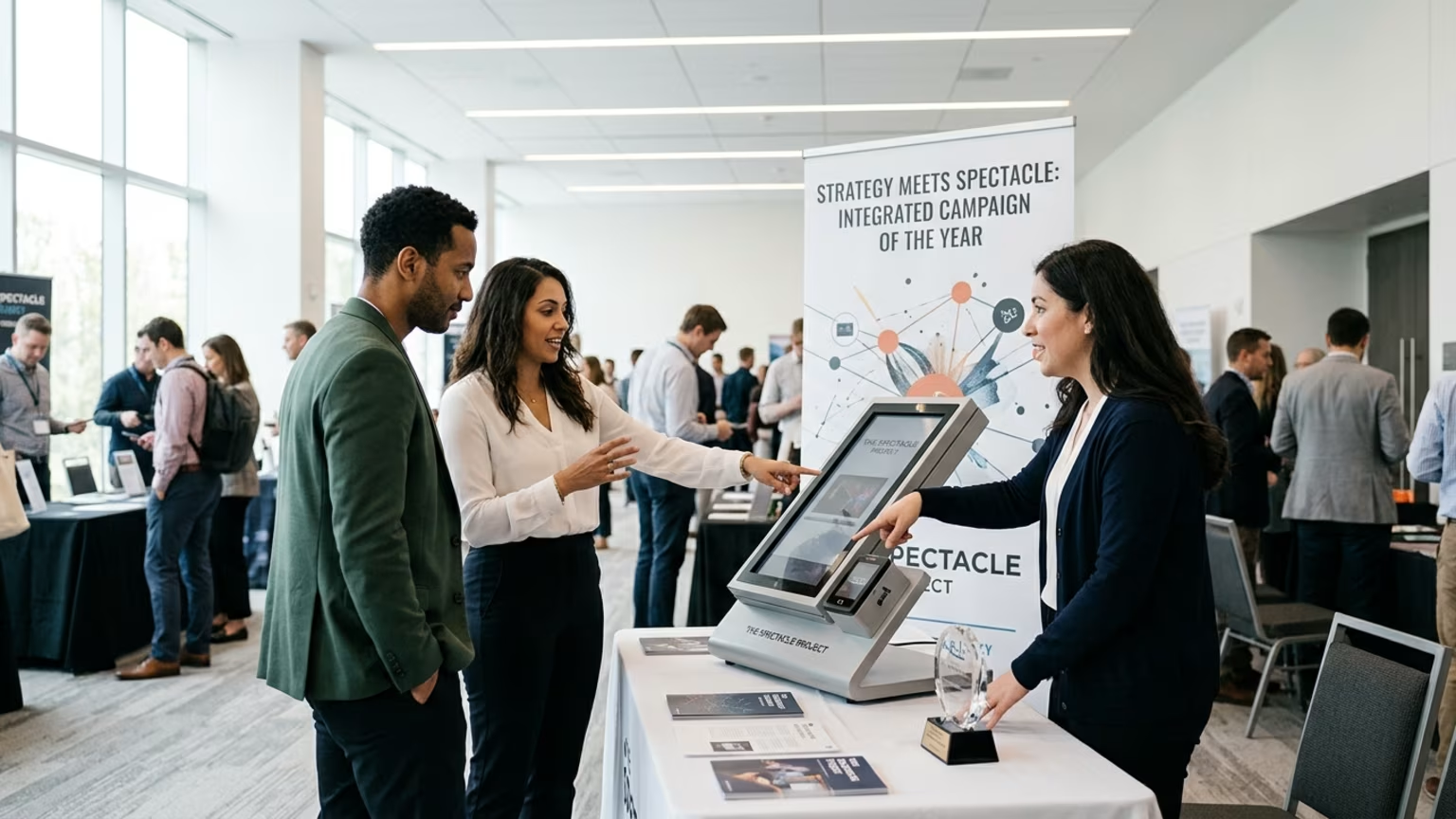
Your massive interactive booth at the national trade show is bleeding you dry. Marketing teams continue to fund these giant physical spaces hoping for a miracle. They build massive structures, hand out expensive promotional items and pray for retailer attention. When the dust settles, they get a pile of vague engagement metrics instead of qualified pipeline.
This structural mismatch is precisely why Adweek's 2026 Media Plan of the Year awards captured our attention. The publication recognized media agencies and brand-side planners whose work connected cultural relevance with measurable business results. The industry is tired of paying for vibes and unverified foot traffic. These awards cover 22 categories and were selected by a jury of industry professionals.
Adweek frames this year's winners as concrete evidence that brands can stand out in a fragmented media environment. They achieve this by combining creativity, authority and purposeful use of platforms rather than simply optimizing for algorithms. This standard is exactly what the experiential marketing space needs right now. We must stop celebrating activations that generate social media noise but fail to move products off retail shelves.
Many live event campaigns look like a beautiful disaster up close. A consumer goods brand will spend vast sums to build an immersive physical footprint. Field teams then hand out thousands of product samples to people who just want free stuff. When the finance team asks for the Return on Investment, the marketing director simply points to a vague list of impressions.
That excuse no longer works for a modern marketing executive. CMOs feel deep anxiety over spending six figures to get no verifiable retail lift. They know perfectly well that casual foot traffic does not equal actual purchase intent. A crowded activation space might look highly successful to a casual observer, but it lacks a clear path to revenue.
The disconnect between physical presence and commercial reality destroys brand budgets every single year. Marketing leaders often hire creative agencies that prioritize aesthetics over operational logistics. These agencies design beautiful structures but fail to track how many target buyers actually interacted with the brand. The field staff gets overwhelmed, the sampling inventory runs out and the lead capture system breaks down entirely.
Brands cannot afford this level of waste when advertising costs are rising everywhere else. If a digital campaign fails to track conversions, the media buyer gets fired immediately. Yet, physical events routinely get a free pass because they look impressive on a recap slide. This double standard harms the entire experiential marketing industry and prevents real budget growth.
Adweek characterizes the winning media plans this year as needle-moving work that tapped into the cultural zeitgeist and drove results. That exact same standard must apply to physical brand activations. Live consumer events must move the needle on actual shopper behavior. If a campaign cannot prove that it changed purchasing habits, it is nothing more than expensive theater.
At makai, we view live activations through a much sharper lens. Warm human interactions are critical for building brand trust in physical environments. However, that aloha-style approachability must be backed by brutal operational discipline. We have executed over 1000 campaigns across all 50 states, bringing brands to life in every major U.S. market.
From retail demos in Seattle to roadshows in Miami and events in Honolulu, our teams activate brands wherever our clients' audiences are located. Every single one of those consumer touchpoints requires rigorous logistical planning. When you combine genuine hospitality with strict performance tracking, you turn fleeting interactions into actual pipeline. The real magic happens when field teams execute with absolute precision.
This operational mindset shifts the entire focus of a live campaign. Instead of worrying about the color of the lighting, we focus on the flow of the product trial. We train ambassadors to qualify leads quickly and capture actionable data. Teams that learn how to connect field sampling with retail media data always see better long-term conversion.
A well-executed event functions as a highly controlled physical advertising channel. The staff knows exactly how many units they need to distribute per hour to hit the target. The inventory is tracked flawlessly, and the conversations are documented. This exact dynamic shows how live marketing powers broader retail growth across the entire brand portfolio.
The smartest marketing organizations are finally shifting away from empty metrics. Planners now want to track tangible outcomes like samples distributed to target buyers and retail meetings booked. Adweek's related 2026 Tech Stack Awards coverage describes tools that connect audience data, activation and measurement across multiple channels. These channels include connected television, retail media, programmatic, audio and digital out-of-home platforms.
Experiential marketing must integrate smoothly into this exact same measurement ecosystem. The core focus should be on separating true campaign impact from baseline consumer activity. One measurement example cited by Adweek is Ibotta's LiveLift system. This tool compares exposed and unexposed shopper groups across transaction data to estimate incremental revenue.
It stops counting purchases among people who simply saw an ad and starts isolating real behavioral shifts. Another example from the technology coverage is Incremental's iROAS platform. Adweek describes this tool as providing always-on, SKU-level incrementality measurement across retailers. It then feeds those precise results directly into bidding and budget decisions.
When live activations sync with incrementality measurement tools, brands can finally prove their physical footprint actually matters. Field marketers should treat every event as a highly structured test environment. You measure the unexposed baseline, run the targeted activation and track the specific SKU lift. This approach provides the concrete evidence that executive leaders demand.
Integrating physical events into a digital measurement stack requires intentional planning before the venue doors open. You cannot staple a measurement strategy onto an activation after it finishes. The physical footprint must be designed to capture data naturally. Whether through a digital coupon scan or a geo-fenced retail promotion, the data capture must be frictionless.
This level of rigorous data analysis builds massive trust with retail partners. Buyers want to see exactly how a brand plans to drive traffic to their specific stores. When you can show a buyer that your last roadshow created measurable incremental revenue, they pay attention. They stop treating your product as a risk and start treating it as a proven traffic driver.
Closing the loop between a live taste test and a register scan is difficult work. It requires sophisticated planning and a willingness to look at honest data. However, the brands that figure out the first-party shopper data advantage will dominate their categories. They will know exactly which events drive sales and which ones just waste money.
Marketing leaders must stop accepting aesthetic success as a substitute for actual business results. The push toward integrated measurement proves that brands can demand more from their media and their live events. Physical activations require the exact same level of commercial accountability as any digital transaction. Precision, warmth and rigorous tracking will always outperform an unmeasured spectacle.

30 Years Experiential & Retail Activation Partner for CPG & Beverage Brands | Multi-Market Demos, Roadshows & Costco/Club Programs That Actually Sell