Robbie Thain
Founder, CEO

Set trade show goals before booth design. Separate traffic and samples from qualified conversations, retailer meetings, and downstream sales outcomes.

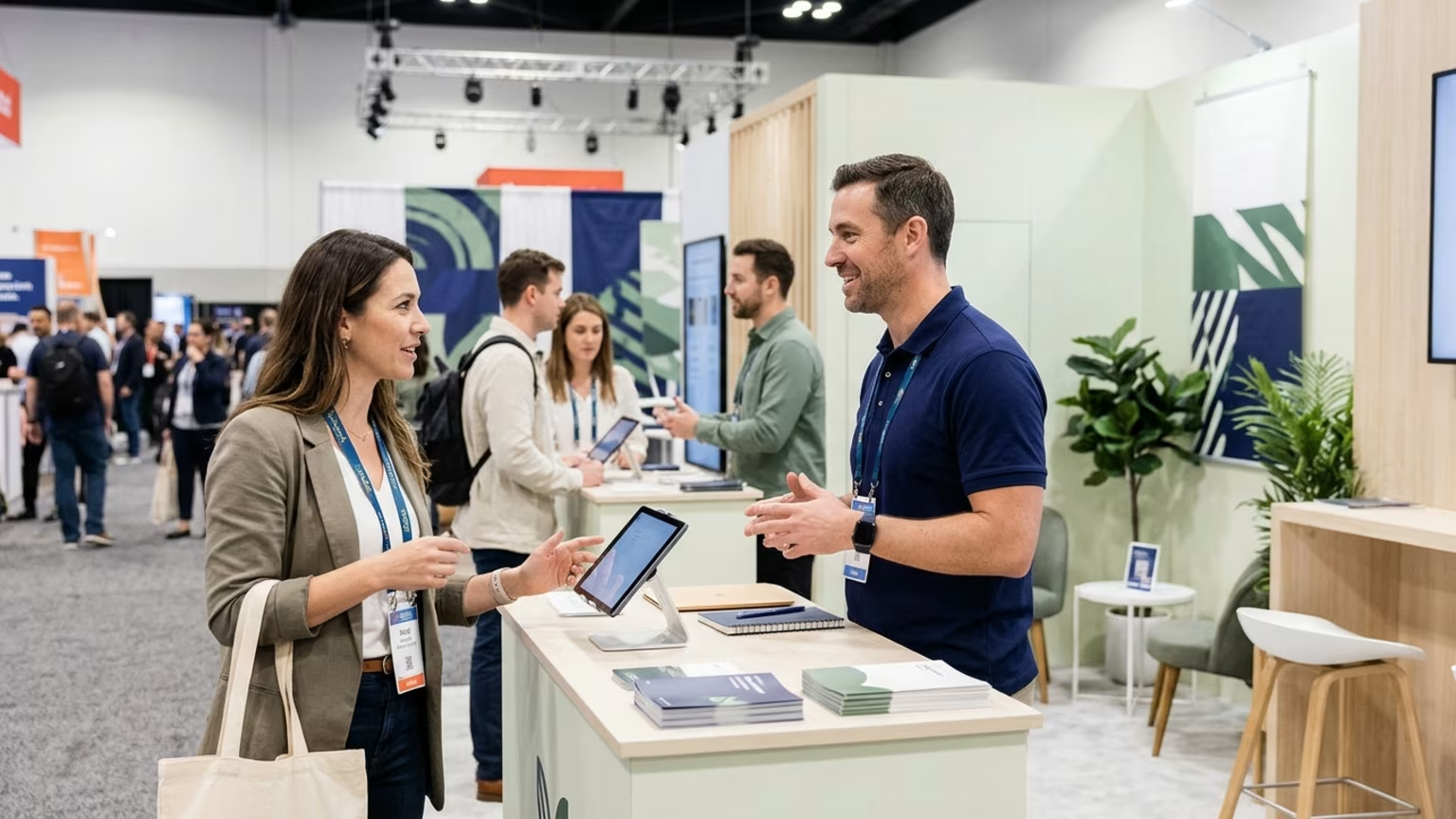
Your giant interactive booth is not a strategy. Until it serves a defined business objective, it is an expensive creative preference. The screen wall and giveaway can wait until someone explains what the activation needs to accomplish.
That sounds harsh because experiential marketing is supposed to feel exciting. We agree that it should. But excitement belongs inside a commercial brief, not in place of one. A product trial should have a purpose beyond keeping the sampling station busy.
For CPG marketing leaders, the stronger starting question is not “What will make people stop?” It is “What useful action should happen because they stopped?” That question belongs before the rendering and before the feature list starts consuming the budget.
The beautiful dumpster fire begins when visible activity becomes the objective. The booth attracts people. The team distributes product and collects scans. Then the CMO has to explain why a substantial activation investment produced little evidence of qualified pipeline.
The problem is not necessarily weak creative. It is asking creative to solve a business question nobody settled. If the real objective is retailer meetings, a crowded sampling counter is not the same accomplishment. If the objective is qualified follow-up, a large contact file leaves the commercial question unanswered.
A summary of trade-show performance research separates performance into attraction, contact, and conversion. It describes how booth space and attention-getting techniques affect those stages differently from staffing and training. That distinction matters: attracting someone and advancing a useful conversation are different jobs.
Our view is that a booth becomes difficult to defend when its reporting treats those jobs as interchangeable. Visits describe traffic. Product distribution describes activity. Neither should quietly become a claim about pipeline when the presentation reaches the executive team.
The anxiety is understandable. A crowded photograph is available immediately, while a commercial result may take longer to establish. But the easiest evidence to collect should not get to define success.
At Makai, we believe the alternative is not a colder or less creative experience. It is a warmer experience with a clearer job. Aloha-style approachability gives people a reason to engage, while operational discipline keeps the business purpose in focus.
Our experiential work connects emotion with action through creativity, strategy, and data. We craft experiences that engage all five senses. The point is to give the product a meaningful human encounter, then connect that encounter to something measurable.
Our team designed and managed a 40 by 20 foot trade show environment for Glanbia at Natural Products Expo West 2025. It brought think!, Isopure, Optimum Nutrition, and Amazing Grass into one coordinated space. We handled concept and operations along with staffing and breakdown. More than 14,000 recorded product samples were distributed across the activation stations.
For this discussion, the useful detail is the recorded distribution rather than the footprint. It gives the activation a tangible activity measure. The rendering tells one part of the story; the documented product trial tells another.
The emotional side matters too. A Director of Brand Strategy in the CPG snack division described our in-store work this way:
“The Makai team turned our product launch into a sensory event that shoppers still talk about. From creative storytelling to flawless in-store execution, they made snack time unforgettable. We couldn't have asked for a stronger partner.”
That feedback speaks to the value of a memorable product encounter. We do not see human connection and commercial discipline as competing priorities. Our position is that the experience deserves both a reason to care and a reason to act.
We also managed a four-week, multi-market Costco sampling program for Pulmuone's PlantSpired line. The program delivered more than 65,000 samples and recorded an 18 percent sold-to-sale rate. Here the reporting included trial volume alongside a sales-related measure, rather than stopping at participation.
These examples reinforce our operating philosophy: creativity earns its place by supporting the intended action. That is the logic behind planning space around product trial and buyer conversations. A compelling environment and a clear commercial purpose should belong in the same brief.
Start by deciding which business result deserves priority. A trade-show marketing guide recommends selecting one primary goal and setting a corresponding target. It also recommends agreeing with sales on qualification criteria before the show.
These sources provide practitioner guidance and a research summary, not a universal measurement standard. Our first-party activation totals also do not establish incremental sales lift or prove one design superior to another. The practical response is to define the intended result and keep each measure attached to what it actually records.
A revenue objective needs a different scorecard from a relationship objective. An awareness program can also have a legitimate purpose without being judged as an immediate sales program.
A guide to trade-show Return on Investment maps objectives to different measures:
For a retailer-focused activation, meetings booked can show progress toward access. Meetings held record a different accomplishment. Our recommendation is to name the intended outcome precisely enough that the booth team and sales team recognize the same finish line.
That definition gives design a job. If buyer conversations are the priority, features should support those conversations. If product trial is the priority, participation should connect people with the product rather than distract from it.
A guide to evaluating trade-show results advises establishing qualification criteria in advance because “qualified lead” has no universally accepted definition. The useful decision is therefore an agreement between the teams that will generate and use the information.
The questions are practical. What makes the conversation relevant to the business goal? What context does sales need to continue it? What follow-up has the visitor agreed to receive?
Those questions should inform the capture requirements before the booth opens. The Return on Investment guide also recommends tagging leads with the show and recording enough information to qualify them later. A scan is a record of contact, not an agreed judgment of commercial fit.
Keep them in the report. Do not promote them into outcomes they do not measure.
Samples distributed to the intended audience are more useful to the brief than an unexplained giveaway total. Qualified conversations and retailer meetings answer different questions. Reporting those categories separately makes the story clearer without dismissing the work required to generate trial.
This is also where impressions need a narrower role. Our view is that they can describe exposure, but should not displace the measures selected for the business objective. For more on that distinction, see our approach to separating event activity from commercial evidence.
The measurement window should fit the intended outcome. A separate exhibitor-marketing guide recommends distinguishing badge counts from meetings held and qualified opportunities. It also describes tracking pipeline and closed revenue over an attribution window that accommodates the sales cycle.
That means the close of the show need not be the close of measurement. Immediate reporting can describe activity and captured conversations. Later reporting can assess whether those conversations developed into the intended business result.
This is why the handoff belongs in the original strategy. Our recommendation is to settle qualification and follow-up expectations before choosing the booth's attention-getting features. The connection between captured context and CRM handoff deserves the same planning attention as the physical experience.
Core takeaway: Demand execution before applause. A trade show booth should make the chosen business objective easier to pursue and its results easier to explain. Warm human interaction gives the experience meaning; operational discipline connects that meaning to a credible next step. Judge the creative by the job it supports, then keep attention and activity separate from qualified engagement and downstream outcomes. Aesthetics should serve that work rather than substitute for it.
A striking exhibit still needs a path beyond the conversation; Makai addresses that gap through trade show planning and management focused on visitor engagement. Its work supports CPG marketers dealing with inefficient post-event follow-up and CRM routing, with qualified lead generation as the commercial aim rather than a larger collection of badge scans.

30 Years Experiential & Retail Activation Partner for CPG & Beverage Brands | Multi-Market Demos, Roadshows & Costco/Club Programs That Actually Sell