Robbie Thain
Founder, CEO

KITA’s Los Angeles expo paired tastings with buyer meetings. See the implications for CPG staffing, booth flow and post-event follow-up.

From October 22 to 24, 2026, the Korea International Trade Association (KITA) and event organizer Exporum held the 2026 LA K-Premium Consumer Goods Expo at Magic Box LA in Los Angeles. Herald Business reported that this was the fair’s first North American edition.
The event put consumer-facing product experiences and structured distributor meetings into the same program. For CPG and beverage leaders, the useful development is that shared operating brief: make room for people to try the product while giving channel buyers a defined setting for business discussions.
According to Herald Business, the expo featured 85 Korean consumer-goods companies across 120 booths. Categories included cosmetics and fashion alongside food and household or lifestyle goods.
KITA arranged one-to-one business matching with approximately 120 local distributors. Buyer participants included H Mart, Sally Beauty Holdings and Mexican retailer Del Sol. KITA said participating companies held more than 400 export consultations during the event.
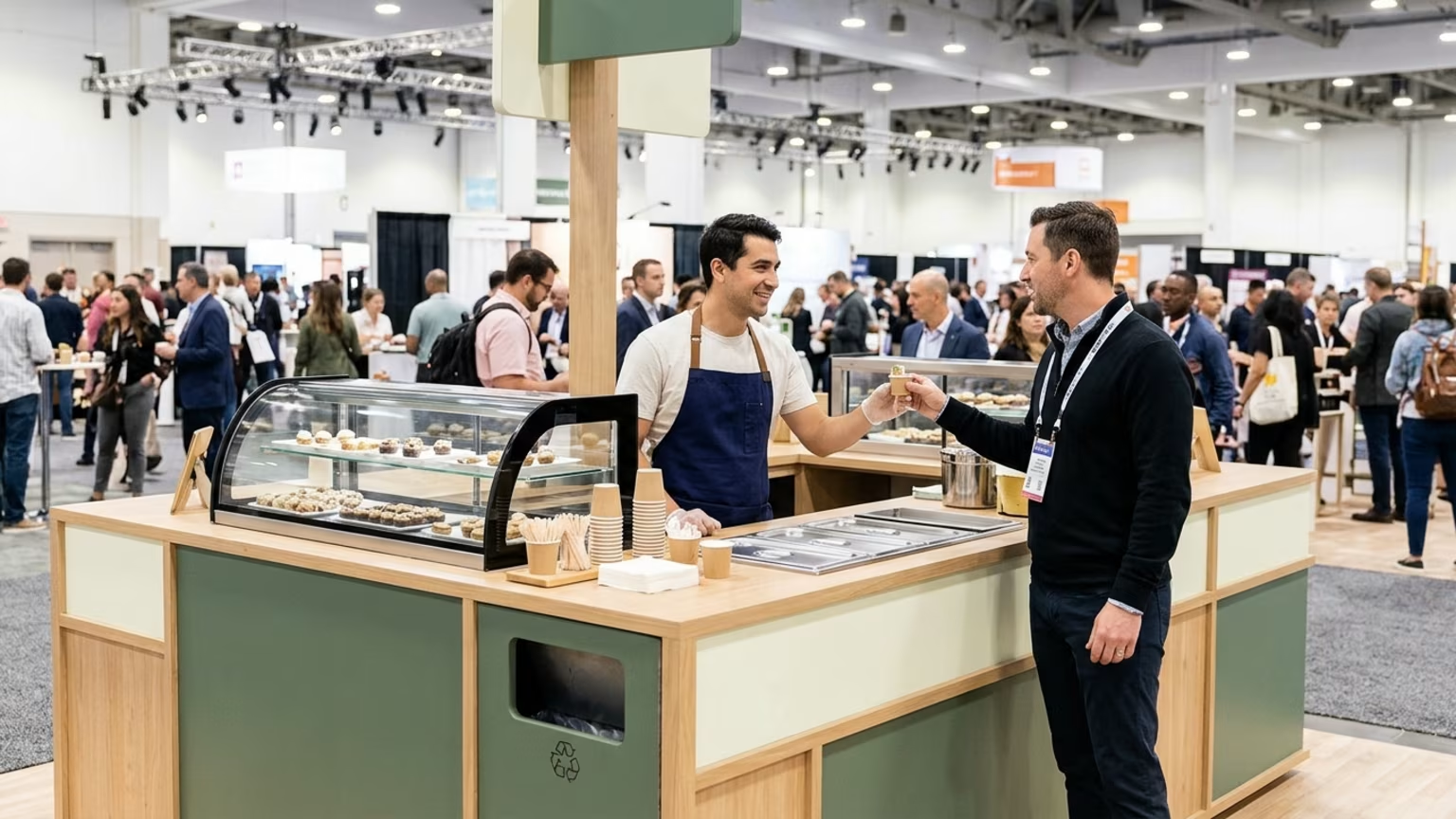
The consumer program included chef-led cooking demonstrations and tasting sessions. Those experiences sat alongside the distributor meetings rather than operating as an entirely separate trade-development effort.
Seoul Economic Daily reported that KITA describes the fair as a consumer-facing exhibition combined with trade meetings. KITA also said it had held editions in other overseas cities. The Los Angeles event therefore represented a North American expansion of an existing format, not the organization’s first consumer-goods fair overall.
The reported consultation total counts business discussions, not completed contracts or retailer listings. The coverage does not publish company-level conversion results, follow-up outcomes or activation costs. That makes this a useful operating format to examine rather than a demonstrated Return on Investment case.
Makai’s stance is straightforward: welcome people warmly and give the commercial handoff a clear structure. Product trial deserves an inviting experience. Buyer development deserves a defined purpose and an accountable next step.
KITA’s format brings those priorities into the same planning conversation. A consumer may need time to taste and understand a product. A distributor may need a focused discussion about whether that product belongs in a particular market. We believe the activation should respect both needs without asking one conversation to do every job.
That fits Makai’s positioning. We create face-to-face experiences designed to capture attention and generate measurable sales pipeline. Our consumer events use interaction and emotional engagement to connect people with brands, while our trade show work focuses on spaces that start conversations and support customer conversion.
We designed and managed a 40 by 20 foot trade show environment for Glanbia at Natural Products Expo West 2025. The coordinated space brought together think!, Isopure, Optimum Nutrition and Amazing Grass. Our team handled concept and operations as well as staffing and breakdown. More than 14,000 recorded product samples were distributed across the activation stations.
For this discussion, the relevant lesson from that scope is coordination. Multiple brands and sampling stations belong to one operating environment. Our view is that the same discipline should connect product engagement with any planned buyer-development work.
The commercial destination also deserves attention before the booth opens. When the objective includes carrying expo relationships into retail activation, the event brief should connect those stages rather than stop at the show floor.
For a brand considering a similar approach, the planning unit is bigger than the sampling counter. It includes the consumer experience, the buyer conversation and the handoff between them.
Makai’s end-to-end services extend from permitting to CRM reporting. We see that scope as a reason to discuss physical execution and lead handling together. The experience should have a clear operational owner from the first interaction through the next commercial step.
The practical staffing response is to distinguish responsibilities in the brief. Product engagement needs a clear owner. Scheduled buyer conversations and follow-up capture need ownership too.
This does not require turning every tasting into a sales interview. Our view is that ambassadors should be able to welcome consumers without losing sight of a buyer who needs a different conversation. The planned handoff should make that distinction understandable to the team.
For brands operating across markets, coordinating staffing as one program is a useful planning lens. The relevant question is whether everyone understands the same engagement objective and commercial next step.
Staffing discussions should therefore cover more than availability. They should establish who handles product questions, who receives buyer inquiries and who records the agreed follow-up. These are responsibilities to resolve in advance rather than leave to whoever happens to be free.
A useful footprint review treats sampling and buyer discussions as connected activities with different purposes. The tasting experience should make participation approachable. The buyer conversation should have an identifiable destination within the activation plan.
For us, the design question is where the handoff belongs. If a product interaction develops into a distribution inquiry, the team needs a shared understanding of what happens next. That is a planning decision rather than a decorative feature of the booth.
The same review should account for cooking demonstrations and other programmed experiences when those are part of the brief. KITA’s event documented cooking and tasting alongside structured meetings. A brand adopting that combination should evaluate how its consumer programming and commercial conversations will share the footprint.
The research’s practical implication is to plan lead logging and follow-up ownership before the event. For a comparable activation, the record should connect the conversation with its intended next action.
That means defining what makes a buyer meeting qualified and who takes responsibility afterward. A contact record has a different purpose from a sample count. The follow-up plan should preserve the commercial context of the discussion rather than leave the receiving team to reconstruct it.
Event Marketer’s coverage provides a useful planning principle. George P. Johnson practitioners recommend aligning objectives, selecting key performance indicators and planning data capture before an event.
For a combined consumer-and-buyer activation, we would apply that principle through distinct measures with a shared commercial purpose. The research supports defining meaningful trial, qualified buyer meetings, follow-up opportunities and eventual sales in advance.
A planning brief can separate those measures clearly:
These definitions give the field team and the commercial team a common language. They also give each workstream a specific job. Consumer engagement can be evaluated against its intended interaction while buyer development can be tracked through its next commercial steps.
Our view is that this is where reporting discipline should begin: with decisions about what the activation is meant to accomplish. A dashboard is more useful when its categories reflect those decisions rather than simply collect whatever information was easiest to capture.
The same thinking applies to evaluating sampling performance beyond activity totals. Define the commercial question first, then identify the evidence needed to answer it.
For a CMO or VP of marketing, the management task is to align those definitions across field execution and sales follow-up. The trial objective belongs in the experience brief. The buyer objective belongs in the meeting plan. Follow-up ownership connects both to the work that continues after the event.
Before approving the next activation, will you ask your field and sales leads today to map the handoff from product trial to buyer follow-up and name the person accountable for the next commercial step?
Consumer-event handoffs fall to field marketing leads and trade show coordinators; with Makai, the live experience centers on participation and emotional connection. For premium CPG teams dealing with inefficient post-event follow-up and CRM routing, Makai designs consumer events and experiential campaigns intended to turn face-to-face interactions into qualified leads.

30 Years Experiential & Retail Activation Partner for CPG & Beverage Brands | Multi-Market Demos, Roadshows & Costco/Club Programs That Actually Sell