Robbie Thain
Founder, CEO

Turn trade show buzz into retail velocity. Discover the operational framework to bridge expo conversations with high-conversion localized roadshows.

The most successful trade show booths actually generate zero direct revenue. They are merely expensive launchpads that require a precision-focused field execution strategy to produce actual shelf velocity. By mastering the operational handoff from expo conversations to localized roadshows, brand leaders can transform fleeting event buzz into undeniable retailer confidence and measurable sales lift.
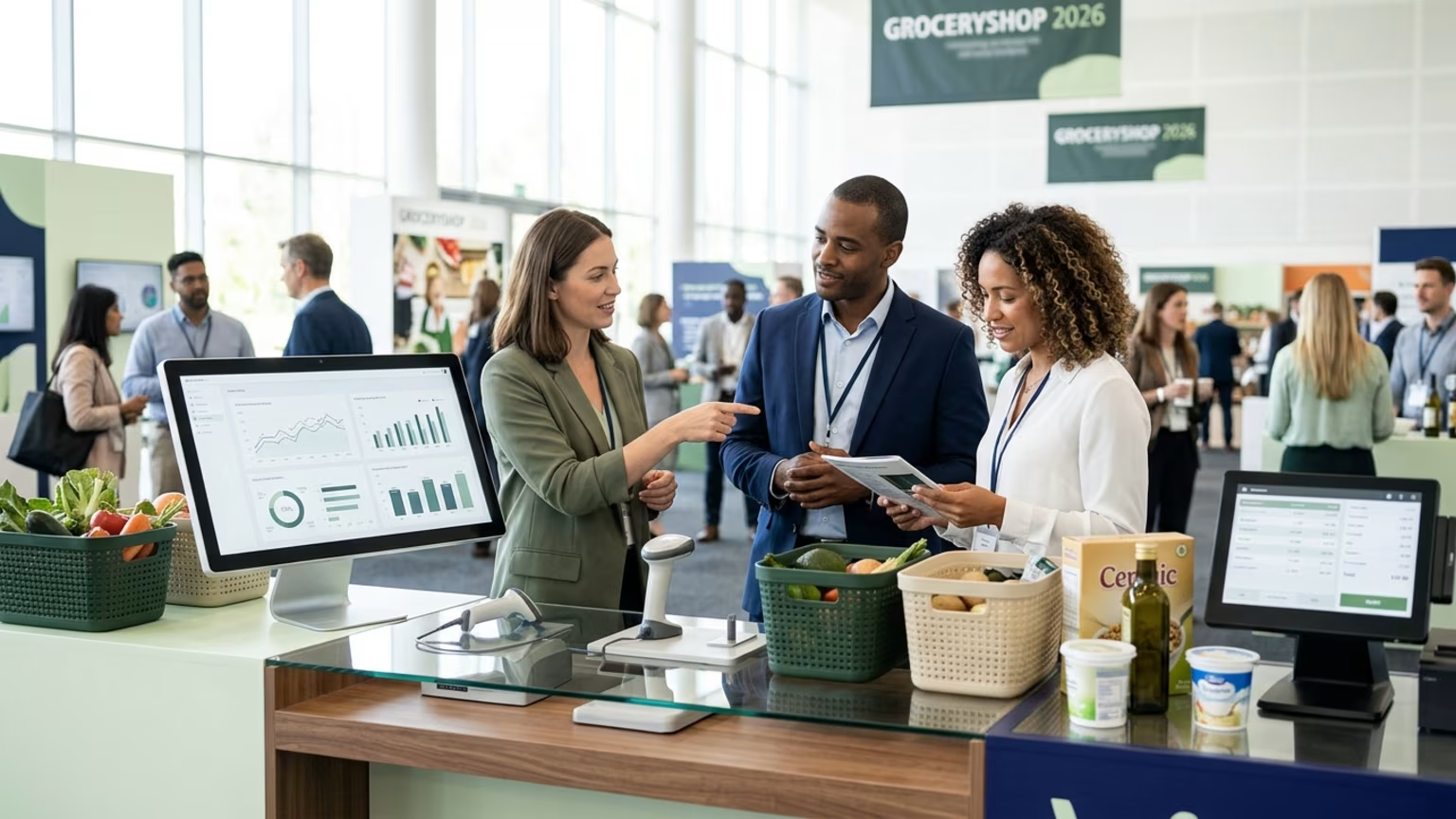
Walking away from a major industry expo feels like a massive victory. Your booth was packed, the product samples disappeared instantly, and buyers nodded aggressively during your pitch. You gathered hundreds of badge scans and promised everyone a rapid follow-up sequence. The team celebrates the high foot traffic and returns home exhausted but optimistic about future distribution.
Then reality sets in exactly two weeks later. Those hot leads grow cold, and the buyer who loved your new snack line stops returning emails. The massive pile of scanner data sits completely untouched in your CRM. Field marketing teams are left without a clear mandate, and the promising brand theater devolves into a beautiful dumpster fire of missed opportunities.
Industry research from B2B marketing analysts reveals that up to 80 percent of trade show leads are never followed up effectively. Of the leads that do receive attention, nearly half wait two to four weeks for a response. This massive delay instantly kills any momentum generated during the live event. The initial excitement fades, and the buyer moves on to other priorities.
This disconnect happens when brands treat the expo as the finish line rather than the starting block. A buyer might love the product at Expo West, but their primary concern is how it will perform in their specific stores. Without a system to prove local velocity, that buyer will naturally hesitate to commit shelf space. The gap between a great conversation and a signed purchase order is massive.
Current data highlights this rising pressure on marketing operators. According to the Center for Exhibition Industry Research, 82 percent of trade show attendees have buying authority. Yet, 41 percent of marketers say proving Return on Investment is their top trade show challenge. The expo floor is full of high-intent prospects, but operational gaps destroy value right after the event ends.
Bridging this gap requires a structural shift in how marketing teams plan their event calendars. You must view the trade show booth as step one in a comprehensive retail conversion funnel. The goal is not just collecting contacts. The goal is identifying target markets for immediate localized activations that prove the product sells.
We have executed over 1000 campaigns across all 50 states, bringing brands to life in every major U.S. market. From retail demos in Seattle to roadshows in Miami and events in Honolulu, our teams activate brands wherever our clients' audiences are located. In our experience, the most effective approach aligns sales and field marketing before the expo even begins. This alignment guarantees every badge scan translates into a specific field execution plan.
To build this bridge, you need an operational framework that connects top-of-funnel expo buzz directly to in-store demonstrations. When a regional buyer expresses interest, your team should instantly propose a pilot program in their exact territory. This strategy pivots the conversation from vague future promises to concrete trial runs. It proves you have the field infrastructure to support their retail locations immediately.
Integrating localized roadshows into your post-show strategy helps secure buyer confidence. Instead of asking buyers to take a massive risk, you invite them to witness local consumer demand firsthand. This systemic approach transforms your marketing spend from a guessing game into a predictable pipeline.
Retail buyers want evidence of store-level execution. Shopper marketing analysts consistently note that retailers reward brands that drive incremental traffic and execute without causing operational headaches. Demonstrating this capability early sets your brand apart from competitors who only offer a pretty slide deck.
Executing this strategy in the real world requires extreme discipline and clear playbooks. You cannot rely on untrained gig workers or disconnected marketing silos to carry the message. You need a unified motion that moves leads from the convention floor to the retail floor seamlessly. Here is the operational blueprint for a flawless handoff.
Following these steps prevents fragmented planning and keeps all stakeholders accountable. Proper event preparation and clear timelines guarantee that no momentum is lost. If your internal resources are stretched too thin to manage this transition, it is time to act. Book a strategy call with our team to map out your exact rollout plan.
Retail buyers do not care about your booth aesthetics. They care about household penetration, unit lift, and flawless execution inside their stores. To win their trust, your field teams must deliver reporting that speaks the language of retail velocity. Granular data collection is the only way to validate your experiential investments.
Tracking the right lead metrics provides visibility into the execution quality of your live campaigns. These are the daily operational numbers that show your team is performing up to standard. You must track the exact number of samples distributed per activation hour. Your field team should log meaningful consumer conversations and track coupon redemption rates. Display compliance rates must be verified by timestamped photos from the retail floor.
Lag metrics tell the actual revenue story and justify the initial expo investment. These numbers prove to buyers that your product will not sit untouched on their shelves. Connecting these data points is critical for brands managing product launch roadshows designed to build trust.
You need to measure unit sales lift on the specific day of the demonstration. Nielsen research indicates that in-store demos typically generate massive unit sales lift on demo day compared to the baseline. You must track sustained unit velocity in the four weeks following the event. Incremental lift compared to control stores without activations provides undeniable proof of impact. Finally, calculate the cost per sample and cost per conversion to optimize future campaigns.
Packaging this data into simple, one-page recaps gives your sales team massive negotiating power. When you show a buyer that a recent campaign drove a 200 percent unit lift on demo day, the conversation changes entirely. Data turns experiential marketing from an unpredictable expense into a verifiable growth channel.
Consider the reality of a new premium beverage brand attempting to expand its footprint. The leadership team invested heavily in a massive presence at a major natural products expo. Instead of merely handing out cans, their booth staff targeted regional grocery buyers with a distinct proposition. They offered fully staffed, four-week localized sampling programs to support any new store placements.
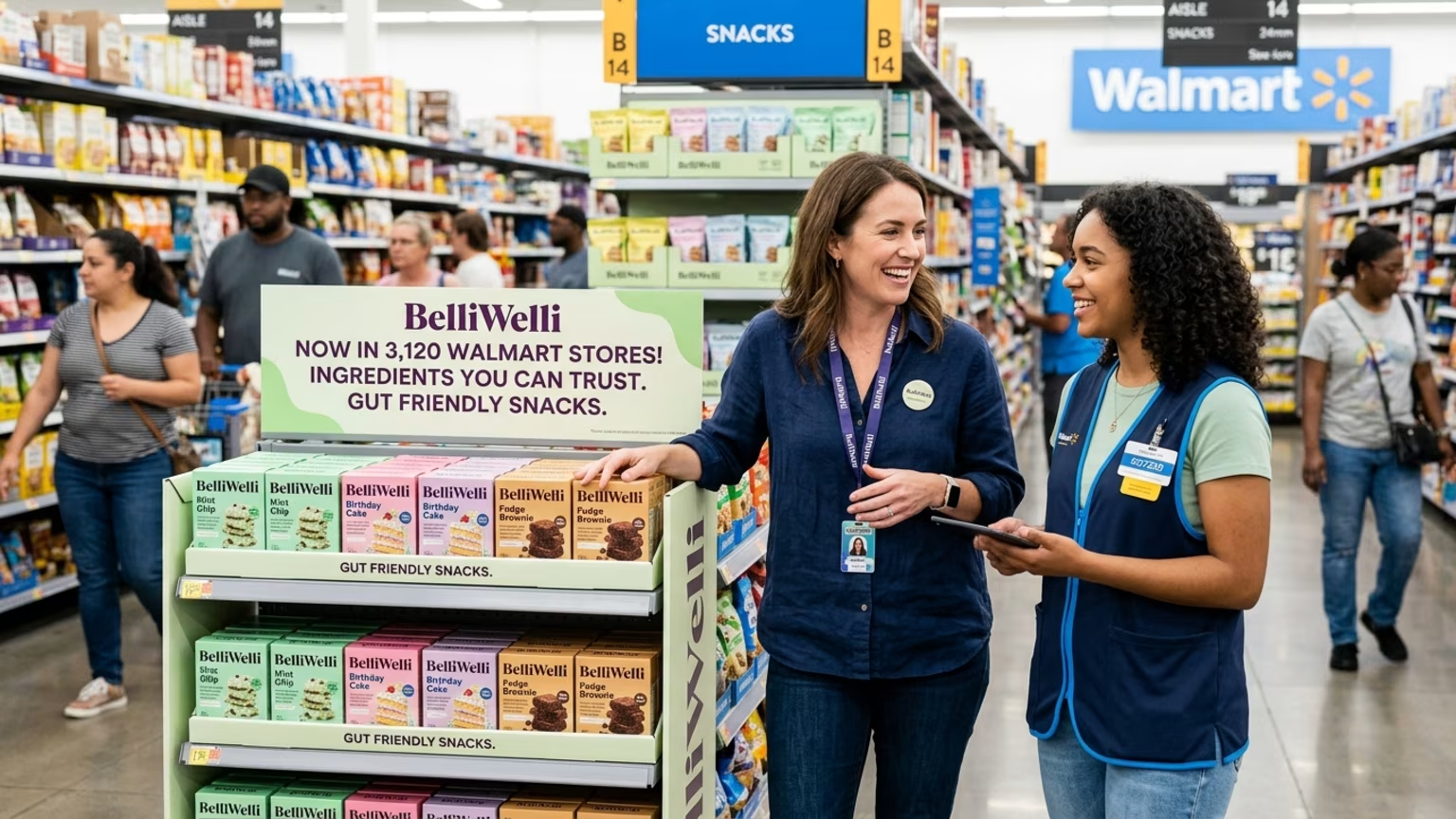
When a buyer from a major Texas grocery chain showed interest, the brand immediately activated its field teams. They deployed trained ambassadors to ten key store locations across the region. These ambassadors executed pristine retail demonstrations and captured precise daily metrics. The field team recorded the exact number of samples poured, consumer reactions, and immediate shelf depletion.
The results were packaged into a clean performance dashboard for the buyer. The data showed a massive spike in demo-day unit sales and a sustained 35 percent lift over the next month. Shopper behavior studies from the Food Marketing Institute validate this trend, noting that a vast majority of shoppers purchase sampled products.
This proof of local velocity gave the buyer the confidence to expand the brand from ten stores to fifty. The brand successfully bridged the gap between a noisy expo hall and permanent retail distribution. They transformed initial event interest into a repeatable retail growth engine.
The true measure of a live event is never found in the immediate applause or the size of the crowd. It is found weeks later in the quiet rhythm of products leaving a shelf.

30 Years Experiential & Retail Activation Partner for CPG & Beverage Brands | Multi-Market Demos, Roadshows & Costco/Club Programs That Actually Sell