Robbie Thain
Founder, CEO

Learn how localized roadshows and targeted retail demos drive immediate sales lift and secure permanent shelf space for growing CPG brands.
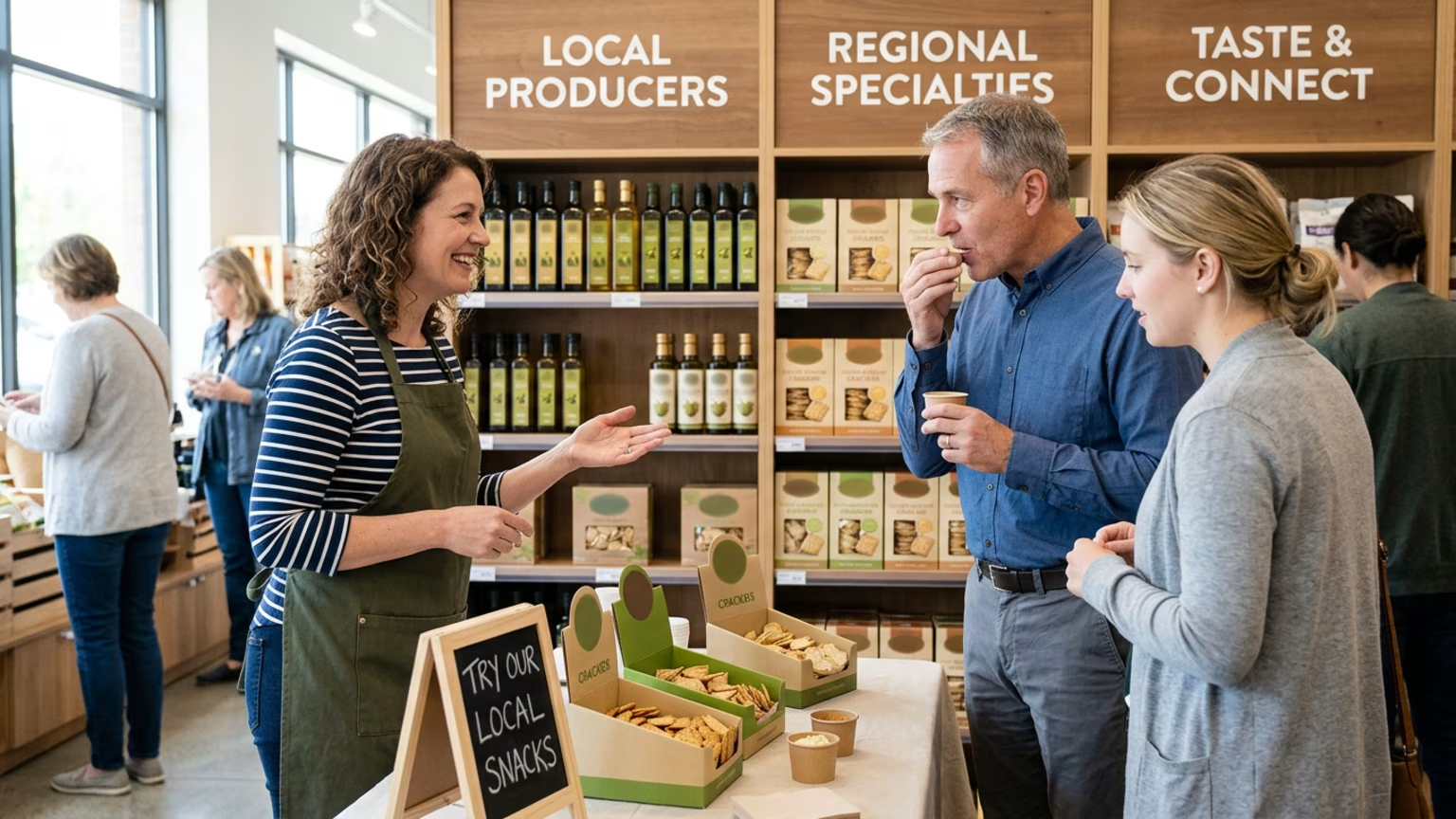
A field marketing director stands in a midwestern grocery aisle watching an untrained ambassador text on a phone. The activation costs thousands per week. The regional retailer meeting is tomorrow. The immediate sales lift data remains a complete mystery.
Localized roadshows transform fleeting consumer interactions into irrefutable data that secures premium retail shelf space. By running highly targeted sampling blitzes, brands can prove immediate sales velocity and turn skeptical buyers into committed partners.
Retail expansions demand flawless execution on the ground. A poor showing at a regional grocer or a major club store destroys brand credibility instantly. Fragmented execution costs brands heavily in lost efficiency and wasted product. Many field teams struggle with inconsistent staffing, missing inventory, and spotty reporting.
This lack of operational control turns retail activations into an expensive liability. Disjointed efforts produce weak data instead of driving product trial. Grocers want hard proof of velocity before allocating permanent shelf space. They care only about how much product moves off the physical shelf.
You lose the shelf to a competitor if your team cannot show retail buyers the exact units moved per store per week. Event marketers frequently see operations fail from poor planning and bad vendor management. Staffing inconsistencies alone can derail an entire regional push. A disorganized roadshow frustrates both the target consumers and the local store managers.
Fragmented execution costs brands twenty to thirty percent in lost efficiency. This heavy financial penalty drains regional marketing budgets fast. Store managers will actively block future events if the brand team leaves a mess on the floor. Brands need strict management to prevent consumer trust from dropping and regional sales from stalling entirely.
Overcoming this friction requires a complete reset of how live marketing operates. Operational rigor must quickly replace chaotic hope.
The solution lies in deep operational rigor and strict data integration. Targeted retail demos must act as precise data collection tools. By treating every localized roadshow as a measured experiment, brands build a bulletproof case for expansion. This strategic approach replaces guesswork with undeniable hard numbers.
Industry data points show that brands using data-integrated demos see triple the retailer buy-in during expansions. Grocers remain heavily risk-averse in current market conditions. Nearly seven out of ten grocers demand proof of velocity before expanding a product line. A well-executed localized roadshow provides this exact proof in their own backyard.
Our team knows exactly how this plays out in the real world. One of our clients, a Brand Manager in the alcohol beverage space, shared their experience. They noted that working with Makai completely transformed their field results. The activation blew past all key performance indicators and created a lasting emotional connection with customers.
Integrating localized roadshows with digital proofs helps brands win the physical shelf. Post-event data capture reduces the reliance on vague brand awareness metrics. This systematic strategy aligns marketing spend directly with immediate retail sell-through. Brands that adopt this method quickly outpace competitors who rely on passive shelf presence.
Marketing executives need clear visibility into their physical activation investments. Integrating cost effective event tracking tools provides leadership with the exact data they require. This unified reporting dashboard connects cross-team visibility directly to Return on Investment. The operations team can spot regional anomalies and correct them instantly.
Real-time adjustments prevent minor staffing issues from becoming massive national failures. To win at retail, marketing leaders must choose the right physical sampling strategy for their specific product category. Health and wellness brands benefit immensely from direct product trials. In these spaces, consumer trust forms the foundation of repeat purchases.
Direct interaction removes buying friction and accelerates the long sales cycle.
Executing a successful retail expansion requires a tightly managed playbook. Brands that rely on consistent operational systems know that discipline beats flashy design every time. Tightly controlled operations cut staffing inconsistencies by forty percent. Follow these exact steps to launch a highly successful regional sampling blitz.
Following this structured playbook strips the chaos out of live consumer events. It replaces fragmented field efforts with a repeatable system that scales across hundreds of stores. Operations managers can audit staffing weekly to maintain high quality control. Pre-launch mapping of retailer trigger moments keeps the regional campaign highly relevant.
Teams must pilot the program in fifty stores to secure initial proof of concept. This test phase highlights any friction points in the live consumer experience. Once the pilot proves successful, the brand can roll out the full regional wave. A systematic rollout protects the marketing budget and maximizes consumer impact.
Using a clear Return on Investment measurement framework guarantees that all teams stay aligned. Execution becomes incredibly seamless when everyone understands the core financial objectives. Brand leaders can then focus entirely on scaling the successful model nationally.
Proving Return on Investment to retail buyers requires tracking highly specific numbers. Vanity metrics like total brand impressions hold zero weight in a tough buyer meeting. You need hard, unassailable evidence that your product moves quickly off the physical shelf. Retailers want to see velocity, repeatability, and margin growth.
The most critical lead metric is the actual trial rate. This measures the percentage of engaged shoppers who taste or test the physical product. A well-trained ambassador team should convert over eighty percent of interactions into physical product trials. High trial rates indicate strong product appeal and effective booth staff.
The primary lag metric remains the immediate sales lift. Retail analytics show that in-store sampling events generate an average twenty-two percent sales lift immediately following the demo. This sales lift often rises to between thirty-five and fifty percent within four weeks for food and beverage brands. Sustained lift proves that consumers bought the product and then returned for more.
Retailers look closely at conversion to purchase directly on-site. Securing a twelve percent conversion rate during the live event proves strong immediate consumer demand. Health brands pushing into wholesale clubs frequently see a twenty-eight percent purchase intent uplift. Measuring these metrics against total activation costs reveals the true campaign profitability.
Modern localized roadshows track digital opt-in rates from QR code scans. Capturing first-party consumer data creates a massive long-term marketing asset. Brands can retarget these warm leads with localized digital offers to drive repeat retail visits. This strategy bridges the gap between physical trials and sustained digital engagement.
Rebrand activations using geofenced data capture show massive returns for permanent shelf expansions. Retail buyers heavily favor brands that present clean, verifiable consumer data. Securing premium regional shelf space depends entirely on this exact mathematical proof. Brands that run a massive regional sampling program must track the exact immediate sales lift to justify the investment.
Looking at a concrete industry example brings this strategic playbook to life. A leading global food company modeled a massive twelve-hundred store sampling program across key midwestern grocery chains. They needed to secure regional credibility and drive immediate trial for a new product line.
This targeted regional blitz captured over fifteen thousand consumer interactions per wave. The rigorous operational discipline resulted in an impressive eighty-seven percent trial rate. Shoppers responded enthusiastically to the well-trained brand ambassadors. The activation proved that face-to-face marketing still dominates retail trial strategies.
The live activation drove a twelve percent conversion to purchase right on the store floor. The brand shared real-time data dashboards with major retail buyers at Kroger and Target. This high level of transparency proved the Return on Investment instantly. The retail buyers expanded the product shelf space based entirely on this clean data.
Costco pushes surge significantly for brands that deploy these exact data capture methods. The physical retail advantage over passive shelf presence becomes undeniable when the data validates the effort. Brands no longer have to guess if their field marketing spend actually works. They have the mathematical proof sitting right in their daily reporting dashboards.
This transparency builds deep trust between the brand and the massive retail buyer. The localized model works across diverse consumer categories when applied with intense operational rigor. Overcoming regional scale hurdles simply requires a disciplined field partner. Marketing leaders need an experienced operating partner to implement this level of precision.
It is time to replace disjointed field efforts with a highly tuned execution machine. Stop relying on complete guesswork to secure your premium retail shelf space. Book a strategy call today to build a localized roadshow playbook that turns live consumer trials into measurable pipeline.

30 Years Experiential & Retail Activation Partner for CPG & Beverage Brands | Multi-Market Demos, Roadshows & Costco/Club Programs That Actually Sell


