Robbie Thain
Founder, CEO

Learn how manual packaging errors and supplier data mismatches cause massive CPG recalls. Protect your next product launch from costly supply chain disruptions.
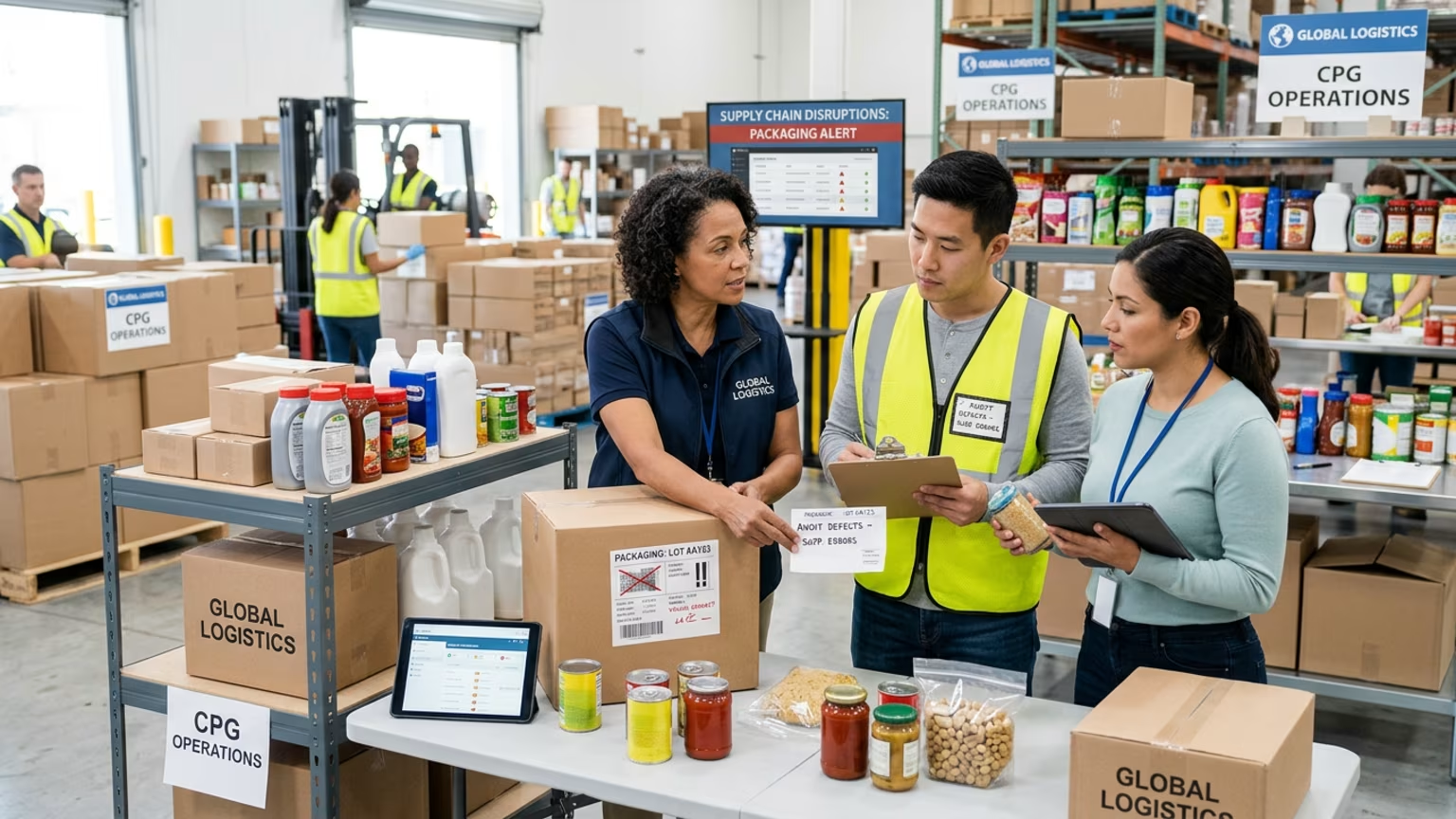
The logistics coordinator stares at her phone in disbelief. Pallets of new product just arrived at the trade show convention center. One glance at the back panel reveals a missing allergen warning. The activation is dead before the doors even open.
Manual data management and upstream packaging errors frequently derail high-stakes CPG field operations before they ever reach the consumer. Fixing these internal workflow vulnerabilities protects your downstream marketing investments and keeps retail relationships intact.
We see this exact tension play out across the industry every quarter. According to recent industry research, undeclared allergens drive nearly half of all FDA food recalls. Labeling and packaging errors cause over sixty percent of those allergen-related events. When a brand scales up for a major Costco push or a national sampling tour, these minor upstream mistakes become massive downstream liabilities.
A single misprinted ingredient list does not just annoy the compliance team. It halts physical product trials and stops experiential activations in their tracks. Studies show that packaging and labeling errors impact thirteen percent of CPG teams. Supplier onboarding failures disrupt another twelve percent. These workflow issues leave marketing leaders holding the bag for expensive events with no product to sample.
Common failures include sub-ingredient blindness where a supplier lists butter without declaring milk. Packaging swaps and cross-contact from unclean equipment plague manual production lines constantly. Outdated labels frequently make it to the floor after sudden formula changes. All of these manual errors create severe risk for brands operating in physical environments.
A recall averages ten million dollars in direct costs. The hidden costs to brand reputation and retailer confidence hit even harder. Fragmented data spread across spreadsheets and emails creates blind spots. This forces field marketing teams to manage damage control instead of driving real consumer engagement. Every operator knows that contingency planning prevents field operations from becoming dumpster fires.
Relying on manual checks to catch formula updates invites failure. Your product label is only as accurate as the information you receive from your suppliers. A missing sub-ingredient creates a cascading operational crisis across your supply chain. Brands need a strategic approach that unifies ingredient data and formulation tracking long before the product ships.
Supplier data mismatches represent a massive blind spot for growing consumer goods companies. Many brands rely on static spreadsheets that become outdated the moment a supplier makes an adjustment. This creates an environment where sub-ingredients easily slip past regulatory reviews. Upgrading your technology stack eliminates these manual vulnerabilities completely.
Moving away from fragmented email chains requires adopting centralized Product Lifecycle Management platforms. These platforms track supplier changes and automatically flag affected labels. Centralizing this data removes the guesswork for your packaging team. It guarantees your field marketing units receive compliant samples for high volume roadshows.
Faster delivery demands and one-hour shipping promises heighten the risks associated with poor item data. Weak packaging and inaccurate inventory leave no buffer for manual fixes during a product launch. Centralized platforms unify your formulation data to slash risks from fragmented manual processes. This kind of systematic control separates amateur campaigns from operator-grade field execution.
Leading packaging professionals now integrate artificial intelligence into their verification processes. Current data indicates eighty percent of packaging companies use AI tools to catch errors before printing. This pre-print verification acts as a critical safety net against human oversight. It bridges the gap between raw supplier data and the final product handed out at consumer events.
Artificial intelligence tools will not replace packaging leaders anytime soon. Industry experts suggest that packaging professionals who integrate artificial intelligence simply outperform those who rely on manual reviews. Regulatory bodies impose heavy fines and legal action for simple mislabeling. Managing compliance systematically becomes a core marketing function.
Marketing leaders must collaborate with operations to lock down final label artwork early. When brands establish clear operational frameworks, they see higher returns and better event measurement before launch.
Transitioning from chaotic spreadsheets to a disciplined workflow requires strict standard operating procedures. Teams must treat compliance as the foundation of brand survival. Missing a step puts both the consumer and the activation at risk. Here is how operator-grade teams execute flawless rollouts in physical environments.
Throwing money at live events without measuring operational efficiency burns through your budget. Brand leaders must track exact performance metrics to prove their operations run smoothly. Many teams struggle to measure success beyond basic foot traffic. You need clear indicators that prove your upstream processes support your downstream activations.
Lead metrics provide early warning signs of systemic vulnerability. Track your data mismatch rate during the supplier onboarding phase. Monitor the average time required to clear new packaging artwork through compliance checks. A high mismatch rate signals impending labeling errors.
Fast onboarding with verified data feeds protects your event timeline and your budget. Lag metrics reveal the true cost of operational failures. Track the incidence rate of product halts or recalls after manufacturing. Measure field activation uptime to confirm your consumer events run without product shortages.
Measuring the direct financial impact of a cancelled pop-up activation opens many eyes. You must account for sunk costs related to staffing, permit fees, and venue rentals. Every hour your field team spends apologizing for missing product drains your operational budget. Tracking these wasted expenses helps justify the cost of implementing better supply chain software.
Finally, calculate the Return on Investment (ROI) against average recall cost benchmarks. When operations run cleanly, you spend your budget on customer acquisition rather than damage control. These operational metrics directly support your overall marketing goals. Without compliant product on the floor, your sales lift data flatlines completely.
Proving that your live events generated revenue requires flawless execution from the factory to the booth. Our team knows that mastering event logistics is why major brands hire for experiential operations.
Even the most creative marketing concepts fall flat if the product fails to show up correctly. In our experience, preventing operational chaos is the first step toward building consumer trust. Once the logistics run perfectly, the creative activation can truly shine. We see this transformation constantly when working with premium beverage and snack companies.
A Brand Manager in the CPG space shared: 'Makai transformed our test-drive activation into an emotional brand journey. They connected technology, lifestyle, and experience seamlessly, and turned casual visitors into loyal fans.' We successfully integrated multiple experience layers to convert casual participants into committed brand advocates. That success relied entirely on having perfect product availability.
When suppliers change formulations at the last minute, it tests the agility of your entire team. We once managed a national activation where a minor packaging swap threatened the whole schedule. Fast communication between the compliance team and our field staff kept the non-compliant product off the floor. We sourced the correct inventory overnight and prevented a major regulatory headache.
The event proceeded smoothly and generated significant qualified leads. Avoiding chaotic mistakes allows your marketing team to focus on meaningful engagement. Consumers notice when an activation feels polished and professional. Retail buyers gain confidence when they see your brand execute flawless live demonstrations.
Measuring ROI in experiential activations becomes simple when your foundational operations work without a hitch. Experiential marketing only converts when the physical product matches the brand promise perfectly.
Manual errors and fragmented data will continue to threaten physical brand activations. Upstream mistakes inevitably become downstream disasters without a solid operational framework. Brands that tighten their packaging compliance protect their budget and their retailer relationships. Operational excellence is not an accident. It is the result of rigorous planning and disciplined execution.
Audit your supplier onboarding process this week to identify your biggest data vulnerabilities. Align your compliance team with your field marketing units to guarantee perfect sample execution. Fixing these small workflow issues prevents expensive recalls and keeps your product launches on schedule. When you are ready to turn live brand experiences into measurable pipeline, we can help.
Our operator-grade discipline guarantees your activations stay on schedule and drive real trial. Book a strategy call today to discuss your next national rollout.

30 Years Experiential & Retail Activation Partner for CPG & Beverage Brands | Multi-Market Demos, Roadshows & Costco/Club Programs That Actually Sell


