Robbie Thain
Founder, CEO

Learn why brands are shifting focus to experiential operations. See how strict event logistics and staffing drive measurable ROI and pipeline generation.

Recent industry job data reveals that massive sports properties recently posted multiple senior roles dedicated entirely to experiential logistics and event operations. This hiring trend proves a hard truth for marketers seeking real world engagement. You cannot scale live interactions without operator grade discipline behind the scenes.
Major sports organizations are shifting their hiring focus toward rigorous logistics management to support physical fan experiences. This tactical pivot demonstrates that successful brand activations demand strict operational frameworks to turn live attention into measurable Return on Investment (ROI).
Imagine a massive race weekend with tens of thousands of fans crowding the entry gates. A premium food brand sets up a massive sampling footprint near the main track. The creative concept looks brilliant on paper and gained full executive approval. The actual execution quickly turns into a sprawling disaster.
Talent travel delays leave the main stage empty for two hours during peak traffic. The local event staff lacks proper credentialing to enter the premium fan zone. Parking logistics fail to account for the massive delivery trucks carrying temperature controlled sampling inventory. The entire activation becomes a massive fire drill that burns cash and damages brand reputation.
Marketing leaders often watch their budgets evaporate into thin air during these live events. They expect a highly controlled environment for product trials. They get a disorganized mess of missing inventory, confused brand ambassadors, and frustrated venue managers instead. The problem rarely stems from the creative vision or the product itself.
The failure almost always points back to weak field execution and poor planning. Many agencies focus heavily on the aesthetic design of the booth. They completely ignore the unglamorous mechanics of moving people, products, and equipment into tight spaces. This oversight creates massive operational gaps that ruin the consumer experience.
Brands must treat event logistics as the absolute foundation of their field marketing strategy. The recent NASCAR job posting for a Manager of Experiential Activations perfectly illustrates this disciplined mindset. The role explicitly demands oversight of credentialing, parking logistics, weekly scheduling, and staffing for seamless fan zone activations. This approach separates amateur activations from true revenue generating machines.
A strong operational framework requires centralizing all field activities under one single point of accountability. You must consolidate talent travel, IT needs, and onsite execution into a strict master plan. This creates a predictable system that removes guesswork from the field completely. Everything runs on a tight timeline with clear chains of command.
Marketers need to build redundancies into their live event plans. A backup generator means nothing if the local staff cannot get past the venue security checkpoint. Securing the proper permits and mapping out exact load in times protects the entire investment. This level of detail keeps the physical activation running smoothly under intense pressure.
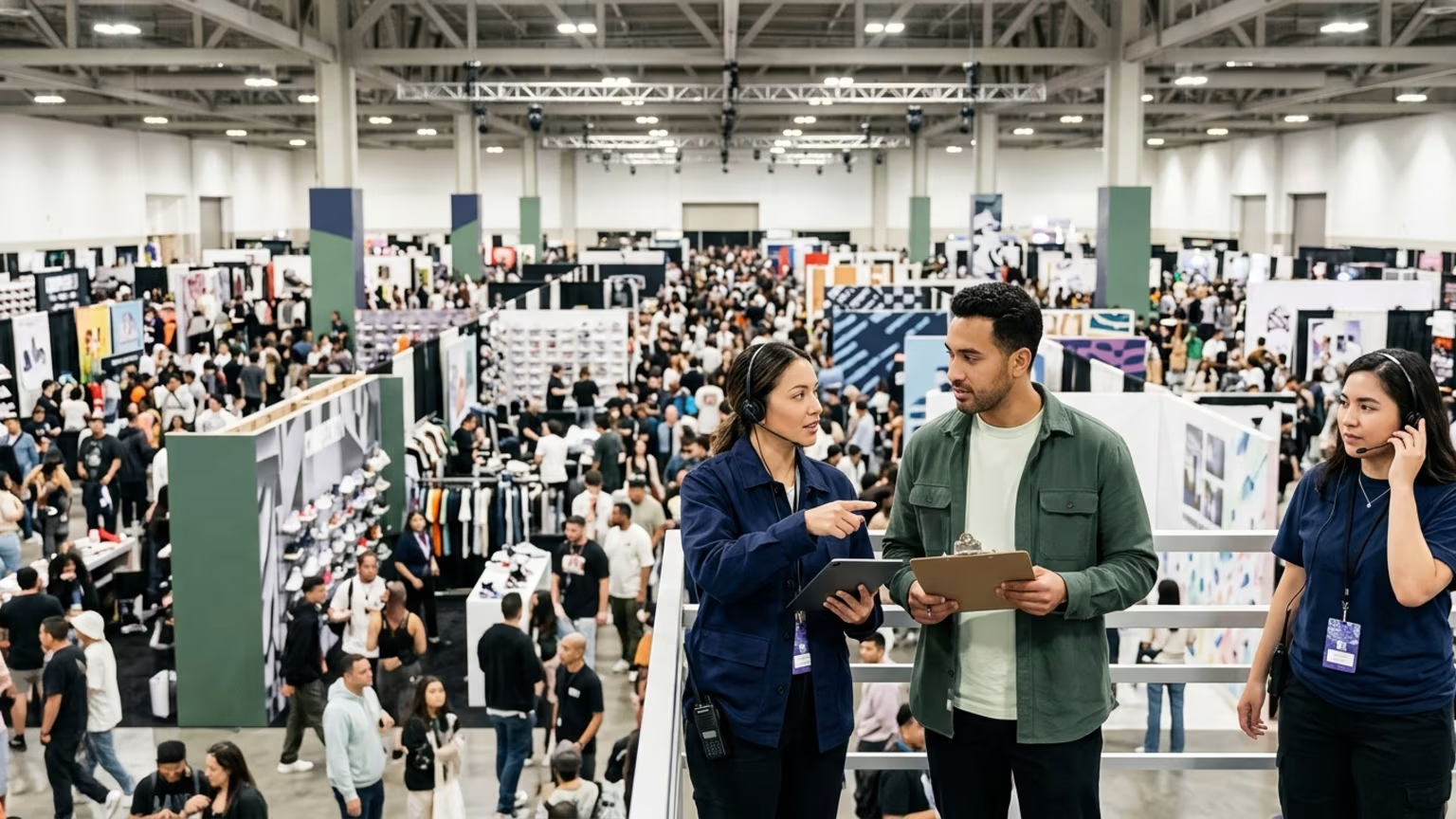
By prioritizing logistics, marketing leaders can focus on genuine consumer connections. The operational friction fades into the background completely. The consumer only sees a flawless brand experience that invites them to try the product. This discipline turns a chaotic trade show floor into a controlled environment for generating actual pipeline.
Teams that implement these strict operational pillars see a massive reduction in wasted budget. They no longer pay for idle staff or miss prime sampling hours. You can read more about planning successful live activations to see how logistics drive attendance.
You need a highly repeatable process to bring this operational framework to life. Field marketing directors should follow a strict protocol for every single activation. This structured approach guarantees consistency across multiple markets and varying event sizes. You must document every step of the journey carefully.
Executing these steps requires serious upfront work from the entire marketing team. You cannot wait until the week of the event to finalize parking passes or test the WiFi connection. The payoff is a physical brand presence that runs like a well oiled machine. This preparation builds immense confidence within the brand marketing department.
You cannot prove the value of a flawless operation without collecting the right data. Clear tracking separates serious experiential investments from fluffy brand theater. Marketing teams must establish strict lead and lag metrics to report on actual pipeline generation. This data driven approach earns trust from the executive board.
The lead metrics provide real time health checks during the live event. You should track the number of qualified conversations, samples distributed, and total digital data captures. You must monitor the percentage of staff adhering to the assigned shift schedule. These numbers immediately show if your operational logistics are working.
If the lead metrics drop, the onsite operations manager can make rapid adjustments. They might reposition the brand ambassadors to a higher traffic area. They could troubleshoot a broken tablet that slows down the email collection process. Real time data gives you the power to save an activation before it fails completely.
The lag metrics prove the true financial outcome weeks or months later. Teams need to measure total retail sales lift in the surrounding market territory. You should track the conversion rate of captured event leads into actual paying customers. These are the sales lift metrics that justify your field budget.
Combining these data points creates a complete picture of event success. You can see exactly how many samples led to immediate retail purchases. This reporting turns an isolated event into a core component of your broader marketing strategy. It proves that live activations drive serious commercial value.
Scaling these operational standards across multiple markets presents a massive challenge for growing CPG brands. We run experiential and engagement programs coast to coast with local crews, smart logistics, and permit expertise that let us launch fast and maintain quality consistency in every region, from major metros to smaller markets. Our nationwide infrastructure enables us to activate brands wherever their audiences are located.
This local expertise prevents the common pitfalls of massive national sampling tours. We handle the complex permit processes and parking logistics that derail unprepared teams. A brand activating in Miami requires a completely different logistical approach than a team setting up in Seattle. Our teams understand the nuances of regional event regulations.
A physical activation must match the original creative vision every single time. You cannot deliver a premium experience in one city and a sloppy presentation in the next. Centralized logistics planning guarantees that the booth hardware arrives on time and undamaged. We manage the unglamorous details so the brand can shine.
When you align creative strategy with flawless execution, the results multiply. The brand ambassadors feel supported and confident in their roles. Venue managers appreciate the professionalism and often grant better placement next time. The entire ecosystem benefits from a disciplined approach to experiential marketing.
The decision by major racing organizations to hire dedicated experiential logistics managers is a massive industry signal. It proves that the future of live marketing belongs to the operators. The most creative booth design will always fail without a rigorous staffing and parking plan. Live events demand precision.
Brands that master the unglamorous details of onsite execution will win the real world attention war. They will turn brief consumer interactions into lasting brand loyalty and measurable retail sales. You must build a foundation of strong logistics before you try to scale your field marketing efforts.
A successful brand activation requires more than just good intentions and free samples. It requires the tactical discipline of a military operation. If you want to stop running fire drills and start building scalable brand experiences, we should talk. Book a strategy call with our team today.

30 Years Experiential & Retail Activation Partner for CPG & Beverage Brands | Multi-Market Demos, Roadshows & Costco/Club Programs That Actually Sell