Robbie Thain
Founder, CEO

Learn how the WNBA scales its experiential marketing with coordinated street teams, localized fan events, and standardized playbooks to drive measurable impact.

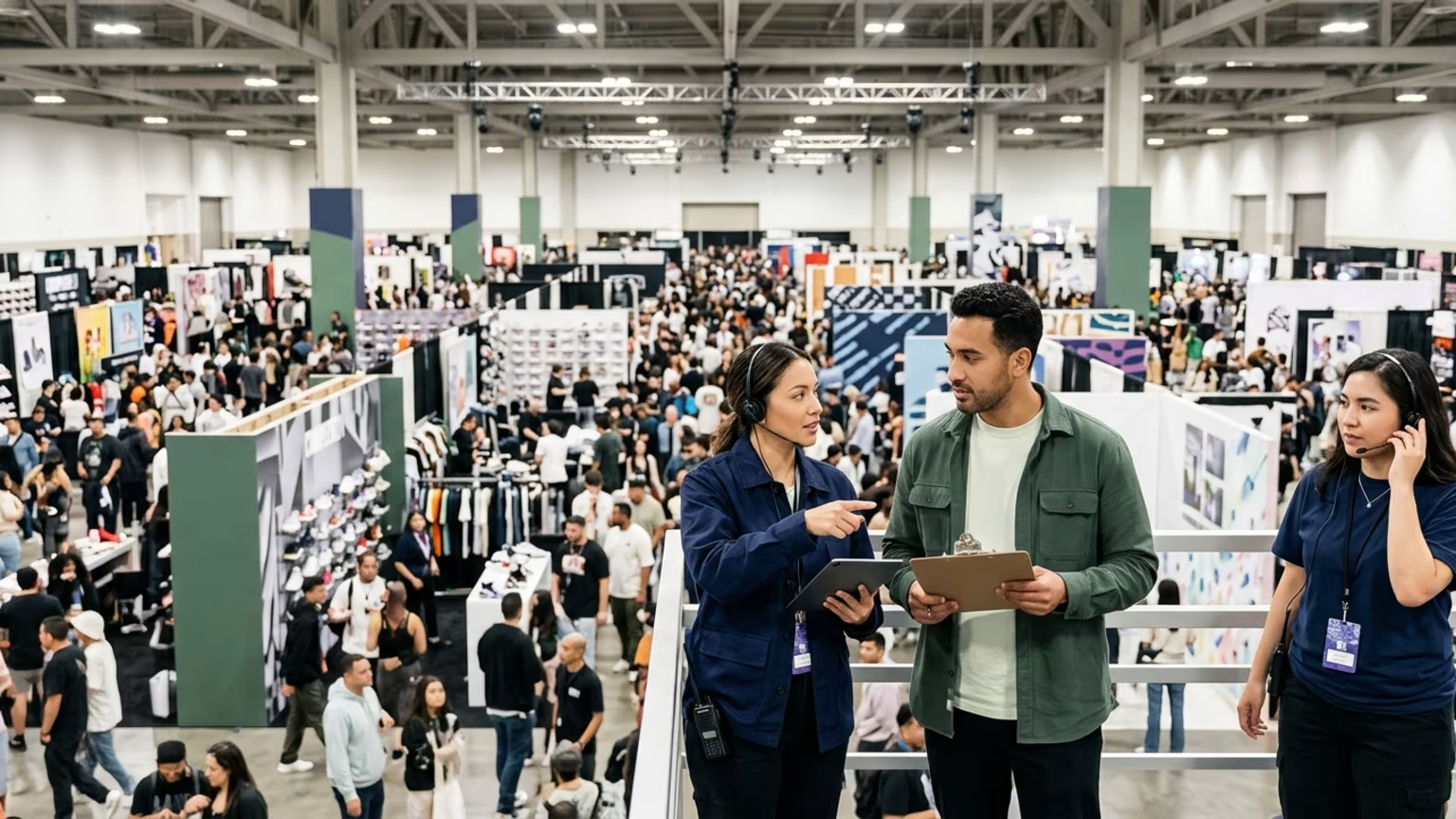
Pallets of promotional gear sit untouched on a downtown sidewalk. A local street team waits nearby for a delayed event permit. Across town another crew scrambles to assemble a branded pop-up before the arena doors open. The Women's National Basketball Association (WNBA) recently faced this exact logistical challenge as they planned their largest promotional season in history.
The league is scaling its biggest season yet by treating physical growth as an experiential marketing challenge that requires coordinated street teams and localized fan events. Field marketing leaders can learn from this blueprint to deploy tighter regional logistics and standardized playbooks that turn surging interest into measurable real-world engagement.
Managing a regional event footprint usually deteriorates into a decentralized mess. Brand directors issue high level directives from corporate headquarters. Local managers end up wrestling with unique city ordinances. A permit gets denied in Chicago, a staffing agency sends untrained workers in Atlanta, and a rainstorm washes out a custom build in Seattle.
When brands attempt to scale live experiences without a rigid framework, they produce fragmented events that yield fuzzy results. Operational complexity paralyzes field teams out on the ground. They spend their energy fighting logistical fires instead of connecting with consumers. The resulting activations fail to deliver meaningful data capture or retail impact.
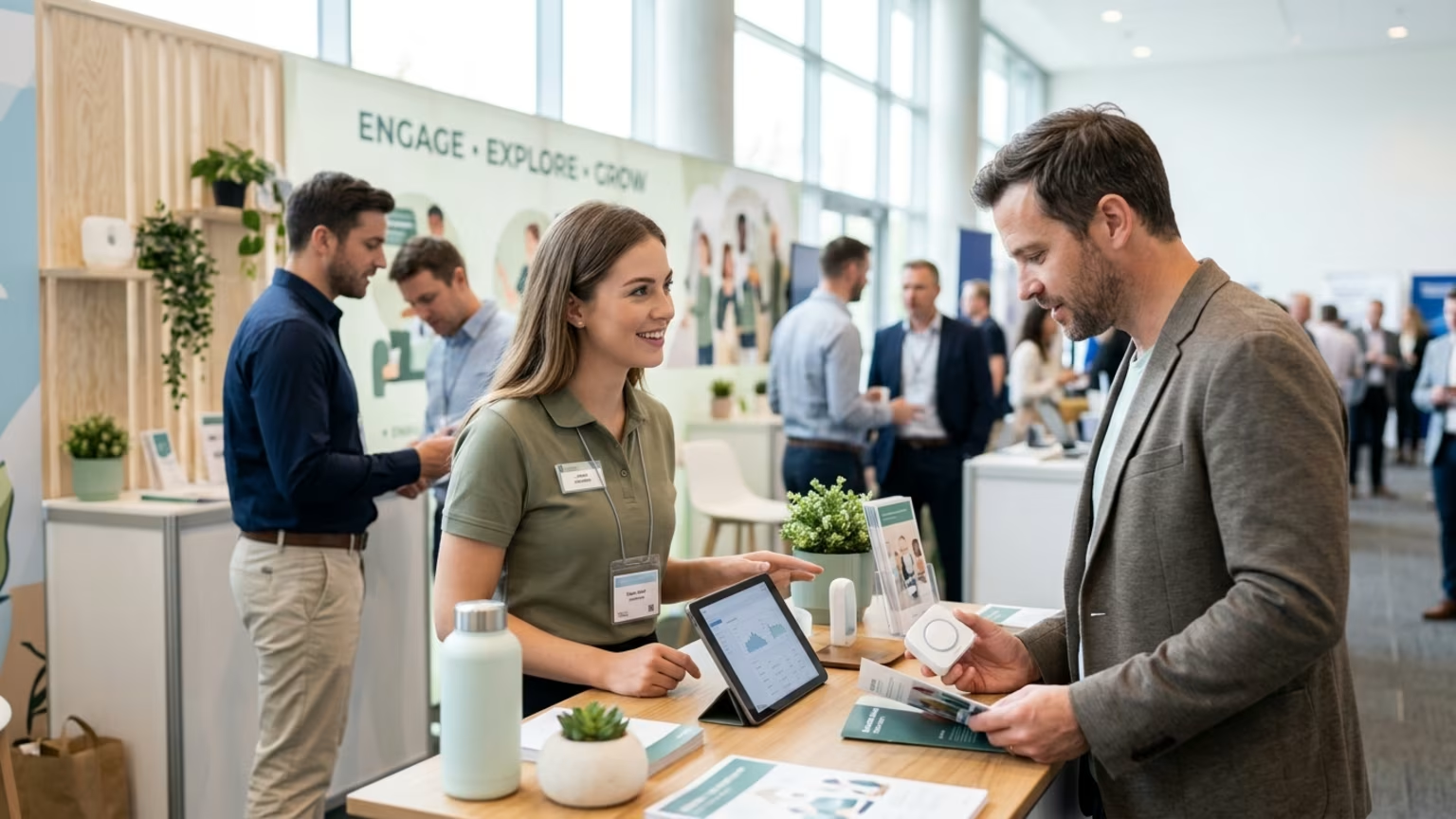
We create experiential marketing programs built to connect emotion with action. Our process blends creativity, strategy, and data to ensure every brand interaction drives measurable results. We craft experiences that engage all five senses, helping people not just see brands, but feel them, turning moments into meaningful business outcomes. The WNBA applied a similar discipline for its thirtieth season campaign.
Sports Business Journal describes the WNBA campaign as a season long creative effort that ties the league origins to its present momentum. This framework relies on milestone driven initiatives and fan centric merchandise programs. The program features Court Origins Nights with Nike Court Origins Edition uniforms and Wilson game balls carrying retro branding. Teams use these predictable elements to standardize their event formats across multiple cities.
The WNBA Legacy Trail merchandise program provides another anchor for local teams. This initiative features staggered commemorative product drops released on the thirtieth of each month. Fans get access to partner brands like La Crema, Nike, and Mitchell & Ness through a structured rollout. Instead of inventing new tactics for every game, local operators execute repeatable templates.
Scaling regional events requires transforming temporary crews into efficient operators. Successful teams follow a strict sequence to standardize their presence across different markets. Establishing a central command allows teams to coordinate complex logistics seamlessly.
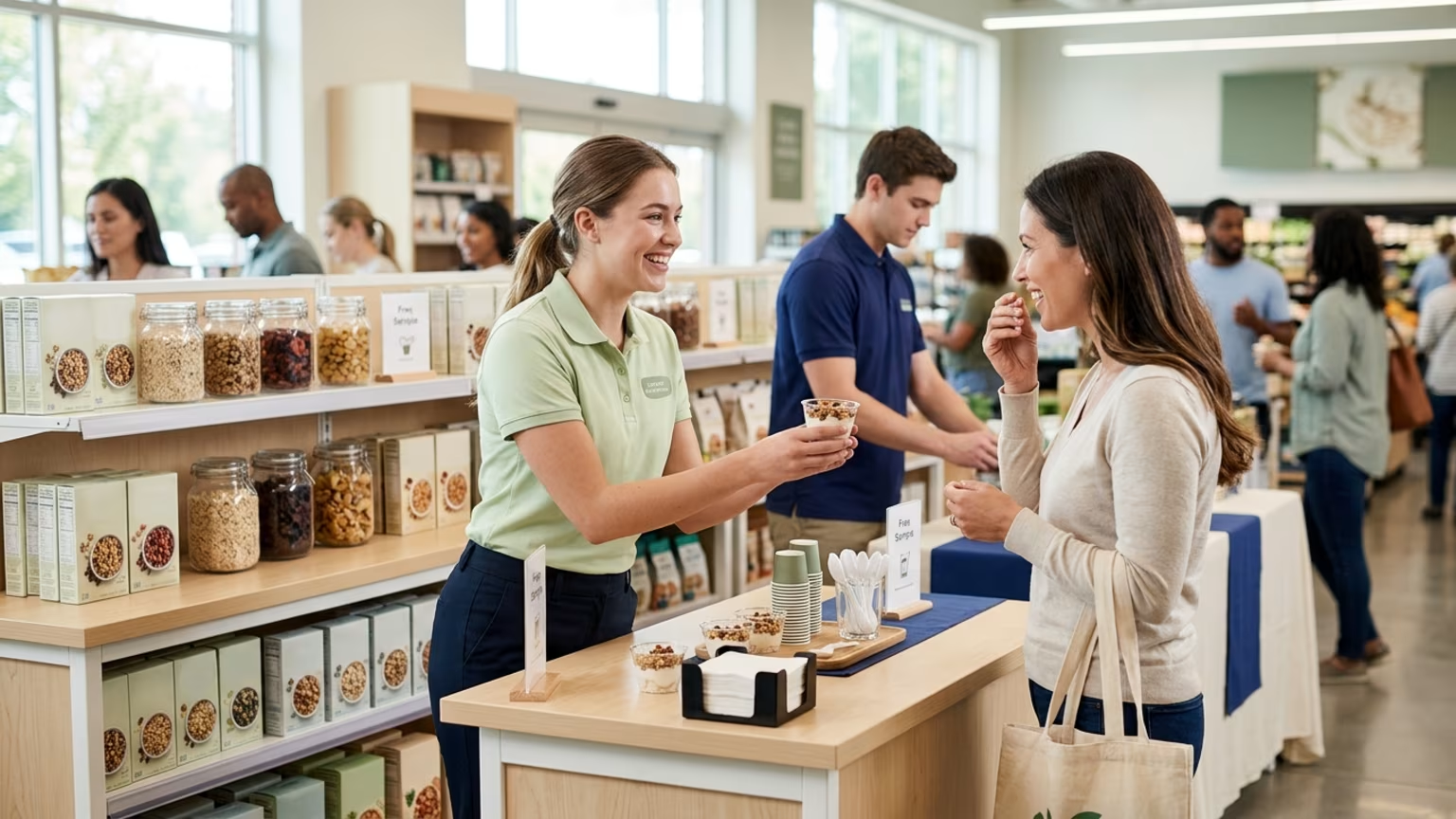
Measuring success in the field requires separating passive crowd counting from active behavioral data. When you manage a live footprint, you must track both lead and lag indicators. Lead metrics measure the immediate on site friction and direct consumer engagement. These include the total number of product samples distributed, the volume of digital QR code scans, and the count of direct conversations held by brand ambassadors.
Lag metrics reveal the downstream financial value of those initial interactions. Teams look at subsequent retail sales lift in the targeted zip codes and total audience retention over the season. A Q2 2026 marketing roundup from agency lotus823 argues that brands are increasingly investing in immersive activations, pop-ups, and live events to create stronger consumer connections beyond the transaction. Developing clear frameworks for measuring experiential marketing Return on Investment without guesswork relies heavily on tracking this kind of localized momentum.
The results of sustained integration are highly visible in broadcasting data. According to Nielsen data cited by the Video Advertising Bureau, the 2025 WNBA regular season averaged 1.3 million viewers on ESPN national broadcasts. This marks a 6 percent increase from the prior year. Total viewing time jumped 16 percent to reach 220.12 million hours.
The property saw massive digital expansion alongside its physical activation strategy. The Video Advertising Bureau reports the WNBA share of sports streamers increased from 9 percent to 14 percent. This 56 percent relative gain was the largest proportional jump among the leagues measured in that study.
Coordinated multi-market experiential programs introduce significant operational vulnerabilities. Delays in acquiring local permits can completely derail a scheduled weekend activation. Staffing inconsistencies plague regional campaigns when temporary crews lack proper brand training. You can fix this by deploying repeatable team frameworks for street events to build consistency. Unpredictable city infrastructure and crowd behavior add layers of complexity to outdoor event management.
The WNBA strategy emphasizes tightening these logistical variables across every region. A unified operational playbook prevents isolated incidents from ruining a national tour schedule. Centralized reporting systems give brand directors immediate visibility into field performance. Teams can deploy resources dynamically based on real time attendance figures.
A Brand Innovators event summary on WNBA All-Star Week describes a shift beyond logo placement toward purposeful activations that embed brands in the communities driving modern fandom. The partnership between children apparel brand Carter's and the Atlanta Dream illustrates this beautifully. Martechedge reports that Carter's launched a multi-season partnership with the team through 2027 that focuses on family centered experiences. This program extends far beyond basic arena signage.
The collaboration features in-arena entertainment like the Carter's Simba Cam and Baby Crawl Races. The brand hosts community events at retail stores to bridge the gap between game day and the shopping aisle. They even produce a Home Grown content series highlighting the local roots of the players. This layered approach culminates in a Carter's Family Takeover game with co-branded youth activities.
Media networks are adjusting their strategies to support these community driven narratives. Variety reports that ESPN will introduce Women's Sports Sundays for nine weeks. This programming block replaces Sunday Night Baseball with WNBA or NWSL games and adds a tailored studio show across ESPN platforms. Sponsors gain entirely new story formats to integrate with their localized event activations.
Forbes highlights a similar trend in athlete sponsorships, noting that modern brand partnerships are defined by authentic relationships, influence on product development, and long term value via shared ownership. When consumer brands stop renting billboard space and start building localized interactions, they create permanent customer pipelines. To build this level of operational discipline into your next national campaign, it is time to act. Book a strategy call with our team today.

30 Years Experiential & Retail Activation Partner for CPG & Beverage Brands | Multi-Market Demos, Roadshows & Costco/Club Programs That Actually Sell