Robbie Thain
Founder, CEO

Experiential agencies are building centralized permit and compliance teams to de-risk street activations, secure ROI, and stop last-minute event closures.
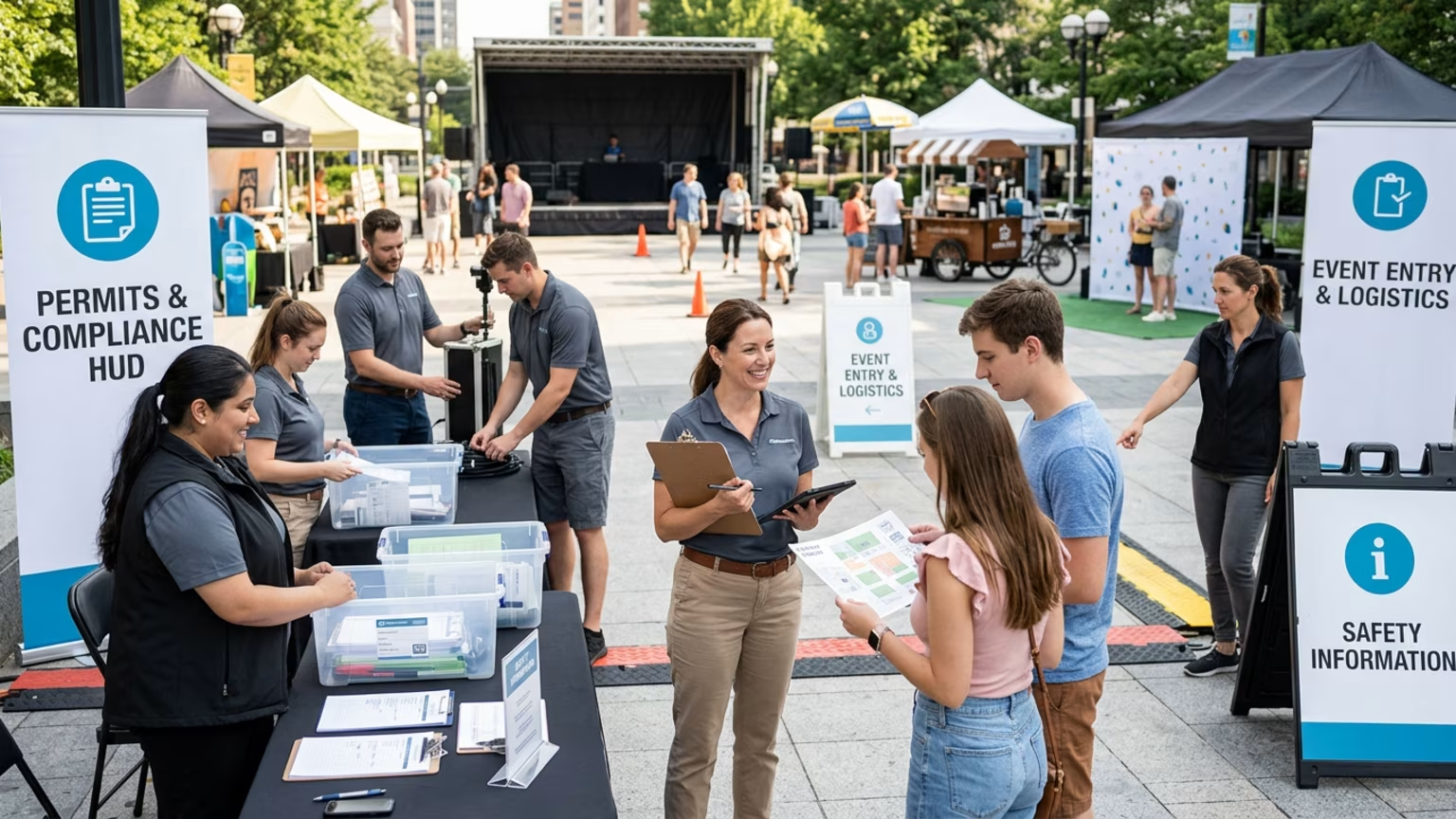
Managing street teams and pop-up tours across multiple city jurisdictions requires strict operational discipline. Leading marketing agencies are building centralized compliance teams to eliminate legal risks and prevent last-minute event cancellations.
A fully wrapped box truck idles right outside a crowded university quad on launch day. The local campus coordinator approaches the field manager to ask for an exact fire marshal clearance document. No one on the brand side pulled that precise paperwork for this exact town. The field manager starts making frantic phone calls.
Brand ambassadors sit idle on folding chairs near the activation footprint. Thousands of dollars in experiential marketing spend evaporate as the team misses peak foot traffic. This scenario happens constantly when brands treat local municipal codes as an afterthought. Disconnected planning leaves field operators exposed to shifting local enforcement rules.
A lack of standardized compliance tracking turns what should be a smooth brand activation into a costly operational failure. Marketing directors want measurable pipeline from these live events. They get expensive apologies from stranded field staff instead. Relying on isolated regional teams to parse complex city ordinances invites disaster at the worst possible moment.
A single missing health permit can shut down a nationwide product sampling initiative in minutes. Chaos on the trade show floor or the city street directly impacts your bottom line. Consumer trust drops when a hyped activation suddenly shuts down halfway through the morning. Retail partners lose confidence when promised in-store lift fails to materialize from local events.
Operational friction destroys the exact Return on Investment that field marketing is supposed to deliver. Local enforcement officers do not care about your marketing timeline. They strictly care about municipal code compliance and public safety regulations. Attempting to negotiate with a fire marshal on the day of your event is a losing strategy.
The brand always loses the argument when the proper paperwork is missing. The solution relies on treating permitting and compliance as a central pillar of campaign planning. Brands must move away from relying on local field managers to handle municipal paperwork. A centralized task force takes full ownership of researching local laws and securing every required document.
This team maps out exact requirements for street teams and campus tours across dozens of U.S. cities at once. They build a master database of health department codes, noise ordinances, and right-of-way permissions. We build festival zones, premieres, and pop-ups that turn viewers into fans and fans into advocates. We design moments people want to share, using music tie-ins, screenings, and live stunts to bring stories to life.
Our crews manage execution and track reach and response metrics in the background. This requires a dedicated operations hub to clear the path for creative concepts. Centralized digital permit trackers allow teams to forecast clearance timelines accurately. This systematic framework stops compliance surprises before the tour trucks ever leave the warehouse.
A structured approach is the only way to manage multi-market event logistics city by city with total confidence. Agencies formalizing these dedicated task forces report far fewer logistical bottlenecks. A compliance hub acts as the operational spine for your entire field campaign. It removes the administrative burden from creative directors and frontline brand ambassadors.
Your field teams can focus entirely on driving product trials and collecting qualified consumer leads. Structuring your operations this way shifts the focus from avoiding penalties to maximizing live consumer engagement. Centralizing these efforts provides a clear line of sight across all active markets simultaneously. Directors can view a dashboard to see exactly which city is cleared for a weekend launch.
Legal risks drop significantly when specialists handle the negotiations with local municipal authorities. This targeted approach completely de-risks the activation footprint for major consumer brands. The traditional model relied on a chaotic web of email chains and verbal approvals. Field managers would often guess which permits applied to their specific activation footprint.
This decentralized approach created massive blind spots across national street campaigns. Centralized teams replace this chaos with strict accountability and transparent reporting. Municipal regulations change constantly based on new city council votes or shifting neighborhood priorities. A centralized compliance team tracks these minute legislative updates across the entire country.
They adapt the overall campaign strategy long before the field teams hit the ground. This ongoing vigilance prevents your brand from getting caught by newly enacted street vending restrictions.
Deploying a compliance task force demands a rigid operating procedure from day one. You must standardize the workflow across every market on your tour schedule. Follow this exact sequence to build a resilient event foundation.
Brand leaders need hard data to justify the overhead of a dedicated compliance team. You must track specific lead and lag metrics to prove this operational model works. Lead metrics show you the health of your planning phase well before launch. Tracking these numbers keeps the entire experiential agency accountable to the timeline.
The most pressing lead metric is the average days from permit application to approval. You should track the percentage of required documents secured thirty days prior to launch. Another strong lead indicator is the number of proactive conversations held with local municipal officials per market. Rising lead metrics indicate a highly predictable and secure field marketing schedule.
Lag metrics prove the financial value of the activation after the trucks pack up. The primary lag metric is activation uptime percentage. This measures the exact hours your team spent engaging consumers versus sitting idle. You must track total compliance fines avoided compared to previous decentralized campaigns.
Industry analysts report that aligning these operational data points with revenue outcomes maximizes marketing impact. Measuring the exact cost per acquisition during successful events proves the value of a secured location. Linking operational discipline directly to sales lift provides a clear picture of campaign success. A high activation uptime directly correlates to massive improvements in your Return on Investment.
Track the volume of qualified CRM entries generated per hour of active permit time. This metric connects the boring regulatory paperwork directly to the sales pipeline. Evaluate the foot traffic conversion rate at your fully compliant campus sampling sites. Proving that a secured location drives measurable retail velocity keeps marketing budgets intact for future quarters.
You should track the specific time saved by your centralized compliance operations. Calculate the hours your field managers used to spend calling local municipal offices. Multiplying those saved hours by their hourly rate reveals immediate cost savings. Redirecting that labor toward actual consumer engagement represents a massive gain for your overall campaign efficiency.
Another valuable lag metric is the retention rate of your best field marketing managers. Frontline operators experience massive burnout when forced to handle chaotic municipal disputes on site. Providing them with rock-solid permits dramatically improves their daily working conditions. High retention rates directly lower your ongoing recruitment and training costs for future roadshows.
A premium snack brand recently planned a massive back-to-school sampling tour across twenty different college towns. Previous tours suffered multiple delays when local campus police shut down street teams for lacking proper sidewalk clearances. The brand decided to deploy a centralized compliance task force four months before the new launch date. This dedicated team mapped out every distinct campus regulation and municipal street code.
The compliance managers secured all health department sign-offs for the sample distribution. They provided the local field marketing managers with digital and physical binders containing every necessary document. This prep work included detailed schematics showing exactly where the sampling tents could sit legally. The brand secured backup locations near each campus in case university policies shifted unannounced.
This created a completely frictionless multi-city campaign. The street teams maintained a perfect activation uptime record across all twenty markets. The brand captured thousands of qualified consumer leads and drove immediate retail velocity at nearby grocery locations. Not a single event hour was lost to municipal interference.
This level of preparation completely eliminated the anxiety that usually haunts national tour launches. The marketing directors could focus entirely on tracking live social media engagement and product feedback. The field teams operated with total confidence knowing their presence was fully authorized by city officials. Systematic operational planning proved to be the ultimate growth lever for the consumer product launch.
The centralized team managed complex health department requirements for food sampling across different state lines. They built custom refrigeration protocols that satisfied strict local codes in every single market. This proactive health planning prevented any regulatory delays during the final product distribution phase. The brand launched the product flawlessly across twenty distinct regulatory environments.
Retail partners noticed the flawless execution and requested additional store visits for future product rollouts. The grocers felt entirely confident that the brand could handle complex logistical requirements without causing headaches. This operational trust opened new distribution channels for the snack company. A boring compliance strategy ultimately became their strongest competitive advantage in the retail market.
Real-world brand experiences demand flawless execution behind the scenes. Centralizing your permit operations removes the guesswork and protects your marketing budget. Stop leaving your brand reputation to the mercy of unpredictable local enforcement policies. Book a strategy call with our team to start building a resilient field marketing plan today.

30 Years Experiential & Retail Activation Partner for CPG & Beverage Brands | Multi-Market Demos, Roadshows & Costco/Club Programs That Actually Sell