Robbie Thain
Founder, CEO

Learn how product sampling campaigns on college campuses turn Gen Z trials into measurable retail sales. Discover the exact operational playbook to track ROI.
According to Newbridge Marketing research, student activations outperform digital ads with Gen Z every single time. This data points to a massive opportunity for brands wanting real consumer engagement. Real world programs build deeper brand trust than screen based impressions alone.
Campus product sampling campaigns paired with local retail discounts turn student product trials into measurable pipeline. Brand leaders will learn the exact operational framework to convert high traffic campus events into verified retail sales lift.
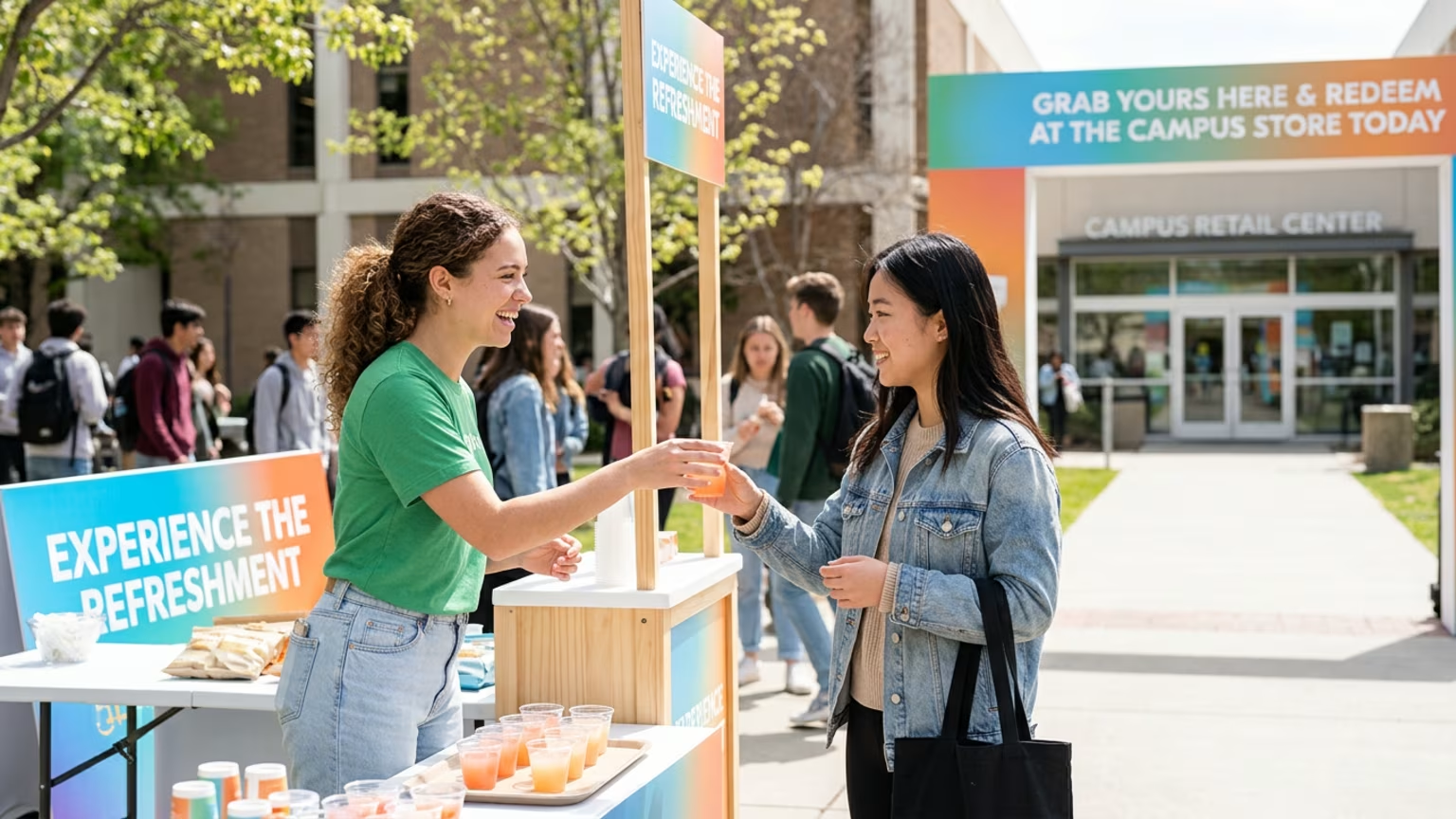
College campuses during welcome week are loud and distracted environments. Brands set up colorful tents near the student union. They hand out free snacks or energy drinks to anyone who walks by. The immediate scene feels like a massive win with high energy and empty sample boxes.
Field teams pack up their gear feeling victorious after moving thousands of units. Then Monday arrives. The marketing team sits in a board room to review the weekend effort. The CMO asks for the Return on Investment from the activation.
The room goes quiet. The team can report on the number of samples distributed. They might even have a few photos of smiling students holding the product. They cannot prove a single retail sale resulted from the costly weekend event.
Brands often ship pallets of product to college towns without a proper conversion strategy. They hire temporary staff who have zero connection to the brand values. The staff sets up a folding table in the hot sun. They passively hand out items without ever speaking to the students.
This lazy execution creates a terrible brand experience. It wastes perfectly good inventory and generates zero useful consumer data. The frustration multiplies when retail buyers ask for performance data. A major grocery chain wants to know if the local campus activation moved any product off their shelves.
When the marketing team cannot answer that question confidently the buyer loses faith in the brand. This lack of data makes future shelf space negotiations incredibly difficult. Handing out free product is easy. Tracking that product to a final purchase requires a deliberate system. Without a clear bridge to retail, brands throw away valuable marketing budgets on fleeting moments.
Giving away free product to college students is only step one. Turning those free samples into paid retail transactions requires a deliberate operational bridge. Our team calls this the trial to purchase loop. You capture attention during high traffic windows and immediately connect that interaction to a nearby point of sale.
In our experience the best campaigns treat the campus as an extension of the retail aisle. You are not just building brand awareness. You are actively moving a consumer down a purchasing funnel. We specialize in creating retail demos, product sampling programs, and roadshows that bring brands face to face with their audiences.
Each program is designed to drive trial, build consumer relationships, and accelerate retail velocity across multiple locations. You must connect your on-campus activation directly to a nearby purchase point. This connection separates campaigns that drive real sales lift from those that only generate impressions.
The strategic approach relies on timing and proximity. According to Newbridge Marketing, you must target peak periods like move in day and welcome week. These windows provide massive foot traffic in venues like dining halls and student unions. You pair this high volume sampling with immediate digital conversion tools.
Brands use QR codes linked to exclusive nearby retail discounts. This tactic shortens the path from trial to purchase. It turns a casual campus handoff into a trackable retail redemption. The approach lowers buyer hesitation and drives repeat purchases for new product launches.
The operational bridge requires planning months before the students arrive. Your team must coordinate with local store managers to stock adequate inventory. It is a massive failure to send hundreds of students to a store that sold out of your product yesterday. We manage end to end Costco roadshows that bring brands to shoppers through live demos, real conversations, and measurable sales impact.
That same logistical rigor applies directly to university programs. This strategy requires precise timing and placement to avoid low receptivity. Off peak timing yields very poor engagement. The method connects physical samples to in store purchase points for stronger customer experiences. For teams focused on converting live event growth into retail sales, this physical to digital bridge is mandatory.
Operating a profitable campus activation requires extreme discipline. You cannot just show up with a truck full of product and hope for the best. You need a structured plan that connects trial to final purchase. Successful execution removes all friction from the consumer experience.
The student should seamlessly transition from tasting the product to downloading the coupon. Every step must feel intuitive and instantly rewarding. Here is the step by step operational guide.
Deciding the exact format for your activation takes careful planning. You must choose between retail demos, roadshows, and tours based on your budget and goals. Sampling is low risk and highly scalable. Immersive pop up events demand more resources and carry a higher execution complexity.
Proving the value of an activation requires tracking the right numbers. Vanity metrics like foot traffic and total samples distributed are no longer enough. You need concrete data that demonstrates financial return. Measuring success means moving from foot traffic to measurable sales lift.
Lead metrics tell you if the execution is working in real time. First track the total number of verified samples distributed per hour. Next monitor the QR code scan rates on site. A low scan rate means your ambassadors are not communicating the discount clearly. You can fix this issue immediately on the event floor.
Capturing consumer feedback during the sample handoff is another critical lead metric. Your ambassadors should ask students for a one sentence review of the flavor. Documenting this real time feedback gives your product team immediate market insights. You can use these insights to tweak future messaging or alter the retail display strategy.
Lag metrics prove the financial success of the campaign weeks later. Retail redemption rates are the most critical number to review. You must track the overall in store sales lift at the specific nearby retailers. Compare these sales figures to stores in regions without an active campus campaign.
Lag metrics also include tracking repeat purchases over a three month period. A single scan and redemption is a great start. True brand success happens when that student buys the product again at full price. Use your digital tracking tools to see if the discounted trial created a loyal recurring customer.
Cost per acquisition is the final metric to calculate. Divide the total activation cost by the number of tracked retail purchases. This number proves the exact financial efficiency of your experiential program. Event based sampling yields high Return on Investment by lowering buyer hesitation. Clear tracking makes it easy to justify future budgets to your executive team.
A national consumer packaged goods brand recently launched a new sparkling water. They needed to drive trial among Gen Z consumers quickly. Digital ads were failing to create real product adoption in their target markets. They decided to pivot toward a physical sampling strategy on large college campuses.
The brand executed a mobile marketing tour during the busy back to school season. Airfresh Marketing notes campus tours deliver scalable trial across high traffic venues. The brand set up sleek sampling stations near student unions at ten major universities. They handed out cold cans of the new beverage to students between classes.
The brand trained their ambassadors to explain the health benefits of the sparkling water. They did not just hand out cans in silence. They engaged each student in a ten second conversation about wellness and hydration. This human connection made the digital coupon scan feel like a natural next step. The students felt valued and understood by the brand representatives.
Each can featured a custom QR code sticker. Scanning the code gave the student a digital coupon for a nearby grocery store. This direct link between the physical sample and the retail store created massive results. Coordinating physical channels to drive trial proved incredibly effective for this beverage launch.
The campaign generated thousands of verified physical interactions. More importantly the brand saw a staggering forty percent redemption rate on the digital coupons. This conversion rate dwarfed their previous digital ad campaigns. The entire program established a blueprint for all future product rollouts.
The local grocery stores saw a massive spike in sales for the new product. The marketing team could track exactly how many samples turned into retail purchases. They proved a clear Return on Investment to their leadership board. If you want to build this kind of predictable sales pipeline then you should book a strategy call with our team.
A single striking statistic opened this discussion. Student activations outperform digital ads with Gen Z every single time. That reality should change how every brand approaches their college marketing budget. Digital ads still have a place but they cannot replace the power of a physical trial.
Those empty sample boxes from welcome week no longer represent blind hope. When executed with operational discipline they represent trackable paths to retail growth. By bridging the gap between physical trial and digital redemption brands win the campus and the shelf. The chaotic college quad simply becomes the starting line for measurable sales success.

30 Years Experiential & Retail Activation Partner for CPG & Beverage Brands | Multi-Market Demos, Roadshows & Costco/Club Programs That Actually Sell