Robbie Thain
Founder, CEO

Scale your experiential activations with operator-grade discipline. Learn how to standardize field team logistics, staffing, and measurement for national events.
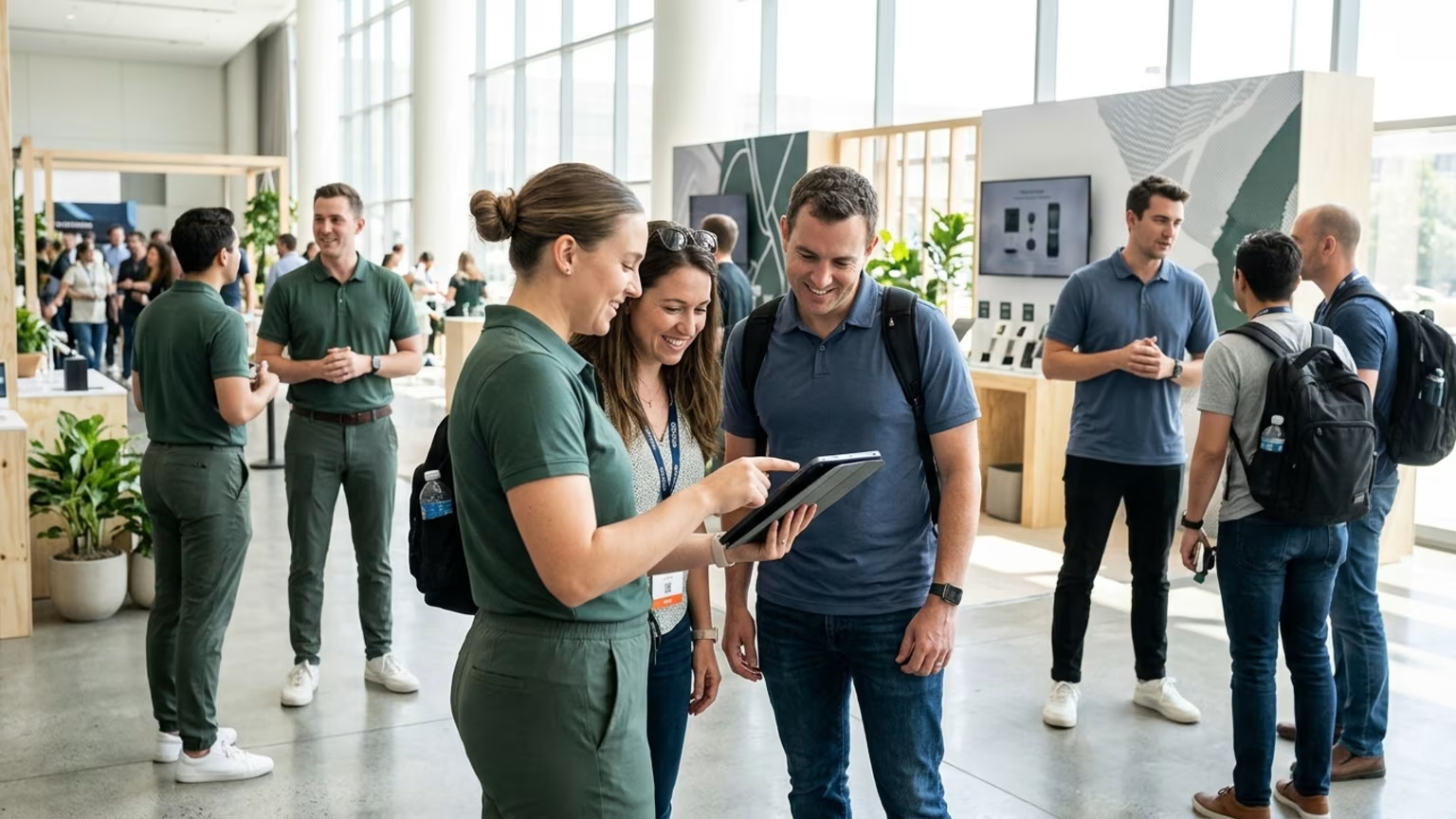
A regional marketing manager stares at a clipboard covered in illegible email addresses. Two hundred people just walked past the brand booth. The sampling station is completely out of product, and the lead ambassador is missing. Here are the harsh truths of field execution:
We have been connecting brands with people through live experiences, retail programs, and national activations since 1995. Over three decades, we have built a track record of creating meaningful brand moments across the country. That history taught us that successful events are won weeks before the first tent goes up. The unglamorous prep work dictates the outcome of any field program.
You must secure local permitting well in advance to prevent city officials from shutting down your footprint. Street activations often require municipal sign offs, health department clearances, and specific venue permissions. Skipping these steps invites massive fines and immediate operational pauses. Centralized logistics teams must map out these requirements before deploying a single asset.
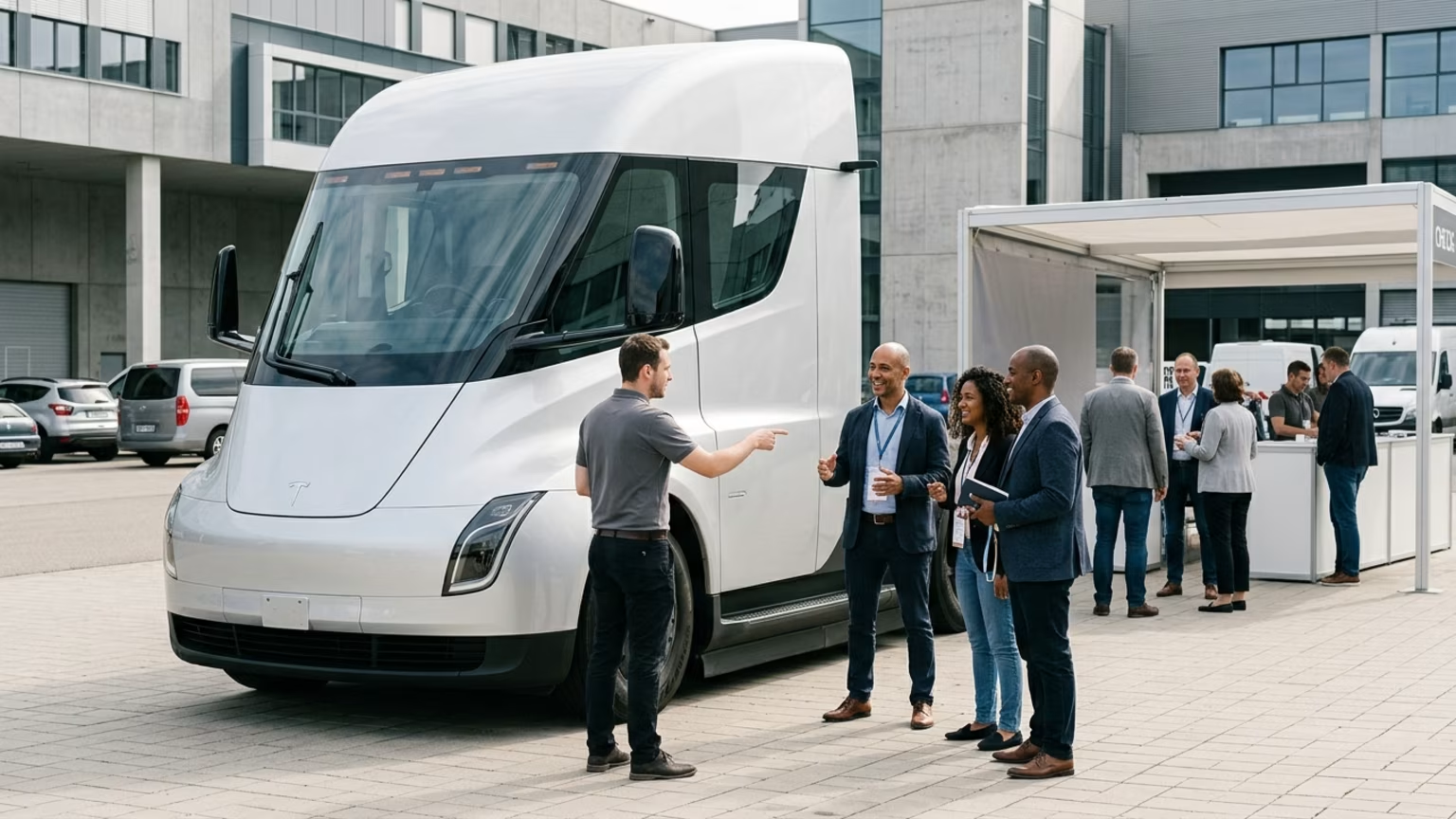
Vehicle staging and supply chain routing also demand strict operator oversight. An experiential footprint cannot function if the sampling vehicle is stuck in a loading zone or if the product arrives warm. Operations teams must coordinate delivery times, storage temperatures, and staging areas with total precision. This unglamorous work ensures that field staff can focus entirely on the consumer.
Finally, you need to configure your routing setup before training the team. Leads captured on site must flow directly into a secure system for rapid follow up. Paper clipboards and fragmented spreadsheets lead to lost data and severe privacy violations. A robust centralized or local operating model ensures that field data immediately becomes actionable business intelligence.
A scalable field model requires a deliberate framework for daily execution. You must organize your system around decision rights and operational readiness. Follow these exact steps to maintain control across multiple markets.
The most common failure point is treating a live event like a billboard rather than a conversion engine. Amateurs focus entirely on aesthetics while ignoring customer flow and data capture. They underestimate how quickly a poorly managed crowd will abandon a crowded sampling station. Product sampling guidance highlights customer flow and short waiting times as top priorities. Clear signage and efficient distribution mechanics keep crowds moving smoothly. Operators must also prioritize stock management and coordinated staff to prevent bottlenecks.
Another fatal error is deploying poor data collection tools. Field teams often lose highly qualified leads because they rely on fragmented notes or manual entry. When a team fails to configure their digital forms properly, the activation generates zero measurable pipeline. This disconnect prevents marketing leaders from proving the actual business impact of their budget.
Brands also fail when they treat all brand ambassadors as interchangeable labor. Guidance for activation staffing recommends matching training and team design to assignment complexity rather than treating every event the same. A complex product demonstration requires deeper product knowledge and qualification skills than a simple beverage giveaway. Assigning untrained staff to a technical demonstration frustrates consumers and heavily damages retailer confidence.
Finally, inexperienced teams improvise their response to live problems. When a consumer raises a safety concern, a local staff member might offer an unapproved incentive or make a false product claim. A bulletproof contingency plan must provide clear escalation paths to prevent these spontaneous mistakes. Improvising a response during a live event simply creates unnecessary reputational risk.
Brands that commit to this level of operational discipline see tangible returns on their experiential investments. The business case for physical experiences is increasingly tied to the quality of the human interaction. A Cvent commissioned study of nearly 1000 marketers and event professionals found that 98 percent considered in person and community based events central to their marketing strategy. The same research noted that 81 percent reported increased audience trust after an in person event.
This push for real world engagement is a direct response to digital saturation. The Cvent study found that 85 percent of respondents believed the growth of artificial intelligence generated content had made it harder to establish audience trust. Consumers are actively seeking authentic and verifiable interactions with the products they buy. Live events provide the transparency that digital channels currently lack.
The downstream impact of these live interactions is substantial. Freeman research reported by Bonnist found that 77 percent of consumers and business professionals reported increased trust in a brand after a live event interaction. Furthermore, 64 percent retained a positive impression for at least one month. High quality execution builds long term credibility.
Most importantly, these interactions directly influence commercial outcomes. The Freeman research showed that 67 percent of respondents said they were likely to purchase products or services following an event. When field operations are executed with precision, they scale experiential programs into highly reliable revenue drivers.
An effective field operating system requires continuous adjustment based on real data. You must treat field feedback as an immediate operating signal rather than a delayed post event summary. If consumers repeatedly ask the same unscripted question, your central team must update the approved messaging architecture immediately. Field intelligence is totally useless if it sits in a spreadsheet for three weeks.
Monitor your execution metrics closely during the first few hours of any multi stop campaign. Staffing fill rates, equipment readiness, and photo report completeness will tell you if the baseline standards are holding. If a specific region consistently flags stockouts or retailer friction, you must escalate the issue to the regional lead. Rapid course correction prevents a single local failure from ruining the entire national program.
After the attribution window closes, shift your focus to the deeper commercial outcomes. Analyze the connection between on site interactions and qualified leads. You should track coupon redemptions and direct retail sell through where a credible comparison is available. This alignment proves whether your operational rigor is successfully turning fleeting attention into measurable business value.
Makai creates high impact experiential marketing campaigns and trade show activations that turn fleeting consumer interactions into qualified leads for premium CPG brands. We help food and beverage brand managers overcome complex event logistics and scattered booth attention to prove event ROI through measurable pipeline.

30 Years Experiential & Retail Activation Partner for CPG & Beverage Brands | Multi-Market Demos, Roadshows & Costco/Club Programs That Actually Sell