Robbie Thain
Founder, CEO

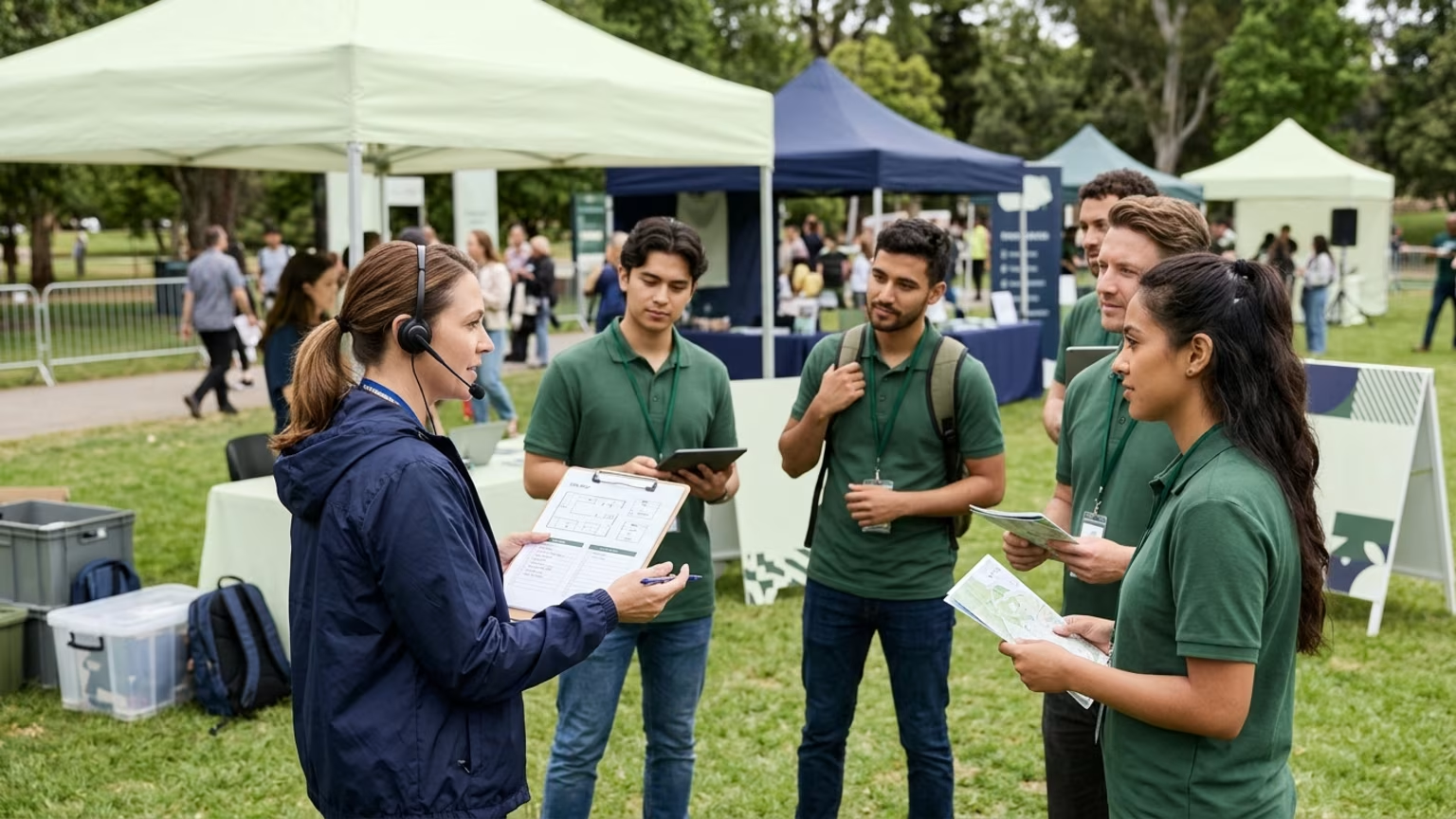
Build a field team brief covering product messages, guest flow, venue logistics, role boundaries, CRM ownership, reporting, and escalation.

At Makai, we build experiential programs around creativity, strategy, and data. The aim is to connect emotion with action rather than make every guest conversation identical. We believe a useful field brief should give that creative intent an operational home.
This framework draws on practitioner guidance rather than a tested universal briefing standard. Use it as a working structure that accommodates the campaign and its confirmed site requirements.
A practitioner staffing guide advises confirming venue documentation and activity permissions. It identifies risk assessments and insurance certificates among the documents a venue or landowner may request. The brief should identify the applicable requirements and who owns coordination with the site.
A separate activation planning guide recommends checking installation windows, freight access, and surface protection with the venue. For mobile sampling tours, vehicle staging belongs in that same site-specific discussion. Record the confirmed arrangement rather than copying a parking or access plan from another stop.
The 2025 AIA Conference exhibitor FAQ illustrated how detailed event instructions could become. It listed move-in windows and freight-arrival requirements alongside closed-toe-shoe rules. It also specified contractor and insurance submission procedures. Those were instructions for that event, not a standing rulebook for other activations.
Makai's integrated services span permitting through CRM reporting. That connection matters to the brief: permissions and product delivery should not sit in a separate planning universe from captured leads and follow-up ownership.
State who receives captured contacts and who owns CRM routing. Connect those responsibilities to the reporting expectations before the activation opens. The brief does not need to describe an entire software system, but it should make the handoff owner visible.
We have executed over 1000 campaigns across all 50 states. That experience informs our view that campaign consistency and local detail belong together, but they serve different jobs. A shared approach to field execution should leave room for confirmed local arrangements without changing the campaign's purpose.
A practitioner guide to in-person activations recommends advance briefing on messaging and objectives. It also covers responsibilities, common questions, onsite leadership, and station schedules. Translate that guidance into the following working sequence.
The result should read like a decision reference rather than a presentation transcript. Someone covering a station should be able to locate the message and the reporting expectation without searching through creative rationale. Someone facing an unresolved question should know where their responsibility ends.
Two mistakes deserve special attention: treating contact collection as tracking and treating crowd movement as somebody else's job.
A clipboard is not a follow-up plan. Neither is a collection of sign-ups with no named recipient or stated reporting purpose.
The mistake is allowing the collection method to stand in for a measurement plan. A sample count describes distribution activity. A sign-up records participation, while a claim about sales requires evidence of the later purchase outcome. Neither count alone establishes qualified pipeline or sales impact.
Keep the reporting owner connected to the business objective. A clear separation between field activity and business impact makes the brief more useful than a long list of counts with no explanation of what they represent.
A layout does not tell staff who manages a confusing transition or raises a crowd-flow concern. The walkthrough and role assignments need to meet in the same brief.
Use the guest journey to identify where responsibilities change. Connect those transitions to station coverage and the onsite lead. This follows the practitioner guidance on flow planning and leadership without assuming that a diagram or a pre-opening check will prevent every bottleneck.
The brief should remain useful after the shift. Compare the planned responsibilities with the reporting the team actually produced. Check whether captured contacts reached the named follow-up owner before using lead collection as evidence of a functioning pipeline.
For distributed campaigns, the next useful question is whether the same unresolved product question or flow concern appears across locations. That is a reason to review the shared brief rather than treating every issue as an isolated local problem. A structured review of field feedback can connect those observations to the next version.
What to watch next: Follow the handoff from recorded participation to CRM ownership. Then examine any later conversion evidence separately. The next campaign decision should reflect both what happened onsite and what the business can actually verify afterward.
Field marketing managers own the daily translation from campaign strategy to guest conversations; with Makai, that work sits within hands-on experiences built around emotional connection. Makai creates experiential campaigns for premium CPG brands with the goal of turning consumer interactions into qualified leads.

30 Years Experiential & Retail Activation Partner for CPG & Beverage Brands | Multi-Market Demos, Roadshows & Costco/Club Programs That Actually Sell